News Release

Kaiser Analysis: Estimated Health Insurance Rebates Under the Health Reform Law Total $1.3 Billion in 2012

Published: Apr 1, 2012

NEWS RELEASEApril 26, 2012

Rebates Expected to Vary Significantly by State

MENLO PARK, Calif. – Consumers and businesses are expected to receive an estimated $1.3 billion by this August in rebates from health insurers who spent more on administrative expenses and profits than allowed by the Affordable Care Act (ACA), finds a new analysis from the Kaiser Family Foundation of the latest estimates provided by insurers to state insurance commissioners.

The rebates include $541 million in the large employer market, $377 million in the small business market, and $426 million for those buying insurance on their own. Rebates in the group market will generally be provided to employers, and in some cases be passed on to employees as well.

Rebates are expected to go to almost one-third (31%) of consumers in the individual market. Among employers, about one-quarter (28%) of the small group market and 19% of the large group market is projected to receive rebates. The share of consumers in the individual insurance market expected to receive rebates ranges from near zero in several states to as high as 86% in Oklahoma and 92% in Texas.

“This study shows that asking insurance companies to put more of their premium dollar towards patient care rather than administration and profits is not only popular but also effective,” said Kaiser President and CEO Drew Altman. “There are tangible benefits for consumers and employers.”

The largest rebates overall are projected to go to consumers and businesses in Texas (total $186 million) and Florida ($149 million); Hawaii is the only state where no insurer is expected to issue a rebate.Consumers receiving rebates in the individual market are projected to receive $127 on average, with amounts varying significantly by insurer and state. The average rebates for individual purchasers expected to receive them range from just a few dollars in some states to as much as an average of $305 in Alaska, $294 in Maryland, $243 in Pennsylvania, $241 in Idaho, and $236 in Mississippi.

Beginning in 2011, the ACA requires insurance plans to pay out a minimum percentage of premium dollars towards health care expenses and quality improvement activities, limiting the amount spent on administrative and marketing costs and profit. Under the law, large group plans are required to spend at least 85 percent of premium dollars on health care and quality improvement, while small group plans must spend at least 80 percent. These ratios are known as the Medical Loss Ratio (MLR). If an insurer fails to meet the MLR within a market segment in a state, they must issue a refund to consumers and employers.

The analysis includes a data table with state-by-state information on the total dollar amount of projected rebates, the number of people enrolled in plans expected to provide rebates, the number of plans paying rebates, the average rebate across the entire market, and the average rebate amount for those receiving them. The data are available for the individual, small group and large group markets.

The data for the insurance rebates are based on estimates provided by insurers in filings to the National Association of Insurance Commissioners in the 2011 Supplemental Health Care Exhibit. The source of the data was the Health Coverage Portal, a market database maintained by Mark Farrah Associates, which includes information from the NAIC. Actual rebates will be based on reports insurers submit to the federal government later this year.Learn more about the MLR, how it is calculated, and how consumer rebates will be issued in a fact sheet from the Foundation.

The Kaiser Family Foundation, a leader in health policy analysis, health journalism and communication, is dedicated to filling the need for trusted, independent information on the major health issues facing our nation and its people. The Foundation is a non-profit private operating foundation, based in Menlo Park, California.

###

Publish Date: 2012-04-26

Patient Cost-Sharing Under the Affordable Care Act

Published: Apr 1, 2012

Under the Affordable Care Act (ACA), four tiers of health insurance will be offered in the health insurance exchanges and throughout the individual and small group markets beginning in 2014. Under the minimum coverage plan, the “Bronze” plan, the insurance plan will pay for 60 percent of the costs of covered benefits on average while the individual enrolled will pay the remaining 40 percent in deductibles, copays and coinsurance. Individuals will have the option to purchase plans with more comprehensive coverage at higher premiums.

The study projects what deductibles and coinsurance would meet the requirements of a Bronze plan, presenting two alternatives: One with a deductible per individual of $4,375, with consumers paying 20% of their health care expenses once meeting the deductible. The other with a deductible of $3,475 and patient coinsurance of 40%. Under both plans, total patient out-of-pocket costs would be capped at $6,350, as required by the health reform law. Deductibles for families would be double these amounts.

Report (.pdf)

Among Dual Eligibles, Identifying The Highest Cost Individuals Could Help In Crafting More Targeted And Effective Responses

Published: Apr 1, 2012

This Health Affairs article by researchers at the Urban Institute analyzes linked Medicare and Medicaid data to examine dual eligibles’ utilization and spending in both programs in 2007. It finds that while the population of people dually eligible for Medicare and Medicaid is indeed costly, it is not monolithic. For instance, although 20 percent of dual eligibles accounted for more than 60 percent of combined Medicaid and Medicare spending, nearly 40 percent of dual eligibles had lower average per capita spending than non-dual-eligible Medicare beneficiaries. Fewer than one percent of dual eligibles were in high-cost categories for both Medicare and Medicaid.

The findings suggest that decision makers should tailor Affordable Care Act initiatives to account for subpopulations of dual eligibles, their costs, and their service use.

Health Affairs Article

Insurer Rebates under the Medical Loss Ratio: 2012 Estimates

Published: Apr 1, 2012

Beginning in 2011, the Affordable Care Act (ACA) requires insurance plans to pay out a minimum percentage of premium dollars towards health care expenses and quality improvement activities, limiting the amount spent on administrative and marketing costs and profit. Under the law, large group plans are required to spend at least 85 percent of premium dollars on health care and quality improvement, while small group plans must spend at least 80 percent. These ratios are known as the Medical Loss Ratio (MLR). This analysis looks at the latest estimates provided by insurers to state insurance commissioners.The analysis finds that consumers and businesses are expected to receive an estimated $1.3 billion by this August in rebates from health insurers who spent more on administrative expenses and profits than allowed by the ACA. The rebates include $541 million in the large employer market, $377 million in the small business market, and $426 million for those buying insurance on their own. Rebates in the group market will generally be provided to employers, and in some cases be passed on to employees as well.Rebates are expected to go to almost one-third (31%) of consumers in the individual market. Among employers, about one-quarter (28%) of the small group market and 19% of the large group market is projected to receive rebates. The share of consumers in the individual insurance market expected to receive rebates ranges from near zero in several states to as high as 86% in Oklahoma and 92% in Texas.

Report (.pdf)

Media Internships in Health 2011

Published: Mar 31, 2012

The Kaiser Media Internships in Health: 2011 Kaiser Media Interns

mediainterns2011.jpg

The Henry J. Kaiser Family Foundation sponsors 16 annual summer internships for journalists interested in specializing in health and health policy reporting. The aim is to provide journalists just starting their reporting careers with an in-depth introduction to and practical experience on the specialist health beat – with a particular focus on diverse and immigrant communities. Interns are typically just graduating from undergraduate or graduate school, and are selected by the participating news organizations. This is an intensive 12-week program that combines briefings and site visits with practical reporting experience

The program begins in early June with a week-long briefing in Washington, D.C., where the interns meet with a wide range of health policy experts, health providers, and senior health reporters and editors. Briefings are focused on national trends and health-related statistics as well as local demographic, cultural, economic and epidemiological factors that affect health issues in the cities where the interns are working during the summer. Story ideas and reporting challenges specific to the health beat are discussed in some detail. Interns are then based at their news organizations for 10 weeks where they report on health, health policy, and medical issues. The program ends in late August with a 3-day meeting and site visits in Boston, including a detailed critique of each intern’s print, video, or audio clips by a group of senior health journalists.

See the briefing and critique agendas (.pdf).

The 16 news organizations that participated in the 2011 program were The Boston Globe, The Charlotte Observer, KQED Public Radio/San Francisco, KTVU/2-TV/San Francisco/Oakland, The Milwaukee Journal-Sentinel, NPR, The Oregonian, The Orlando Sentinel, The Philadelphia Inquirer, The Plain Dealer/Cleveland, Reuters, The Sacramento Bee, The San Jose Mercury News, The Seattle Times, The Times-Picayune, and The Washington Post. While reporting for these news organizations, the interns produced a considerable number of stories. The clips included here just represent a selection of the work produced during the 2011 program.

2011 Media Interns and Their Host Organizations (click on the interns’ names to see examples of their work)

Neena SatijaThe Boston Globe Deia de BritoThe Charlotte ObserverAlexander Liu KQED Public Radio, San Francisco Rose TibayanKTVU/2-TV, San Francisco-OaklandGrace PatuwoThe Milwaukee Journal SentinelLinda Thrasybule NPR, Washington DCAndrew DoughmanThe Orlando Sentinel Tatiana SanchezThe Oregonian Juliana SchatzThe Philadelphia Inquirer Teresa Chin The Plain Dealer, Cleveland Andrew Seaman Reuters, Washington DC Lynn LaThe Sacramento Bee Jane LeeThe San Jose Mercury News Roberto Daza The Seattle Times Ashley HopkinsonThe Times-Picayune, New Orleans Christian TorresThe Washington Post

AIDS in Gay America: Findings from Focus Groups

Published: Mar 30, 2012

Between January and March 2012, the Kaiser Family Foundation and the Black AIDS Institute conducted focus groups in Philadelphia, Los Angeles and Dallas with men self-identifying as gay or bisexual to provide insight as to how HIV/AIDS is viewed in the gay community today, what actions are being taken to stem its spread, and to inform future Greater Than AIDS campaign messaging.

Report (.pdf)

Using Data and Technology to Drive Process Improvement in Medicaid and CHIP: Lessons From South Carolina

Published: Mar 30, 2012

In the past year, there has been a notable trend of states increasingly utilizing data and technology to modernize, streamline, and gain efficiencies in their Medicaid and CHIP programs. The expanded use of data and technology is not only helping states deal with current budget pressures and decreased administrative resources, but also lays important groundwork for the coverage expansions and new coordinated, streamlined, and technology-driven enrollment process that will go into effect in 2014 under the Affordable Care Act (ACA).

South Carolina provides a case study example of how states can utilize data and technology to improve Medicaid processes and increase enrollment for children and low-income families. In 2011, South Carolina initiated a data-driven decision making process to identify potential simplifications to its Medicaid enrollment process. This effort was in response to administrative and legislative directives to better utilize technology to reduce bureaucratic waste and improve customer service in Medicaid by eliminating unnecessary “hassle factors”. Using data analysis, the state identified significant churn in its Medicaid program—each year, about 140,000 children were losing coverage, with 90,000 returning within the year, 60,000 of whom were returning within one month. This repeated movement into and out of coverage was creating burdens for families, administrative staff, and providers.

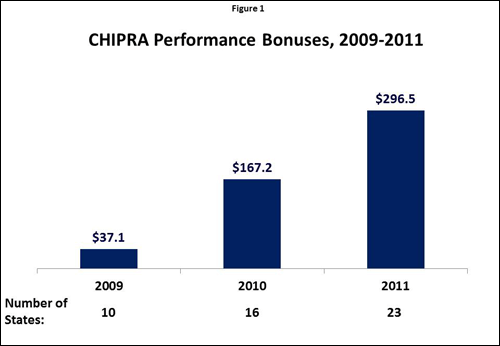
Based on its analysis, the state determined that using eligibility information from other programs to conduct “express lane” renewals of Medicaid coverage would reduce churn and likely enable the state to earn a performance bonus. The state moved quickly to begin utilizing eligibility findings from its Supplemental Nutrition Assistance Program (SNAP) and Temporary Assistance for Needy Families (TANF) program to conduct express lane renewals and renewed coverage for about 80,000 children in just nine months. It also became one of seven states that earned performance bonuses in 2011 for the first time, earning $2.3 million of the $296.5 million awarded to a total of 23 states (Figure 1).

8298_UsingData_01_1.gif

SOURCE: CHIPRA Performance Bonuses: A History (FY:2009-FY2011)

Looking ahead, South Carolina is examining how to use SNAP and TANF data to facilitate enrollment of an estimated 70,000 eligible but uninsured children into Medicaid. The state also is exploring how state staff and community partners can assure that processes move beyond enrollment to connect individuals to care. These efforts will not only increase coverage and improve care for children, but will also inform future expansion efforts under health reform by providing the state, community partners, and providers with experience enrolling large numbers of individuals at one time and connecting them to care.

South Carolina is also pursuing an update to its Medicaid eligibility system to facilitate program efficiencies and continued process improvement as well as prepare for system needs under health reform. The state is utilizing an incremental approach, focusing first on system upgrades that must be in place to meet the requirements of 2014, with additional phases planned to meet its long-term system goals. As noted, South Carolina’s efforts are reflective of the broader movement across states to increasingly utilize data and technology in their Medicaid and CHIP programs. Specifically, survey data show that as of January 2012:

  • Nine states are relying on eligibility information from other income-based public programs or the state tax or revenue department to conduct express lane enrollments or renewals of children’s Medicaid or CHIP coverage. Moreover, 44 states are using an electronic data match with the Social Security Administration to verify citizenship in their Medicaid or CHIP program.
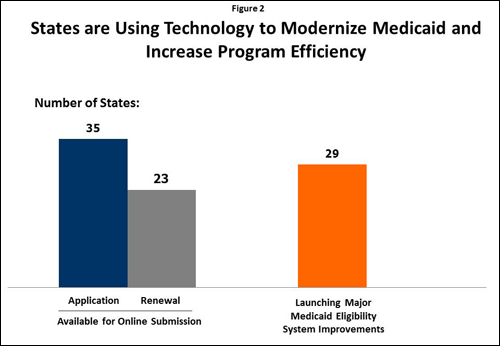
  • More than two-thirds of states allow families to apply online for Medicaid and/or CHIP coverage for their children (Figure 2). Further, an increasing number of states are providing families the ability to create an online account to start, stop and return to an online application and conduct other activities such as checking benefits, reporting changes, viewing notices, or renewing coverage.
  • A total of 29 states are launching major Medicaid eligibility system improvements. This significant activity has been spurred by the availability of an enhanced 90% federal matching rate (up from the regular 50% administrative federal match rate) for states to develop or upgrade existing Medicaid eligibility systems.
8298_UsingData_02_final_1.gif

SOURCE: Based on the results of a national survey conducted by the Kaiser Commission on Medicaid and the Uninsured and the Georgetown University Center for Children and Families, 2012.

The growing use of data and technology in Medicaid and CHIP programs is leading to significant process improvements that reduce burdens for families and administrative staff and increase program efficiencies. These actions have not only helped states deal with current budget pressures, but also lay the groundwork for the 2014 coverage expansions and new enrollment requirements that are designed to provide a real-time, streamlined, technology-driven enrollment process for Medicaid, CHIP, and exchange coverage.

The Health Reform Law’s Medicaid Expansion: A Guide to the Supreme Court Arguments

Published: Mar 29, 2012

One significant element of the pending U.S. Supreme Court case challenging the Affordable Care Act is the constitutionality of the law’s Medicaid expansion. This provision of the law requires states that choose to participate in the Medicaid program to cover nearly all adults under age 65 with household incomes at or below 133% of the federal poverty level as of January 2014. A ruling on the Medicaid expansion could have far-reaching impacts on the present and future contours of the Medicaid program, the people it is scheduled to serve, and Congress’s power to attach conditions to the federal funds it provides to states.

This policy brief examines the Medicaid expansion, the legal and policy arguments related to it in the pending Supreme Court case, and the potential ramifications of the Court’s decision. A separate brief also examines other aspects of the case.

Report (.pdf)

SEE ALSO: Read about the outcome in A Guide to the Supreme Court’s Affordable Care Act Decision

A Guide to the Medicaid Appeals Process

Published: Mar 29, 2012

This background brief provides a comprehensive look at the appeals process for the Medicaid program, which differs significantly from those available through the Medicare program and private health insurance. The Medicaid appeals process provides redress for individual applicants and beneficiaries seeking eligibility for the program or coverage of prescribed services, but the process is multi-layered and can be complex to navigate. The guide describes Medicaid’s appeals system, including the fair hearing process and the appeals process required for Medicaid managed care organizations. As coverage expands under health reform and efforts proceed to integrate services for dual eligibles, who are enrolled in both Medicare and Medicaid, protections through the appeals process will be increasingly important.

Guide (.pdf)

The Role of the Basic Health Program in the Coverage Continuum: Opportunities, Risks & Considerations for States

Published: Mar 28, 2012

This brief assesses the potential benefits and drawbacks to states from implementing a Basic Health Program under the Affordable Care Act. The law gives states the option of creating a Basic Health Program, using federal tax money to subsidize insurance coverage for low-income residents who would otherwise be eligible to purchase coverage through a state exchange. Such a program would give states the ability to provide more affordable coverage for these low-income residents and improve continuity of care for people whose income fluctuates above and below Medicaid levels.

The brief discusses the potential impact of a Basic Health Program on the effectiveness of state exchanges and strategies to manage these effects. It also offers a framework for states looking to assess the financial feasibility of the Basic Health Program, highlighting key considerations in estimating the amount of federal funding they will receive and the costs of implementing the program.

Brief (.pdf)