KFF designs, conducts and analyzes original public opinion and survey research on Americans’ attitudes, knowledge, and experiences with the health care system to help amplify the public’s voice in major national debates.
This snapshot finds that between June 2010 and June 2011, while enrollment continued to grow as an additional 2.2 million people enrolled in Medicaid programs nationally, enrollment growth in the program slowed as the economy started to improve. Enrollment growth over this period was 4.4 percent, down significantly each of the two prior annual periods. Since June 2007, just before the start of the recession, Medicaid enrollment has grown by over 10 million people, over half of whom were children. The percentage of uninsured children actually declined slightly during this period, largely due to more children gaining coverage through Medicaid or CHIP.
This data spotlight examines the growth in private Medicare Advantage plan enrollment in 2012, with a record 13 million Medicare beneficiaries enrolled as of March, representing 27 percent of all Medicare beneficiaries. Enrollment jumped by more than 1 million enrollees from the previous year and increased in every state except Alaska and New Hampshire.
Medicare Advantage plan enrollees generally must pay Medicare’s standard Part B premium, but more than half do not pay any additional premiums to the plan. Across all enrollees, plan premiums average $35 per month this year, down $4 per month from 2011.
The Kaiser Family Foundation has issued a series of data spotlights and examining the Medicare Advantage plan options available in 2012 and trends affecting the Medicare Advantage marketplace. These analyses were prepared by researchers at Mathematica Policy Research Inc. and the Kaiser Family Foundation.
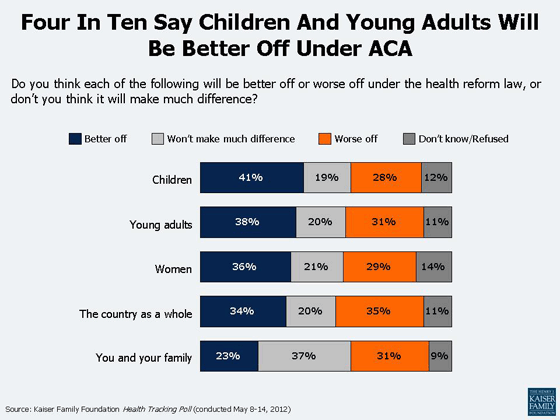
While supporters and opponents of the Affordable Care Act wait for the Supreme Court to announce their decision, support for the law dipped slightly in May, with unfavorable views now outnumbering favorable ones (44 percent versus 37 percent). As in previous months, the public remains divided on whether the law will leave the country better off (34 percent) or worse off (35 percent). When it comes to their own families, a plurality (37 percent) doesn’t expect to be impacted, while 31 percent expect to be worse off and 23 percent expect to be better off. Americans are more optimistic about the impact of the law on women, young adults, and especially children, with higher shares saying each of these groups will be better off under the law than worse off.
See the summary document, topline, and charts for more findings from the survey, including a look at how the public feels about the current state of women’s reproductive health choices and services, including abortion, contraception, and family planning.
This analysis looks at the difficulties uninsured people ages 55-64 have accessing and affording health care in 2010. Four in 10 of these near-seniors report having unmet health care needs or delaying treatment, while three in 10 uninsured near-seniors lived in families reporting problems paying their medical bills largely due to the cost.
Seniors on Medicare report problems accessing care at a significantly lower rate than uninsured near-seniors and at a similar rate to near-seniors with private insurance, after controlling for differences in demographics and health status.
Today near-seniors may face difficulties obtaining comprehensive health insurance in the individual market because their age and health status can result in high, unaffordable premiums. Starting in 2014, the Affordable Care Act will create new options to purchase health insurance, barring higher premiums due to pre-existing conditions and limiting premium adjustments based on age. The full analysis includes trend data and comparisons to insured near-seniors and seniors with Medicare.
This policy brief examines how states in every region have responded to five key opportunities available under the health reform law to help them prepare for the significant expansion of Medicaid in 2014. The options covered in the brief include incentives for states to get an early start on the Medicaid coverage expansion; increased federal funding to upgrade Medicaid eligibility systems; money to improve care for beneficiaries with chronic conditions by providing “health home” services; special funding for chronic disease prevention; and help in developing service delivery and payment models that integrate care for beneficiaries who are dually eligible for Medicare and Medicaid.
Under the Affordable Care Act (ACA), beginning in 2014, Medicaid eligibility will expand to 133% of the federal poverty level for nearly all individuals. Arizona is one of the few states that already cover adults without dependent children in Medicaid through a longstanding Section 1115 waiver. This report, based on 2007 Medicaid claims data for adult Medicaid enrollees in Arizona, provides an analysis of health care utilization and health conditions for childless adults and compares them with parents and adults with disabilities. Understanding the health care use and needs of low-income childless adults can help inform other states’ efforts to care for these adults under the Medicaid expansion in 2014.
This fact sheet examines the provisions in the Patient Protection and Affordable Care Act (ACA) that require states to maintain eligibility and enrollment standards for Medicaid and the Children’s Health Insurance Program. These maintenance of eligibility (MOE) provisions were designed to keep Medicaid and CHIP coverage stable until coverage expands under the health reform law.
Under the MOE provisions, to receive federal Medicaid funds, states cannot impose eligibility and enrollment policies that are more restrictive than those in place at the time the ACA was enacted (March 23, 2010) until 2014 for adults and until 2019 for children in Medicaid and CHIP. An exception allows states facing a budget deficit to reduce eligibility for non‐disabled adults above 133% FPL.
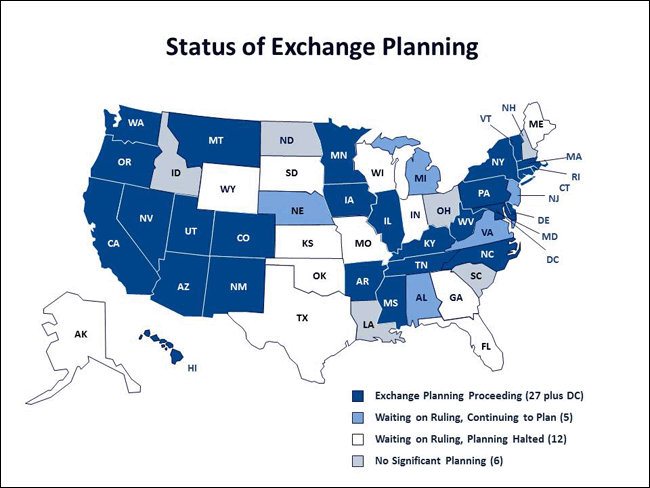
State-based health insurance exchanges are an important component of the Patient Protection and Affordable Care Act (ACA) designed to extend subsidized private health insurance coverage to millions of Americans by 2014. Though projections show exchange enrollment could grow to 20 million individuals nationally, aggressive planning on the part of states will be necessary to meet implementation timelines—exchanges must be fully operational by January 1, 2014 and the Department of Health and Human Services will begin certifying exchange readiness by January 2013. Recognizing the urgency, many states initiated planning activities soon after the passage of the ACA, creating task forces or workgroups to study exchange design options. Many also applied for and were awarded federal Level 1 Exchange Establishment grants to fund planning activities, including the development of information technology (IT) systems. However, legal challenges to the ACA have created uncertainty for states and have led some to slow or halt exchange planning efforts in recent months. The implications of these decisions are significant. Delays in exchange planning mean fewer states will likely meet the timelines for implementing a state-based exchange and will instead be forced to default to a federal exchange or a federal-state partnership model.
To date, 12 states have halted exchange planning while awaiting a ruling from the Supreme Court on the constitutionality of the ACA, which is not expected until late June. Another five states indicate that while they will not pursue exchange legislation until the Supreme Court rules, they will continue planning for an exchange. Nationally, over half of states are proceeding with exchange planning- including all of the 14 states and the District of Columbia that have established exchanges either through legislation or executive order. The remaining six states never seriously began planning for an exchange and while they have not explicitly announced an intention to wait on the Supreme Court ruling, it may be a factor in their decisions.
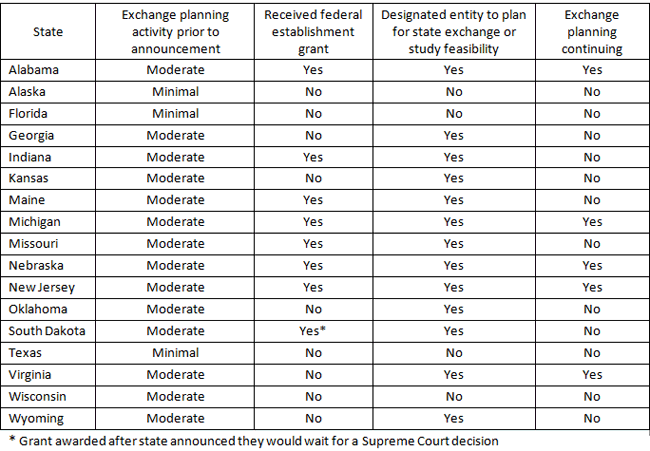
Before announcing they would halt all or certain aspects of exchange planning, the 17 states waiting on a Supreme Court decision were in different phases of development. Several states, including Alaska, Florida, and Texas had undertaken minimal planning work prior to their announcement. These states were arguably not very different from those within the “no significant planning” category and it is likely not much additional ground was lost with an announcement to waitHowever, the majority of states that decided to wait for a Supreme Court decision were in fact making moderate exchange planning progress prior to their announcement. Many of these states had designated an entity responsible for coordinating exchange development or for studying the feasibility of establishing an exchange. In Alabama, Georgia, Maine, and Virginia, Commissions had already issued recommendations for how a state-based exchange should be designed. Seven states had been awarded federal Level 1 Exchange Establishment grants before announcing they would place their planning efforts on hold. Another state, South Dakota, had applied for an Establishment grant, though the grant had not been awarded prior to the Governor’s announcement. Kansas’ Insurance Department had organized extensive stakeholder workgroups comprised of hundreds of volunteers which met regularly developing exchange recommendations. Virginia had passed legislation expressing its intent to establish a state exchange and Indiana’s Governor signed an Executive Order conditionally establishing a nonprofit exchange. By waiting for a Supreme Court ruling, states that had been making moderate progress increased the likelihood that instead of having a state-based exchange, they will default to a federal exchange or a partnership model come 2014.
States Waiting on Ruling from the Supreme Court on the Constitutionality of the Affordable Care Act
What happens next will depend on how the Supreme Court rules. If it tosses out most or all of the law, states that decided to slow or stop exchange planning will not have expended additional resources on creating a new infrastructure they would not support in the absence of the federal law. If, however, the Supreme Court upholds most or all of the law, these states will be left with a considerably shortened timeframe for building their exchanges. By mid-November 2012, states are required to submit a blueprint (.pdf) for approval indicating whether they plan to run their own exchange or will participate in a federal-state partnership exchange.
States that delay implementation until the Supreme Court ruling will face significant challenges in meeting the November deadline for a state-based exchange. It will be difficult to build the IT systems and other components needed to support the exchange since much of the exchange infrastructure requires longer lead times for development. Also, many 2012 legislative sessions will have ended by the time the Court rules in June and states may not be able to enact authorizing exchange legislation. Exchange establishment legislation may be essential to receiving conditional federal approval for a state-based exchange. Without such approval, it is more likely the federal government will need to step in to run all or part of the exchanges in these states. By ceding responsibility for key aspects of their exchanges to the federal government, states forfeit the ability to tailor the exchange to meet the specific needs of their state.
Over 9 million elderly Americans and younger persons with disabilities are jointly enrolled in the Medicaid and Medicare programs. These “dual eligibles” receive coverage for most medical services from Medicare, and they also receive Medicaid assistance for Medicare premiums and cost-sharing and coverage of benefits not offered under Medicare (such as long-term care). Dual eligibles are among the sickest and poorest individuals covered by Medicare and Medicaid and, as a group, account for a disproportionate share of spending in both programs. For this reason, policymakers are focusing on dual eligible individuals in planning new initiatives to improve care coordination and quality, expand the use of managed care, or enhance current service delivery programs with the goal of achieving cost savings. States, which administer the Medicaid program jointly with the federal government, are playing an active role in the development of these proposals.
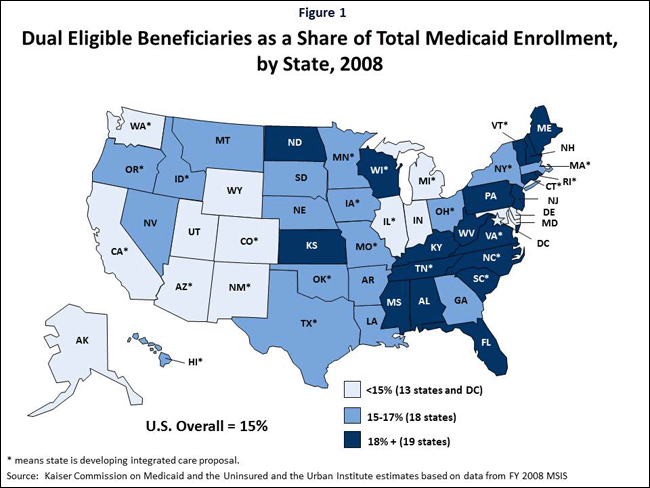
There is significant variation across states in the role that dual eligibles play within state Medicaid programs. Figure 1 shows that dual eligibles account for a varying share of Medicaid enrollees by state, from a low of 10 percent in Arizona and Utah to a high of 26 percent in Maine. These variations reflect a state’s demographic profile as well as state policy choices in Medicaid eligibility and coverage. In general, states in the East—which tend to have older overall populations—have a higher share of Medicaid enrollees who are dual eligibles than those in the Midwest and West. However, states with a relatively low share of Medicaid enrollees who are duals (such as California and Illinois) may have a much higher number of dual eligibles enrolled in Medicaid than states with a higher share, since these states have larger overall populations.
Figure 1 also indicates whether a state has developed a proposal for a federal demonstration program to integrate Medicare and Medicaid services and financing for dual eligibles. As of May 2012, 26 states were actively developing such proposals. Notably, many states developing proposals have a relatively low share of Medicaid enrollees who are dual eligibles, while many states that do have a high share of dual eligible Medicaid enrollees are not currently participating.
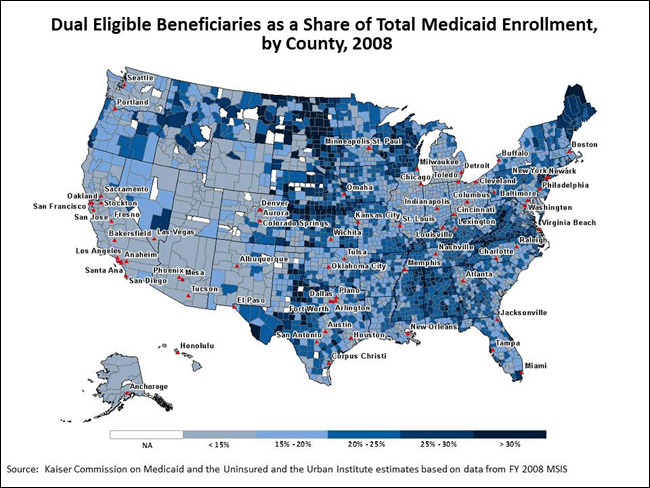
In addition to the variation across states in the share of Medicaid beneficiaries who are dually eligible, there is also variation between counties within states. Figure 2 shows county-level data on the share of Medicaid beneficiaries who are dual eligibles. This map also indicates the location of cities (marked by red dots) with populations greater than 250,000. It demonstrates how state-level averages can mask substantial geographic variation within a state. While some states, such as Ohio and Maine, have a fairly consistent share of dual eligible Medicaid beneficiaries across most counties, other states such as Idaho and Texas show wide county level variation. For example, in Texas, in Moore County, fewer than 10 percent of Medicaid enrollees are duals, versus nearly 46 percent in Terrell County. In many counties across the nation, the share of Medicaid beneficiaries who are dually eligible is over 30 percent, more than twice the national average. A handful of counties—primarily in largely rural areas such as Nebraska, North Dakota, South Dakota, and Montana—have more than half their Medicaid population dually enrolled in Medicare.
County-level data on dual eligible enrollment may help policymakers develop state or local initiatives. Some existing programs for dual eligibles, such as PACE or certain managed care initiatives, are locally-based, and county-level prevalence information can help assess whether they are reaching areas with a high share of dual eligibles. As states plan future efforts to improve care and financing for this population, county-level information can help in further targeting efforts or determining how to phase-in statewide initiatives.
More information on the methods underlying this analysis is available in the Methods box below. Data on specific states (.xls) or counties (.xls) is available.
MethodsThe dual eligible enrollment and Medicaid beneficiary data in these maps comes from estimates made by the Kaiser Commission on Medicaid and the Uninsured and the Urban Institute using data from FY 2008 MSIS. Dual eligibles include both “full duals” (Medicare beneficiaries eligible for full Medicaid benefits) and “partial duals” (Medicare beneficiaries eligible for only premium and/or cost sharing assistance from Medicaid) whose last-known monthly Medicaid enrollment status showed that they were dual eligible beneficiaries during FY2008. County information in the MSIS was reconciled with county information from the Census Bureau’s American Community Survey 5-year estimate file, to address inconsistencies in county codes across data sets. The 100 missing counties (3% of all counties) include those with insufficient sample to display data as well as a very small number (18) with missing Medicaid data. There were 44,600 dual eligibles (<1% of all dual eligibles) in FY2008 MSIS who are not represented in the county data because their county information was missing, incorrect, or excluded due to privacy purposes.