KFF designs, conducts and analyzes original public opinion and survey research on Americans’ attitudes, knowledge, and experiences with the health care system to help amplify the public’s voice in major national debates.
While the percent of the population without health coverage has decreased since the major coverage expansion in the ACA, at least 10% of the non-elderly population is still uninsured. This analysis looks at how many of the remaining uninsured are eligible for premium subsidies large enough to cover the entire cost of a bronze plan, which is the minimum level of coverage available on the Marketplaces.
The premium tax credits that subsidize Marketplace coverage are calculated using the second-lowest cost silver plan in each rating area as a benchmark. As was the case in 2019, many unsubsidized silver plans continue to be priced relatively high because insurers generally loaded the cost from the termination of federal cost-sharing reduction payments entirely onto the silver tier (a practice sometimes called “silver loading”). The relatively higher price for silver plans means subsidy-eligible Marketplace enrollees will continue to receive large premium tax credits in 2020. These subsidies – which can be used towards the premium of any Marketplace plan – also continue to make lower premium bronze plans more likely to be available for $0 than before cost-sharing reduction payments were terminated.
In this analysis, we focus specifically on the approximately 16.7 million uninsured people who could be shopping on the Marketplace, regardless of whether or not they are eligible for a subsidy.1 We therefore exclude people who are eligible for Medicaid, those over the age of 65, and those who are undocumented immigrants (who are not permitted to buy Marketplace coverage).
We estimate that 28% of uninsured individuals who could shop on the Marketplace, or 4.7 million people nationwide, are eligible to purchase a bronze plan with $0 premiums after subsidies in 2020. This figure is similar to 2019, when 27% of uninsured individuals, or 4.2 million people, could purchase a no-premium bronze plan.
As shown on the map and table below, the availability of free bronze plans varies widely between states. More than half of the uninsured who could get a free bronze plan live in Texas, Florida, North Carolina, or Georgia. Other states with large shares of uninsured residents who could sign up for a no-premium bronze plan include Iowa (59%), Alaska (45%), Wyoming (44%), Idaho (41%), and South Dakota (41%).
Rather than continuing to go without insurance, the 4.7 million uninsured people eligible for no-premium bronze plans would benefit from the financial protection health insurance offers. While bronze plans have high deductibles, they all cover preventive care with no out-of-pocket costs, and a number of bronze plans cover additional services, such as a few physician visits, before the deductible. If a low-income enrollee in a bronze plan needs a hospitalization, they will likely have difficulty affording the deductible, but the deductible will also likely be much less than the cost of a hospitalization without insurance.
Bronze plans have an average deductible of $6,506, and many people eligible for a $0 bronze premium would also be eligible for significant cost-sharing assistance by instead purchasing a silver plan. Single individuals with incomes below 250% of the poverty level can purchase benchmark silver plans with cost-sharing reductions (CSR) for $20 to $215 per month after subsidies in 2020, on average, depending on an enrollees’ income. Silver CSR plans have average annual deductibles ranging from $209 to $3,268 in 2020, also depending on income, and have reduced copays and coinsurance. It is therefore important for potential enrollees, particularly those with significant health needs, to not only consider the premium, but also the significant cost-sharing assistance that is only available if they enroll in a silver plan.
Table 1: Uninsured who have Access to a Free Bronze Plan After Tax Credits in 2020
State
Percent
Count
US Total
28%
4,655,900
Alaska
45%
20,000
Alabama
36%
147,100
Arkansas
5%
5,200
Arizona
10%
35,700
California*
16%
178,800
Colorado
8%
19,500
Connecticut
35%
29,200
District of Columbia
N/A
N/A
Delaware
30%
7,600
Florida
33%
694,800
Georgia
29%
303,600
Hawaii
18%
4,300
Iowa
59%
47,700
Idaho
41%
44,500
Illinois*
13%
50,200
Indiana
10%
26,400
Kansas
36%
65,500
Kentucky
31%
41,100
Louisiana
22%
37,800
Massachusetts
10%
9,600
Maryland
21%
30,700
Maine*
26%
15,600
Michigan
19%
54,500
Minnesota
N/A
N/A
Missouri
27%
126,400
Mississippi
22%
67,600
Montana
30%
15,100
North Carolina
40%
338,200
North Dakota
22%
7,700
Nebraska
38%
24,600
New Hampshire
17%
8,000
New Jersey
14%
37,300
New Mexico
18%
15,600
Nevada
7%
9,400
New York*
N/A
N/A
Ohio
18%
67,800
Oklahoma
40%
166,600
Oregon*
24%
38,400
Pennsylvania
22%
74,800
Rhode Island
13%
3,000
South Carolina
40%
166,000
South Dakota
41%
25,800
Tennessee
36%
186,100
Texas
32%
1,151,300
Utah
37%
47,800
Virginia
29%
92,100
Vermont
30%
4,900
Washington*
10%
24,800
Wisconsin
30%
57,500
West Virginia
12%
7,000
Wyoming
44%
22,400
* CA, IL, NY, ME, OR, and WA require that most ACA plans include abortion coverage, which typically costs $1 per month and cannot be covered by subsidies.
SOURCES: 2020 Premiums come from KFF analysis of premium data from Healthcare.gov and review of state rating filings. Data on population and eligibility for subsidies come from KFF analysis of the American Community Survey (ACS) for 2018.
NOTES: Counts are rounded to the nearest 100. This analysis does not include individuals who are over the age of 65, or who are eligible for Medicaid in 2020 or are undocumented immigrants. DC is not included in this analysis due to an insufficient sample size in the ACS. New York and Minnesota are not included in this analysis because they offer Basic Health Plans to enrollees with incomes less than 200% of poverty.
Methods
2020 Premiums come from Kaiser Family Foundation (KFF) analysis of premium data from Healthcare.gov and review of state rating filings. Data on population, income, and eligibility for subsidies come from KFF analysis of the Census Bureau’s 2018 American Community Survey (ACS). The ACS includes a 1% sample of the US population and allows for precise state-level estimates. The ACS asks respondents about their health insurance coverage at the time of the survey. Respondents may report having more than one type of coverage; however, individuals are sorted into only one category of insurance coverage.
Premiums in this analysis are the full price of plans, rather than specifically the portion that covers essential health benefits (EHB). Since premium tax credits can only be used to cover the EHB portion of premiums, some of the individuals denoted as having access to a “free” bronze plan would actually have to pay a premium for non-essential health benefits if they enrolled in a bronze plan. The ACA does not permit federal subsidies to pay for abortion coverage and requires plans to collect no less than $1.00 per month for this coverage. In CA, IL, NY, ME, OR, and WA, state law requires that that all state regulated plans include abortion coverage. Policyholders who live in these states must pay the abortion surcharge even though they may qualify for subsidies that provide the full cost of premiums if they select a bronze plan. Providence Health Plans in OR and WA have a religious exemption allowing them to exclude abortion coverage.
This analysis does not include individuals who are over the age of 65, or who are eligible for Medicaid in 2020 or are undocumented immigrants. DC is not included in this analysis due to an insufficient sample size in the ACS. New York and Minnesota are not included in this analysis because they offer Basic Health Plans to enrollees with incomes less than 200% of poverty.
The total number of uninsured for 2018 does not include DC, New York, or Minnesota. This figure does not include individuals who are over the age of 65, or who are eligible for Medicaid in 2020 or are undocumented immigrants. The Census Bureau estimates a total of 27.5 million people in the U.S. were uninsured in 2018. ↩︎
A new issue brief looks at the prevalence of potential surprise medical bills based on patient diagnosis, emergency visits, and type of inpatient admission. Using claims data from large employer health plans, the analysis finds that patients who may be at higher risk of surprise medical bills include those admitted for surgery (including mastectomies), heart attack patients, and people admitted for mental health and/or substance abuse treatment.
The brief follows an earlier analysis that examined how often patients get hit with surprise medical bills, what circumstances tend to give rise to them and what policy proposals are currently being considered to protect consumers from this problem.
The analysis is part of the Peterson-KFF Health System Tracker, an online information hub dedicated to monitoring and assessing the performance of the U.S. health system.
On November 20, 2019, Tennessee submitted an amendment to its longstanding Section 1115 Waiver that would make major financing and administrative changes to its Medicaid program.1 The Centers for Medicare and Medicaid Services (CMS) certified the waiver as complete and opened a federal public comment period through December 27, 2019. Most significantly, Tennessee is requesting to receive federal funds in the form of a “modified block grant” and to retain half of any federal “savings” achieved under the block grant demonstration. The state identified five high-priority areas for reinvestment of such savings. Tennessee is also requesting authority to implement a closed formulary for prescription drugs and a waiver of all federal managed care oversight rules.2
Tennessee has a longstanding Section 1115 waiver, called TennCare II, through which most of its Medicaid program runs, dating back to 1994. Tennessee has not adopted the ACA Medicaid expansion, so excludes childless adults from coverage but covers parents up to 95% FPL (as of January 2019).3 The current waiver includes most enrollees and services, including most seniors, adults with physical disabilities, children with special health care needs,4 and children and adults with intellectual and developmental disabilities (I/DD). TennCare enrollees receive both acute care and long-term services and supports through mandatory capitated managed care arrangements. The state’s current waiver is set to expire in June 2021. In FY 2019, the Tennessee state legislature passed legislation requiring the state to submit a waiver amendment to CMS to request to convert their Medicaid funding mechanism to a “block grant” model under its TennCare waiver.5 If/when the state receives approval from CMS, the legislation requires the General Assembly to approve the agreement before implementation.
CMS has been developing guidance for states related to block grant waivers; however, CMS withdrew this guidance from Office of Management and Budget (OMB) review on November 15, 20196 – prior to Tennessee submitting its proposal. This will be an important waiver to watch as CMS decisions related to financing, treatment of budget neutrality, managed care regulations, and permanent waiver approval (among other areas) will send important signals to other states interested in pursuing similar program policies. This waiver will again test the limits of how the Administration and states can reshape the Medicaid program through Section 1115 waiver authority. This brief provides a high-level overview of the proposed waiver changes and context for why these changes matter.
The Tennessee waiver amendment proposes significant changes to Medicaid financing through a “modified block grant” with the potential for shared savings.
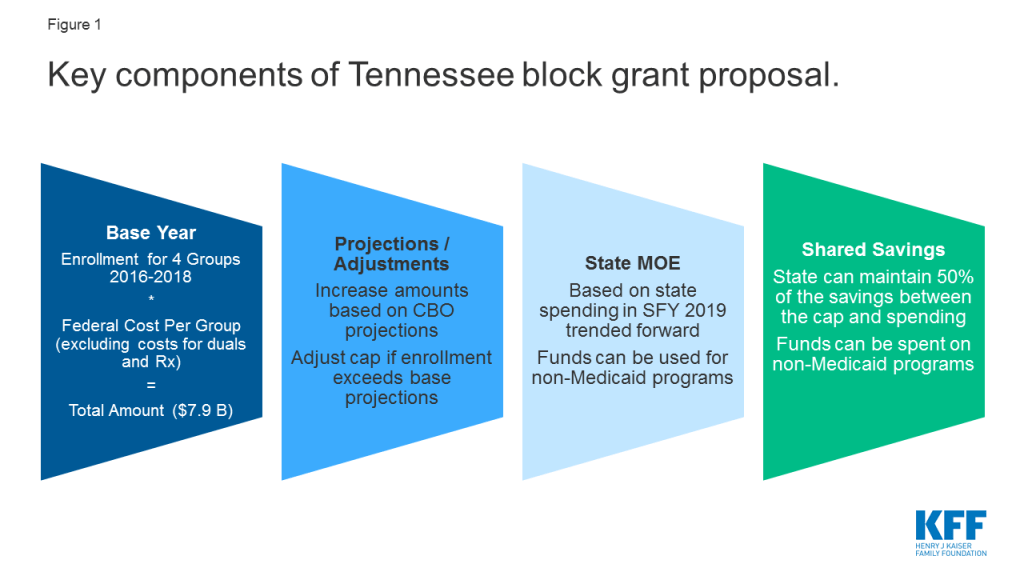
Under the proposal, Tennessee is requesting to receive federal Medicaid funds in the form of a “modified block grant.” Base spending for FY 2018 under the Tennessee proposal would be calculated based on average enrollment from state FYs 2016-2018 in four categories (blind and disabled, elderly, children, and adults) multiplied by expected “without waiver7 ” per member per month (PMPM) expenditure amounts by category (excluding costs for outpatient prescription drugs) multiplied by the Tennessee federal match rate (about 65%) (Figure 1). Spending estimates for 2018 would be trended forward based on Congressional Budget Office (CBO) projections for growth in Medicaid spending to determine the block grant amount in the first year of the demonstration, which the state estimates to be $7.9 billion. These calculations to create a new “without waiver baseline” for waiver budget neutrality (as well as the block grant amount for measuring shared savings) could be, in part, related to compliance with CMS budget neutrality guidance released in 2018, scheduled to go into effect fully in January 2021.8 The state is proposing to exclude the following expenditures from its modified block grant model: administrative expenses, uncompensated care funds, spending for all dual eligible beneficiaries (full benefit and partial duals), and spending for services carved out of the Section 1115 waiver (e.g., services provided under the state’s separate Section 1915 (c) waivers for some people with I/DD and institutional I/DD services).
Unlike a typical block grant, federal funding would increase if enrollment grows. Base year spending would increase by spending growth estimated by CBO plus a per capita adjustment if actual enrollment exceeds enrollment estimates for the 2016-2018 base period. In this way, the block grant would set a federal financing floor. Federal funding would not decrease if enrollment were to decline. However, there would be no additional adjustment if per enrollee costs rise faster than anticipated (e.g., due to the development of new drug therapies or other advances or the emergence of public health crises (like the opioid epidemic)). The CBO per enrollee spending projections over the next decade are above inflation.9 The state does not anticipate that the block grant would reduce overall federal Medicaid spending in the state.
Figure 1: Key components of Tennessee block grant proposal.
Under its proposed modified block grant, Tennessee would no longer draw down federal dollars based on a fixed federal match percentage and on state spending for covered beneficiaries and services.10 Tennessee proposes that it would be required to maintain state Medicaid spending at 2019 levels (trended forward for each block grant demonstration year). However, the proposal does not require such state spending to be for Medicaid-only services. While Tennessee notes that it expects that the “bulk” of block grant funds will be spent on “traditional” expenses (i.e., expenditures for medically necessary covered services), it proposes to have flexibility to spend federal block grant funds on services that may not otherwise be covered by Medicaid. Specifically, the state notes it would like the flexibility to spend federal funds on services not currently covered by Medicaid (or eligible for federal match) if the state determines such expenditures will benefit the health of enrollees or are likely to lead to improved health outcomes.
In any year that the state does not spend its entire federal block grant amount, Tennessee is proposing to share equally in the savings with the federal government. Each year, CMS would project the total amount of state and federal dollars that would have been spent without the waiver. The total amount of state and federal dollars actually spent during the year would be subtracted from CMS’s projected “without waiver” total. The difference would be multiplied by the state’s federal medical assistance percentage (FMAP) to determine the federal share of the savings. That amount would be multiplied by 50% to determine the federal savings that could be retained by the state.11 So, the state would retain their “state share” of any block grant savings as well as 50% of the federal share.12
Tennessee says that it does not intend to restrict eligibility or benefits; however, the proposal does not require the state to maintain its current eligibility or benefits and the shared savings provision could create an incentive to reduce eligibility or benefits so that the state can achieve savings. Tennessee identified the following five priority areas as examples of areas where the state may invest such savings: extending coverage for postpartum women from two to 12 months; providing dental benefits only for prenatal and postpartum women; covering additional “needy” individuals who are not currently eligible; clearing the waiting list for home and community-based services for individuals with intellectual disabilities; and addressing other state-specific health crises.13 Under current federal law, the state could expand eligibility and/or optional benefits and receive federal matching funds to address these “high priority” areas. However, any expansion of coverage or services resulting from the availability of shared savings would likely remain dependent on the continued availability of such demonstration savings.
Capped federal financing with a potential for shared savings could incentivize the state to reduce optional eligibility and services for high cost enrollees.
Spending for non-dual seniors and persons with disabilities – who on average have high health needs and associated costs – would be included in the block grant.14 Tennessee estimates that this includes approximately 64,000 member months for non-dual seniors (about 5,300 enrollees) receiving capitated managed long-term services and supports (MLTSS), including non-dual seniors receiving MLTSS in nursing facilities or in the community. These seniors are not dually eligible likely because they do not have a qualifying work history to gain Medicare eligibility. The block grant would also include approximately 1.6 million member months for people with disabilities (about 133,000 enrollees) including adults with physical disabilities receiving MLTSS in nursing facilities or in the community, children who are eligible based on a disability (i.e., receive SSI) or are otherwise identified as blind or disabled (e.g., from claims), and adults and children with intellectual or developmental disabilities receiving home and community-based services.15
New coverage for children with disabilities and/or complex medical needs included in a separate waiver amendment pending at CMS would be excluded from the block grant. Directed by state legislation, Tennessee currently has a separate Katie Beckett-like waiver program amendment pending at CMS that would add coverage for some children with special health care needs. At least for the first several years, Tennessee proposes that this and any other new coverage groups would be excluded from the block grant, so that the state could gain experience paying for services before adding to the block grant calculation.
Seniors and people with disabilities account for a small share of enrollees but a large share of expenditures, placing these groups at higher risk under a capped financing model. While the state says the intent of the waiver is not to restrict eligibility or benefits, placing a cap on federal funding as well as an incentive to spend below the cap could lead the state to reduce optional eligibility or benefits to achieve these savings (which would not be prohibited under the terms of the waiver). Because seniors and people with disabilities often need complex acute and long-term care services, which are high cost and unavailable through other coverage sources, these groups may be particularly vulnerable to financing models that incentivize lowering costs to realize savings. Nearly all home and community-based long-term services and supports and most coverage pathways for seniors and people with disabilities are optional. Tennessee can scale back this coverage under current law. However, this proposal could create additional incentives to do so to access shared savings.
Beyond financing, Tennessee is seeking unprecedented flexibility to administer its program.
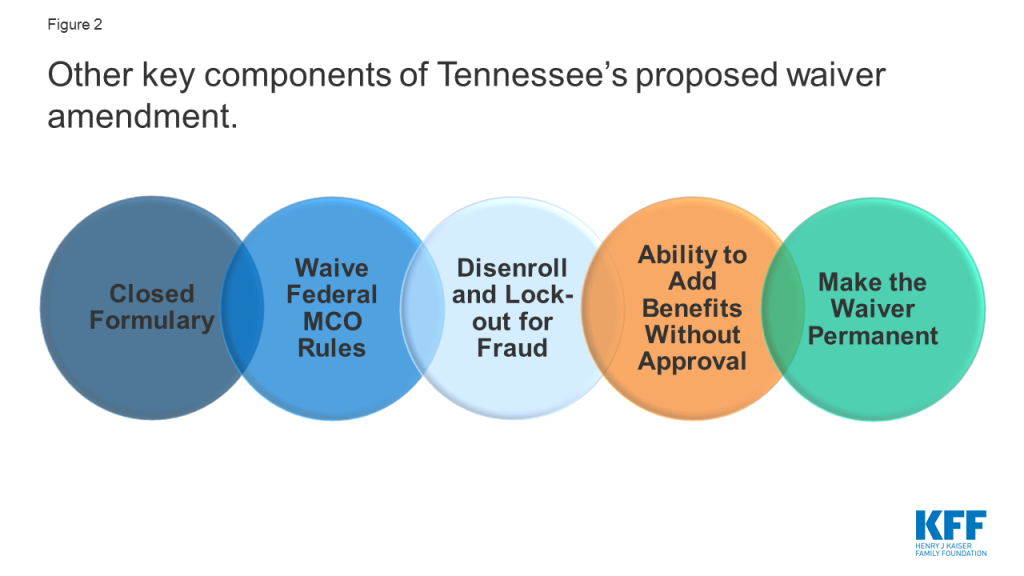
Tennessee is seeking authority to implement a closed formulary for prescription drugs (Figure 2). Under current rules, manufacturers that want their drugs covered by state Medicaid programs must rebate a portion of drug payments back to states (who share these rebates with the federal government). In exchange, Medicaid programs must cover almost all FDA-approved drugs produced by those manufacturers. Although states are required to cover nearly all of the manufacturer’s FDA-approved drugs, states employ a range of strategies to control prescription drug costs and utilization. The Tennessee proposal excludes outpatient prescription drugs from the block grant calculation but also seeks authority to implement a closed formulary, which would allow the state to cover just one drug per therapeutic drug class. The state is not proposing to forgo statutory rebates from drug manufacturers. The state is also proposing to exclude new drugs from the formulary until “market prices are consistent with prudent fiscal administration” or sufficient data exists regarding the drug’s cost effectiveness.16 A similar proposal put forth by Massachusetts was not approved by CMS.17
Figure 2: Other key components of Tennessee’s proposed waiver amendment.
Tennessee is also seeking authority to add covered benefits without CMS approval and a waiver of all federal Medicaid managed care regulatory requirements. Under current law, states have authority to add optional benefits and to increase the amount, duration, and scope of a benefit by submitting a state plan amendment (SPA) (or demonstration waiver amendment). The Tennessee proposal would allow such changes without CMS approval. However, Tennessee would continue to submit SPAs to CMS for any changes that would eliminate or decrease benefits. The proposal also seeks to waive the managed care regulations at 42 CFR Part 438, which detail parameters involving how states contract with and oversee managed care plans. These regulations are extensive and outline federal requirements related to plan enrollment and disenrollment, network adequacy, utilization management, care coordination, member appeals, actuarially sound rates, quality strategies, program integrity as well as other areas.
Tennessee seeks authority to terminate enrollees from coverage and impose up to a 12-month lock out if an individual is determined to be guilty of TennCare fraud. The state seeks to determine additional details through state policy (e.g., when termination is appropriate, the length of the suspension) based on the nature of the offense and does not include these details in the waiver proposal. The state further notes that under certain circumstances it may choose to develop alternatives to termination or suspension of coverage including restricting access to certain benefits (e.g., pharmacy benefits for a member who fraudulently obtained prescription opioids) or conditioning continued coverage on specific member actions (e.g., participation in substance use disorder treatment for enrollees convicted of fraudulently obtaining prescription opioids). Under current federal law, enrollees suspected of fraud are referred to the appropriate law enforcement agency to make a determination of fraud with penalties assigned by the court (not the Medicaid agency),18 and states may not terminate or suspend Medicaid eligibility for individuals that remain eligible for the program.
Tennessee seeks exemptions from future federal requirements, additional flexibility to make program changes without CMS approval, and authority to have its waiver approved on a permanent basis. The proposal seeks exemptions from any new federal requirements as well as new flexibility to make changes to enrollment processes, service delivery systems, and the distribution methodology for the charity care and virtual disproportionate hospital share (DSH) funds without seeking CMS approval. Section 1115 waivers are typically approved for a five-year period and can be extended, usually for three years.19 Tennessee also proposes that CMS should authorize its demonstration on a permanent basis and only require future amendments to the waiver to go through the CMS approval process, which could result in less federal oversight and fewer opportunities for public comment.20
Looking Ahead
Tennessee’s proposed amendment is open for federal public comment through December 27, 2019. Some advocates have raised concerns that the federal public comment period is limited by holidays that fall within the time-period, which may constrain public engagement/comment and that the state has not provided sufficient detail in the current proposal to provide meaningful input on the proposed policy changes.21 Looking ahead, this will be an important waiver to watch as CMS decisions related to financing, treatment of budget neutrality, managed care regulations, and permanent waiver approval (among other areas) will send signals to other states interested in pursuing similar program policies. As a version of a block grant, the waiver mirrors longstanding conservative proposals to cap federal Medicaid spending while giving states added flexibility, which was also a prominent part of the debate to repeal and replace the ACA. However, Tennessee’s modified block grant proposal differs from a traditional block grant, as it would require the federal block grant calculation to adjust for enrollment growth, mitigating some risk for the state while creating a federal financing “floor” instead of a federal financing “ceiling.” This waiver proposal will again test the limits of how the Administration and states can reshape the Medicaid program through Section 1115 waiver authority.
TN has a separate waiver amendment pending with CMS that would cover a limited number of additional children with special health care needs. If approved, TN proposes that this new coverage group initially be excluded from the block grant proposal. ↩︎
Office of Information and Regulatory Affairs, Office of Management and Budget, State Medicaid Director Letter: Medicaid Value and Accountability Demonstration Opportunity, Withdrawn on 11/15/2019, https://www.reginfo.gov/public/do/eoDetails?rrid=129184. ↩︎
The “without waiver” projected costs are part of long-standing federal policy that requires Section 1115 waivers to be budget neutral to the federal government. This means that the federal government cannot spend more under the waiver than it would have been expected to spend without the waiver. To determine “with” and “without” waiver costs, CMS establishes a per member per month (PMPM) spending amount. Tennessee’s waiver has PMPMs for four populations that it proposes to include in the block grant. ↩︎
In August 2018, CMS issued guidance related to Section 1115 budget neutrality indicating methodology adjustments related to calculating “without waiver” expenditures that would be fully phased in for waiver extensions beginning January 1, 2021. Notably, these methodology changes restrict the ability of states with long-running demonstrations to roll over “unspent” budget neutrality savings and to extend baseline spending assumptions for years without adjustment. SMD # 18-009, Budget Neutrality Policies for Section 1115 (a) Demonstration Projects, https://www.medicaid.gov/Federal-Policy-Guidance/downloads/SMD18009.pdf. ↩︎
The Tennessee proposal is not like other capped waiver programs approved in the past. In the past, capped waiver programs have been approved in Rhode Island, Vermont, and Virginia (for a limited population). However, despite the calculation of a federal cap on funds that would be available to the state, in each case the states still had to expend state dollars to be able to draw down the federal funds. ↩︎
Tennessee also indicates in its waiver application that itis open to discussing with CMS how the shared savings could be accomplished within the more traditional federal-match funding model. ↩︎
Such as opioids, maternal and infant mortality, access to care in rural and underserved areas, and tobacco cessation. ↩︎
All Medicaid spending for duals, including long-term services and supports, would be excluded from the block grant. ↩︎
TN is unlike other states in that it does not have a Katie Beckett state plan option or comparable waiver to expand financial eligibility for children with significant disabilities. Instead, TN’s waiver has a demonstration group for children that meet medical criteria with income at or above 211% FPL – enrollment in this group is capped and closed. This group would be excluded from the block grant. ↩︎
If approved and implemented, these provisions could potentially impact people with disabilities and others who need access to and could benefit from breakthrough drugs that offer cure, new treatment etc. ↩︎
The Affordable Care Act (ACA) made Section 1115 waivers subject to new rules about transparency, public input, and evaluation. In February 2012, HHS issued new regulations that require public notice and comment periods at the state and federal levels before new Section 1115 waivers and extensions of existing waivers are approved by CMS. Although the final regulations involving public notice do not require a state-level public comment period for amendments to existing/ongoing demonstrations, CMS has historically applied these regulations to amendments. ↩︎
Abortions occurring at or after 21 weeks gestational age are rare (1.4%) and difficult to obtain, yet these abortions are subject to intense public debate in the news, policy and the law. A new KFF fact sheet provides basic information about abortion later in pregnancy in the US, including what it is, why patients may have an abortion later in pregnancy, and the laws that regulate it. The fact sheet addresses many misconceptions about abortion later in pregnancy by defining key terms, outlining standard clinical practice, and explaining state abortion regulations that place gestational limits on abortion or ban clinicians from using certain medically-approved methods.
A new KFF analysis provides an overview of pregnancy loss, how it is sometimes conflated with abortion, and how abortion restrictions may negatively impact care for those experiencing pregnancy loss. Pregnancy loss – which is extremely common — is an umbrella term that describes both miscarriages and stillbirths.
At a time when abortion restrictions around the country are increasing, these laws have the potential to limit clinicians’ ability to manage pregnancy loss and promote investigations and criminal charges against women experiencing pregnancy loss. The brief also examines how “fetal protection” legislation has been used to criminalize pregnancy loss, particularly in the context of substance use in pregnancy.
A new resource gives an overview of intimate partner violence (IPV) in the US, discusses the populations most impacted, and insurance coverage of IPV screening, counseling, and referral services.
The Affordable Care Act (ACA) changed access to coverage and services for people who have experienced IPV. The ACA requires private plans and Medicaid expansion programs to cover preventative screening for IPV. Many providers have started to incorporate IPV screening and intervention into their practice, but few women are screened for IPV in health care settings.
Despite improved coverage for IPV screening, there are several challenges to implementing IPV screenings in health care settings, including ensuring patient privacy, mandatory reporting laws, and time constraints during appointments. The brief also provides case studies of providers who are trying to better implement IPV care into their practice in response to these barriers.
The brief calls attention to populations at higher risk for IPV, including women living with HIV. In addition to this new brief, KFF also has updated a brief that highlights the link between HIV and IPV for women, and reviews key policy changes that attempt to address the intersection of these issues. Greater Than AIDS, KFF’s national public information campaign, also has a series of informational videos of women telling their stories about living with HIV and overcoming IPV.
Intimate partner violence (IPV), defined as sexual violence, stalking, physical violence, and psychological aggression perpetrated by an intimate partner, affects nearly a third of all Americans at some point in their lives. Although IPV affects men and women of all ages, women, particularly young women and women of color experience IPV at higher rates. An estimated 6.5 million women in the U.S. experience contact sexual violence, physical violence, or stalking by an intimate partner in a single year. People who are victimized by their partners are more likely to experience health problems and both the Centers for Disease Control (CDC) and U.S. Preventive Services Task Force (USPSTF) have identified IPV has a significant public health issue in the US. Evidence supports the role that clinicians have in assisting women who have experienced IPV and reducing adverse outcomes. The USPSTF and the Women Preventive Services Initiative (WPSI) sponsored by Health Resources and Services Administration (HRSA) both recommend that clinicians screen women for violence. As a result, the Affordable Care Act (ACA) required private plans and Medicaid expansion programs to reimburse clinicians when they provide IPV screening and brief intervention services to women as part of their preventive care, at no additional cost to women. This factsheet reviews the prevalence and consequences of IPV and discusses insurance coverage of and access to IPV screening, counseling, and referral services for women in the US.
Table 1: Key Terms and Definitions
Term
Definition
Intimate Partner
A romantic or sexual partner and includes spouses, boyfriends, girlfriends, people with whom they dated, were seeing, or “hooked up.”
Contact Sexual Violence
A combined measure that includes rape, being made to penetrate someone else, sexual coercion, and unwanted sexual contact.
Stalking
Involves a pattern of harassing or threatening tactics used by a perpetrator that is both unwanted and causes fear or safety concerns in the victim.
Physical Violence
Includes a range of behaviors from slapping, pushing or shoving to severe acts that include hit with a fist or something hard, kicked, hurt by pulling hair, slammed against something, tried to hurt by choking or suffocating, beaten, burned on purpose, used a knife or gun.
Psychological Aggression
Includes expressive aggression (such as name calling, insulting or humiliating an intimate partner) and coercive control, which includes behaviors that are intended to monitor and control or threaten an intimate partner.
Reproductive Coercion
Includes forced or coerced sex, sabotage of contraception, or the forcible control of reproductive health by an abusive partner. Reproductive coercion can take the form of hiding, withholding, or destroying a partner’s contraceptives, breaking, poking holes in, or removing a condom in an attempt to promote pregnancy, and threats or acts of violence forcing a victim to have an abortion or carry a pregnancy to term.
The term “intimate partner violence” is often used interchangeably with the term “domestic violence” (DV). IPV occurs across all demographics, but some groups experience higher rates. Most statistics on IPV incidence and prevalence are based on self-report. Many women are hesitant to report IPV for a variety of reasons, including financial dependence on a partner or fear of further abuse. Victims’ characteristics, such as cultural background, socio-economic status, or age, can also shape how they are affected by or speak about IPV. For example, IPV is especially stigmatized in Asian-Pacific Islander communities, so cultural and linguistic differences with providers can lead to lower reported numbers of violence. Therefore, published data may undercount actual incidence, but the National Intimate Partner and Sexual Violence Survey (NISVS) is a population-based, anonymous, random digital dial phone survey and has been ongoing since 2010.
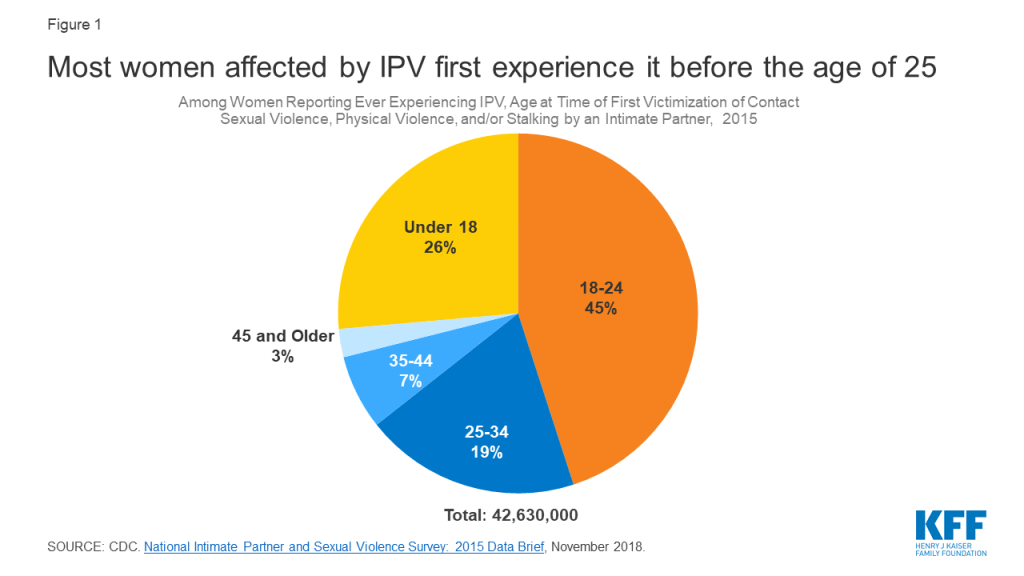
Young Women: IPV affects millions of women in the US of all ages, but nearly three quarters of all victims first experience IPV before the age of 25, with an estimated 11.6 million women experiencing their first victimization between the ages and 11 and 17 (Figure 1).
Figure 1: Most women affected by IPV first experience it before the age of 25
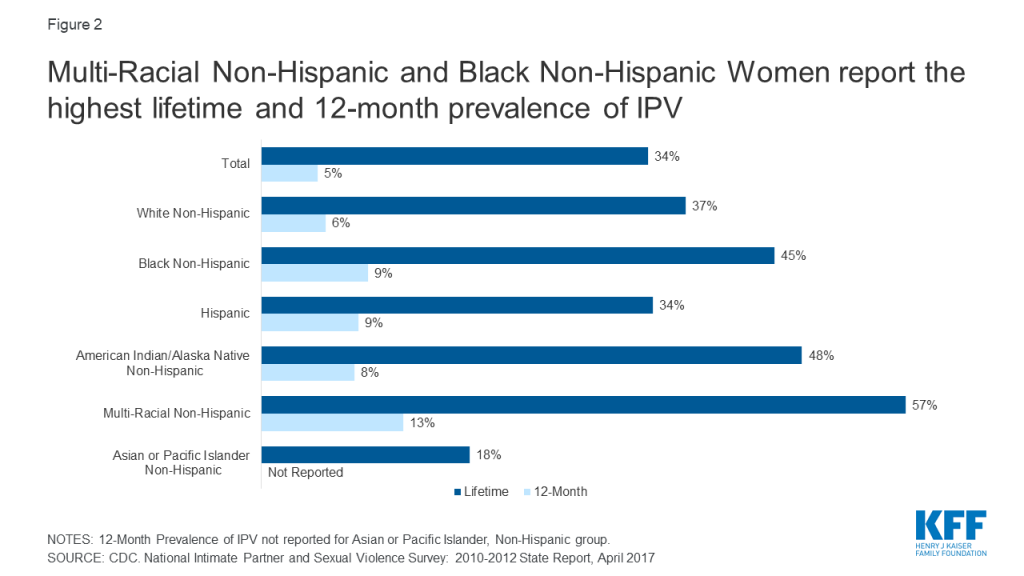
Women of color: Around half of all Non-Hispanic Black, American Indian/Alaska Native women, and Multi-Racial women have experienced IPV at some point in their lives (Figure 2). While women of all economic backgrounds can and do experience IPV, some studies show that as social class increases, risk of victimization decreases.
Figure 2: Multi-Racial Non-Hispanic and Black Non-Hispanic Women report the highest lifetime and 12-month prevalence of IPV
Women with disabilities: Women with disabilities, like women without disabilities, experience physical, sexual, and emotional violence; however, they also experience disability-specific forms (such as interference in taking medications or accessing care) of violence by an intimate partner or caretaker. In one study, women with physical health impairments were 22% more likely than women without disabilities to experience IPV; in the same study, women with mental health impairments were 67% more likely to experience IPV than their nondisabled counterparts. Overall, an estimated 26% of HIV-positive people experience IPV, but this share more than doubles to 55% amongst HIV-positive women.
LGBTQ Individuals: Four in ten (40%) of Gay/Lesbian women and six in ten (60%) Bisexual women report victimization, compared to 35% among heterosexual women.1 Studies of lifetime prevalence of IPV among transgender people range from 31% to 50%, showing similar, if not higher rates of occurrence than other sexual minorities.
Women in the military: A 2013 Department of Veteran Affairs (VA) study found a high prevalence of 12-month IPV perpetration and victimization among active duty service members, at 22% and 30% respectively. Among women Veterans, the prevalence of lifetime IPV victimization is 35%.
Women with substance Abuse Disorder: Studies have found that anywhere from 31% to 67% of women entering substance abuse treatment or methadone clinics have experienced IPV within the last year, and nearly 90% had experienced IPV within their lifetimes. Other studies have found that women who have been abused by an intimate partner are more likely to use or become dependent on substances: one study found a quarter (26%) among those experiencing IPV, compared to 5% in those who had not experienced IPV.
Pregnancy: Research has found that between 3%-9% of pregnant women are estimated to have experienced IPV during pregnancy, which can have a multitude of negative consequences for both women and babies. Pregnant women that have experienced IPV are likely to experience peri-partum depression, obstetric complications, preterm birth, low-birth weight infants, and perinatal death.2 Furthermore, research suggests that many women experience violence in the year leading up to pregnancy.3 Pregnancy offers multiple opportunities for screening and identification of IPV. Research has found that screening multiple times during the course of pregnancy results in higher identification rates than a single screen at the initial prenatal visit. A study of women who have had multiple abortions found that a history of physical or sexual abuse was associated with repeat abortion: this is also an opportunity for screening.
Reproductive coercion is a form of IPV that can include forcible control of reproductive health by an abusive partner. For example, approximately 10.3 million women have reported that an intimate partner has refused to use a condom, or tried to get them pregnant when they did not want to be pregnant.
Estimates of lifetime and 12-month exposure to IPV vary across the states, although the reasons for this variation are not well understood. Rhode Island sees the lowest percent of women experiencing contact sexual violence, physical violence, or stalking victimization by intimate partner at an estimated 4.2%, while South Carolina sees the highest, at 10.6% (Appendix Table 1). A CDC study showed that a higher prevalence of IPV was shown for women who were young, not White, unmarried, had less than 12 years of education, received Medicaid, or had unintended or stressful pregnancies. States that have a larger population of women with these characteristics are likely to see higher rates of IPV prevalence.
What are the Consequences of IPV?
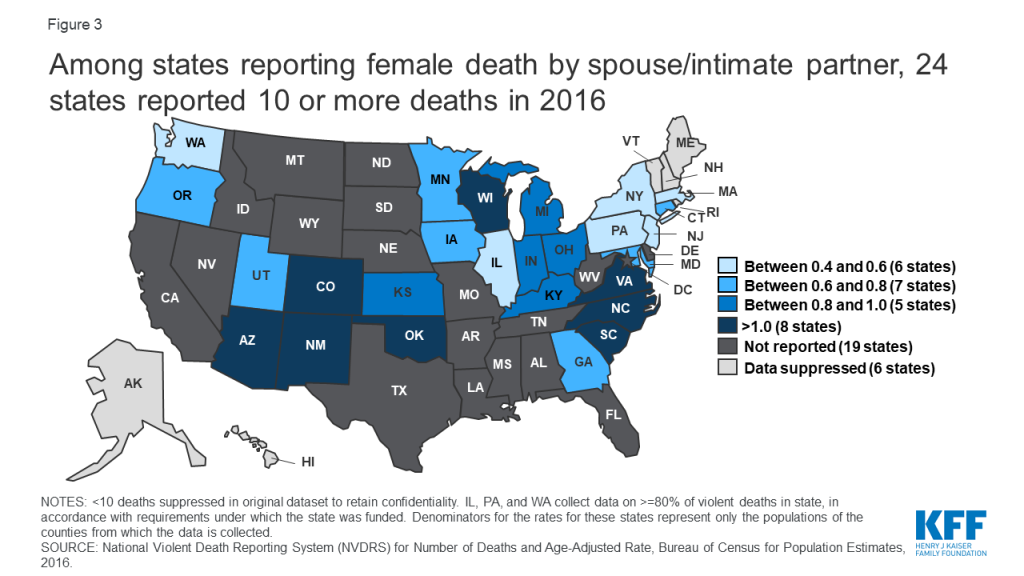
Several major medical and public health organizations, along with the CDC and USPSTF identify IPV as a significant public health issue. Four in ten (41%) of all female survivors experience physical injury related to IPV. Approximately 55% of all female homicide victims in the US are killed by an intimate partner. 31 states report their violent deaths in the Non-National Violent Death Reporting System (NVDRS); of those, 8 states have a rate higher than 1 death by a spouse or partner per 100,000 women: Arizona, New Mexico, Colorado, Oklahoma, Wisconsin, Virginia, North Carolina, and South Carolina (Figure 3).
Figure 3: Among states reporting female death by spouse/intimate partner, 24 states reported 10 or more deaths in 2016
Among women who have experienced IPV in their lifetimes, 69% reported at least one IPV-related impact including safety concerns, PTSD symptoms, injury, missing work or school, needing medical care, becoming pregnant, or contracting a sexually transmitted infection. Many also reported needing assistance with housing, legal advice, and victim advocacy. Among women who experienced IPV in the past 12 months, 55% reported to have experienced one of these IPV-related impacts.4
People who have experienced IPV are more likely to report experiencing negative health outcomes, such as chronic pain, asthma, difficulty sleeping, frequent headaches, gastrointestinal disorders and increased risk of chronic conditions such as arthritis, stroke and cardiovascular disease.5 A study of Adverse Childhood Experiences found that there is a strong relationship between exposure to child maltreatment and household dysfunction (such as witnessing IPV) and many of the leading causes of death in adults: IPV not only raises health risks for the survivor, but children, who are secondary survivors.
It is estimated that the lifetime economic cost of IPV to the US population is $3.6 trillion, with a lifetime per-victim cost of $103,767 for women and $23,414 for men. This number is estimated to include medical costs, lost productivity, criminal justice costs, and other costs, such as victim property loss. Beyond the cost to the overall population, there are costs directly to the victim of IPV, such as medical care or mental health services.
Coverage for IPV Screening and Intervention
The Affordable Care Act (ACA) changed access to coverage and services to people who have experienced IPV, by both providing new protections and in requiring coverage of specific support services. Prior to the ACA, non-group health insurers could deny coverage based on pre-existing conditions, which could include conditions arising out of acts of domestic violence, such as post-traumatic stress disorder and sexually transmitted infections.6 In the years leading up to the passage of the ACA, some states did not prohibit insurance companies from considering IPV as an underwriting criterion.
Additionally, victims of IPV may also be eligible for a Special Enrollment Period (SEP) in the federal marketplace (and in state marketplaces at the state’s discretion), permitting them to enroll for coverage outside of the specified open enrollment window. The ACA requires all private plans and Medicaid expansion programs to reimburse providers when they provide the preventive services recommended by USPSTF and the WPSI, without cost-sharing for the patient.7
Research shows that the implementation of routine inquiry or screening for IPV in healthcare settings can identify those experiencing IPV and survivors of past IPV, increase access to resources, reduce abuse, and improve clinical and social outcomes.8 Both USPSTF and WPSI recommend screening women for intimate partner violence. The WPSI recommendation is broader and states that clinicians should screen adolescents and adult women of all ages for intimate partner violence annually, while the USPSTF recommendation is limited to women of reproductive age. In addition, other professional organizations, including the American College of Obstetricians and Gynecologists (ACOG) and the American Academy of Pediatrics (AAP),9 also recommend that providers conduct intimate partner violence screenings.
Table 2: Recommendations for Screening of Interpersonal Violence Covered by Private Plans and Medicaid Expansion Programs
Organization
Recommendation
U.S. Preventive Services Task Force (USPSTF)
The USPSTF recommends that clinicians screen for intimate partner violence (IPV) in women of reproductive age and provide or refer women who screen positive to ongoing support services.
Health Resources and Services Administration (HRSA)
The Women’s Preventive Services Initiative recommends screening adolescents and women for interpersonal and domestic violence at least annually and, when needed, providing or referring for initial intervention services. Interpersonal and domestic violence includes physical violence, sexual violence, stalking and psychological aggression (including coercion), reproductive coercion, neglect, and the threat of violence, abuse, or both. Intervention services include, but are not limited to, counseling, education, harm reduction strategies, and referral to appropriate supportive services.
Clinicians can choose from several instruments to screen for whether a woman has experienced IPV within the last year within a primary care setting (Appendix Table 2). Most screening tools include questions about current physical violence, psychological aggression, and feeling threatened or afraid. Some cover sexual violence and stalking (Figure 4).
Figure 4: More than 3 in 10 women experience contact sexual violence, physical violence, and/or stalking by an intimate partner in their lifetime
Another approach recommended by Futures Without Violence is Universal Education and Empowerment, in which clinicians talk with all patients about healthy and unhealthy relationships and the health effects of violence, and offer the opportunity for disclosure.
The ACOG recommendation outlines that IPV be screened for privately during new patient visits, annual examinations, initial prenatal visits, each trimester of pregnancy, and the postpartum checkup, while AAP (Bright Futures) recommends that IPV is discussed with mothers at prenatal, newborn, 1-month, 9-month, and 4-year visits.
Interventions and Counseling
The WPSI and USPSTF recommendations state that women who screen positive for IPV be provided or referred to ongoing support services. Most interventions include referral to mental health, social services, local and national IPV advocacy organizations, which can provide safety planning, counseling, cognitive behavioral therapy, and other ongoing support. Other intervention resources include the brief Danger Assessment Tool (Appendix Table 3) to assess the risk for severe violence and an interactive decision aid to facilitate safety planning, myPlan, which is available as a mobile app and website.
Some of these patient resources are hotlines that the patient can call or text (Appendix Table 4). Another option is for clinicians to refer patients to their local DV advocates or mental health services.10 A systematic review of IPV interventions in primary care settings found that 76% of all interventions resulted in at least one statistically significant benefit, whether it be use of IPV resources, safety planning, improvement of health, or reductions in violence. Women receiving an intervention were found to be 60% more likely to end a relationship because it felt unhealthy or unsafe.11
What are the Challenges to Screening?
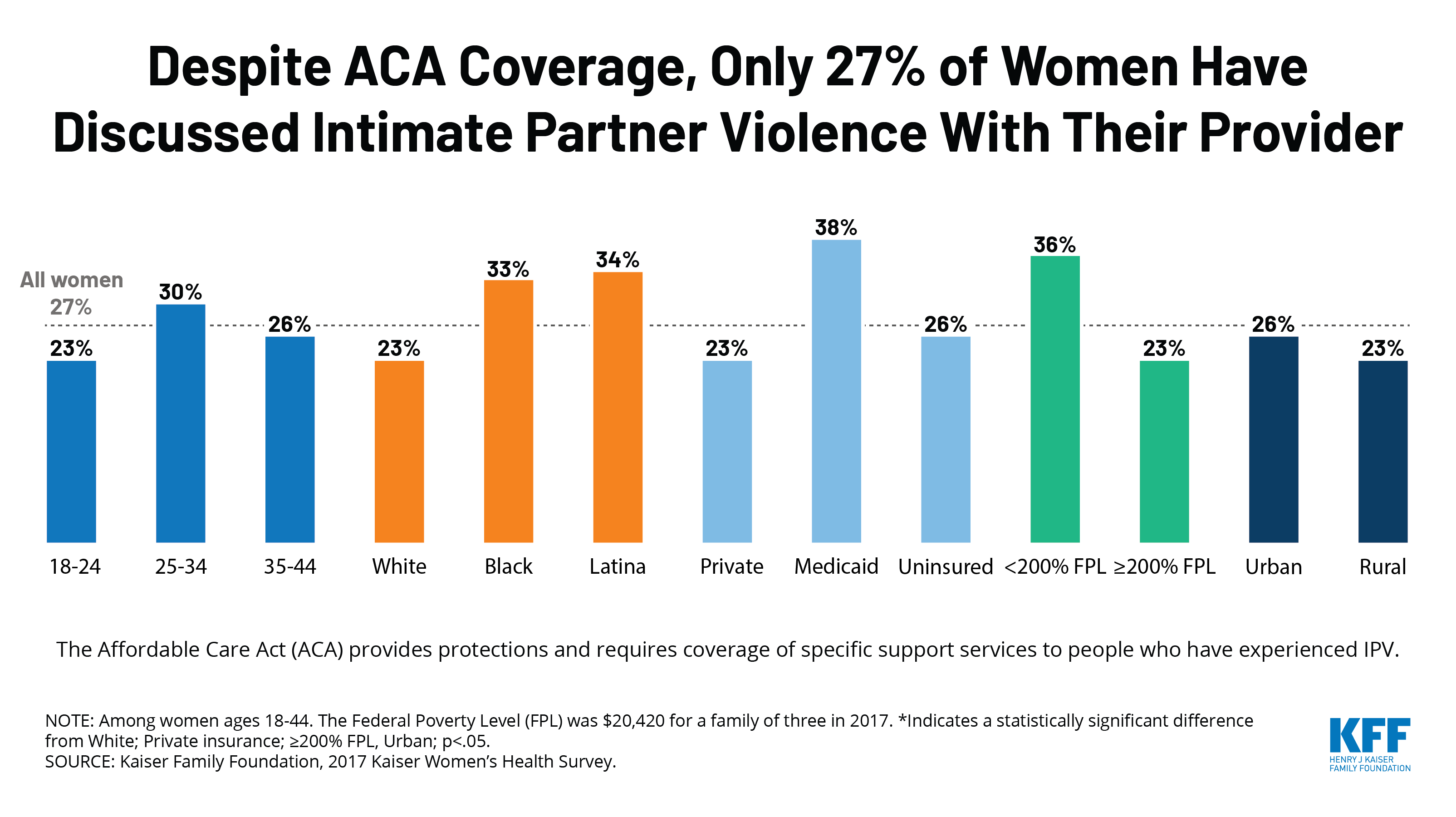
Although several years have passed since the initial recommendation for provider screening of IPV, adoption has been slow. In 2017 only 27% of women reported having discussed IPV with their provider recently (Figure 5). Low-income women, women on Medicaid, and Black or Latina women were most likely to have discussed DV than their counterparts.
Figure 5: Approximately one quarter of women have discussed domestic violence with their provider recently, but rates are higher among Black and Latina women and those with Medicaid
Ensuring privacy is one of the challenges to providers having these conversations with patients, who may not feel safe discussing IPV because their partner or someone else has accompanied them to their visit. Women who experience IPV are unlikely to disclose to a provider in front of their partner, friends, or family. To address this, clinics and providers can have a policy that patients will have at least some private time with their provider during the visit.12 The studies cited in the USPSTF recommendations only included women who could be separated from their partners at the screening phase, intervention phase, or both.
Mandatory reporting laws for IPV differs between states, but most have laws which require the reporting of specified injuries, or use of weapons. However, some clinicians feel that these reporting requirements impinge provider-patient confidentiality and may actually make patients less likely to disclose information. If a disclosure falls under a state’s reporting laws, the provider must submit an injury report to law enforcement or that state’s specified entity.13 Suspected abuse of a minor is required for reporting in all states. Futures Without Violence recommends a provider disclose their limits of confidentiality before beginning an IPV screening.
Other frequently reported barriers include personal discomfort with the issue or lack of knowledge about IPV or institutional policies. 14 Studies show that implementing a universal workflow, training, and screening protocols in an existing program might alleviate some of these barriers. 15,16,17 Some providers have reported that time constraints keep them from building patient rapport, which could lead to a positive IPV disclosure. Including nurses, nursing assistants, and other non-physician staff in screening protocols could help relieve some of the issues with time constraints.18,19
Other challenges include a fear that patients will be offended by being screened, misconception regarding a patient’s risk of IPV, or not realizing that domestic violence is a significant problem for their patient populations. 20,21 Studies have found that interdisciplinary methods of formal education, in-service training, and continuing education can assuage personal perceptions and feelings about domestic violence.22
Examples of Implementation
Despite the challenges, there are several examples of successful implementation in different settings. A systematic review of 17 programs that evaluated IPV screening found that programs that included a comprehensive approach and institutional support were effective in increasing IPV screening and disclosure rates. Effective screening protocols, initial and ongoing training, and immediate access/referrals to onsite or offsite support services helped to improve provider screening.23 Establishing provider relationships with community agencies in training sessions was found to raise the comfort level of staff, in both screening and in referring to services. Of note, HRSA is implementing a multi-year strategic framework to improve the response of health care systems to IPV.
There are multiple examples of health systems that have implemented both routine screening as well as intervention mechanisms to support, including at the Veterans Health Administration (Case Study 1: Veterans Affairs), and the not-for-profit integrated health system Kaiser Permanente (KP) (Case Study 2: Kaiser Permanente).
Case Study 1: Veterans Affairs
In May 2012, the U.S. Department of Veterans Affairs (VA) chartered an IPV task force, which would develop a national plan for the VA to implement a trauma informed care approach. In its Plan for Implementation of the DV/IPV Assistance Program, the Veterans Health Administration (VHA). These recommendations included expanding screening, prevention, and intervention services for men and women veterans, introducing an employee assistance program for those experiencing IPV, changing the language clinicians use to speak about IPV, and interventions for individuals who commit IPV. After pilot testing the plan in select sites, as of January 2019, the VHA requires all VA medical centers (VAMCs) to implement and maintain the program.
A 2019 study of 11 VAMCs found several successful clinical practices that were implemented through the program. These included the use of screening tools for primary IPV screening and secondary risk assessment, resource provision, community partnerships, and co-location of mental health resources. While VAMCs faced some of the same challenges as other providers discussed above, the study was able to identify facilitators to combat these challenges, such as engaging IPV champions. The VA Office of Research and Development is currently conducting longer studies to understand how intervention can help improve health outcomes.
SOURCES: Veterans Health Administration, Directive 1198: Intimate Partner Violence Assistance Program, January 2019.
Case Study 2: Kaiser Permanente
Since 2001, Kaiser Permanente Northern California,(KP) a large integrated health care organization that is not associated with KFF, has been implementing a “systems model” approach to improving screening and response to IPV and IPV identification has significantly increased. This comprehensive approach leverages the entire healthcare environment, and is comprised of five:
1) visible messaging for patients throughout the healthcare setting;2) private, routine clinician inquiry (with intervention and referral for positive screens);3) services by behavioral health clinicians for mental health needs and safety planning;4) partnerships with IPV advocacy organizations for crisis response and ongoing support and legal services; and5) oversight by local medical center leadership.
As part of integrating IPV screening and intervention into clinical care settings, KP uses health information technology, including tools in the electronic health record, to support clinician inquiry, intervention, documentation, and referral as well as patient privacy. Diagnostic information does not appear on visit summaries, bills, or patient portals. Performance improvement methods using de-identified databases help sustain and guide progress across clinical departments and medical centers.
While earlier studies of the effectiveness of the IPV screening and intervention tended to focus on outcomes such as increased screening provided by clinicians, increased awareness of the medical facility as a resource for IPV related issues, and increased member satisfaction, there has been a recent push on studying the effects of intervention. One study interviewing women with a past or current history of IPV found that survivors placed emphasis on interventions that protected safety, privacy, and autonomy, such as interventions that did not require IPV disclosure. Another analysis of women’s perceptions of appropriate interventions also found that women were looking for nonjudgmental, nondirective, and individually tailored interventions. In both the cases of the VA and KP, there is emphasis placed on the success of interventions implemented after screening is complete.
Looking Forward
With nearly 8 million women in the US experiencing IPV annually, and nearly 45 million over the course of their lifetimes, IPV poses a significant, multi-faceted public health problem. One important component of both reducing violence and the health burdens of that violence is the role of health care providers in early detection and treatment of IPV. USPSTF and WPSI highlight studies that found lower rates of IPV in women who underwent screening and intervention.24 Furthermore, given the complex nature of IPV and the wide range of its health consequences, more providers are striving to develop IPV screening and intervention services that align with related efforts in the health care system, including providing trauma-informed care, addressing the role of social determinants of health, and improving access to mental health and addiction services.
As a result of the ACA’s preventive services coverage requirement, IPV screening is covered under most private health plans and Medicaid expansion groups. The ACA also made policy changes related to IPV, including protecting coverage access for people with pre-existing conditions and offering them special enrollment periods.
In addition to coverage, the USPSTF and WPSI recommendations imply that screening and counseling should be standard practice. As states expand Medicaid or more people become privately insured, more become eligible for coverage of these screening and counseling services, which could play an important role in reducing IPV victimization. In addition to coverage for screening, more providers are implementing interventions to connect patients to services. These efforts, along with continued education and awareness about IPV and expanded resources could improve outcomes and reduce the burden of violence experienced by millions of women in the US.
The authors thank Brigid McCaw MD, MPH, MS, FACP for her helpful review and input on this brief.
Appendices
Appendix Table 1: 12 Month and Lifetime Prevalence of Contact Sexual Violence, Physical Violence, and/or Stalking Victimization by Intimate Partner, U.S. Women 2010-2012 Estimates
1. Have you ever been emotionally or physically abused by your partner or someone important to you?
Dichotomous scale, clinician administered survey; scores range from 0-5, with any positive response considered a positive screen.
32-93%; 55-99%
2. Within the last year, have you been hit, slapped, kicked or otherwise physically hurt by someone?
3. (If applicable): Since you’ve been pregnant, have you been slapped, kicked or otherwise physically hurt by someone?
4. Within the last year, has anyone forced you to have sexual activities? (circle all that apply): husband, ex-husband, boyfriend, stranger, other, multiple.
5. Are you afraid of your partner or anyone you listed above?
U.S. Congress. United States Code, Title XXVII, The Public Health Service Act. Enacted October 2009. ↩︎
Affordable Care Act (ACA) requires coverage of services recommended by USPSTF as well as women’s preventive services recommended by HRSA, which currently contracts with WPSI to make recommendations. ↩︎
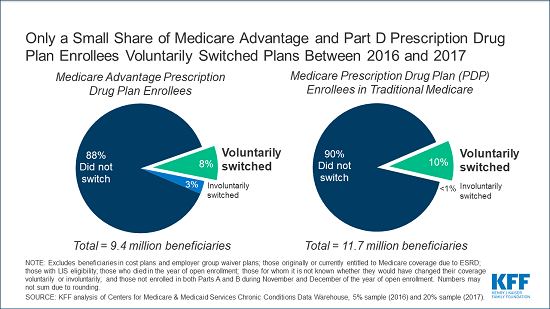
A new KFF analysis finds that a relatively small share of people with Medicare Advantage or stand-alone Medicare Part D prescription drug coverage voluntarily switch plans during Medicare’s open enrollment period, which runs annually from Oct. 15 to Dec. 7.
With less than a week remaining for beneficiaries to make their selections, shopping around among plans is important, since plans can vary significantly and change from year to year, which can have a large impact on enrollees’ coverage and costs.
The analysis finds that, among beneficiaries without low-income subsidies, 8 percent of those in Medicare Advantage plans with prescription drug coverage voluntarily switched to another plan during the 2016 open enrollment period for the 2017 plan year. Similarly, only 10 percent of beneficiaries without low-income subsidies in Part D stand-alone drug plans voluntarily switched to another plan during the 2016 open enrollment period.
The data reflect a longstanding pattern where a substantial majority of Medicare’s private plan enrollees don’t choose to switch plans in any given year. During each of the open enrollment periods between 2007 and 2016, the share of enrollees without low-income subsidies voluntarily switching plans for the coming year ranged between 6 and 11 percent for people in Medicare Advantage drug plans, and between 10 and 13 percent among those in stand-alone drug plans.
According to an analysis of data from the Centers for Medicare & Medicaid Services (CMS), one-third of Medicare beneficiaries living in the community said it was very difficult or somewhat difficult to compare Medicare options in 2017, while nearly half said they rarely or never review or compare their Medicare options.
Low rates of plan switching could indicate that many beneficiaries are generally satisfied with their current plan. Another explanation could be that many beneficiaries may find the process of comparing plans too challenging, are unaware of open enrollment, or have limited confidence in their ability to choose a better plan.
CMS encourages beneficiaries to shop around for plans each year to potentially save money or get new benefits. This is valuable advice, because private plans can vary significantly in premiums, deductibles and other cost sharing, provider and pharmacy networks, and drugs covered, among other features.
Women in the United States experience high rates of violence and trauma, including physical, sexual, and emotional abuse. Women with HIV, who represent about a quarter of all people living with HIV in the U.S., are disproportionally affected.1,2,3 Intimate partner violence (IPV), a term often used interchangeably with domestic violence (DV), in particular, has been shown to be associated with increased risk for HIV among women, as well as poorer treatment outcomes for those already diagnosed.4,5 In addition, it has been suggested that women are at greater risk of experiencing violence upon disclosure of their HIV status to partners.6
Given the role that IPV plays in HIV risk, transmission, and care and treatment, decreasing the prevalence of IPV and mitigating its effects is an important part of addressing the HIV epidemic among women in the United States. Policy changes, including those related to health care and coverage, represent one mechanism for addressing the intersection of HIV and IPV. After highlighting key statistics about IPV generally as well as the link between HIV and IPV, this brief will review key policy changes and initiatives that attempt to address these challenges.
Table 1: Key Terms and Definitions
Term
Definition
Intimate Partner
A romantic or sexual partner, including spouses, boyfriends, girlfriends, people with whom an individual dated, were seeing, or “hooked up.”
Contact Sexual Violence
A combined measure that includes rape, being made to penetrate someone else, sexual coercion, and unwanted sexual contact.
Stalking
Involves a pattern of harassing or threatening tactics used by a perpetrator that is both unwanted and causes fear or safety concerns in the victim.
Physical Violence
Includes a range of behaviors from slapping, pushing or shoving to severe acts that include being hit with a fist or something hard, kicked, hurt by pulling hair, slammed against something, hurt by choking or suffocating, beaten, burned on purpose, or assaulted with a weapon.
Psychological Aggression
Includes expressive aggression (such as name calling, insulting or humiliating an intimate partner) and coercive control, which includes behaviors that are intended to monitor and control or threaten an intimate partner, including through digital technologies.
Reproductive Coercion
Includes forced or coerced sex, sabotage of contraception, or the forcible control of reproductive health by an abusive partner. Reproductive coercion can take the form of hiding, withholding, or destroying a partner’s contraceptives, and threats or acts of violence forcing a victim to have an abortion or carry a pregnancy to term.
Women in the United States experience high levels of violence, including sexual violence, across their lifetimes, with the most recent data indicating that approximately 44% of US women report ever having experienced unwanted sexual contact.7 Moreover, an estimated 36% of US women report ever having experienced contact sexual violence, physical violence, or stalking by an intimate partner in their lifetime.8
Figure 1: Experience of Intimate Partner Violence and Women, Overall and with HIV
While IPV can and does occur among all groups, some groups face higher rates of violence. 57% of Multi-Racial Non-Hispanic women, 48% of American Indian/Alaska Native Non-Hispanic Women, and 45% of Black Non-Hispanic Women report facing IPV in their lifetimes (and those shares are likely to be under reported due to a variety of factors).9 Social class, LGBTQ identification, and disability status are also associated with higher rates of IPV. 10,11,12
Overall, an estimated 26% of HIV-positive people are estimated to have experienced physically violence by a romantic or sexual partner and 17% are estimated to have been “threatened with harm or physically forced to have unwanted vaginal, anal, or oral sex”13 ; Among HIV positive women, IPV is even more prevalent, reported by 55% of women living with HIV.14 In addition to the traumatic impact IPV has on all women, the experience of trauma and violence is also associated with poor treatment outcomes and higher transmission risk among HIV positive women.15,16
In many cases, the factors that put women at risk for contracting HIV are similar to those that make them vulnerable to experiencing trauma and IPV. Women in violent relationships are at a four times greater risk for contracting STIs, including HIV, than women in non-violent relationships and women who experience IPV are more likely to report risk factors for HIV.17 A nationally representative study found 20% of HIV positive women had experienced violence by a partner or someone important to them since their diagnosis and of these, with half perceiving that violence to be directly related to their HIV serostatus.18 Indeed, these experiences are interrelated and can become a cycle of violence, HIV risk, and HIV infection (see Figure 2). In this cycle, women who experience IPV are at increased susceptibility for contracting HIV and HIV positive women are at greater risk of experiencing IPV.19,20
Figure 2: Cycle of Violence, HIV Risk, and HIV Infection/Transmission
Key Policies Addressing Intimate Partner Violence: The ACA and Beyond
Several key policy changes have occurred in recent years that either directly or indirectly address IPV among women with HIV, particularly changes ushered in by the Affordable Care Act (ACA).
Policy Changes Under the ACA
The ACA, signed into law in 2010, expanded access to affordable health coverage and reduced the number of uninsured Americans through the creation of federal and state health insurance marketplaces and by expanding the Medicaid program, as well as through other reforms. In addition, there are several provisions that are specifically designed to protect individuals who have experienced IPV, including those with HIV. These include explicit protections in the law, as well as policy enacted through regulatory interpretation and guidance.
The elimination of pre-existing condition exclusions and premium rate setting based on health status, such as HIV, and other factors, including whether someone is a survivor of IPV. Prior to the ACA, non-group private health insurers could deny coverage based on pre-existing conditions, which could include conditions arising out of acts of domestic violence, such as post-traumatic stress disorder and sexually transmitted infections.21,22 While some states enacted comprehensive IPV related anti-discrimination insurance protections, not all did so. Under the ACA, pre-existing condition exclusions are prohibited and rates are permitted to vary only by age, geographic location, and smoking status. This provision is important for HIV positive domestic violence survivors who in the past could have faced denials or higher rates based on experience of IPV (or use of related health services), their gender, or their HIV status. However, individuals with non-ACA compliant plans, such as short-term limited duration (STLD) plans may be turned down for coverage or charged more if they have a health condition such as HIV or have a history of experiencing IPV (or using health services related to IPV experience).23
Coverage of a range of no-cost preventive services for women including screening and counseling for IPV. Under the ACA, screening and counseling for IPV is a preventive service that must be covered without cost-sharing by most insurers, including most private health plans and all Medicaid expansion programs, in states that have expanded. While, there is no requirement that traditional state Medicaid programs provide no-cost IPV screenings as part of the state benefit package, they are encouraged to do so – if states choose to cover a suite of preventive services, they can seek a 1% increase in their federal matching rate for those services. As of June 2019, 15 states have elected this opportunity.24 Screening might occur during a routine office visit or well-woman exam and might entail a provider asking a patient about their current and past relationships. The Women’s Preventive Services Initiative (WPSI) recommends counseling if IPV/DV is disclosed, which can consist of assessing the patient’s safety, referring to mental health services, and providing linkage to support services and resources (Appendix Table 1).25 HIV screening and pre-exposure prophylaxis (PrEP), an HIV prevention medication (starting 2021), are also covered preventive services.
Allowance for married survivors of IPV to file taxes separately from their spouse and claim a premium tax credit. To help make insurance coverage more affordable, the ACA provides advanced premium tax credits to individuals between 100% and 400% of the federal poverty level who purchase private insurance through state and federal exchanges. Per the ACA, a married individual needs to file taxes jointly with their spouse to be eligible for premium tax credits which can help make health insurance coverage purchased through a marketplace more affordable. The Department of Treasury and Internal Revenue Service (IRS) issued guidance and subsequent regulations in April and July of 2014 that permit a survivor of IPV living apart from their spouse at the time of tax filing and unable to file a joint return, to claim a premium tax credit while using a married filing separately tax status for up to three consecutive years.26 Allowing survivors to file using this tax status and still obtain premium tax credits is designed to protect them from having to interact with an abuser at tax time while still being able to access insurance subsidies.
Special Enrollment Period for survivors of IPV. While enrollment in private health plans through the insurance marketplaces must typically occur during a specific open enrollment period in most cases, there are exceptions. Individuals experiencing certain qualifying events, such as a marriage, divorce, or birth of a child, may be granted a Special Enrollment Period (SEP) and permitted to enroll outside of the specified open enrollment window. In 2014, a limited 2-month SEP was created for spousal victims of IPV and their dependents and in 2015 the SEP was extended to include any member of a household who is a victim of intimate partner violence.27 The SEP applies to federally facilitated marketplaces; state-run marketplaces may optionally provide SEPs related to experience of IPV.
Non-grandfathered plans in the individual and small group markets and Medicaid expansion programs now cover mental health and substance use disorder services as one of ten “essential health benefit” categories. The ACA requires that individual and small group plans, sold both inside and outside the health insurance marketplaces, as well as Medicaid expansion plans, provide ten categories of essential health benefits including among others: ambulatory services; hospitalization; prescription drugs; and of note in this instance, mental health and substance use disorder services. Prior to this requirement, it was estimated that about one-third of those enrolled in individual market products lacked coverage for substance use services and about one in five were without coverage for mental health services.28 In addition, the ACA applies Mental Health Parity and Addiction Equity Act of 2008 standards to the individual and small group insurance markets which means that these services must now be covered at parity with medical and surgical benefits. Numerous studies have observed an association between IPV and an array of mental health conditions, including Post Traumatic Stress Disorder (PTSD), depression, and anxiety, among others.29,30 People with HIV experience mental health and substance misuse comorbidities at higher rates than the population overall.31,32,33 Similarly, the rate of substance misuse among women experiencing IPV is 26%, compared to 5% among those not experiencing.34 Access to mental health and substance use services, therefore, is an important component of comprehensive health coverage for many people living with HIV and particularly for those dealing with current or past IPV and trauma.
Maternal and child home visitation program includes focus on domestic violence. A 2013 study of 260 HIV positive women with a mean age of 46, found that 86% of those surveyed were mothers and 31% had children living at home.35 Given that a large share of women with HIV are likely to be parents and that women with HIV are disproportionately affected by IPV, home visits that include opportunities to address domestic violence could be particularly important for this population. The ACA established the Maternal, Infant, and Early Childhood Home Visiting (MIECHV) program, a grant program that provides states with resources to respond to the needs of children and families in at risk communities and includes specific opportunities to address domestic violence. The ACA provided the first five years of funding for the program. Participating states are required to demonstrate an improvement in 4 of 6 benchmarks, one of which is a reduction in crime or domestic violence with its performance measure being screening for IPV. In 2018, 82% of MIECHV caregivers were screened for IPV, up from 74% in 2017.36 In February 2018, the Program was allocated $400 million per year through fiscal year 2022 and in September 2018, 56 states, territories, and nonprofit organizations were awarded grants totaling approximately $361 million through the program.37
Federal grant program to support pregnant teens and women, including those experiencing domestic and sexual violence, established under the Pregnancy Assistance Fund. The ACA also established a competitive grant program for states and tribes to support pregnant and parenting teens and women, allowing states to use funds to provide intervention and support services to pregnant women who are victims of domestic, sexual violence or stalking. The fund is also available to support the provision of assistance and training related to these issues for federal, state, local and other partners. In FY18, 25 grantees were awarded a total of $25 million. Of these, addressing domestic or interpersonal violence is specifically included in the project description provided on HHS.gov for six grantees.38
Other Policy Initiatives
In addition to ACA-related changes, several other policy initiatives could also help address the intersection of HIV and IPV, including:
Reauthorization of The Violence Against Women Act.39 The Violence Against Women Act, first signed in 1994, dedicated over $1.5 billion in funding towards the investigation and prosecution of violent crimes against women and towards “victim’s services,” including, rape crisis centers, battered women’s shelters, and other sexual assault or domestic violence programs. These services are often the resources recommended by providers to those who screen positively for IPV (Appendix Table 1) VAWA has been reauthorized several times, most recently in 2013. The last authorization lapsed and expired in December of 2018. As of August 2019, the Violence Against Women Reauthorization Act of 2019 had been passed by the House, and is awaiting vote by the Senate.
The National HIV/AIDS Strategy. The National HIV/AIDS Strategy (NHAS), unveiled in 2010 under President Obama and updated in 2015 through 2020, has goals of reducing new HIV infections, increasing access to care and improving health outcomes for those living with HIV, reducing HIV-related disparities and health inequities, and achieving a more coordinated national response to the HIV epidemic. In order to reduce new HIV infections, NHAS recommends a combination of evidence-based approaches, including supporting and strengthening patient-centered IPV screening and linkage to services (housing, education, employment) for those who screen positively. To address the challenge posed by IPV for accessing and adhering to stable care, the NHAS suggests that a trauma-informed approach to care, which seeks to minimize the chances of re-traumatizing those who are trying to heal, may be applicable in an HIV care setting. The Trump administration is currently working on an updated version of the NHAS but it is not yet known whether addressing IPV will feature in the strategy.
“Ending the HIV Epidemic” Initiative In February of 2019, President Trump announced a new initiative with the goal of ending the HIV epidemic in the United States within 10 years.40 The Ending the HIV Epidemic proposal requests $291 million in the FY 2020 budget to begin the multiyear initiative. Although the plan does not specifically outline funding for those experiencing IPV or those with HIV at risk for IPV, the plan does aim to reduce new infections by 90% by 2030. Substantial localized planning will occur within the 48 counties, 7 states, Washington, D.C., and San Juan, Puerto Rico targeted in year one of the initiative. It is possible that addressing IPV as part of “ending HIV” strategy will feature to varying degrees across jurisdictions which will be charged with developing their own plans to reach the initiative’s goals.
Funding to address the intersection of IPV & HIV among women.41 In December 2019, the Health and Human Services’ (HHS) Office on Women’s Health (OWH) awarded new funding to community based organizations to “provide a community-level focus on the prevention of, screening for, and response to IPV and its intersection with HIV infection.” Awards totaling $3.1 million were provided to four organizations, each located in one of the jurisdictions prioritized in the Ending the HIV Epidemic initiative: University of Texas Southwestern Medical Center in Dallas, TX, University of North Texas Health Science Center in Fort Worth, TX, The Center for Women and Families, , in Louisville, KY, and the Institute of Women and Ethnic Studies, in New Orleans, LA.
Funding to provide HIV positive domestic violence survivors with housing. As part of a demonstration project, in 2016 the Departments of Justice and Housing and Urban Development awarded $9.2 million to eight local programs to provide stable housing to HIV positive survivors of domestic violence in an effort to prevent homelessness.42
Looking Ahead
Addressing trauma and violence experienced by women with and at risk for HIV aims to provide care and support in the immediate term, but in the longer term, may also be an important contribution in combating the HIV epidemic. Key policy changes, including those ushered in by the ACA and other opportunities outlined above, provide important vehicles for targeted interventions to address IPV in HIV positive and at risk women.
Despite these policy changes, several challenges remain. With respect to screening and counseling for IPV, as with all preventive services, coverage does not necessarily equate with uptake by consumers or with the service being offered by providers. Inclusion of IPV/DV screening as a reimbursable service and the associated federal and advisory body recommendations may drive up some provision of the intervention but additional efforts may be necessary to generate more widespread provider led screenings. A 2017 study found that just 27% of reproductive age women have discussed IPV with a provider recently, demonstrating that these screenings are still relatively rare.43 (See Women’s Preventive Services Initiative (WPSI) for a compilation of IPV screening tools.) In addition, maintaining confidentiality for women seeking violence-related care can sometime be a challenge and create barriers to access. Private insurance plans typically send an Explanation of Benefits (EOB) that documents provided services to the principal policy holder which may deter women from accessing services. In addition, mandated reporting of IPV in many states, including requirements for providers to file police reports or reports with a public health department or other state entity, may also deter women from seeking services.44 Beyond these challenges related to IPV more generally, there is also a need to raise awareness among providers and women at risk for and living with HIV about the interrelatedness between HIV and intimate partner violence.
Finally, as states make different policy decisions, particularly around the ACA, opportunities for enrollees vary across the nation. For example, whether states with state based marketplaces decided to implement the SEP for victims of IPV discussed above is one such policy decision. Additionally, states are still making decisions about whether to expand their Medicaid program to all those below 138% of the Federal Poverty Level (currently 37 states (including DC) have expanded), and this has significant implications for access to coverage for low-income individuals. Given that multiple studies have demonstrated that HIV and IPV both trend with poverty, access to Medicaid expansion, including the associated IPV screening, could play a particularly important role for these populations.45 In addition, access to services, varies by coverage and as noted, IPV screening is not a required covered service for those in traditional Medicaid.
Key provisions under the ACA as well as other policy developments discussed above could present significant opportunities to address IPV, for both women living with HIV as well as those at risk. At the same time, efforts to eliminate all or parts of the ACA could remove many of these protections.
Appendix
Appendix Table 1: Resources for Addressing Intimate Partner Violence
E. L. Machtinger, J. E. Haberer, T. C. Wilson, and D. S. Weiss. Recent Trauma is Associated with Antiretroviral Failure and HIV Transmission Risk Behavior Among HIV-Positive Women and Female-Identified Transgenders, AIDS and Behavior. 16:8(2012): 2160–2170. ↩︎
A.C. Gielen, K.A. McDonnell, J. G. Burke, and P. O’Campo. Women’s Lives After an HIV-Positive Diagnosis: Disclosure and Violence. Maternal and Child Health Journal. 4:2(2000):111-119. ↩︎
E. L. Machtinger, T. C. Wilson, J. E. Haberer, and D. S. Weiss, Psychological Trauma and PTSD in HIV-Positive Women: A Meta-Analysis, AIDS and Behavior. 16:8(2012): 2091-2100. ↩︎
R. A. C. Siemieniuk, et al. The Clinical Implications of High Rates of Intimate Partner Violence Against HIV-Positive Women. JAIDS: Journal of Acquired Immune Deficiency Syndromes. 64:1(2013): 32-38. ↩︎
E. L. Machtinger, J. E. Haberer, T. C. Wilson, and D. S. Weiss. Recent Trauma is Associated with Antiretroviral Failure and HIV Transmission Risk Behavior Among HIV-Positive Women and Female-Identified Transgenders, AIDS and Behavior. 16:8(2012): 2160–2170. ↩︎
S. Zierler, et al. “Violence Victimization After HIV Infection in a U.S. Probability Sample of Adult Patients in Primary Care.” American Journal of Public Health. 90:2(2000): 208-215. ↩︎
E. L. Machtinger, T. C. Wilson, J. E. Haberer, and D. S. Weiss. “Psychological Trauma and PTSD in HIV-Positive Women: A Meta-Analysis.” AIDS and Behavior. 16:8(2012): 2091-2100. ↩︎
M. Okuda, et al, Mental Health of Victims of Intimate Partner Violence: Results From a National Epidemiologic Survey, Psychiatric Services. 62:8 (2011),959-62. ↩︎
G. Dillon, R. Hussain, D. Loxton, and S. Rahman, Mental and Physical Health and Intimate Partner Violence Against Women: A Review of the Literature, International Journal of Family Medicine, vol.2013. ↩︎
E. L. Machtinger, T. C. Wilson, J. E. Haberer, and D. S. Weiss, Psychological Trauma and PTSD in HIV-Positive Women: A Meta-Analysis, AIDS and Behavior. 16:8(2012): 2091-2100. ↩︎