Health and Health Care Experiences of Immigrant Parents and Their Children During the Second Trump Term
Summary
Actions taken by the Trump administration and Congress will likely have major impacts on health and health care for immigrant families, including children. About one in four children in the U.S. has at least one immigrant parent, and the vast majority of these children are U.S. citizens. President Trump’s increased immigration enforcement activity has contributed to significant levels of fear and uncertainty among the immigrant community, which can negatively affect the health and well-being of immigrant families and make them more reluctant to access health coverage as well as health care. Longstanding research also shows that such fears can have lifelong negative impacts on the physical and mental health of children.
This brief provides data on the health and health care experiences of immigrant parents and their children in the U.S. amid the current policy environment. Immigrant parents include naturalized citizens, lawfully present immigrants, and likely undocumented immigrants who report having a child under age 18 living in the home with them. As noted, the vast majority of children with an immigrant parent are citizens (in some cases by birthright citizenship, which President Trump has sought to restrict in a case currently before the Supreme Court). This brief is based on a KFF survey conducted in partnership with The New York Times in Fall 2025, prior to the recent ramp up of public Immigration and Customs Enforcement (ICE) activity in Minneapolis and several other areas of the country. It builds on the 2023 KFF/LA Times Survey of Immigrants and two additional surveys conducted by KFF in 2024 and 2025. Separate reports from the Fall 2025 survey examine immigrants’ health care experiences overall, experiences amid increased immigration enforcement, and the political implications of immigrant voters’ views on immigration enforcement.
Key takeaways include:
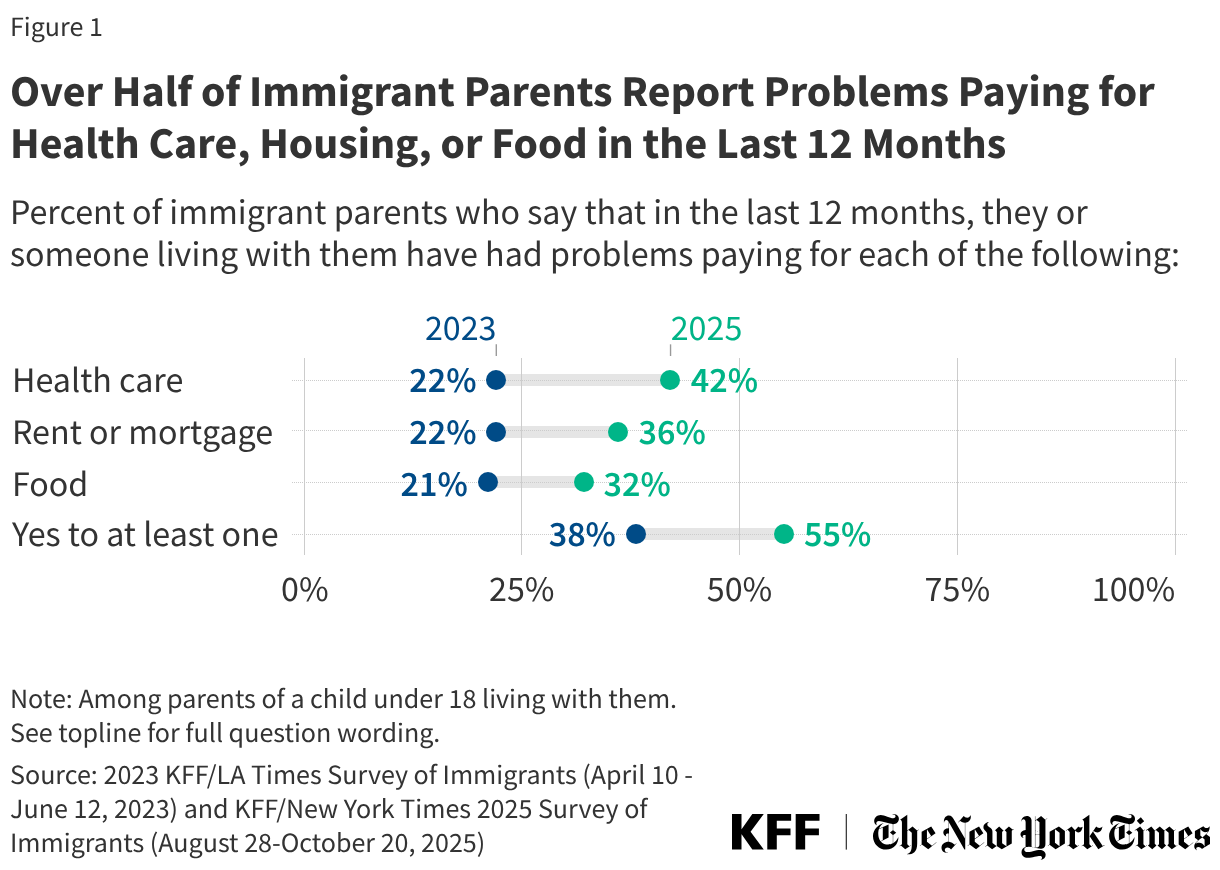
- Immigrant parents report experiencing increased economic challenges, including paying for health care. About half (52%) of immigrant parents say that it has been harder to earn a living since January 2025. Additionally, over half (55%) say they have had problems paying for health care, housing, or food in the past 12 months, with these shares increasing since 2023.
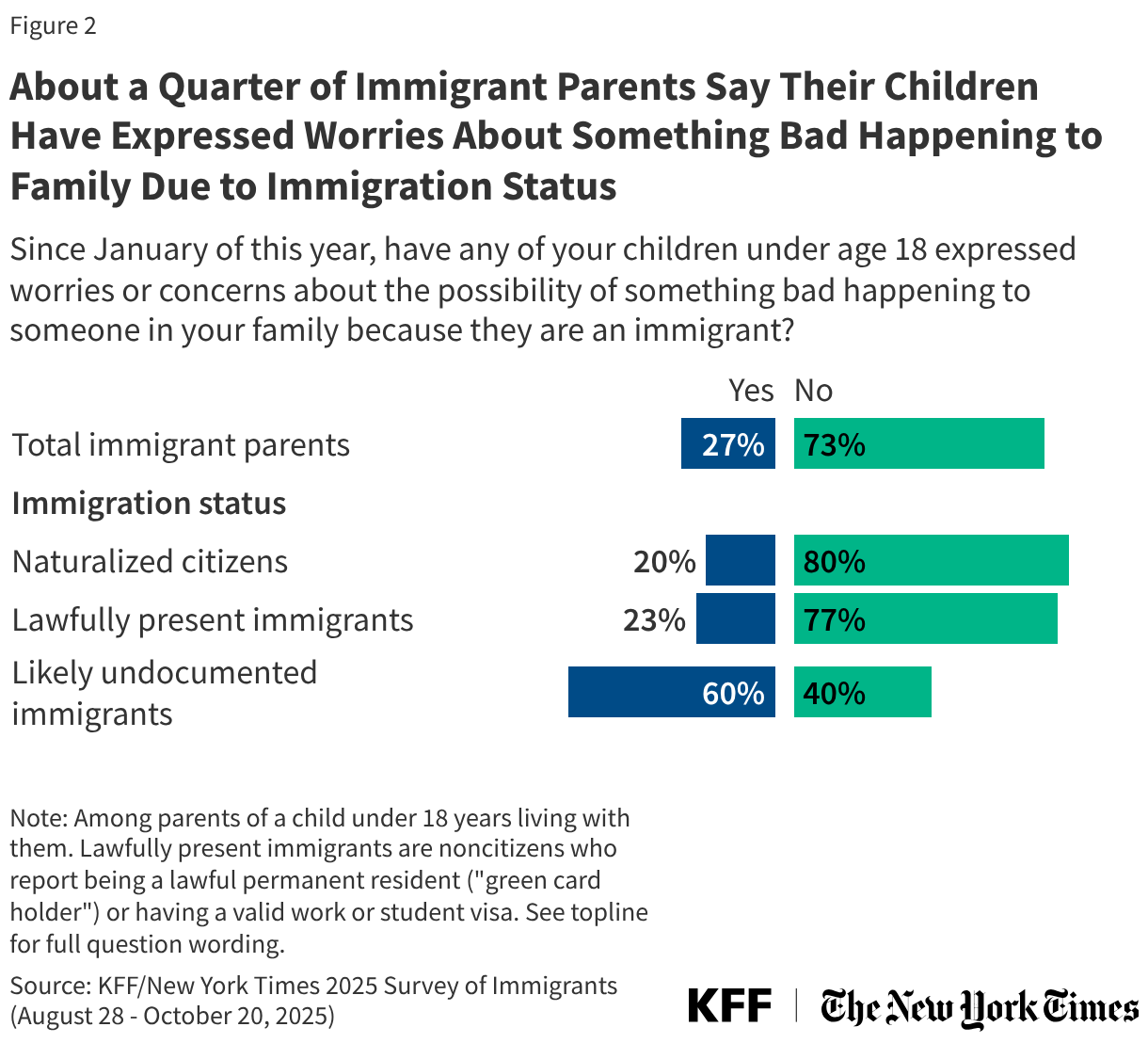
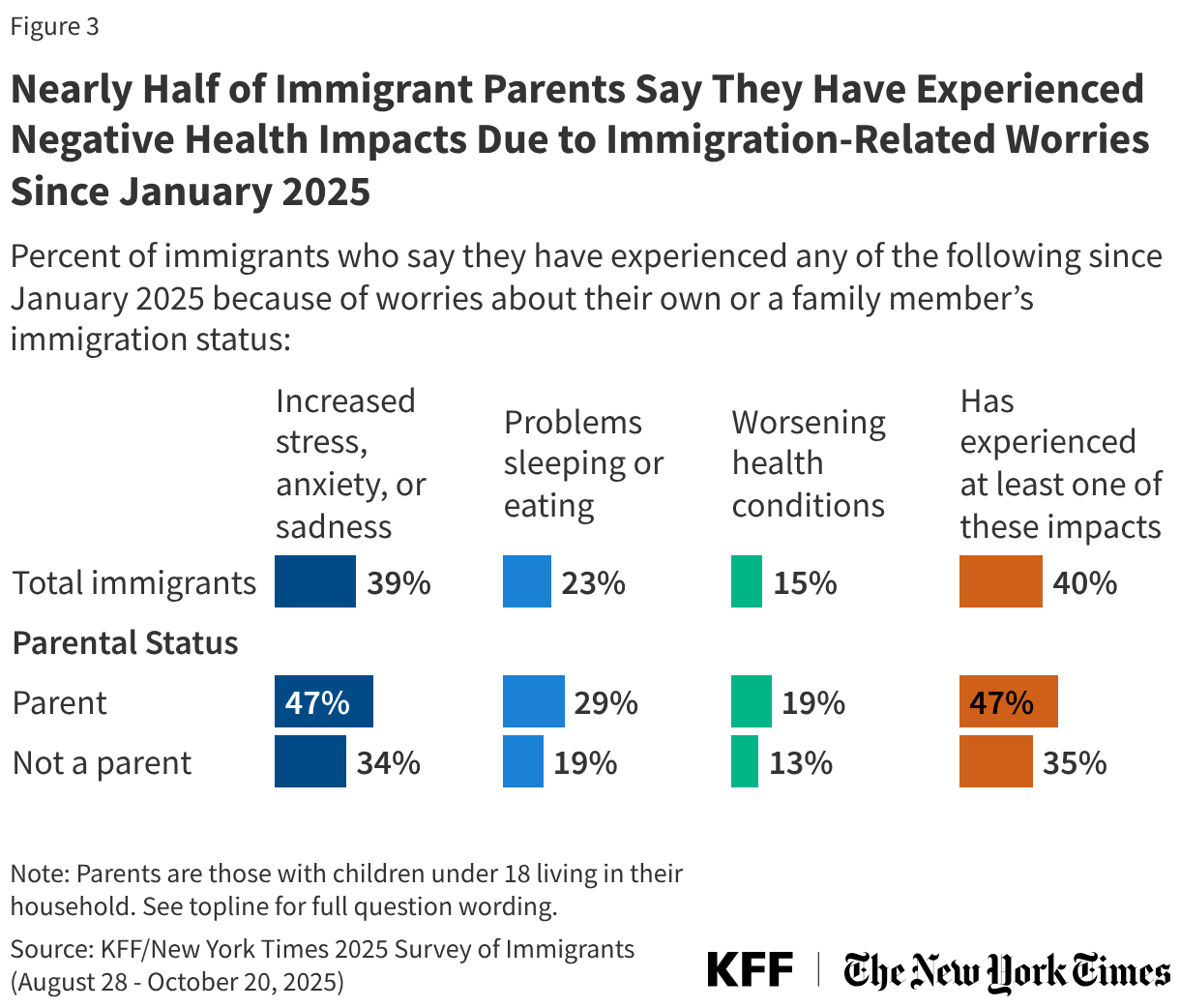
- Immigration-related fears are negatively impacting the health of immigrant parents and their children, including citizens and lawfully present immigrants. About a quarter of immigrant parents (27%), including six in ten (60%) likely undocumented immigrant parents, say that any of their children have expressed worries or concerns about the possibility of something bad happening to someone in their family because they are an immigrant.Nearly half (47%) of immigrant parents report experiencing negative health impacts due to immigration-related worries since January 2025, and about one in five (18%) say that their child’s well-being has been impacted.
- Immigrant parents report health care access challenges for themselves and their children. About one in five (22%) immigrant parents report being uninsured, twice the share of those without a child in the home (11%). About one in seven (15%) immigrant parents say they have a child who is uninsured, with this share rising to about a quarter (27%) among parents who are likely undocumented and to about one in five of those with lower incomes (annual household income of less than $40,000) (22%) or limited English proficiency (LEP) (21%).
- Three in ten (30%) immigrant parents say any of their children missed, delayed, or skipped health care in the past 12 months due to immigration-related fears (14%), not being able to find services at a convenient time or location (13%), or cost or lack of insurance (12%). This includes about six in ten (58%) likely undocumented immigrant parents as well as 23% of naturalized citizen parents and 26% of lawfully present immigrant parents who say any of their children missed, delayed, or skipped care.
Economic Challenges
About half (52%) of immigrant parents say that it has been harder to earn a living since January 2025, and over half (55%) say that they have had problems paying for health care, housing, or food in the past 12 months. These shares are higher compared to those without a child in the home, among whom 45% say it has been harder to earn a living and 42% report problems paying for health care, housing, or food. Among immigrant parents, the shares reporting problems paying for basic needs increased between 2023 and 2025, rising from 22% to 42% for health care, from 22% to 36% for rent or mortgage, and from 21% to 32% for food.
Impacts of Immigration-Related Fears on Health
About a quarter of immigrant parents (27%), including about one in five naturalized citizens (20%) and lawfully present immigrants (23%), say that any of their children have expressed worries or concerns about the possibility of something bad happening to someone in their family because they are an immigrant (Figure 2). Among likely undocumented parents, the share rises to 60%. Additionally, about four in ten Hispanic immigrant parents (39%) as well as those with household incomes of less than $40,000 per year (41%) say their children have expressed these worries or concerns.
Nearly half (47%) of immigrant parents say they have experienced negative health impacts due to immigration-related worries since January 2025 (Figure 3). These negative health impacts include increased stress, anxiety, or sadness (47%); problems sleeping or eating (29%); or worsening health conditions like diabetes or high blood pressure (19%) due to immigration-related worries.Reported negative health impacts are higher among parents (47%) compared to those without a child in the home (35%).
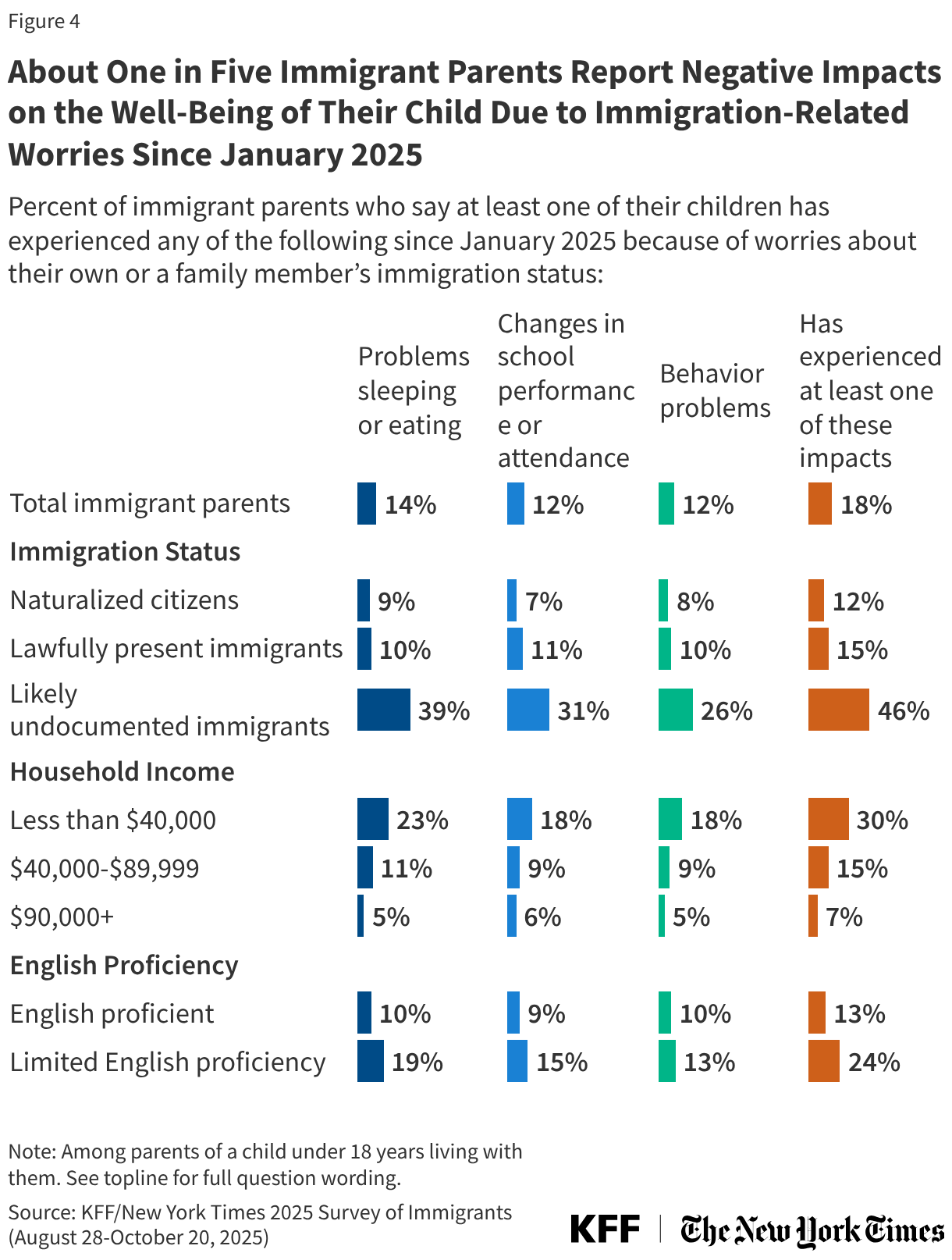
About one in five (18%) immigrant parents say their child’s well-being has been negatively impacted by immigration-related worries since January 2025 (Figure 4). These impacts include problems sleeping or eating (14%); changes in school performance or attendance (12%); or behavior problems (12%). Reports of impacts on children are particularly high among likely undocumented immigrant parents (46%), parents with lower incomes (30%), and immigrant parents with LEP (24%), although over one in ten naturalized citizen (12%) and lawfully present immigrant (15%) parents report their children experienced at least one negative impact.
Health Coverage and Access to Health Care
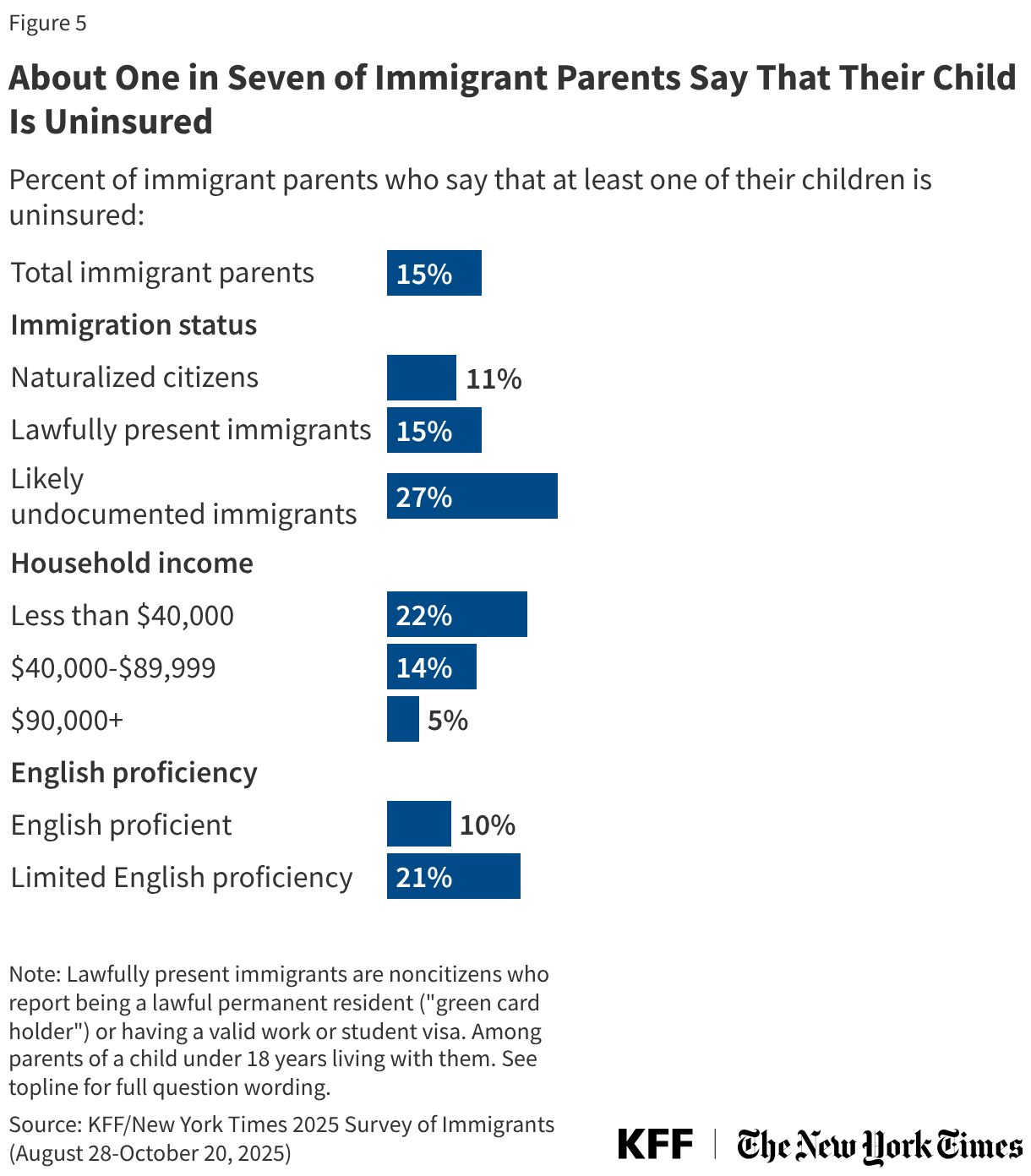
Immigrant parents are twice as likely to be uninsured as their counterparts without a child in the home (22% vs. 11%), and 15% of immigrant parents report having at least one uninsured child as of 2025. The share of immigrant parents who report having an uninsured child rises to about a quarter (27%) among those who are likely undocumented and about one in five of those with lower incomes (22%) or LEP (21%) (Figure 5).
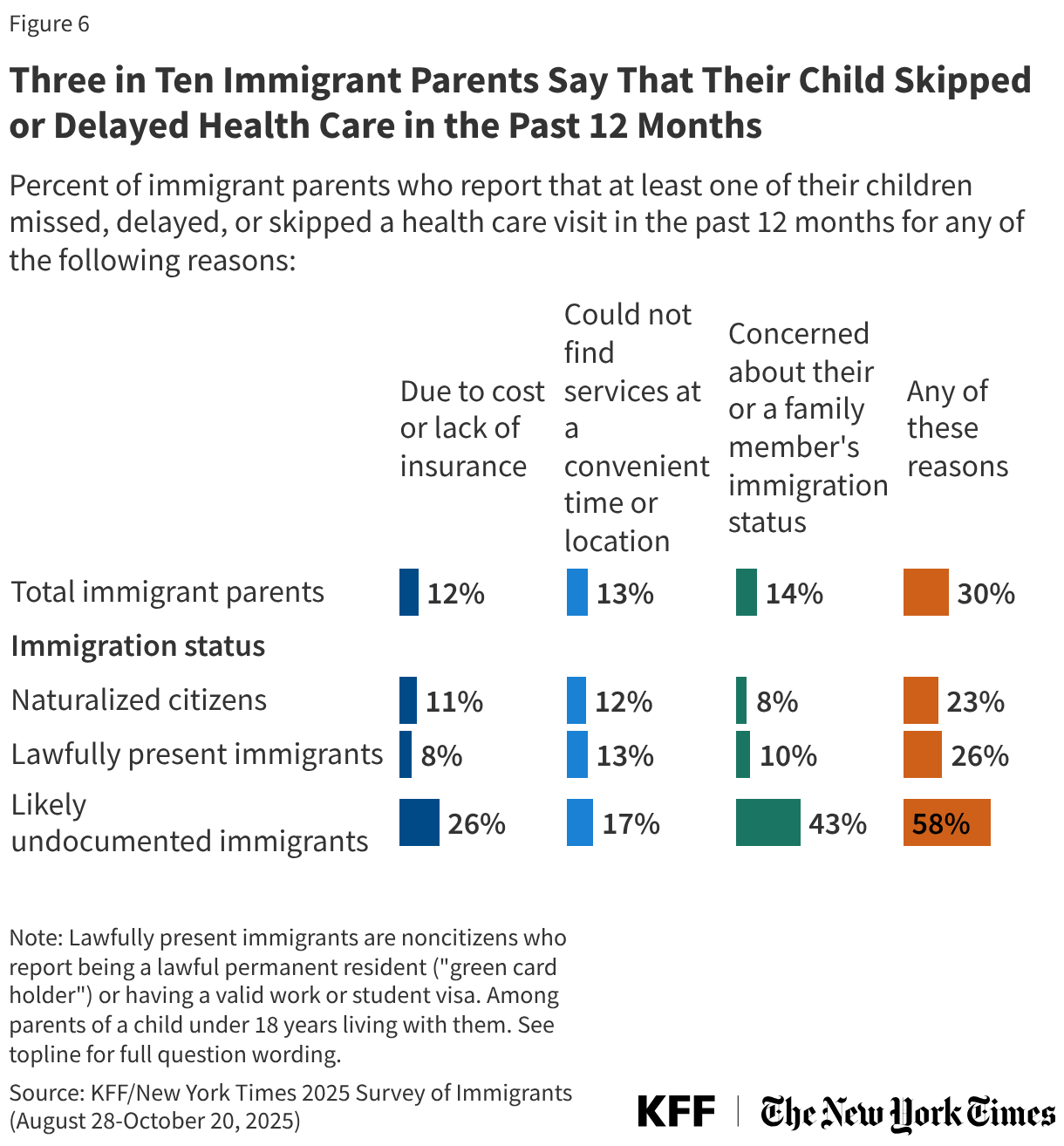
Three in ten (30%) immigrant parents say any of their children missed, delayed or skipped health care in the past 12 months due to immigration-related fears (14%), not being able to find services at a convenient time or location (13%), or cost or lack of insurance (12%) (Figure 6). While rates of delayed or skipped health care for children are higher among immigrant parents who are likely undocumented (58%), with 43% citing immigration concerns, about one in four naturalized citizen (23%) and lawfully present (26%) parents also say their children delayed or skipped care, with about one in ten identifying immigration concerns as a reason (8% and 10%, respectively).
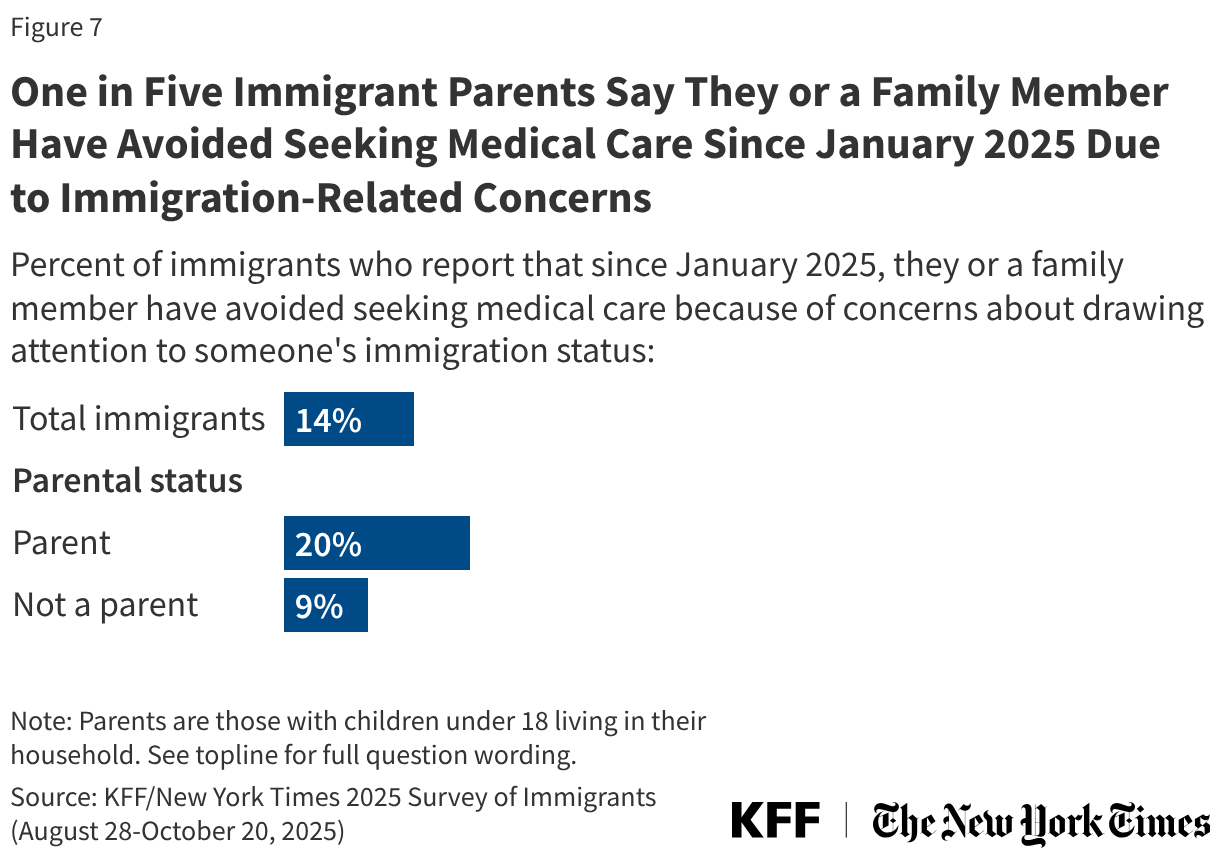
Further, one in five (20%) immigrant parents say they or a family member have avoided seeking medical care since January 2025 due to immigration-related concerns (Figure 7). This is twice the share of those who are not parents (9%). There have been reports of increased presence of ICE (Immigration and Customs Enforcement) at health care facilities following the Trump administration’s reversal of previous policy that had protected against enforcement in these and other “sensitive locations” like schools and places of worship. These actions could further exacerbate fears among immigrant families and may lead to greater avoidance of medical care and other activities going forward for parents and children.