Racial Equity and Health Policy

the Essentials
  • How Experiencing Racial Discrimination Impacts Health

    This brief highlights research examining mechanisms underlying health outcomes linked to self-reported experiences of racial discrimination, including biological changes, chronic stress, mental health, substance use, pregnancy-related outcomes, and sleep.
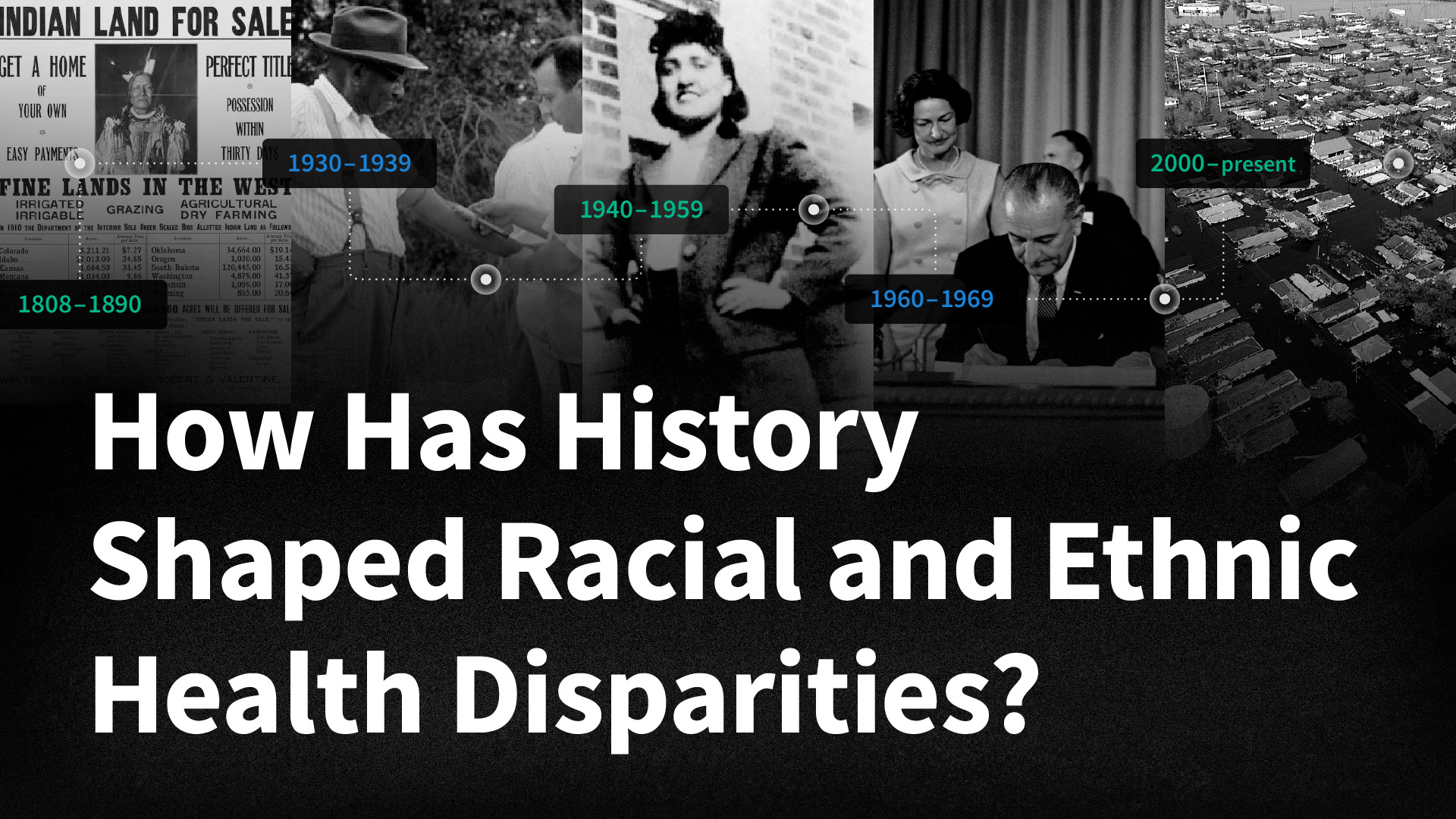
  • Timeline: How History Has Shaped Racial and Ethnic Health Disparities

    This timeline offers a historical view of significant U.S. federal policies and events spanning the early 1800s to today that have influenced present-day health disparities.
  • Health Policy 101: Chapter on Race, Inequality and Health

    Addressing persistent racial and ethnic disparities in health and health care is important for improving the nation’s health and economic prosperity. KFF explains such disparities and the factors that drive them, examines the actions to address them, and outlines future considerations.
  • Key Data on Health and Health Care by Race and Ethnicity

    Racial and ethnic disparities in health and health care remain a persistent challenge in the United States. An updated KFF resource examines how people of color fare compared to White people across 64 measures of health, health care, and social determinants of health.

Survey of Immigrants

KFF-New York Times Survey: Immigrants Report Rising Fear, Negative Economic and Health Impacts, and Changing Political Views During the First Year of President Trump’s Second Term

The 2025 Survey of Immigrants, a partnership between KFF and The New York Times, takes an in-depth look at the experiences of immigrants during the first year of President Trump’s second term, including their worries related to increased immigration enforcement, their health and economic wellbeing, and the political views and preferences of immigrant voters. The survey paints a portrait of families under strain — where fear of detention and economic instability are negatively impacting immigrants’ health and reshaping immigrant families’ daily lives and views of U.S. political parties.

Read the News Release | Explore The New York Times’ Reporting
Stay informed.

Stay informed.

Filter

71-80 of 605 results

  • Potential Implications of Immigration Restrictions on the U.S. Agricultural Workforce

    Issue Brief

    Using data from the 2022 National Agricultural Workers Survey (NAWS), this issue brief examines key characteristics of agricultural workers, including their citizenship status, health coverage, and access to health care. The Trump administration’s restrictive immigration policies may compound health challenges and risks this groups faces and have negative impacts on the cost and availability of food.

  • Potential Impacts of Increased Immigration Enforcement on School Attendance and Funding

    Issue Brief

    This brief presents research on the impacts of immigration enforcement on children, including school attendance and performance; provides data on the share and number of school-aged children by state who live in immigrant families based on KFF analysis of the 2023 American Community Survey (ACS); and discusses potential implications of declines in school enrollment and/or attendance among these children on school funding.

  • Decoding the HHS Reorganization

    From Drew Altman

    In his latest column, KFF President and CEO Drew Altman examines the implications of Secretary Kennedy’s reorganization of HHS and why it’s a sharp break from past efforts to reorganize the department.

  • 5 Key Facts About Immigrants and Medicaid

    Issue Brief

    This brief provides five key facts on Medicaid and immigrants as context for understanding the potential impacts of policy changes under the Trump administration.

  • A Look at Federal Health Data Taken Offline

    Policy Watch

    This post looks at federal government databases with key health data that went offline on Jan. 31, 2025, including several related to HIV, some of which had returned by Feb. 2, 2025. It briefly describing the affected databases, which include widely used, large-scale national health surveys, indices, and data dashboards, that inform research, policy making, and media coverage about health care and public health.

  • Race Is a Social Category, Not a Biological One

    Quick Insights

    Sen. Angela Alsobrooks questioned [Kennedy] about earlier statements he has made suggesting that Black people should not adhere to the same vaccine schedule as White people because “their immune system is better than ours.” … Race is a poor proxy for genetic ancestry and large genetic studies have demonstrated more variation within defined racial groups (intra-racially) than there are between different racial groups (inter-racially).