Racial Equity and Health Policy

the Essentials
  • How Experiencing Racial Discrimination Impacts Health

    This brief highlights research examining mechanisms underlying health outcomes linked to self-reported experiences of racial discrimination, including biological changes, chronic stress, mental health, substance use, pregnancy-related outcomes, and sleep.
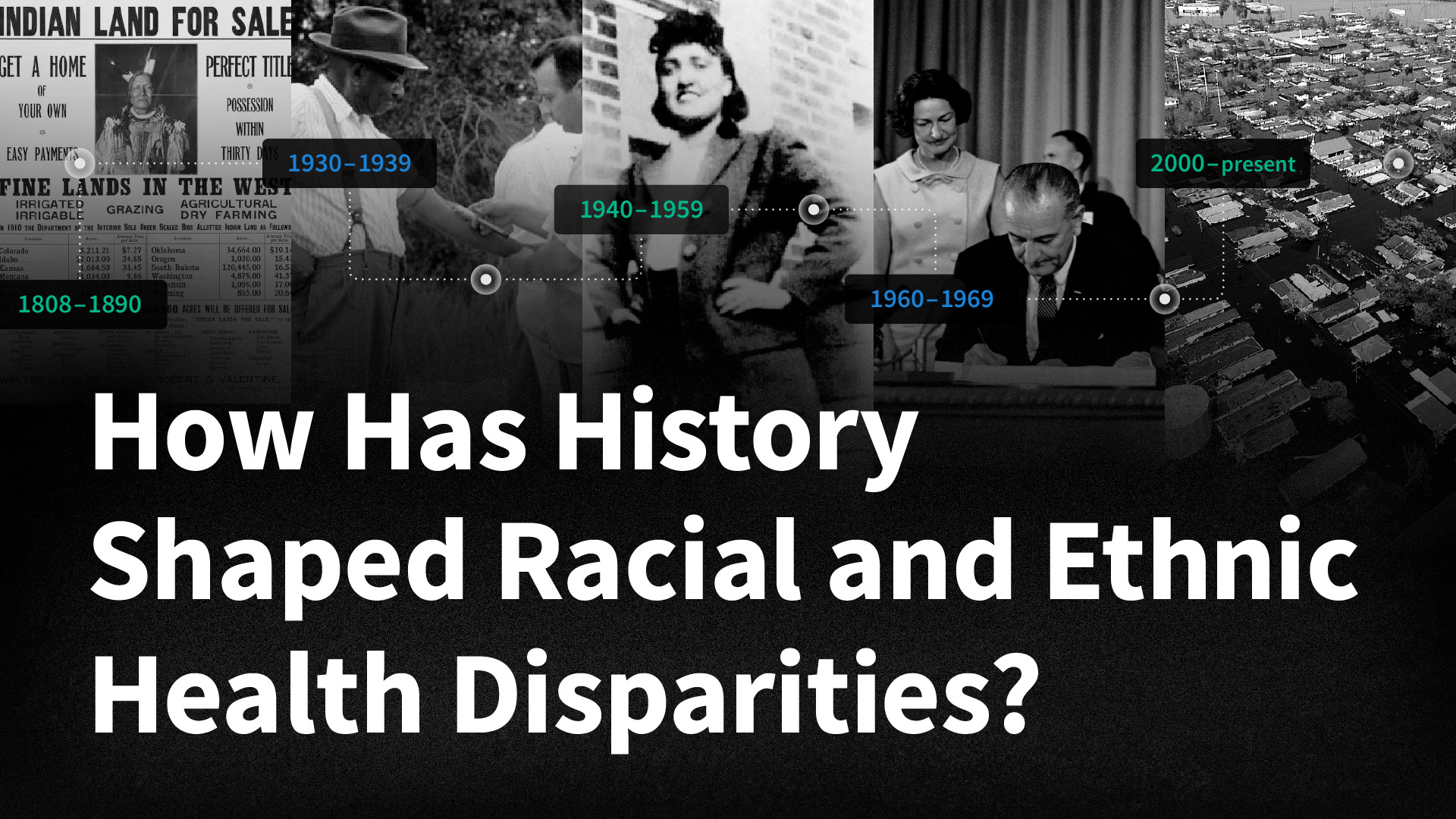
  • Timeline: How History Has Shaped Racial and Ethnic Health Disparities

    This timeline offers a historical view of significant U.S. federal policies and events spanning the early 1800s to today that have influenced present-day health disparities.
  • Health Policy 101: Chapter on Race, Inequality and Health

    Addressing persistent racial and ethnic disparities in health and health care is important for improving the nation’s health and economic prosperity. KFF explains such disparities and the factors that drive them, examines the actions to address them, and outlines future considerations.
  • Key Data on Health and Health Care by Race and Ethnicity

    Racial and ethnic disparities in health and health care remain a persistent challenge in the United States. An updated KFF resource examines how people of color fare compared to White people across 64 measures of health, health care, and social determinants of health.

Survey of Immigrants

KFF-New York Times Survey: Immigrants Report Rising Fear, Negative Economic and Health Impacts, and Changing Political Views During the First Year of President Trump’s Second Term

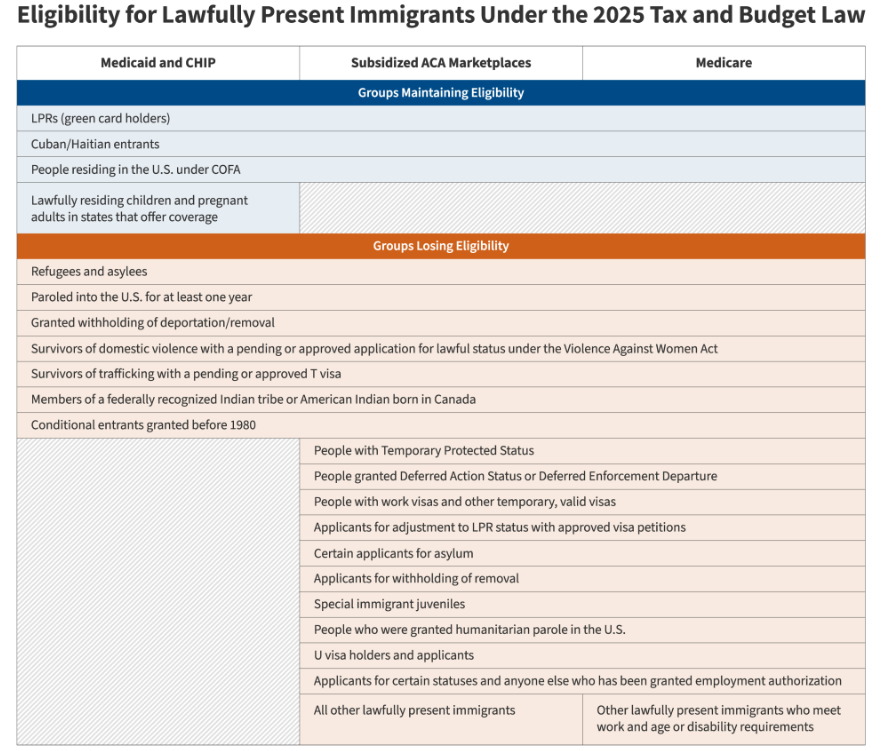
The 2025 Survey of Immigrants, a partnership between KFF and The New York Times, takes an in-depth look at the experiences of immigrants during the first year of President Trump’s second term, including their worries related to increased immigration enforcement, their health and economic wellbeing, and the political views and preferences of immigrant voters. The survey paints a portrait of families under strain — where fear of detention and economic instability are negatively impacting immigrants’ health and reshaping immigrant families’ daily lives and views of U.S. political parties.

Read the News Release | Explore The New York Times’ Reporting
Stay informed.

Stay informed.

Filter

591 - 600 of 602 Results

  • Understanding the Diversity in the Asian Immigrant Experience in the U.S.

    Poll Finding

    Asian immigrants represent an important significant and growing share of the U.S. population, as well as a diverse body of experiences. Increased data on Asian immigrant experiences is important for understanding their diversity of experiences and focusing initiatives, policies, and resources to address the challenges they face.

  • Year in Review: 10 Health Policy Issues for 2023

    Fact Sheet

    This fact sheet offers a look back at 10 issues that KFF tracked closely during 2023 in its polling, policy analysis and journalism, including summaries of major findings and news stories.

  • 3 Charts: Asian Immigrants’ Experiences in the United States

    News Release

    Like other immigrants to the U.S., Asian immigrants overwhelmingly say they emigrated for the opportunity to build a better life for themselves and their children. They come from more than 30 countries, and their experiences – their economic circumstance, how safe they feel, and the discrimination they face - vary greatly once here, including differences by income level, immigration status and country of origin. These three charts explore the diversity of the Asian immigrant experience,…

  • Section 1115 Waiver Watch: Medicaid Pre-Release Services for People Who Are Incarcerated

    Issue Brief

    In April 2023, the Centers for Medicare and Medicaid Services (CMS) released guidance encouraging states to apply for a new Section 1115 demonstration opportunity to test transition-related strategies to support community reentry for people who are incarcerated. As of August 19, 2024, CMS has approved Section 1115 reentry waiver requests from 11 states, while 13 additional reentry waivers remain pending.

  • What the Data Show: Black Women Report More Pervasive Negative Experiences in Health Care Compared to Other Groups

    News Release

    A new analysis of data from KFF’s Survey on Racism, Discrimination, and Health shows Black women are more likely than other groups to report being treated unfairly by a health care provider in recent years because of their race and ethnicity and that these experiences have health consequences. For example, among Black women who used health care in the past three years, 34% report at least one of three consequences because of a negative experience…

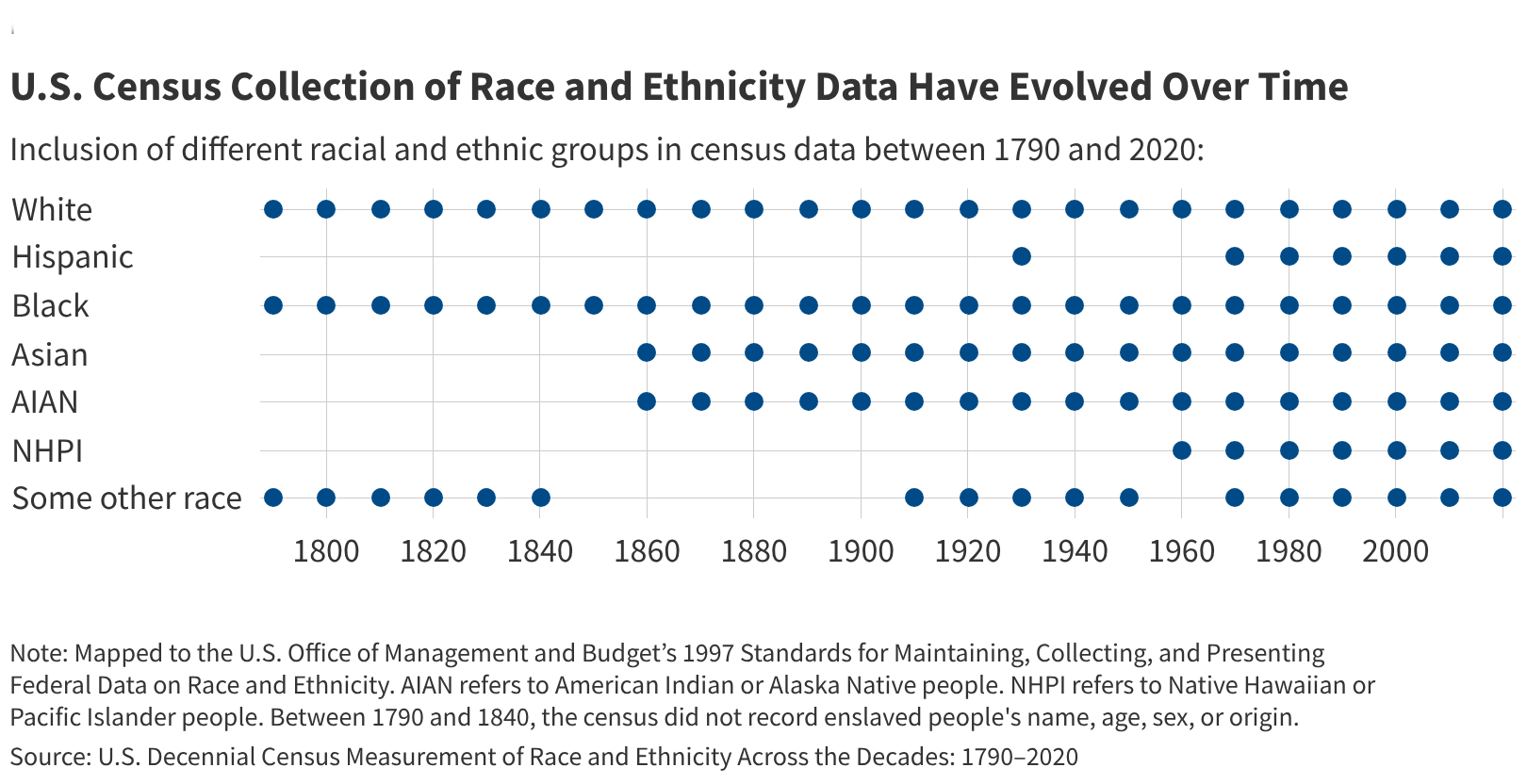
  • Understanding Racial and Ethnic Identity in Federal Data and Impacts for Health Disparities

    Issue Brief

    How race, ethnicity, and nationality have been defined and measured has important implications for health disparities, affecting who can access health, social, and economic resources. While narrow and inconsistent race and ethnicity categories have obscured inequities and limited the ability to address the diverse needs of different populations, data on race and ethnicity have also been used to address disparities by informing policies and interventions.

  • Key Data on Health and Health Care for Native Hawaiian or Pacific Islander People

    Issue Brief

    Among NHPI people, there is significant variation in key factors that influence health, including health coverage, income, and homeownership, with Marshallese people faring the worst across all examined measures. Data gaps prevent the ability to fully identify and understand health disparities for NHPI people. Among available data, NHPI people fare worse than White people for the majority of measures.

  • New KFF Survey Documents the Extent and Impact of Racism and Discrimination Across Several Facets of American Life, Including Health Care 

    News Release

    In a reflection of how pervasive racism and discrimination can be in daily life, a major new KFF survey shows that many Hispanic, Black, Asian, and American Indian and Alaska Native adults in the U.S. believe they must modify both their mindset and the way they look to stave off potential mistreatment during health care visits. KFF’s 2023 Survey on Racism, Discrimination and Health, the first in a series, also documents the pernicious association of racism…