Racial Equity and Health Policy

Survey of Immigrants

KFF-New York Times Survey: Immigrants Report Rising Fear, Negative Economic and Health Impacts, and Changing Political Views During the First Year of President Trump’s Second Term

The 2025 Survey of Immigrants, a partnership between KFF and The New York Times, takes an in-depth look at the experiences of immigrants during the first year of President Trump’s second term, including their worries related to increased immigration enforcement, their health and economic wellbeing, and the political views and preferences of immigrant voters. The survey paints a portrait of families under strain — where fear of detention and economic instability are negatively impacting immigrants’ health and reshaping immigrant families’ daily lives and views of U.S. political parties.

Read the News Release | Explore The New York Times’ Reporting
the Essentials
  • Disparities in Health and Health Care: 5 Key Questions and Answers

    This brief provides an introduction to what health and health care disparities are, why it is important to address them, what the status of disparities is today, recent federal actions to address disparities, and key issues related to addressing disparities in the future.
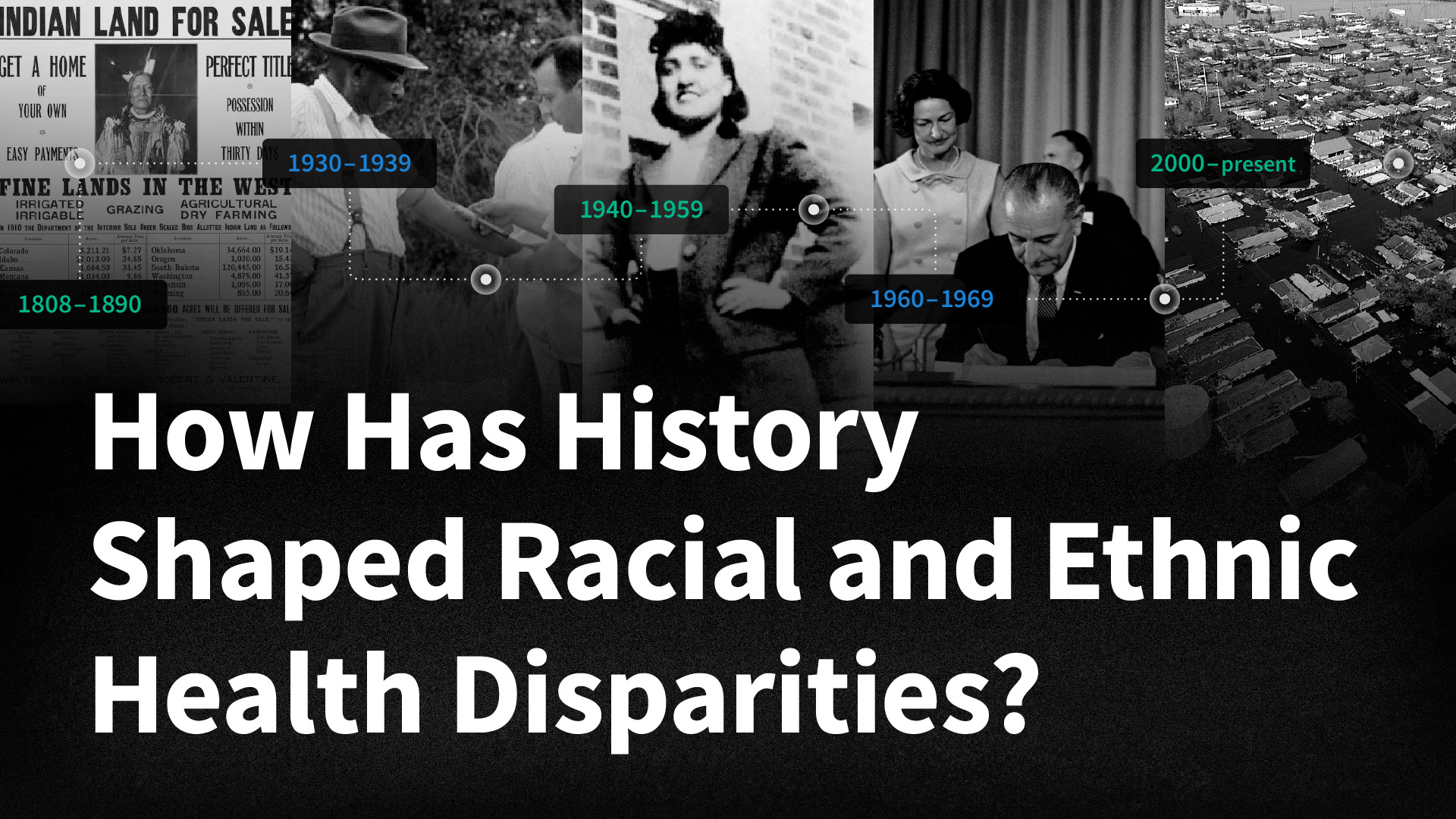
  • Timeline: How History Has Shaped Racial and Ethnic Health Disparities

    This timeline offers a historical view of significant U.S. federal policies and events spanning the early 1800s to today that have influenced present-day health disparities.
  • Health Policy 101: Chapter on Race, Inequality and Health

    Addressing persistent racial and ethnic disparities in health and health care is important for improving the nation’s health and economic prosperity. KFF explains such disparities and the factors that drive them, examines the actions to address them, and outlines future considerations.
  • Key Data on Health and Health Care by Race and Ethnicity

    Racial and ethnic disparities in health and health care remain a persistent challenge in the United States. An updated KFF resource examines how people of color fare compared to White people across 64 measures of health, health care, and social determinants of health.

Subscribe to KFF Emails

Choose which emails are best for you.
Sign up here

Filter

591 - 597 of 597 Results

  • Understanding and Addressing Racial Disparities in Cancer Outcomes, Care, and Treatment

    Event Date:
    Event

    KFF and the American Society of Clinical Oncology (ASCO) hosted a web event on February 3, 2022 featuring oncologists, patient advocates, and policy researchers with expertise in equity and cancer care to examine persistent racial disparities in cancer. Expert panelists shared real-life experiences, provided context on the latest data, and discussed a range of actions which could help ensure that all individuals with cancer receive the highest quality, equitable cancer care and help to eliminate disparities in cancer outcomes.

  • State Reported Efforts to Address Health Disparities: A 50 State Review

    Issue Brief

    This analysis focuses on current state efforts, many of which were implemented during or after 2020, to address health disparities and advance health equity based on a review of publicly available materials from all 50 states and DC. In addition, case study interviews were conducted with 14 stakeholders in three states (California, North Dakota, and Michigan) to increase understanding of the factors contributing to success of these state initiatives, lessons learned, and potential implications for other states.

  • The Impact of HIV on Hispanic/Latino People in the United States

    Fact Sheet

    In the U.S., Hispanic/Latino people have been disproportionately affected by HIV since the epidemic’s beginning, and that disparity has deepened over time. Hispanic/Latino people represent a larger share of HIV diagnoses and people estimated to be living with HIV relative to their population size. This fact sheet provides an overview of the impact of HIV on Hispanic/Latino people in the U.S.

  • Racial Disparities in Life Expectancy

    Issue Brief

    There was an increase in life expectancy between 2021 and 2023 across all racial and ethnic groups. American Indian and Alaska Native (AIAN) people experienced the largest increase in life expectancy of 4.5 years during this time, followed by Hispanic (3.5 years) and Black people (2.8 years).