Racial Equity and Health Policy

the Essentials
  • How Experiencing Racial Discrimination Impacts Health

    This brief highlights research examining mechanisms underlying health outcomes linked to self-reported experiences of racial discrimination, including biological changes, chronic stress, mental health, substance use, pregnancy-related outcomes, and sleep.
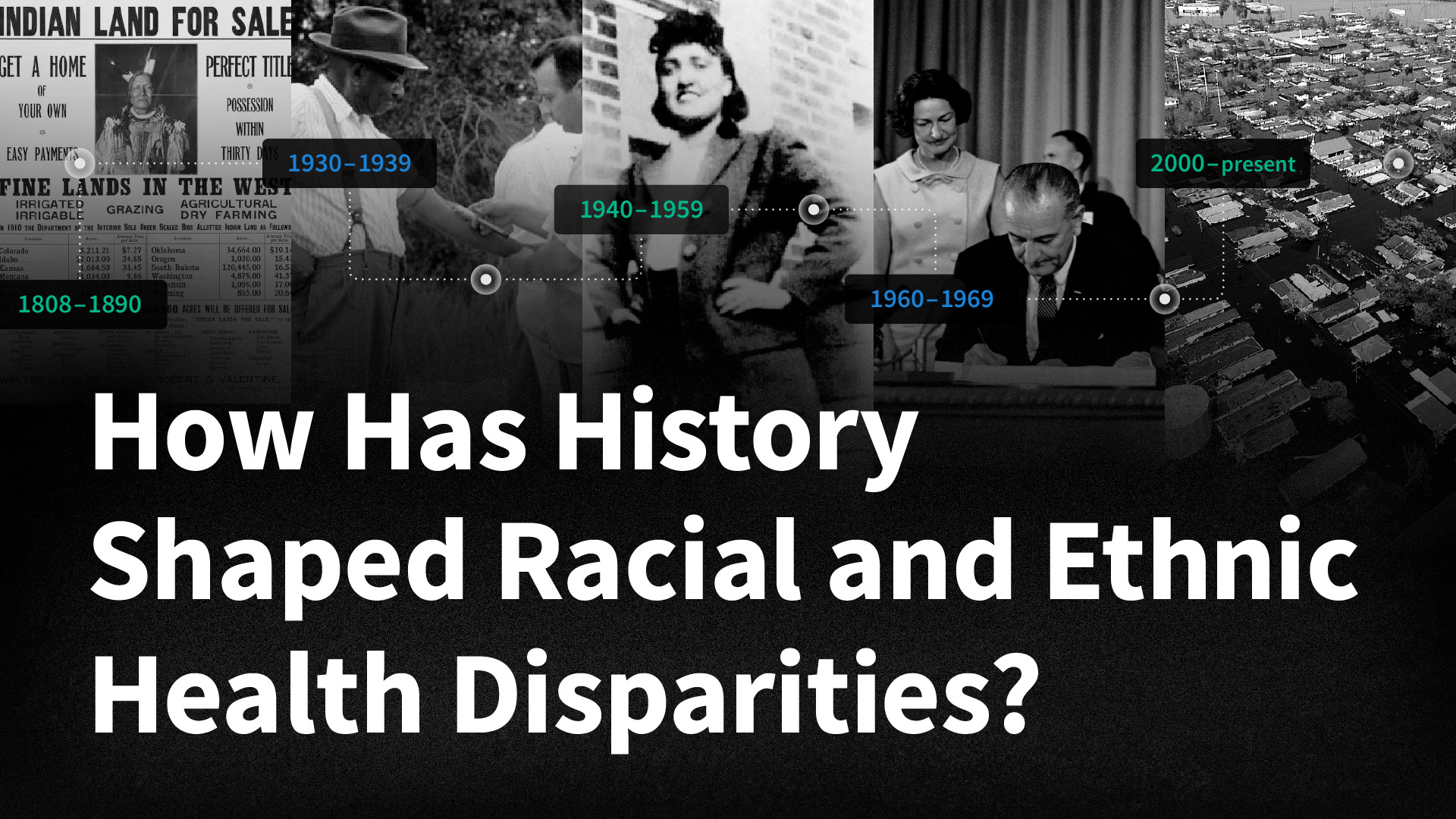
  • Timeline: How History Has Shaped Racial and Ethnic Health Disparities

    This timeline offers a historical view of significant U.S. federal policies and events spanning the early 1800s to today that have influenced present-day health disparities.
  • Health Policy 101: Chapter on Race, Inequality and Health

    Addressing persistent racial and ethnic disparities in health and health care is important for improving the nation’s health and economic prosperity. KFF explains such disparities and the factors that drive them, examines the actions to address them, and outlines future considerations.
  • Key Data on Health and Health Care by Race and Ethnicity

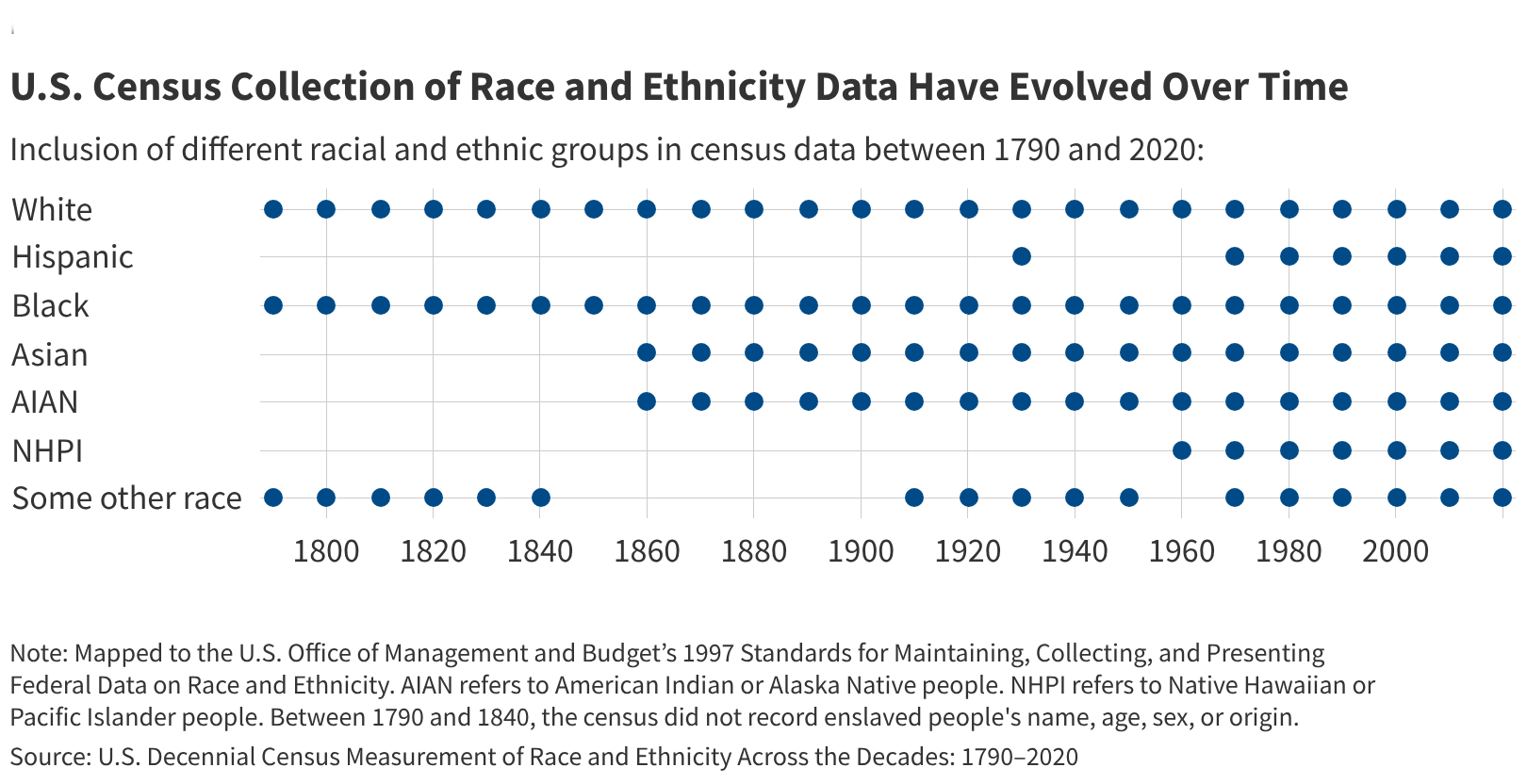
    Racial and ethnic disparities in health and health care remain a persistent challenge in the United States. An updated KFF resource examines how people of color fare compared to White people across 64 measures of health, health care, and social determinants of health.

Survey of Immigrants

KFF-New York Times Survey: Immigrants Report Rising Fear, Negative Economic and Health Impacts, and Changing Political Views During the First Year of President Trump’s Second Term

The 2025 Survey of Immigrants, a partnership between KFF and The New York Times, takes an in-depth look at the experiences of immigrants during the first year of President Trump’s second term, including their worries related to increased immigration enforcement, their health and economic wellbeing, and the political views and preferences of immigrant voters. The survey paints a portrait of families under strain — where fear of detention and economic instability are negatively impacting immigrants’ health and reshaping immigrant families’ daily lives and views of U.S. political parties.

Read the News Release | Explore The New York Times’ Reporting
Stay informed.

Stay informed.

Filter

51 - 60 of 602 Results

  • Pulling it Together: About Kaiser Health News

    Perspective

    There is lots of apocalyptic talk these days about the collapse of the newspaper industry and the challenges facing news organizations.  There is even talk of the unimaginable, my hometown paper The Boston Globe shutting down. Surely they know that Red Sox Nation cannot exist without the Globe Sports pages. All kinds of solutions have been proposed, from micro-payments for news stories like songs on iTunes to foundation-endowed daily newspapers.  There is growing talk of…

  • Kaiser Health Security Watch

    Feature

    The Kaiser Health Security Watch uses Kaiser Health Tracking Poll data to measure the public's health care-related problems and worries, including problems paying medical bills, skipping or delaying health care due to cost, and worrying about their future ability to pay for care and keep insurance. The Health Security Watch describes the overall numbers, and examines which types of people are most likely to report these problems and worries. The May 2012 update to the Health…

  • Immigration Reform and Access to Health Coverage: Key Issues to Consider

    Issue Brief

    The Obama administration and a bipartisan group of U.S. senators recently released blueprints for immigration reform proposals that include a roadmap to citizenship for the 11 million undocumented immigrants currently residing in the United States. Subject to meeting specified requirements, these individuals would be able to apply for a provisional lawful status. After completing an undefined number of years in this status, an individual would then be allowed to apply for lawful permanent residency and,…

  • Health Coverage in an Economic Downturn: Impact of Tight Budgets on Families and States

    Fact Sheet

    The economic downturn has strained family finances and prompted some Americans to cut back on medications and forgo preventive care and visits to the doctor. At the same time, the downturn has triggered declines in tax revenue that inhibit states’ ability to meet rising Medicaid program costs as enrollment spikes during economic hard times. Many states are expected to struggle to close budget gaps despite moves by Congress and the Obama Administration to temporarily boost…

  • Health and Health Care in the U.S.-Mexico Border Region

    Issue Brief

    The four states along the U.S.-Mexico border are home to over 78 million people of whom 8 million live in 44 counties that adjoin the border and border activity is at an all-time high. KFF's county-level analysis of the region shows that people living in border states fare worse along socioeconomic and health access measures as compared to the rest of the U.S. and that people who live in border counties within these states, especially…

  • Race, Inequality, and Health

    Feature

    This Health Policy 101 chapter provides an overview of racial and ethnic disparities in health and health care and the factors that drive them, including the role of historical events and social and economic factors. It discusses why addressing disparities is important for health and economic prosperity, reviews recent federal policy actions that may impact disparities, and outlines future considerations.

  • The COVID-19 Outbreak and Food Production Workers: Who is at Risk?

    Issue Brief

    The federal government has deemed workers in the food and agricultural sector part of the essential critical infrastructure workforce. Moreover, under recent a Presidential Executive Order, meat and poultry processing plants must continue operations to prevent disruption in the food supply chain. Workers in these industries face risk for coronavirus exposure due to their continued work outside the home, with many facing increased risks due to close quarters in their working environment. The Centers for…