Racial Equity and Health Policy

the Essentials
  • Health Coverage by Race and Ethnicity, 2010-2024

    There have been longstanding racial and ethnic disparities in health coverage that contribute to disparities in health. This brief examines trends in health coverage by race and ethnicity from 2010 through 2024 and discusses the implications for such disparities.
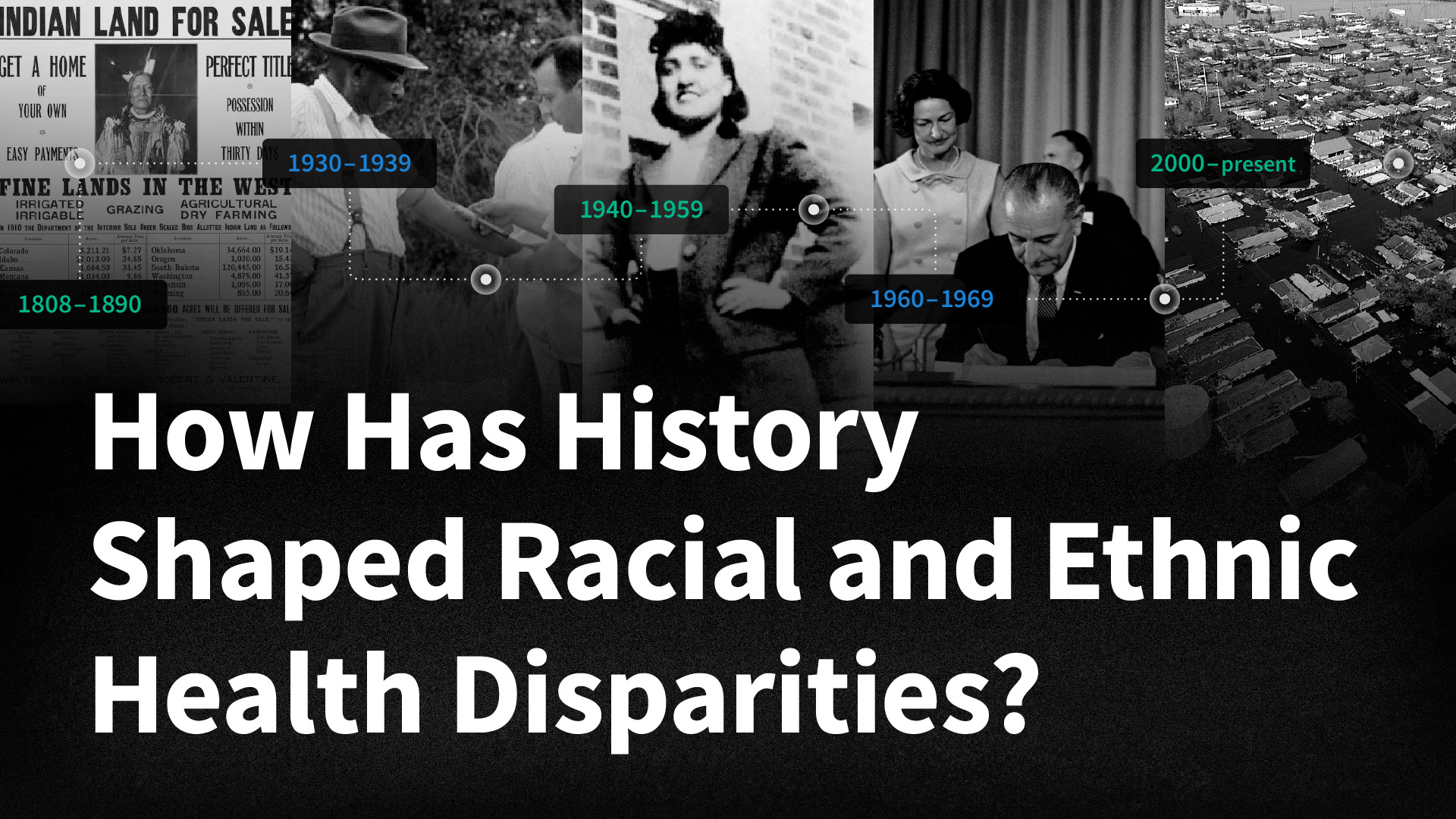
  • Timeline: How History Has Shaped Racial and Ethnic Health Disparities

    This timeline offers a historical view of significant U.S. federal policies and events spanning the early 1800s to today that have influenced present-day health disparities.
  • Health Policy 101: Chapter on Race, Inequality and Health

    Addressing persistent racial and ethnic disparities in health and health care is important for improving the nation’s health and economic prosperity. KFF explains such disparities and the factors that drive them, examines the actions to address them, and outlines future considerations.
  • Key Data on Health and Health Care by Race and Ethnicity

    Racial and ethnic disparities in health and health care remain a persistent challenge in the United States. An updated KFF resource examines how people of color fare compared to White people across 64 measures of health, health care, and social determinants of health.

Survey of Immigrants

KFF-New York Times Survey: Immigrants Report Rising Fear, Negative Economic and Health Impacts, and Changing Political Views During the First Year of President Trump’s Second Term

The 2025 Survey of Immigrants, a partnership between KFF and The New York Times, takes an in-depth look at the experiences of immigrants during the first year of President Trump’s second term, including their worries related to increased immigration enforcement, their health and economic wellbeing, and the political views and preferences of immigrant voters. The survey paints a portrait of families under strain — where fear of detention and economic instability are negatively impacting immigrants’ health and reshaping immigrant families’ daily lives and views of U.S. political parties.

Read the News Release | Explore The New York Times’ Reporting
Subscribe to KFF Emails

Choose which emails are best for you.
Sign up here

Filter

581 - 590 of 602 Results

  • Potential Impacts of Increased Immigration Enforcement on School Attendance and Funding

    Issue Brief

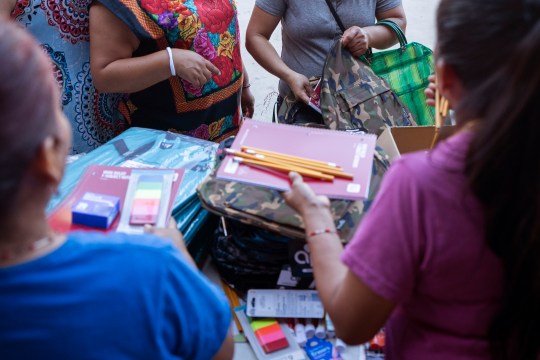
    This brief presents research on the impacts of immigration enforcement on children, including school attendance and performance; provides data on the share and number of school-aged children by state who live in immigrant families based on KFF analysis of the 2023 American Community Survey (ACS); and discusses potential implications of declines in school enrollment and/or attendance among these children on school funding.

  • Key Data on Health and Health Care by Race and Ethnicity

    Issue Brief

    This analysis examines how people of color fare compared to White people across 64 measures of health, health care, and social determinants of health using the most recent data available from federal surveys and administrative sets as well as the 2023 KFF Survey on Racism, Discrimination, and Health.

  • Women’s Health Data Book: A Profile of Women’s Health in the United States

    Fact Sheet

    The Women's Health Data Book: A Profile of Women's Health in the United States, offers the latest data and trends on the wide range of health issues that affect women across their life spans. Published by the Kaiser Family Foundation and the Jacobs Institute of Women's Health, the Data Book is edited by Dawn Misra, Ph.D. This book addresses social and economic factors and provides up-to-date information on chronic conditions, reproductive health, mental health, violence,…

  • AIDS… A Crisis Among African-American Youth

    Fact Sheet

    A fact sheet on HIV, how it is transmitted, how to protect yourself against HIV, and information on testing and treatments for HIV. This fact sheet is available as part of a partnership with BET Teen Summit Town Hall specials. Fact Sheet

  • Kaiser Family Foundation National Survey of Latinos on HIV/AIDS – News Release

    Other Post

    Two New Studies On Latinos And AIDS In America: Survey Of Latinos Finds Widespread Concern About HIV/AIDS; Impact Of Disease Felt "Close To Home" Report Documents Impact Of AIDS/HIV On Hispanics And Offers Guidance For Community Health Providers Embargoed For Release Until:9:30 am, ET, Friday, May 1, 1998 For Further Information Contact: Tina Hoff or Matt James/KFF(650) 854-9400 Xiomara Sosa/COSSMHO(202) 797-4335 Washington, DC -- Next week Latino leaders will gather at Harvard University for the…

  • Survey of Americans on HIV/AIDs – Part Three: Experiences and Opinions by Race/Ethnicity and Age: Toplines

    Poll Finding

    These findings are the third part of a national survey of Americans’ views on HIV/AIDS, “Survey of Americans on HIV/AIDS,” conducted in spring 2004. It explores the views and experiences of, as well as the key differences among, African Americans, Latinos, Whites, and young people. The first part of the survey, on global HIV/AIDS, was released on June 2, 2004. The second part of the survey, on HIV Testing, was released on June 15, 2004.…

  • How Pending Health-Related Lawsuits Could be Impacted by the Incoming Trump Administration

    Issue Brief

    This brief provides an overview of current lawsuits in health policy including preventive services, abortion care, gender affirming care, Medicare drug price negotiations, nursing home staffing rules, private coverage consumer protections, and protections and health coverage for Deferred Action for Childhood Arrivals (DACA) recipients; how they may be affected by the incoming Trump administration; and the implications of their potential outcomes.

  • Key Data on Health and Health Care for Native Hawaiian or Pacific Islander People

    Issue Brief

    Among NHPI people, there is significant variation in key factors that influence health, including health coverage, income, and homeownership, with Marshallese people faring the worst across all examined measures. Data gaps prevent the ability to fully identify and understand health disparities for NHPI people. Among available data, NHPI people fare worse than White people for the majority of measures.