Racial Equity and Health Policy

the Essentials
  • How Experiencing Racial Discrimination Impacts Health

    This brief highlights research examining mechanisms underlying health outcomes linked to self-reported experiences of racial discrimination, including biological changes, chronic stress, mental health, substance use, pregnancy-related outcomes, and sleep.
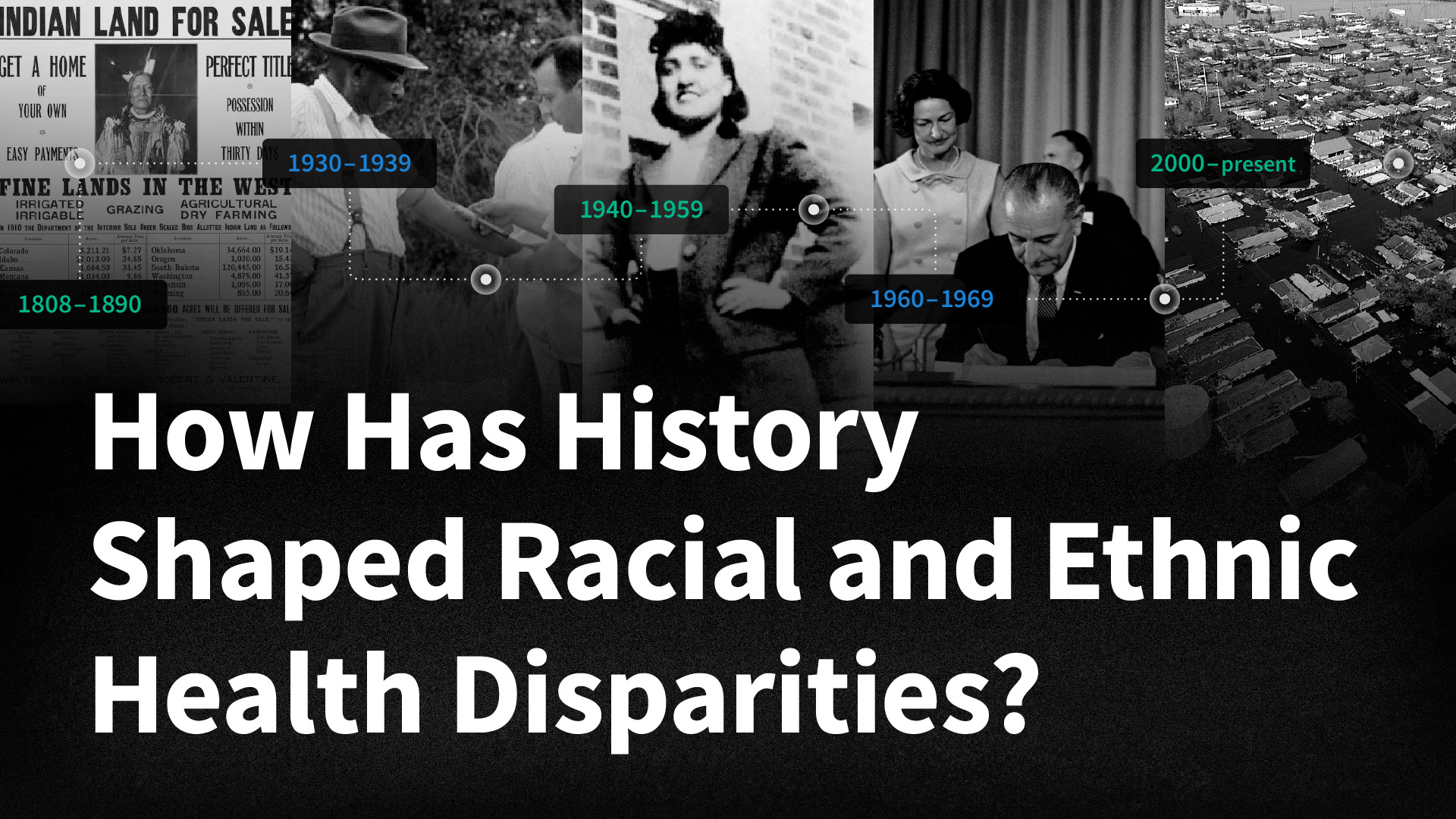
  • Timeline: How History Has Shaped Racial and Ethnic Health Disparities

    This timeline offers a historical view of significant U.S. federal policies and events spanning the early 1800s to today that have influenced present-day health disparities.
  • Health Policy 101: Chapter on Race, Inequality and Health

    Addressing persistent racial and ethnic disparities in health and health care is important for improving the nation’s health and economic prosperity. KFF explains such disparities and the factors that drive them, examines the actions to address them, and outlines future considerations.
  • Key Data on Health and Health Care by Race and Ethnicity

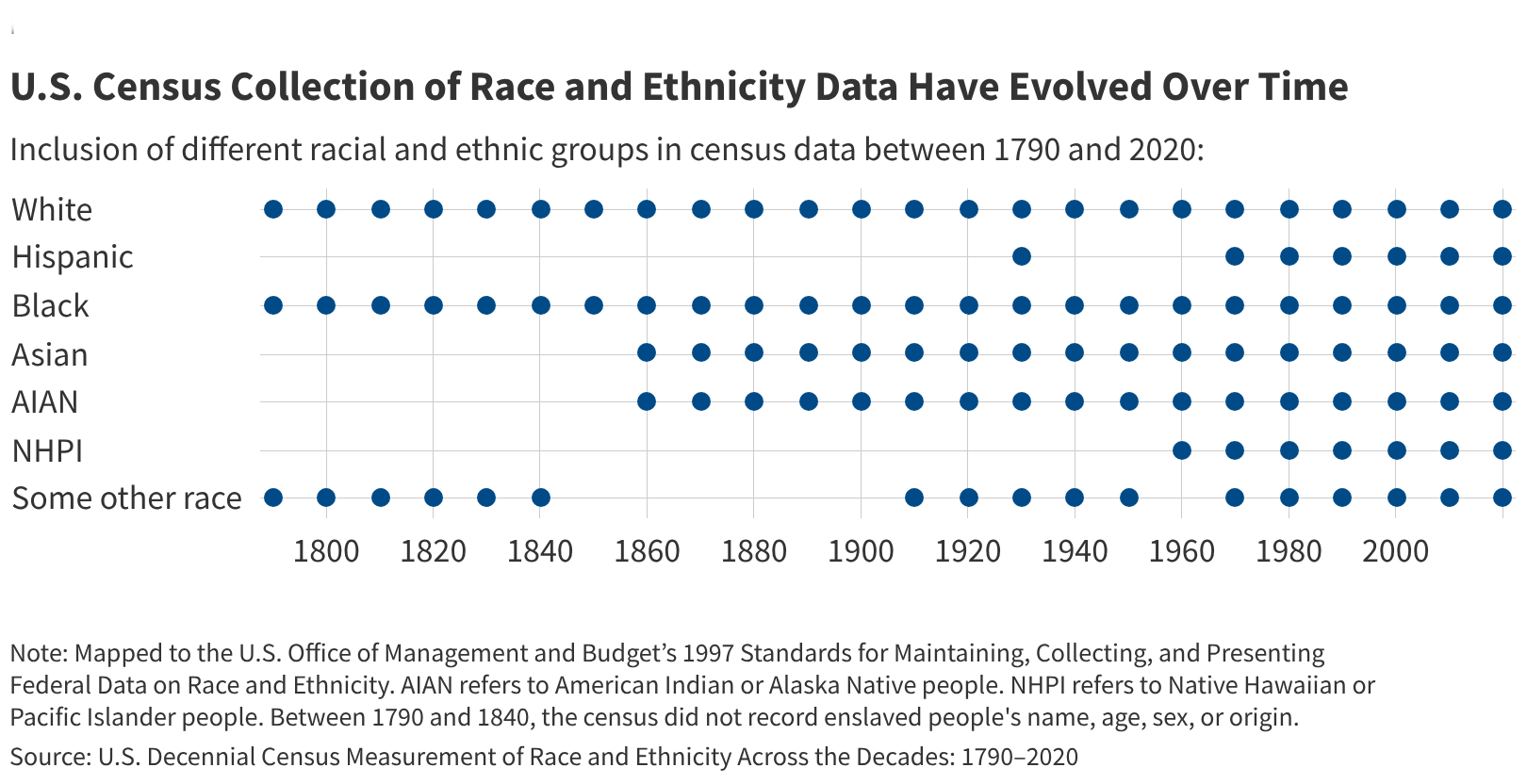
    Racial and ethnic disparities in health and health care remain a persistent challenge in the United States. An updated KFF resource examines how people of color fare compared to White people across 64 measures of health, health care, and social determinants of health.

Survey of Immigrants

KFF-New York Times Survey: Immigrants Report Rising Fear, Negative Economic and Health Impacts, and Changing Political Views During the First Year of President Trump’s Second Term

The 2025 Survey of Immigrants, a partnership between KFF and The New York Times, takes an in-depth look at the experiences of immigrants during the first year of President Trump’s second term, including their worries related to increased immigration enforcement, their health and economic wellbeing, and the political views and preferences of immigrant voters. The survey paints a portrait of families under strain — where fear of detention and economic instability are negatively impacting immigrants’ health and reshaping immigrant families’ daily lives and views of U.S. political parties.

Read the News Release | Explore The New York Times’ Reporting
Stay informed.

Stay informed.

Filter

571 - 580 of 602 Results

  • Territories-Capped-Federal-Funding-as-a-Proportion-of-Federal-Medicaid-Funding-FY-2017

    Medicaid in the Territories: Program Features, Challenges, and Changes

    Issue Brief

    This brief draws on a survey of and interviews with Medicaid officials in U.S. Territories, as well as other research, to examine key issues and trends in their Medicaid programs. Territories differ from the states on key demographic, economic, and health status indicators. Unlike in the states, where federal Medicaid funding is not capped, and the federal share varies based on states’ per capita income, Medicaid in the territories is subject to a statutory cap…

  • Racial and Ethnic Disparities in Access to and Utilization of Care among Insured Adults

    Issue Brief

    This analysis based on data from the 2014 Kaiser Survey of Low-Income Americans examines differences in access to and utilization of care for Black and Hispanic adults compared to White adults among those who are uninsured, enrolled in Medicaid, and privately insured. The findings suggest that gains in health coverage under the ACA will lead to improvements in access to care and utilization for White, Black, and Hispanic adults. They also highlight the importance of…

  • Paths to Success: A Forum on Young African-American Men

    Poll Finding

    Webcast: High Speed Low Speed Transcript The Kaiser Family Foundation and The Washington Post on July 18 hosted a forum in the Foundation's Barbara Jordan Conference Center featuring Bill Cosby and a panel of national leaders examining the experiences of young black men in America. The forum, Paths to Success: A Forum on Young African-American Men, addressed the results of a major new national survey conducted by The Washington Post, the Kaiser Family Foundation and…

  • Key Health Disparities-Focused Legislation Introduced in the 110th Congress

    Other Post

    This compendium summarizes about a dozen federal legislative initiatives introduced in the 110th Congress to address racial and ethnic disparities in health and health care. Although the 110th Congress's session is half complete, the number of bills introduced that include some attention to “health disparities” is about the same as introduced in the entire 109th Congress. While a number of bills introduced this year may have an impact on health disparities and/or affect minority health,…

  • Eliminating Racial/Ethnic Disparities in Health Care: What are the Options?

    Issue Brief

     Download PDF Racial and ethnic disparities in health care – whether in insurance coverage, access, or quality of care – are one of many factors producing inequalities in health status in the United States.1  Eliminating these disparities is politically sensitive and challenging in part because their causes are intertwined with a contentious history of race relations in America. Nonetheless, assuring greater equity and accountability of the health care system is important to a growing constituency…

  • The Role of Health Coverage for Communities of Color

    Issue Brief

    The current health reform debate in this country focuses heavily on providing access to affordable health coverage for the millions of people who are uninsured. Any effort to expand coverage, alter current public programs, and/or create new public programs will have important consequences for the health of communities of color, who are more likely than Whites to be enrolled in public programs or be uninsured. This issue brief highlights variations in coverage by race and…

  • Daily Media Use Among Children and Teens Up Dramatically From Five Years Ago

    News Release

    Most Youth Say They Have No Rules About How Much Time They Can Spend With TV, Video Games, or Computers WASHINGTON – With technology allowing nearly 24-hour media access as children and teens go about their daily lives, the amount of time young people spend with entertainment media has risen dramatically, especially among minority youth, according to a study released today by the Kaiser Family Foundation.  Today, 8-18 year-olds devote an average of 7 hours and 38…

  • An Overview of HIV/AIDS in Black America

    Report

    Black Americans account for more HIV and AIDS cases, people estimated to be living with AIDS, and HIV-related deaths than any other racial/ethnic group in the U.S. Today, Black Americans make up about 12 percent of the U.S. population, but account for half of all new AIDS cases. And, despite medical advances which have sharply reduced HIV-related mortality rates for all racial/ethnic groups, HIV death rates are still significantly higher for Black Americans than other…

  • One Year after the Storms: Recovery and Health Care in Puerto Rico and the U.S. Virgin Islands

    Issue Brief

    One year after Hurricanes Irma and Maria made landfall, Puerto Rico and the U.S. Virgin Islands (USVI) are still feeling the storms’ effects. Drawing on key stakeholder interviews and public reports, this brief provides an overview of recovery status and preparation efforts for the current hurricane season one year after the storms, with a focus on the territories’ health care systems.