Racial Equity and Health Policy

the Essentials
  • How Experiencing Racial Discrimination Impacts Health

    This brief highlights research examining mechanisms underlying health outcomes linked to self-reported experiences of racial discrimination, including biological changes, chronic stress, mental health, substance use, pregnancy-related outcomes, and sleep.
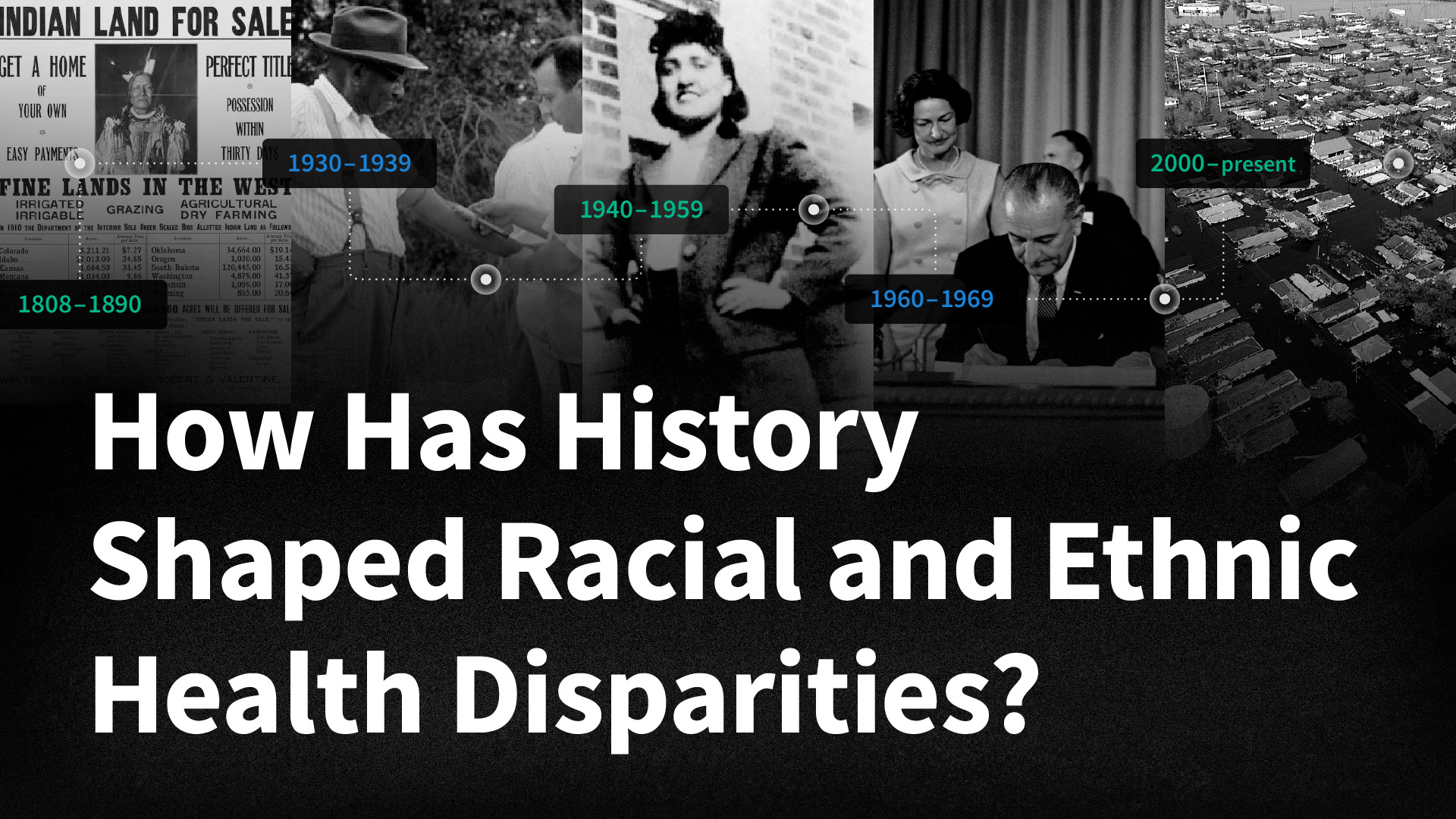
  • Timeline: How History Has Shaped Racial and Ethnic Health Disparities

    This timeline offers a historical view of significant U.S. federal policies and events spanning the early 1800s to today that have influenced present-day health disparities.
  • Health Policy 101: Chapter on Race, Inequality and Health

    Addressing persistent racial and ethnic disparities in health and health care is important for improving the nation’s health and economic prosperity. KFF explains such disparities and the factors that drive them, examines the actions to address them, and outlines future considerations.
  • Key Data on Health and Health Care by Race and Ethnicity

    Racial and ethnic disparities in health and health care remain a persistent challenge in the United States. An updated KFF resource examines how people of color fare compared to White people across 64 measures of health, health care, and social determinants of health.

Survey of Immigrants

KFF-New York Times Survey: Immigrants Report Rising Fear, Negative Economic and Health Impacts, and Changing Political Views During the First Year of President Trump’s Second Term

The 2025 Survey of Immigrants, a partnership between KFF and The New York Times, takes an in-depth look at the experiences of immigrants during the first year of President Trump’s second term, including their worries related to increased immigration enforcement, their health and economic wellbeing, and the political views and preferences of immigrant voters. The survey paints a portrait of families under strain — where fear of detention and economic instability are negatively impacting immigrants’ health and reshaping immigrant families’ daily lives and views of U.S. political parties.

Read the News Release | Explore The New York Times’ Reporting
Stay informed.

Stay informed.

Filter

561 - 570 of 603 Results

  • Potential Effects of Public Charge Changes on Health Coverage for Citizen Children

    Issue Brief

    The Trump Administration is pursuing changes that, for the first time, would allow the federal government to take into account use of Medicaid, CHIP, subsidies for Marketplace coverage and other health, nutrition, and non-cash programs when making public charge determinations. These changes would likely lead to decreased participation in Medicaid, CHIP, Marketplace coverage, and other programs among legal immigrants and their citizen children, even though they would remain eligible.

  • Public Health in Puerto Rico after Hurricane Maria

    Issue Brief

    This issue brief provides a snapshot of key public health challenges in Puerto Rico after Hurricane Maria. It discusses topics such as mortality, food, water, sanitation, health care infrastructure, and mental health on the island in the wake of the storm.

  • Health Coverage by Race and Ethnicity: The Potential Impact of the Affordable Care Act

    Issue Brief

    Executive Summary One of the key goals of the Affordable Care Act (ACA) is to reduce the number of uninsured through a Medicaid expansion and the creation of health insurance exchange marketplaces with advance premium tax credits to help moderate-income individuals pay for this coverage. Given that people of color are at disproportionate risk of being uninsured and having low incomes, the ACA coverage expansions could particularly benefit communities of color and advance efforts to…

  • Putting Men’s Health Care Disparities On The Map: Examining Racial and Ethnic Disparities at the State Level

    Report

    This report documents the persistence of disparities between white men and men of color -- and among different groups within men of color -- on 22 indicators of health and well-being, including rates of diseases such as AIDS, cancer, heart disease and diabetes, as well as insurance coverage and health screenings. It also catalogues disparities in factors that influence health and access to care such as income and education, and other social determinants of health.

  • Advancing Opportunities, Assessing Challenges: Key Themes from a Roundtable Discussion of Health Care and Health Equity in the South

    Issue Brief

    This brief summarizes the primary themes expressed by participants of a roundtable discussion of current and future opportunities and challenges for advancing health care and health equity in the South organized by Kaiser Family Foundation’s Commission on Medicaid and the Uninsured and the Satcher Health Leadership Institute at Morehouse School of Medicine in Atlanta, Georgia.

  • Examining Racial and Ethnic Disparities Among Women at the State Level

    Event Date:
    Event

    A decade after U.S. Surgeon General David Satcher called for the elimination of racial disparities in health, women of color in every state continue to fare worse than white women on a variety of measures of health and health care access. The Foundation has created a package of resources, including a comprehensive report, state fact sheets, and interactive data tables, that illuminate and document the persistence of disparities on 25 indicators between white women and…

  • Resources Examine Racial and Ethnic Disparities Among Men at the State Level

    Other Post

    The Foundation has created a package of resources, including a comprehensive report, fact sheets and other materials, that document the persistence of disparities on 22 indicators between white men and men of color, including rates of diseases such as diabetes, heart disease, AIDS and cancer, and access to health insurance and health screenings. The resources provide a rare look at state-level variations, quantifying where disparities are greatest. Also available are state-level data for men of…