Racial Equity and Health Policy

the Essentials
  • How Experiencing Racial Discrimination Impacts Health

    This brief highlights research examining mechanisms underlying health outcomes linked to self-reported experiences of racial discrimination, including biological changes, chronic stress, mental health, substance use, pregnancy-related outcomes, and sleep.
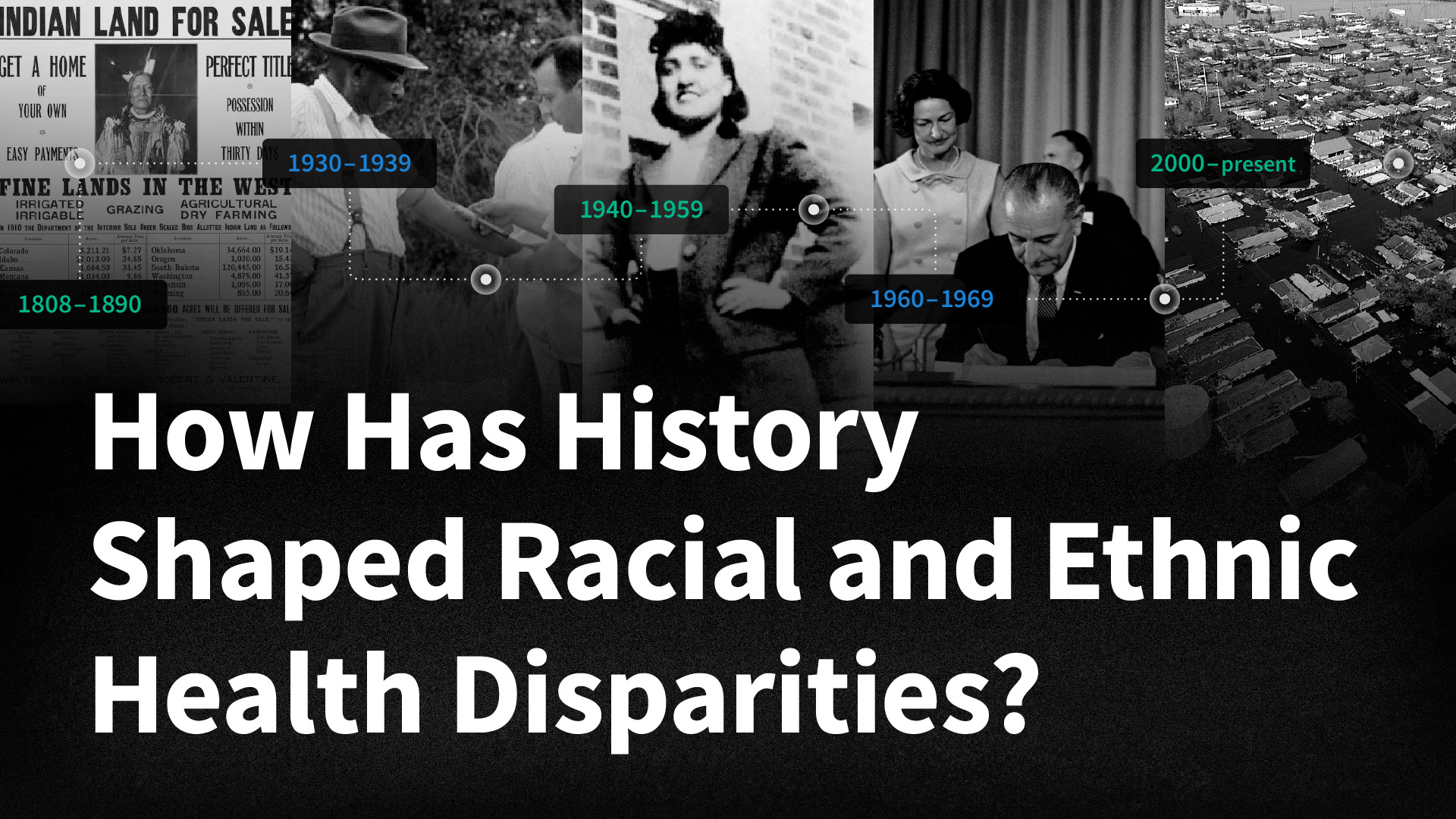
  • Timeline: How History Has Shaped Racial and Ethnic Health Disparities

    This timeline offers a historical view of significant U.S. federal policies and events spanning the early 1800s to today that have influenced present-day health disparities.
  • Health Policy 101: Chapter on Race, Inequality and Health

    Addressing persistent racial and ethnic disparities in health and health care is important for improving the nation’s health and economic prosperity. KFF explains such disparities and the factors that drive them, examines the actions to address them, and outlines future considerations.
  • Key Data on Health and Health Care by Race and Ethnicity

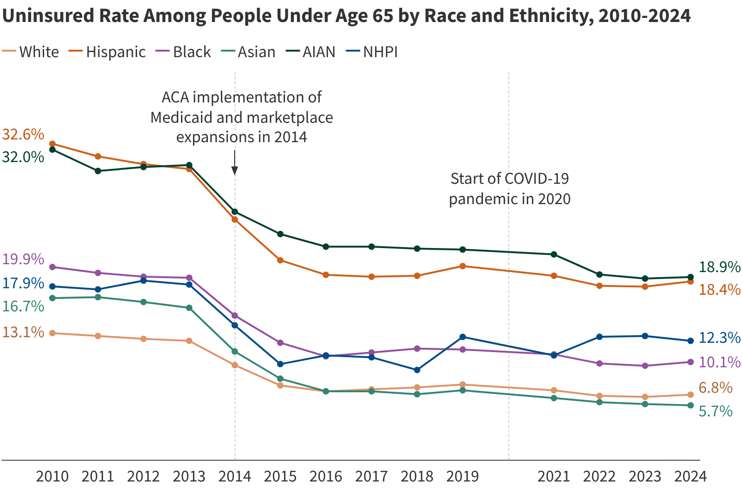
    Racial and ethnic disparities in health and health care remain a persistent challenge in the United States. An updated KFF resource examines how people of color fare compared to White people across 64 measures of health, health care, and social determinants of health.

Survey of Immigrants

KFF-New York Times Survey: Immigrants Report Rising Fear, Negative Economic and Health Impacts, and Changing Political Views During the First Year of President Trump’s Second Term

The 2025 Survey of Immigrants, a partnership between KFF and The New York Times, takes an in-depth look at the experiences of immigrants during the first year of President Trump’s second term, including their worries related to increased immigration enforcement, their health and economic wellbeing, and the political views and preferences of immigrant voters. The survey paints a portrait of families under strain — where fear of detention and economic instability are negatively impacting immigrants’ health and reshaping immigrant families’ daily lives and views of U.S. political parties.

Read the News Release | Explore The New York Times’ Reporting
Stay informed.

Stay informed.

Filter

561 - 570 of 603 Results

  • KFF Briefing Examines Progress and Remaining Challenges for the Health Care Systems in Puerto Rico and U.S. Virgin Islands Six Months After Hurricanes Irma and Maria

    News Release

    Six months after hurricanes Irma and Maria made landfall across Puerto Rico and the U.S. Virgin Islands, local officials described progress but also a long road to full recovery of the U.S. territories’ health care systems, economies and infrastructure during a public briefing Monday at the Kaiser Family Foundation’s Washington D.C. offices. An archived webcast of the 90-minute briefing on the status of the recovery on the islands, with a focus on their health care systems,…

  • Medicaid in the Territories: Program Features, Challenges, and Changes

    Issue Brief

    This brief draws on a survey of and interviews with Medicaid officials in U.S. Territories, as well as other research, to examine key issues and trends in their Medicaid programs. Territories differ from the states on key demographic, economic, and health status indicators. Unlike in the states, where federal Medicaid funding is not capped, and the federal share varies based on states’ per capita income, Medicaid in the territories is subject to a statutory cap…

  • Millions of Seniors Live In Households with School-Age Children

    Issue Brief

    About 3.3 million adults age 65 or older live in a household with school-age children, a factor that state and local officials may want to take into account when deciding when and how fully to re-open schools this fall, a new KFF analysis finds. These older adults, who represent roughly 6 percent of all seniors in the U.S., live with 4.1 million school age children, who comprise about seven percent of all kids ages 5…

  • More Than 3 Million People Age 65 or Older Live with School-Age Children, and Could Be at Heightened Risk of COVID-19 Infection if Children Bring the Virus Home from School

    News Release

    About 3.3 million adults age 65 or older live in a household with school-age children, a factor that state and local officials may want to take into account when deciding when and how fully to re-open schools this fall, a new KFF analysis finds. These older adults, who represent roughly six percent of all seniors in the U.S., live with 4.1 million school age children, who comprise about seven percent of all kids ages 5…

  • Immigrants in the U.S. Continue to Face Health Care Challenges

    Feature

    June marks National Immigrant Heritage Month, which honors the contributions of immigrants to the U.S. As of 2020, there were close to 45 million immigrants residing in the U.S., accounting for 14% of the total U.S. population. Immigrants make up a significant part of the nation’s workforce and families yet face increased barriers to accessing health coverage and care. While citizens account for the majority of the nonelderly uninsured population, noncitizens are much more likely…

  • How Equitable is Access to COVID-19 Treatments?

    Issue Brief

    This issue brief assesses the availability of oral antiviral treatments by county and certain county characteristics, including metro vs. non-metro status, poverty rate, and majority Black, Hispanic, or American Indian or Alaska Native (AIAN).

  • 2023 Update on Key Federal Immigration Policies and Implications for Health

    Issue Brief

    This issue brief provides the latest update on some key evolving immigration policies, including Title 42 as it applies to border enforcement, the Deferred Action for Childhood Arrivals (DACA) program, and the public charge rule and discusses the implications of these policies for the health and well-being of immigrants.