Racial Equity and Health Policy

the Essentials
  • Health Coverage by Race and Ethnicity, 2010-2024

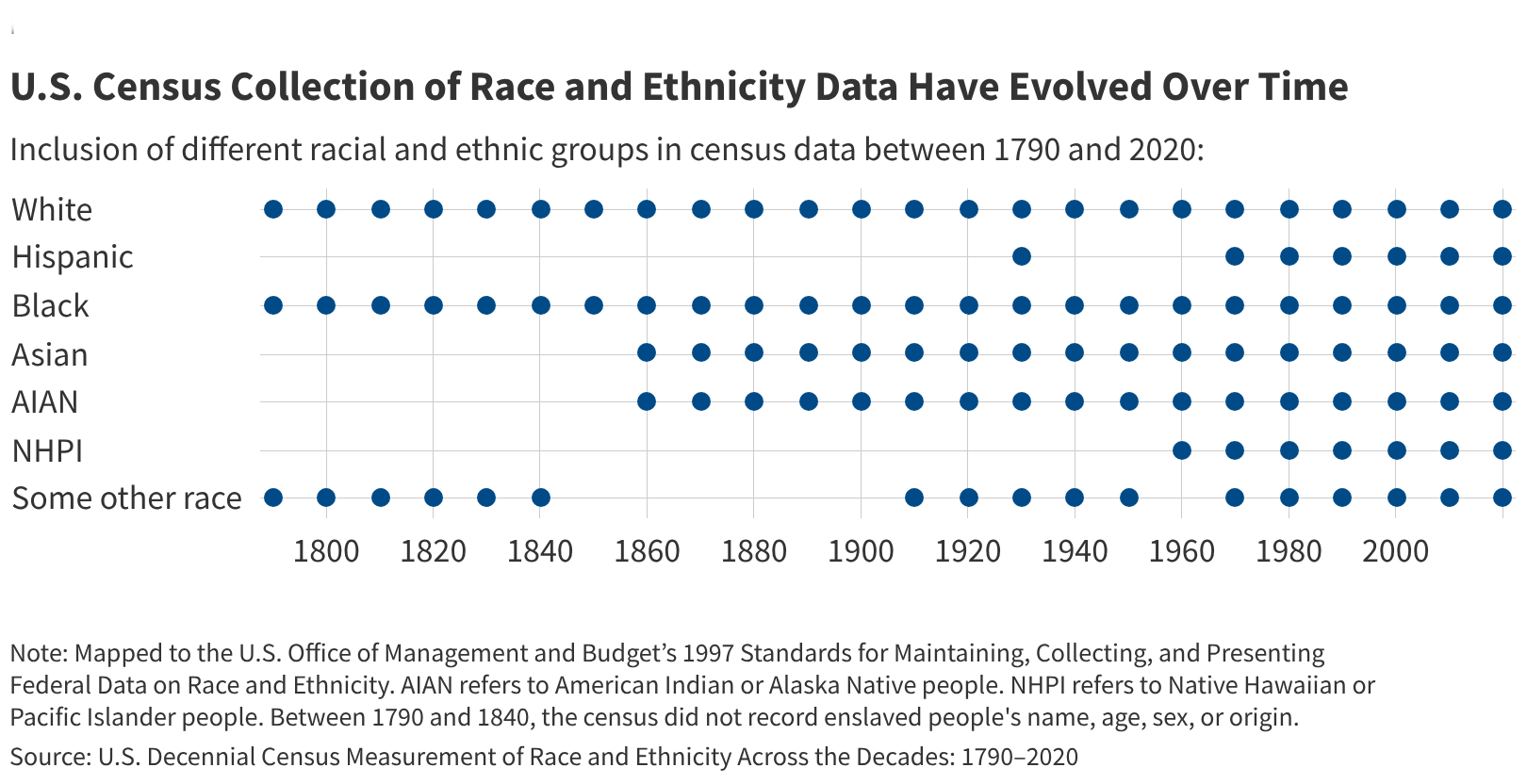
    There have been longstanding racial and ethnic disparities in health coverage that contribute to disparities in health. This brief examines trends in health coverage by race and ethnicity from 2010 through 2024 and discusses the implications for such disparities.
  • Timeline: How History Has Shaped Racial and Ethnic Health Disparities

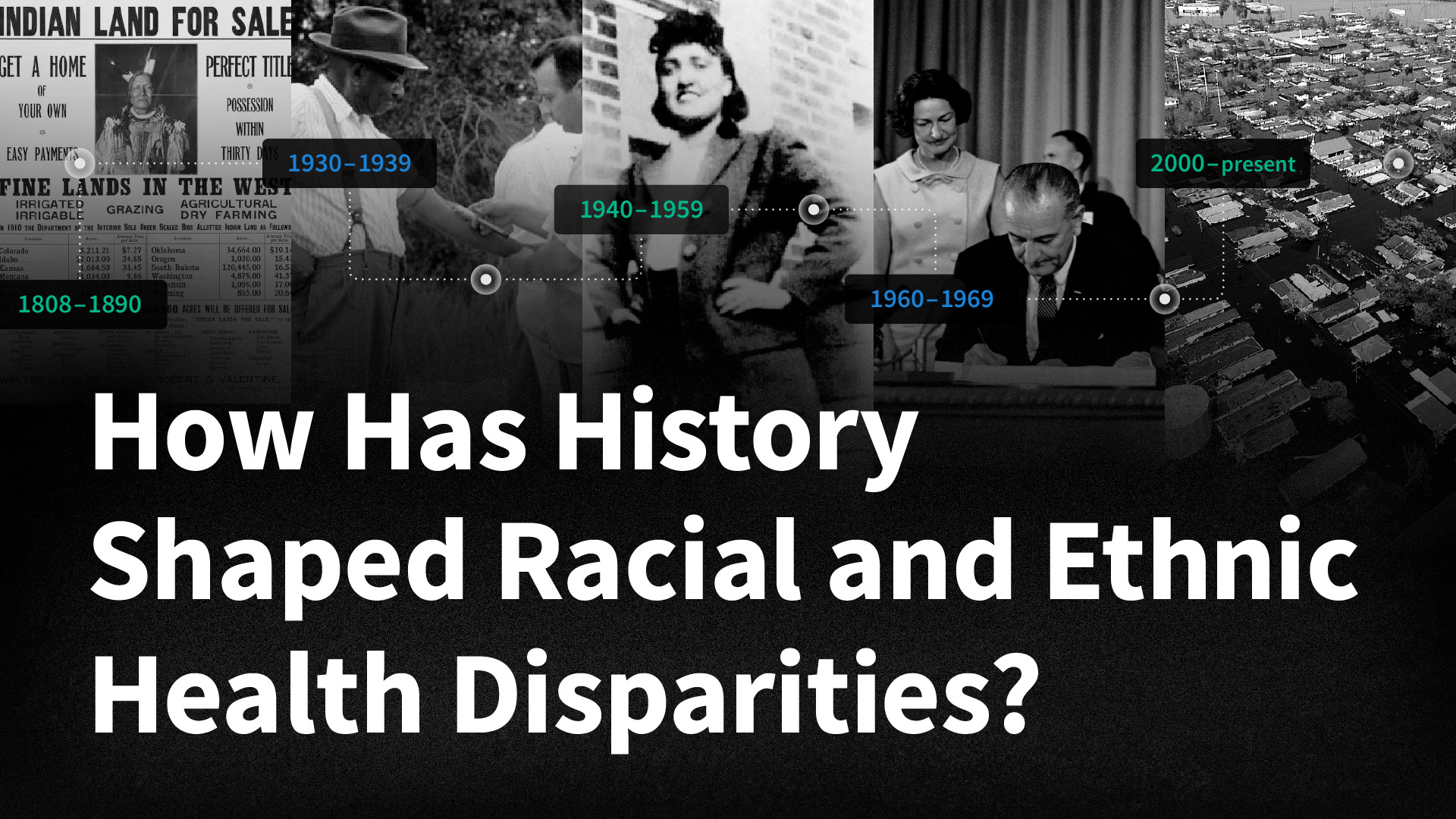
    This timeline offers a historical view of significant U.S. federal policies and events spanning the early 1800s to today that have influenced present-day health disparities.
  • Health Policy 101: Chapter on Race, Inequality and Health

    Addressing persistent racial and ethnic disparities in health and health care is important for improving the nation’s health and economic prosperity. KFF explains such disparities and the factors that drive them, examines the actions to address them, and outlines future considerations.
  • Key Data on Health and Health Care by Race and Ethnicity

    Racial and ethnic disparities in health and health care remain a persistent challenge in the United States. An updated KFF resource examines how people of color fare compared to White people across 64 measures of health, health care, and social determinants of health.

Survey of Immigrants

KFF-New York Times Survey: Immigrants Report Rising Fear, Negative Economic and Health Impacts, and Changing Political Views During the First Year of President Trump’s Second Term

The 2025 Survey of Immigrants, a partnership between KFF and The New York Times, takes an in-depth look at the experiences of immigrants during the first year of President Trump’s second term, including their worries related to increased immigration enforcement, their health and economic wellbeing, and the political views and preferences of immigrant voters. The survey paints a portrait of families under strain — where fear of detention and economic instability are negatively impacting immigrants’ health and reshaping immigrant families’ daily lives and views of U.S. political parties.

Read the News Release | Explore The New York Times’ Reporting
Subscribe to KFF Emails

Choose which emails are best for you.
Sign up here

Filter

561 - 570 of 602 Results

  • Minority Graduates of U.S. Medical Schools: Trends, 1950-1998

    Other Post

    While significant efforts have been made to increase minority representation in the medical profession, very little information about minority medical school graduates and minority physicians has been available to evaluate progress towards this goal. This report, prepared by the Association of American Medical Colleges, provides both trend information in minority medical graduates, as well as the current practice characteristics of minority physicians. It is the first product from a unique database developed from the archives…

  • Immigrants’ Access to Health Care

    Issue Brief

    Immigrants account for 20 percent of the uninsured. There are many reasons for immigrants' lack of coverage, but the welfare reform law of 1996 was significant in restricting Medicaid eligibility for certain immigrant populations. The Kaiser Commission on Medicaid and the Uninsured has produced new reports on immigrant health care: a chart pack highlighting statistics and a policy brief discussing the legal status of Medicaid eligibility. An issue paper summarizing the findings of immigrant focus…

  • Racial and Ethnic Disparities in Access to Health Insurance and Health Care

    Fact Sheet

    Racial and ethnic groups in the United States continue to experience major differences in health status compared to the majority white population. Although many factors affect health status, the lack of health insurance and other barriers to obtaining health services markedly diminish minorities' use of both preventive services and medical treatments. This report, produced in collaboration with the UCLA Center for Health Policy Research, examines health insurance coverage and access to physician services among African…

  • Key Facts: HIV/AIDS and African Americans

    Other Post

    provides an overview of recent data and research on the impact of the HIV/AIDS epidemic on African Americans. The Key Facts document also presents trends in the HIV/AIDS epidemic over time, racial differences in the access to and quality of HIV/AIDS services and includes the attitudes toward and perceptions of HIV/AIDS by race. Report

  • Sources of Financing and the Level of Health Spending for Native Americans

    Report

    This study of Native Americans health care funding and expenditures includes the following: An analysis of all sources of financing and the level of total health expenditures by and on behalf of Native Americans, a detailed analysis of the same data for each of the 12 Indian Health Service areas across the country, an estimate of per-capita spending for health services to Native Americans overall, an illustration of the tribal discrepancies in per capita spending…

  • Reauthorization of the Indian Health Care Improvement Act: Background and Issues

    Report

    An analysis of issues affecting reauthorization of the Indian Health Care Improvement Act. The study examines the historical impact and effectiveness of the current law, its relevance in the context of the contemporary health environment and the issues pertinent to discussions about reauthorization of the Act. Report

  • Race, Ethnicity & Medical Care: A Survey of Public Perceptions and Experiences

    Poll Finding

    Toplines This is a copy of the results of a telephone survey conducted on a random, national sample of nearly 4,000 African American, Latino and white adults, 18 years of age and older. The questions were designed to reveal what each respondent believed about the impact of race and ethnicity on medical care today. Some questions asked about respondents' experiences and others asked about their perceptions. Toplines/Survey Chart Pack This chartpack includes a number of…

  • Perceptions of How Race & Ethnic Background Affect Medical Care

    Report

    This document is a summary of the findings from twelve separate focus groups conducted to better understand how race and ethnic background affect medical care. Seven of the focus groups were minority American health care consumers and the other five focus groups were largely white health care professionals and hospital administrators.

  • Race, Ethnicity and Medical Care: Improving Access in a Diverse Society

    Report

    In an effort to address the racial inequities in health care that exist today, the Kaiser Family Foundation brought together leading public and private sector policymakers -- including health professionals, educators, civil rights leaders, and consumer organizations -- to review the evidence and race and medical care and discuss what can be done to address inequities in care.