Racial Equity and Health Policy

the Essentials
  • How Experiencing Racial Discrimination Impacts Health

    This brief highlights research examining mechanisms underlying health outcomes linked to self-reported experiences of racial discrimination, including biological changes, chronic stress, mental health, substance use, pregnancy-related outcomes, and sleep.
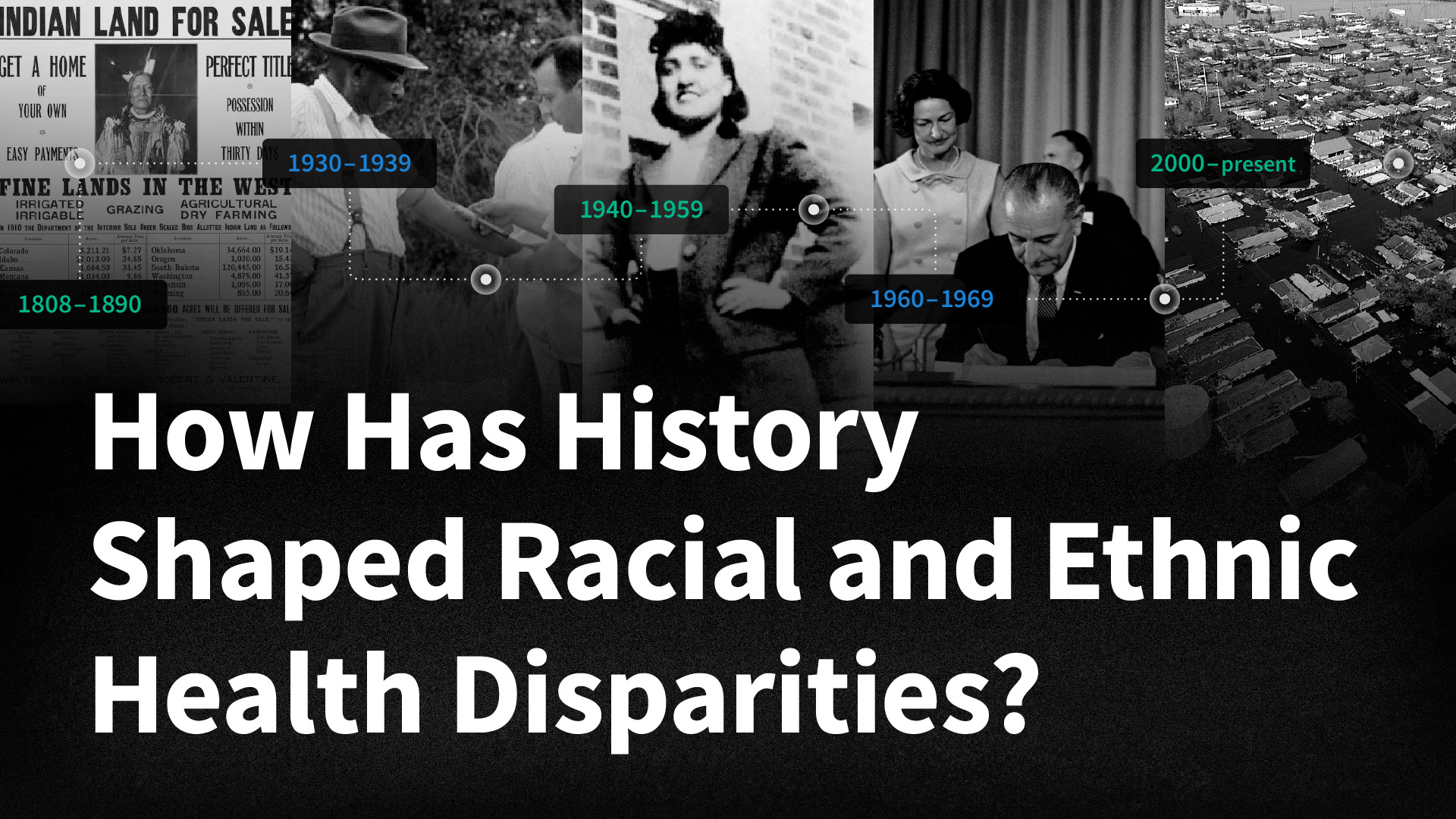
  • Timeline: How History Has Shaped Racial and Ethnic Health Disparities

    This timeline offers a historical view of significant U.S. federal policies and events spanning the early 1800s to today that have influenced present-day health disparities.
  • Health Policy 101: Chapter on Race, Inequality and Health

    Addressing persistent racial and ethnic disparities in health and health care is important for improving the nation’s health and economic prosperity. KFF explains such disparities and the factors that drive them, examines the actions to address them, and outlines future considerations.
  • Key Data on Health and Health Care by Race and Ethnicity

    Racial and ethnic disparities in health and health care remain a persistent challenge in the United States. An updated KFF resource examines how people of color fare compared to White people across 64 measures of health, health care, and social determinants of health.

Survey of Immigrants

KFF-New York Times Survey: Immigrants Report Rising Fear, Negative Economic and Health Impacts, and Changing Political Views During the First Year of President Trump’s Second Term

The 2025 Survey of Immigrants, a partnership between KFF and The New York Times, takes an in-depth look at the experiences of immigrants during the first year of President Trump’s second term, including their worries related to increased immigration enforcement, their health and economic wellbeing, and the political views and preferences of immigrant voters. The survey paints a portrait of families under strain — where fear of detention and economic instability are negatively impacting immigrants’ health and reshaping immigrant families’ daily lives and views of U.S. political parties.

Read the News Release | Explore The New York Times’ Reporting
Stay informed.

Stay informed.

Filter

531 - 540 of 603 Results

  • Voces de Puerto Rico: Reflexiones Dos Meses Después de María (Informe)

    Issue Brief

    Dos meses después que el huracán María tocara tierra, la Kaiser Family Foundation viajó a Puerto Rico. Este informe presenta los resultados de grupos focales y entrevistas individuales con 40 personas de 10 diferentes regiones de la isla afectadas por la tormenta.

  • Voces de Puerto Rico: Reflexiones Dos Meses Después de María (Video)

    Video

    En este video, los residentes de Puerto Rico hablan sobre su vida cotidiana y puntos de vista de los esfuerzos de recuperación dos meses después del huracán María. Describen un clima de frustración, la pérdida de empleo y problemas económicas, la falta de servicios básicos como la electricidad y el efecto en la salud mental y física de la población

  • Potential Effects of Public Charge Changes on Health Coverage for Citizen Children

    Issue Brief

    The Trump Administration is pursuing changes that, for the first time, would allow the federal government to take into account use of Medicaid, CHIP, subsidies for Marketplace coverage and other health, nutrition, and non-cash programs when making public charge determinations. These changes would likely lead to decreased participation in Medicaid, CHIP, Marketplace coverage, and other programs among legal immigrants and their citizen children, even though they would remain eligible.

  • Who are the 3.4 Million People Who Work in the Nation’s Food Production Industries?

    News Release

    Roughly 3.4 million individuals work in food production industries, more than a third of them in animal production and processing where there have been several COVID-19 outbreaks, a new KFF analysis shows. Workers at meat and poultry plants face a higher risk of coronavirus exposure due to the close quarters of their workplaces. The majority of workers in food production – which also include crop production, seafood, and other food manufacturing-- are White and U.S.…

  • Health Policy Resources for Covering the 2020 Elections

    News Release

    As the 2020 Election Day approaches, many candidates continue to focus on health care issues, including on the public health and economic response to COVID-19, the future of the Affordable Care Act, health care costs and abortion. To help reporters understand and cover these issues, KFF offers independent, non-partisan policy analysis, polling and other research and has experts who can provide context, explain trade-offs and provide key data points on health care issues that may arise…

  • Loss of the Affordable Care Act Would Widen Racial Disparities in Health Coverage

    Policy Watch

    In November, the Supreme Court is scheduled to hear arguments on a legal challenge that seeks to overturn the Affordable Care Act (ACA). This analysis shows that new coverage options under the ACA have contributed to large gains in coverage, particularly among people of color, helping to narrow longstanding racial disparities in health coverage.

  • A Court Ruling Striking Down the ACA Would Eliminate the Medicaid Expansion and Cause Millions of Low-Income People to Become Uninsured

    News Release

    Millions of low-income Americans currently covered by Medicaid likely would become uninsured if the Supreme Court were to strike down the Affordable Care Act in California v. Texas, a legal challenge the high court is scheduled to hear in early November, KFF experts explain in a new Policy Watch post. Overturning the ACA would eliminate the expansion of Medicaid, which largely has been financed by the federal government, and eliminate eligibility for Medicaid for low-income…

  • Recent and Anticipated Actions to Reverse Trump Administration Section 1557 Non-Discrimination Rules

    Issue Brief

    The Biden Administration has started taking steps to reverse Trump Administration policy and regulations that significantly narrowed the implementation and administrative enforcement of Section 1557, the Affordable Care Act’s nondiscrimination provision, particularly as the regulations apply to gender identity and sexual orientation. In addition, several lawsuits challenging the regulations, which were initially issued by the Obama Administration and later substantially revised by the Trump Administration, are pending. Section 1557 prohibits discrimination based on race, color,…