Racial Equity and Health Policy

the Essentials
  • How Experiencing Racial Discrimination Impacts Health

    This brief highlights research examining mechanisms underlying health outcomes linked to self-reported experiences of racial discrimination, including biological changes, chronic stress, mental health, substance use, pregnancy-related outcomes, and sleep.
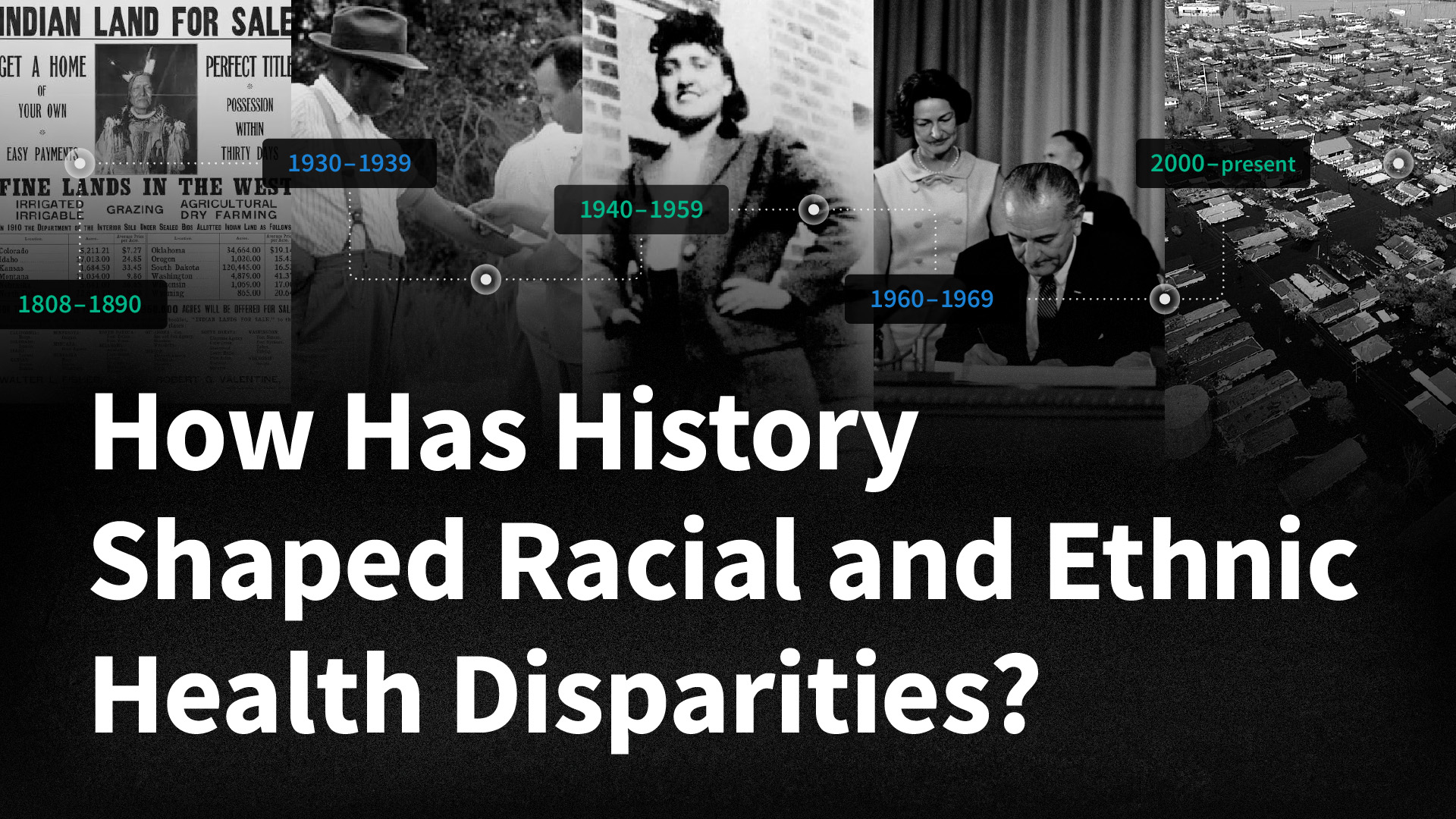
  • Timeline: How History Has Shaped Racial and Ethnic Health Disparities

    This timeline offers a historical view of significant U.S. federal policies and events spanning the early 1800s to today that have influenced present-day health disparities.
  • Health Policy 101: Chapter on Race, Inequality and Health

    Addressing persistent racial and ethnic disparities in health and health care is important for improving the nation’s health and economic prosperity. KFF explains such disparities and the factors that drive them, examines the actions to address them, and outlines future considerations.
  • Key Data on Health and Health Care by Race and Ethnicity

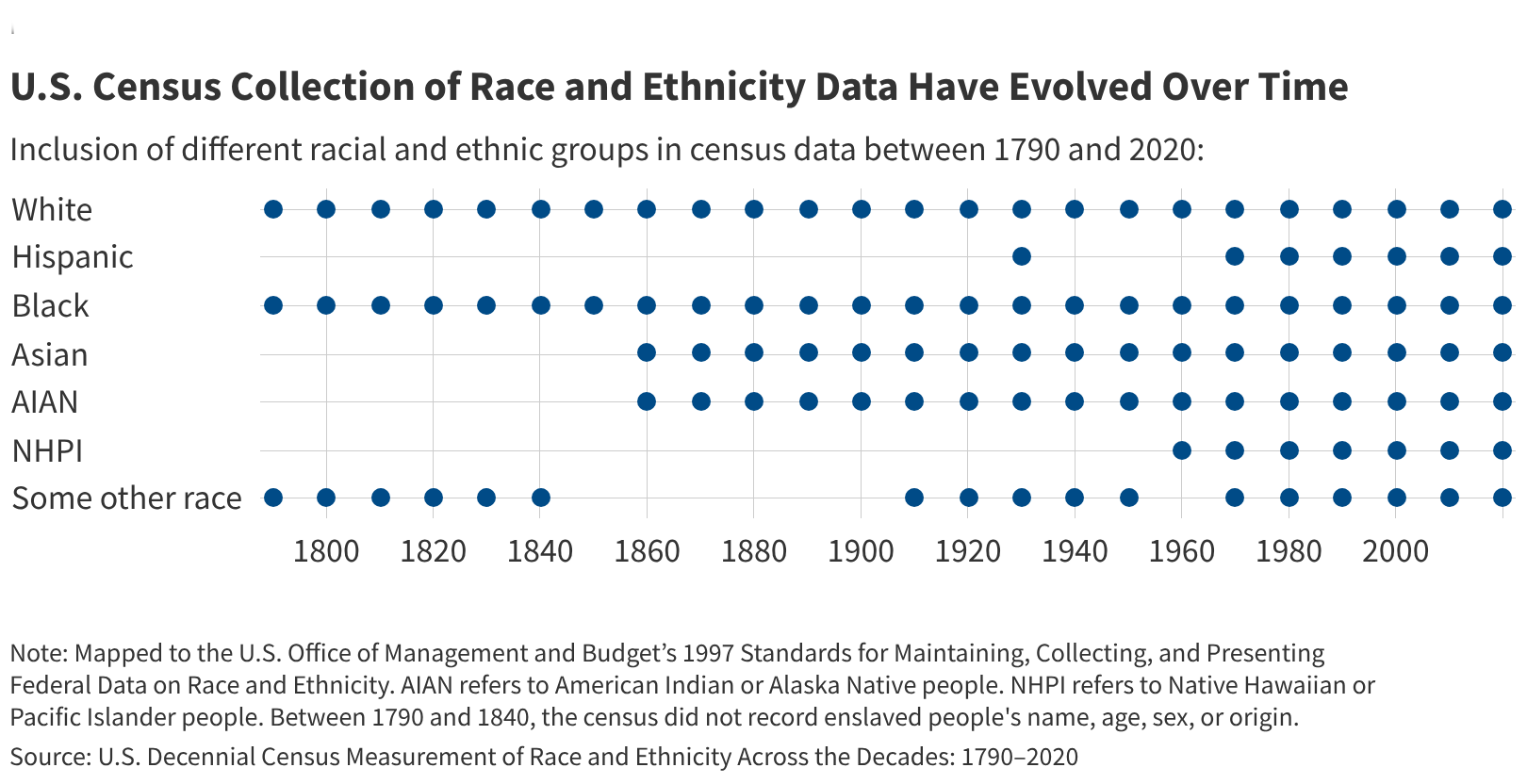
    Racial and ethnic disparities in health and health care remain a persistent challenge in the United States. An updated KFF resource examines how people of color fare compared to White people across 64 measures of health, health care, and social determinants of health.

Survey of Immigrants

KFF-New York Times Survey: Immigrants Report Rising Fear, Negative Economic and Health Impacts, and Changing Political Views During the First Year of President Trump’s Second Term

The 2025 Survey of Immigrants, a partnership between KFF and The New York Times, takes an in-depth look at the experiences of immigrants during the first year of President Trump’s second term, including their worries related to increased immigration enforcement, their health and economic wellbeing, and the political views and preferences of immigrant voters. The survey paints a portrait of families under strain — where fear of detention and economic instability are negatively impacting immigrants’ health and reshaping immigrant families’ daily lives and views of U.S. political parties.

Read the News Release | Explore The New York Times’ Reporting
Stay informed.

Stay informed.

Filter

521-530 of 611 results

  • New Analysis: Updated State Data Continues To Show Wide Disparities in COVID-19 Vaccination Rates by Race/Ethnicity

    News Release

    KFF has an updated analysis of state-reported data as of February 16, 2021 on COVID-19 vaccinations, cases, and deaths by race/ethnicity. New to the analysis are comparisons of vaccination rates in each racial/ethnic group based on state-reported data of total people who have received at least one dose of the vaccine. Among just over half of states reporting data, the vaccination rate among White people is over three times higher than the rate for Hispanic…

  • Medicaid Authorities and Options to Address Social Determinants of Health

    Issue Brief

    Social determinants of health (SDOH) are the conditions in which people are born, grow, live, work and age. While there are limits, states can use Medicaid – which, by design, serves a primarily low-income population with greater social needs – to address social determinants of health. This brief outlines the range of Medicaid authorities and flexibilities that can be used to add benefits and design programs to address the social determinants of health.

  • KFF COVID-19 Vaccine Monitor: December 2020

    Report

    This initial survey for the KFF COVID-19 Vaccine Monitor tracks the public’s attitudes and experiences with COVID-19 vaccinations, with a focus on sub-groups of Americans. It explores confidence in vaccines, assesses trust in messengers, and highlights key challenges for vaccination efforts.

  • Get Ready for a Lot of Biden Executive Orders on Health Care

    Perspective

    In this column for the JAMA Health Forum, Larry Levitt explores what President-elect Biden might do to advance his health care vision both through legislation and through executive orders and waivers and demonstrations.

  • Brief Provides Update on LGBT Coverage and Health as More States Recognize Same-Sex Marriage

    News Release

    An updated issue brief from the Kaiser Family Foundation gives a detailed profile of health concerns for lesbian, gay, bisexual and transgender individuals, offers the latest demographic data, and discusses the impact of recent changes in state and federal policies on health coverage, including the Affordable Care Act and same-sex marriage. As of this month, same-sex marriage is recognized in 32 states and the District of Columbia. The brief, Health and Access to Care and…

  • Pulling It Together: New Orleans Five Years After the Levees Broke

    Perspective

    President Obama's visit to New Orleans on August 29, five years after Hurricane Katrina and the levee failures nearly destroyed the city, presented an opportunity for him to deliver a message on behalf of us all: The country still cares. It was a timely message. Seven-in-ten residents of New Orleans told us in our recent survey that they believe the rest of the country has forgotten them and the difficulties the city still faces in…

  • Immigration Reform and Access to Health Coverage: Key Issues to Consider

    Issue Brief

    The Obama administration and a bipartisan group of U.S. senators recently released blueprints for immigration reform proposals that include a roadmap to citizenship for the 11 million undocumented immigrants currently residing in the United States. Subject to meeting specified requirements, these individuals would be able to apply for a provisional lawful status. After completing an undefined number of years in this status, an individual would then be allowed to apply for lawful permanent residency and,…

  • New Orleans Residents Say Recovery Is Making Progress, But Many Believe The Gulf Oil Spill Will Be More Damaging Than Katrina

    News Release

    Crime is By Far The Biggest Concern in New Orleans Seven in 10 Residents Say Americans Have Forgotten The City’s Plight African-Americans View Their Recovery Differently; It’s Much Slower MENLO PARK, Calif. -- Five years after Hurricane Katrina, an increasing majority of the city’s residents says the rebuilding process is going well, but substantial majorities still report that the city has not recovered and feel the nation has forgotten them, according to a new comprehensive…

  • Filling the Gaps: Dental Care, Coverage and Access

    Event Date:
    Event

    While the Affordable Care Act is expected to expand public and private coverage for children when it takes effect in 2014, significant gaps will remain, especially for low-income adults age 21 and older. This June 19, 2012, a public forum at the Foundation's Washington, D.C. offices examined the gaps and disparities in dental coverage and care in the United States today; the health, social, and other consequences of these systemic deficiencies; and promising strategies for…