Racial Equity and Health Policy

the Essentials
  • Health Coverage by Race and Ethnicity, 2010-2024

    There have been longstanding racial and ethnic disparities in health coverage that contribute to disparities in health. This brief examines trends in health coverage by race and ethnicity from 2010 through 2024 and discusses the implications for such disparities.
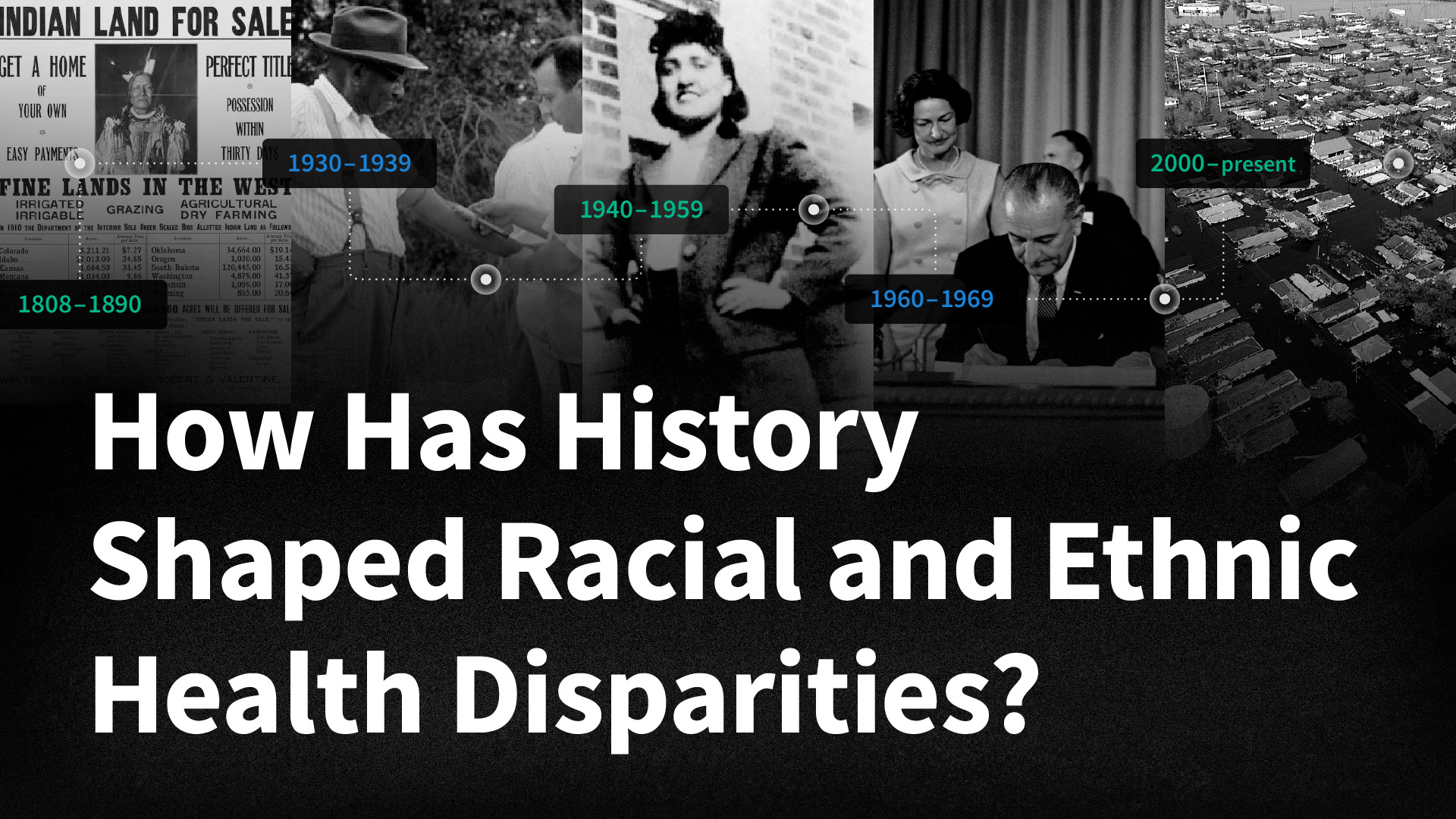
  • Timeline: How History Has Shaped Racial and Ethnic Health Disparities

    This timeline offers a historical view of significant U.S. federal policies and events spanning the early 1800s to today that have influenced present-day health disparities.
  • Health Policy 101: Chapter on Race, Inequality and Health

    Addressing persistent racial and ethnic disparities in health and health care is important for improving the nation’s health and economic prosperity. KFF explains such disparities and the factors that drive them, examines the actions to address them, and outlines future considerations.
  • Key Data on Health and Health Care by Race and Ethnicity

    Racial and ethnic disparities in health and health care remain a persistent challenge in the United States. An updated KFF resource examines how people of color fare compared to White people across 64 measures of health, health care, and social determinants of health.

Survey of Immigrants

KFF-New York Times Survey: Immigrants Report Rising Fear, Negative Economic and Health Impacts, and Changing Political Views During the First Year of President Trump’s Second Term

The 2025 Survey of Immigrants, a partnership between KFF and The New York Times, takes an in-depth look at the experiences of immigrants during the first year of President Trump’s second term, including their worries related to increased immigration enforcement, their health and economic wellbeing, and the political views and preferences of immigrant voters. The survey paints a portrait of families under strain — where fear of detention and economic instability are negatively impacting immigrants’ health and reshaping immigrant families’ daily lives and views of U.S. political parties.

Read the News Release | Explore The New York Times’ Reporting
Subscribe to KFF Emails

Choose which emails are best for you.
Sign up here

Filter

511 - 520 of 602 Results

  • Nearly 8 in 10 Immigrants Who Entered the U.S. Without Legal Permanent Resident Status Have At Least One Characteristic That Could Count Against Them under the New “Public Charge” Rule

    News Release

    Seventy-nine percent of noncitizen residents who originally entered the United States without legal permanent resident status have at least one characteristic that could count against them under the Trump Administration’s new “public charge” rule, according to an updated KFF analysis. Such characteristics – including having an income below 125 percent of the federal poverty level or lacking a high school diploma or private health insurance -- could make it harder for immigrants to obtain admission…

  • Health Care Access and Coverage for the Lesbian, Gay, Bisexual, and Transgender (LGBT) Community in the United States: Opportunities and Challenges in a New Era

    Perspective

    This Policy Insight looks at the challenges and questions surrounding recent policy changes that are expected to increase health insurance coverage and access to care for lesbian, gay, bisexual and transgender (LGBT) individuals and their families, including the impact of the Affordable Care Act (ACA) and the Supreme Court's DOMA decision.

  • Medicaid Financing Cliff: Implications for the Health Care Systems in Puerto Rico and USVI

    Issue Brief

    This brief provides an overview of the status of the health care systems and Medicaid programs in Puerto Rico and the U.S. Virgin Islands (USVI) about one and a half years after Hurricanes Irma and Maria struck the islands in September 2017. The hurricanes exacerbated the territories’ existing economic and health care challenges by accelerating outmigration of residents and health care providers and destroying homes, schools, health care facilities, and other infrastructure. After the storms,…

  • An Early Look at the Affordable Care Act and Women

    News Release

    On Thursday, May 15 at 9:30 a.m. ET, the Kaiser Family Foundation will host a public briefing to release a new report based on the Foundation’s most recent comprehensive survey on women’s health.  This report provides new findings that will be critical to understanding women’s early experiences with the coverage changes that are part of the Affordable Care Act, including the latest information on:  Private and public insurance coverage rates for women  Use of preventive…

  • Examining Racial and Ethnic Disparities Among Women at the State Level

    Event Date:
    Event

    A decade after U.S. Surgeon General David Satcher called for the elimination of racial disparities in health, women of color in every state continue to fare worse than white women on a variety of measures of health and health care access. The Foundation has created a package of resources, including a comprehensive report, state fact sheets, and interactive data tables, that illuminate and document the persistence of disparities on 25 indicators between white women and…

  • Excess Medical Expenditures Due to Health Inequities

    Feature

    Excess Medical Expenditures Due to Health Inequities Download Source LaVeist, T., Gaskin, D., and P. Richard, “The Economic Burden of Health Inequalities in the United States,” Joint Center for Political and Economic Studies, September 2009,