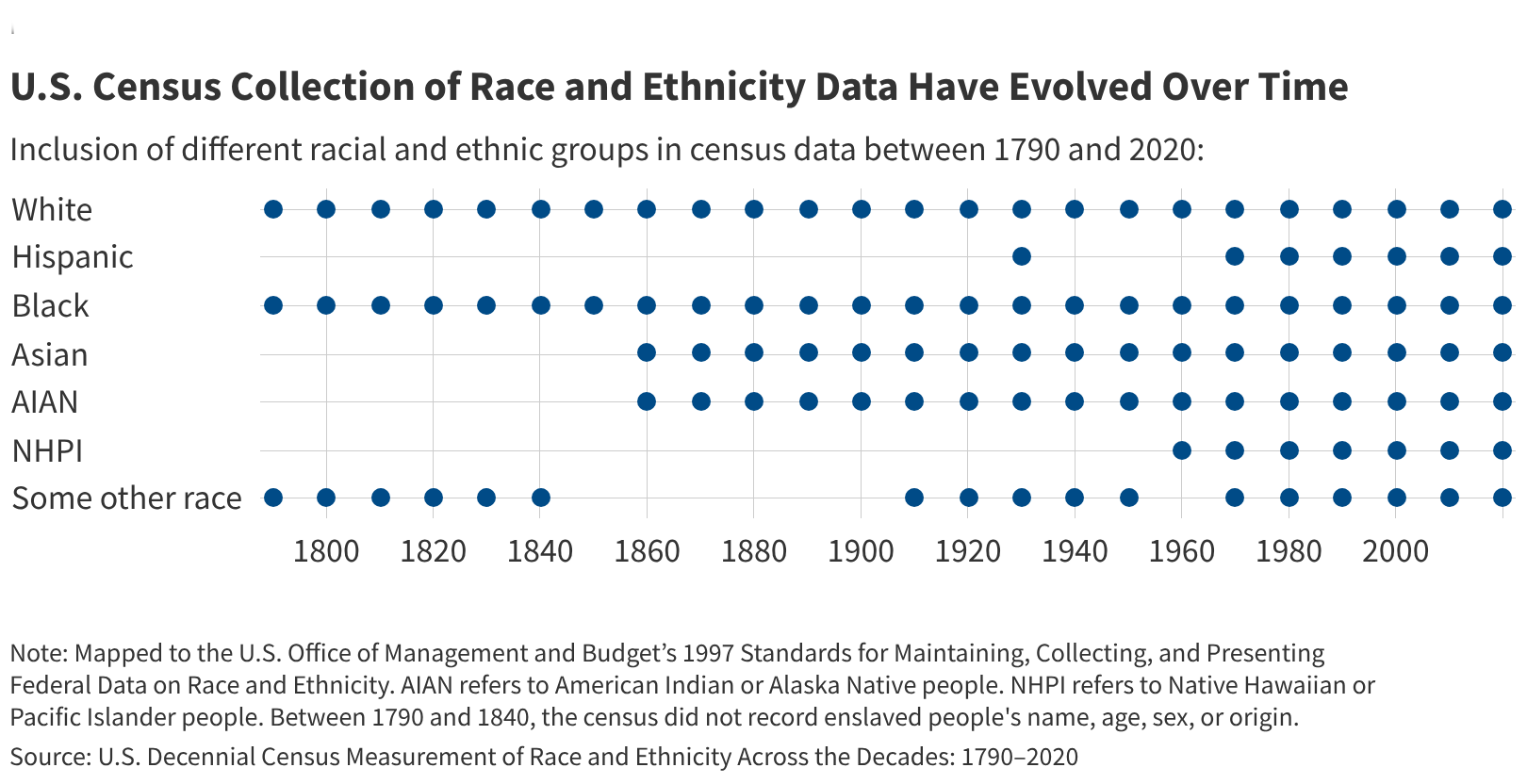
Racial Equity and Health Policy

the Essentials
  • How Experiencing Racial Discrimination Impacts Health

    This brief highlights research examining mechanisms underlying health outcomes linked to self-reported experiences of racial discrimination, including biological changes, chronic stress, mental health, substance use, pregnancy-related outcomes, and sleep.
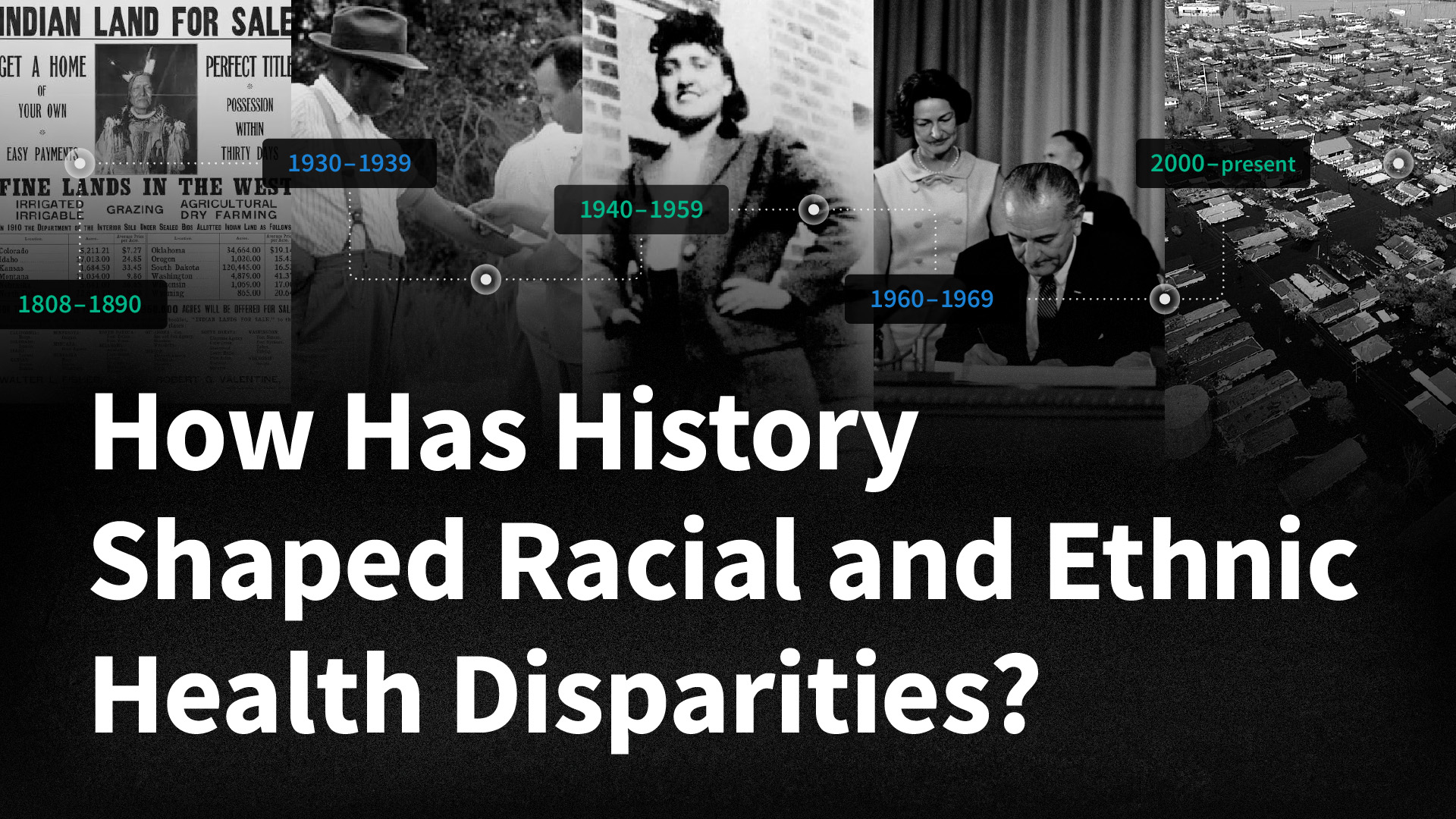
  • Timeline: How History Has Shaped Racial and Ethnic Health Disparities

    This timeline offers a historical view of significant U.S. federal policies and events spanning the early 1800s to today that have influenced present-day health disparities.
  • Health Policy 101: Chapter on Race, Inequality and Health

    Addressing persistent racial and ethnic disparities in health and health care is important for improving the nation’s health and economic prosperity. KFF explains such disparities and the factors that drive them, examines the actions to address them, and outlines future considerations.
  • Key Data on Health and Health Care by Race and Ethnicity

    Racial and ethnic disparities in health and health care remain a persistent challenge in the United States. An updated KFF resource examines how people of color fare compared to White people across 64 measures of health, health care, and social determinants of health.

Survey of Immigrants

KFF-New York Times Survey: Immigrants Report Rising Fear, Negative Economic and Health Impacts, and Changing Political Views During the First Year of President Trump’s Second Term

The 2025 Survey of Immigrants, a partnership between KFF and The New York Times, takes an in-depth look at the experiences of immigrants during the first year of President Trump’s second term, including their worries related to increased immigration enforcement, their health and economic wellbeing, and the political views and preferences of immigrant voters. The survey paints a portrait of families under strain — where fear of detention and economic instability are negatively impacting immigrants’ health and reshaping immigrant families’ daily lives and views of U.S. political parties.

Read the News Release | Explore The New York Times’ Reporting
Stay informed.

Stay informed.

Filter

511-520 of 611 results

  • Two Studies Draw Different Conclusions on State of Black America

    From Drew Altman

    In this column for The Wall Street Journal's Think Tank, Drew Altman discusses how studies with conflicting views of progress and problems for African Americans can both be true, and why African Americans may feel the problems more than the progress.

  • Puerto Rico: Datos Básicos

    Fact Sheet

    Puerto Rico: Datos Básicos provee una descripción general del las características demográficas, y estadísticas de salud y la economía. También se da alguna informacion del gobierno, reglas federales de Medicaid, y asuntos corrientes que estan afectando el territorio, incluyendo a Zika.

  • 8 Questions & Answers about Puerto Rico

    Fact Sheet

    These slides provide a quick snapshot of Puerto Rico’s population, as well as current and upcoming issues that are impacting the island’s health care system.

  • What Do We Know about Social Determinants of Health in the U.S. and Comparable Countries?

    Feature

    Social determinants, such as individual and community behaviors, economic circumstances, and environmental factors, can influence health costs and outcomes, despite being outside the control of the health system in some respects. This slideshow explores social determinants and health outcomes in the United States and similar countries. The collection looks at income inequality, obesity, educational attainment, and rates of insurance, as well as behaviors such as cigarette and alcohol consumption. Health outcomes, such as disease burden…

  • Key Data on Health and Health Coverage in South Carolina

    Fact Sheet

    This fact sheet draws on data from “Health and Health Coverage in the South: A Data Update” to highlight findings for South Carolina. The findings show the current status of health and health coverage in the state and the potential coverage gains that may be achieved through the Affordable Care Act.

  • More than 8 in 10 Workers With Spousal Health Benefits Have Access to Same-Sex Spousal Benefits, Analysis Finds

    News Release

    Following two major Supreme Court rulings on same-sex marriage, a new Kaiser Family Foundation data note finds that in 2016, 84 percent of employees who worked at firms offering spousal health benefits also had access to same-sex spousal benefits. Eight percent did not have access, while another 8 percent worked at firms who reported they had not encountered this benefits issue. The data note draws from responses to the Kaiser/Health Research & Educational Trust (Kaiser/HRET)…

  • Under the Affordable Care Act, People of Color Have Seen Greater Gains in Health Coverage But Remain More Likely Than Whites to Be Uninsured

    News Release

    The uninsured rate has fallen among all racial and ethnic groups under the Affordable Care Act with steeper declines among people of color compared to Whites, according to a new analysis by the Kaiser Family Foundation. The findings for Hispanics were especially striking. Between 2013 and 2015, the uninsured rate for Hispanics fell from 26 percent to 17 percent – a sharper decline than for any other group. Nationally, the total number of nonelderly uninsured…

  • Estimates of Eligibility for ACA Coverage among the Uninsured by Race and Ethnicity

    Issue Brief

    This analysis provides national estimates of eligibility for ACA coverage options by race/ethnicity, including Whites, Blacks, and Hispanics. We estimate coverage and eligibility as of early 2015, which is prior to the end of the 2015 Marketplace open enrollment period. Overall, this analysis finds that more than half (55%) of the total 32.3 million nonelderly uninsured are people of color, including 34% who identify as Hispanic, 14% who identify as Black, and 8% who identify…