Racial Equity and Health Policy

Survey of Immigrants

KFF-New York Times Survey: Immigrants Report Rising Fear, Negative Economic and Health Impacts, and Changing Political Views During the First Year of President Trump’s Second Term

The 2025 Survey of Immigrants, a partnership between KFF and The New York Times, takes an in-depth look at the experiences of immigrants during the first year of President Trump’s second term, including their worries related to increased immigration enforcement, their health and economic wellbeing, and the political views and preferences of immigrant voters. The survey paints a portrait of families under strain — where fear of detention and economic instability are negatively impacting immigrants’ health and reshaping immigrant families’ daily lives and views of U.S. political parties.

Read the News Release | Explore The New York Times’ Reporting
the Essentials
  • Disparities in Health and Health Care: 5 Key Questions and Answers

    This brief provides an introduction to what health and health care disparities are, why it is important to address them, what the status of disparities is today, recent federal actions to address disparities, and key issues related to addressing disparities in the future.
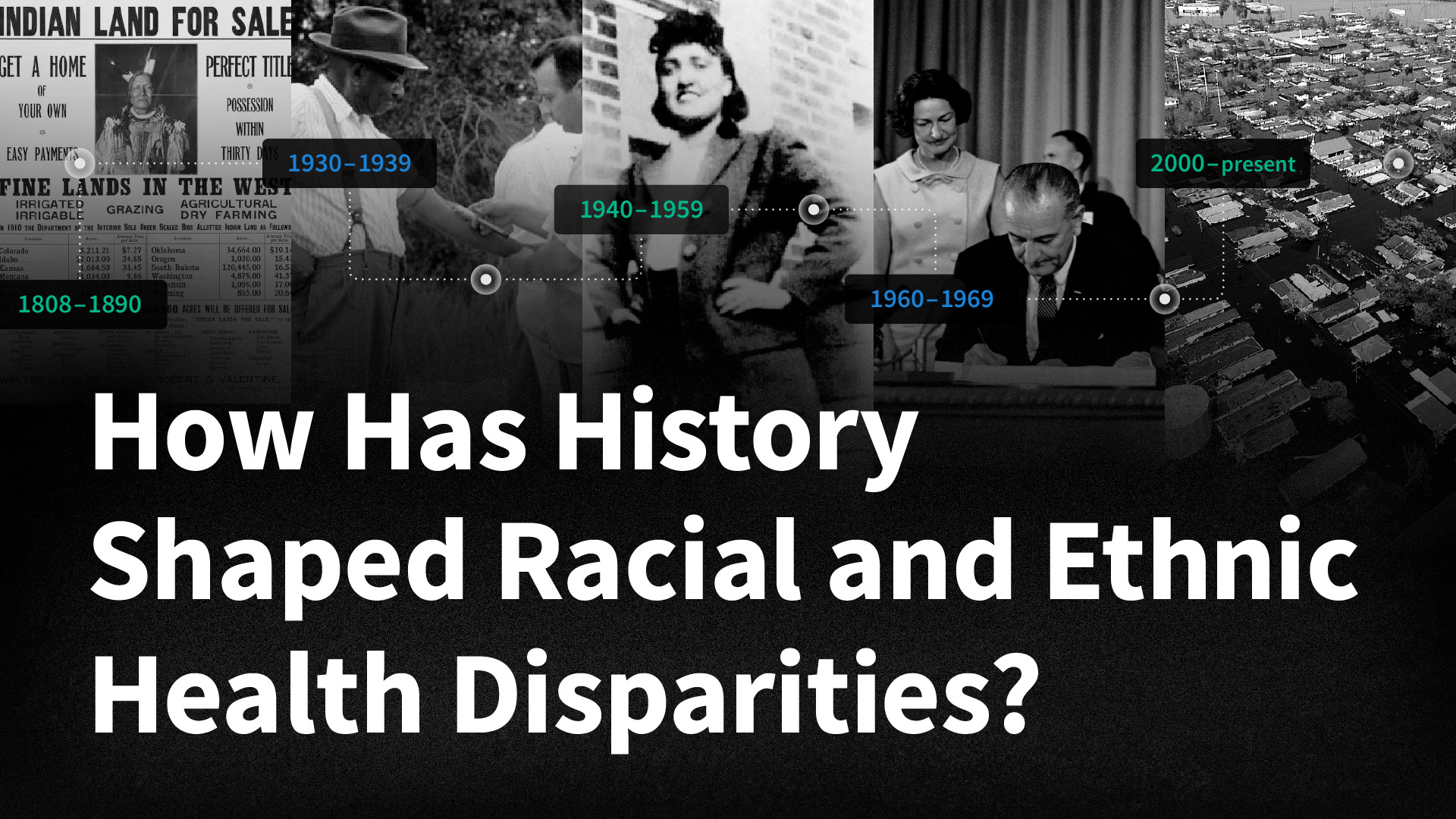
  • Timeline: How History Has Shaped Racial and Ethnic Health Disparities

    This timeline offers a historical view of significant U.S. federal policies and events spanning the early 1800s to today that have influenced present-day health disparities.
  • Health Policy 101: Chapter on Race, Inequality and Health

    Addressing persistent racial and ethnic disparities in health and health care is important for improving the nation’s health and economic prosperity. KFF explains such disparities and the factors that drive them, examines the actions to address them, and outlines future considerations.
  • Key Data on Health and Health Care by Race and Ethnicity

    Racial and ethnic disparities in health and health care remain a persistent challenge in the United States. An updated KFF resource examines how people of color fare compared to White people across 64 measures of health, health care, and social determinants of health.

Subscribe to KFF Emails

Choose which emails are best for you.
Sign up here

Filter

471 - 480 of 597 Results

  • A 50-State Review of Access to State Medicaid Program Information for People with Limited English Proficiency and/or Disabilities Ahead of the PHE Unwinding

    Issue Brief

    This issue brief reviews accessibility of information for people with LEP and people with disabilities provided through state Medicaid websites and call center automated phone trees as of June 16, 2022. The analysis shows that while states have taken some steps to support access to information and applications for people with LEP and people with disabilities, gaps in accessibility remain.

  • Early Data Show Racial Disparities in Monkeypox Cases

    Policy Watch

    This policy watch examines early data showing that Black and Hispanic people are bearing a disproportionate burden of monkeypox cases and discusses the importance of centering equity in response efforts, including prevention, testing, and treatment.

  • Monkeypox (MPX) Cases and Vaccinations by Race/Ethnicity

    Issue Brief

    A small number of states, as well as some local jurisdictions, are reporting race/ethnicity data on MPX cases and vaccinations and these data show a disproportionate impact of MPX cases on Black and Hispanic people. The data available to date on vaccinations also suggest that Black and Hispanic people are receiving smaller shares of vaccinations despite accounting for larger shares of cases.

  • Gaps in Mental Health Care for Asian and Pacific Islander People and Other People of Color

    Policy Watch

    Response to the victims and communities affected by recent mass shootings has increased national attention to mental health care for Asian and NHOPI people, groups that too often remain overlooked in data and policy discussions related to health disparities. In this analysis, we explore mental illness and low utilization of mental health services among Asian and NHOPI people.

  • How Recognizing Health Disparities for Black People is Important for Change

    Policy Watch

    Ongoing racism and discrimination, police violence against and killings of Black people, and gun violence also negatively impact health and well-being of Black people. Black people’s repeated and chronic exposure to stressors associated with racism and discrimination drive rapid biological aging and poorer health outcomes.

  • Disparities in Health and Health Care Among Black People

    Other Post

    This infographic looks at the persistent disparities in health and health care for Black people, which reflect structural and systematic inequities rooted in racism and discrimination. Although disparities in health coverage for Black people narrowed after passage of the Affordable Care Act, they continue to face higher rates of illness and death compared to White people.

  • Unwinding of the PHE: Maintaining Medicaid for People with Limited English Proficiency

    Issue Brief

    Provisions in the Families First Coronavirus Response Act (FFCRA) require states to maintain continuous Medicaid enrollment for enrollees until the end of the month when the COVID-19 public health emergency (PHE) ends. When the continuous enrollment requirements end and states resume redeterminations and disenrollments, individuals with LEP may be at increased risk of losing Medicaid coverage or experiencing a gap in coverage due to barriers completing these processes, even if they remain eligible for coverage.