Racial Equity and Health Policy

the Essentials
  • How Experiencing Racial Discrimination Impacts Health

    This brief highlights research examining mechanisms underlying health outcomes linked to self-reported experiences of racial discrimination, including biological changes, chronic stress, mental health, substance use, pregnancy-related outcomes, and sleep.
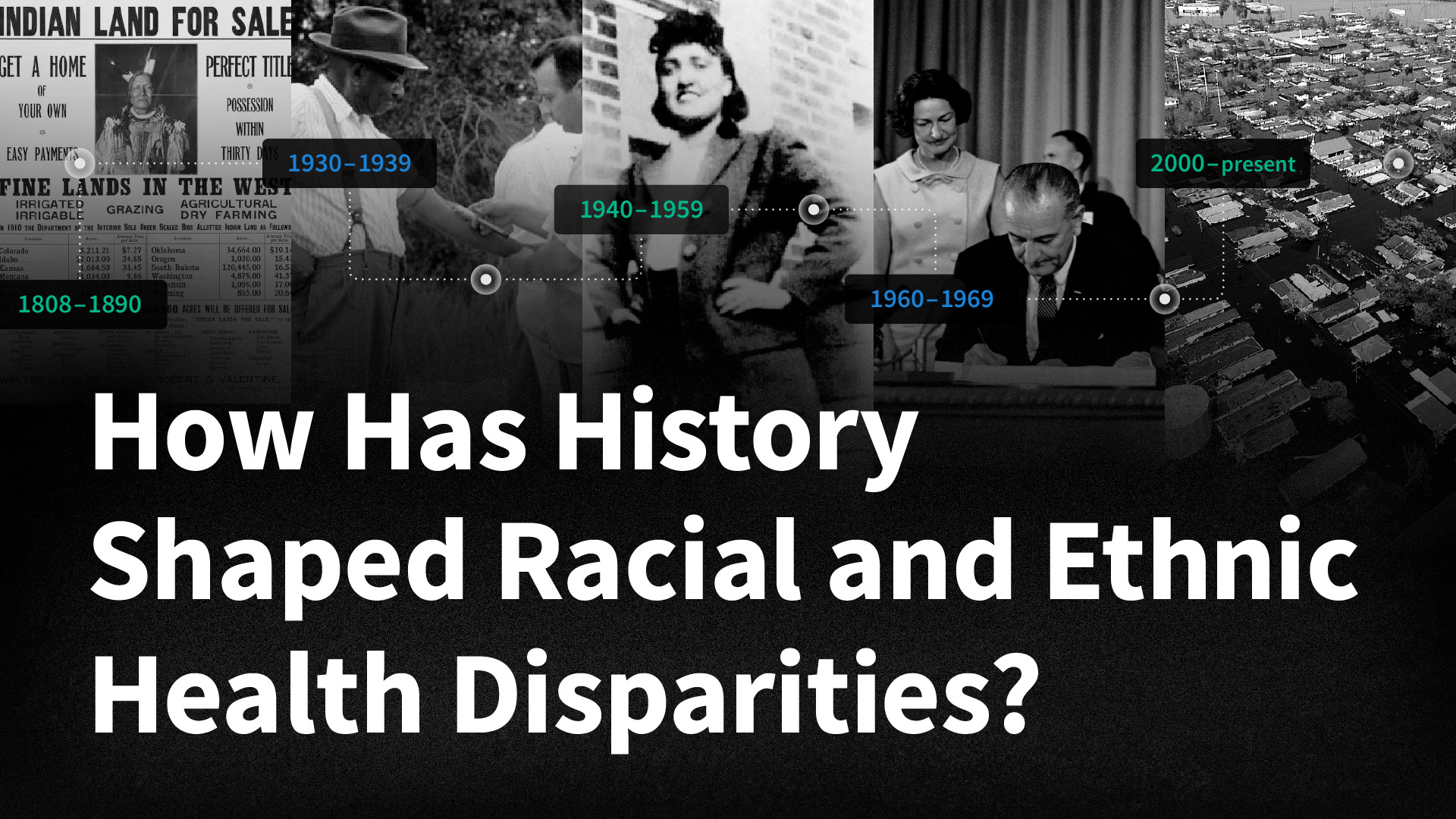
  • Timeline: How History Has Shaped Racial and Ethnic Health Disparities

    This timeline offers a historical view of significant U.S. federal policies and events spanning the early 1800s to today that have influenced present-day health disparities.
  • Health Policy 101: Chapter on Race, Inequality and Health

    Addressing persistent racial and ethnic disparities in health and health care is important for improving the nation’s health and economic prosperity. KFF explains such disparities and the factors that drive them, examines the actions to address them, and outlines future considerations.
  • Key Data on Health and Health Care by Race and Ethnicity

    Racial and ethnic disparities in health and health care remain a persistent challenge in the United States. An updated KFF resource examines how people of color fare compared to White people across 64 measures of health, health care, and social determinants of health.

Survey of Immigrants

KFF-New York Times Survey: Immigrants Report Rising Fear, Negative Economic and Health Impacts, and Changing Political Views During the First Year of President Trump’s Second Term

The 2025 Survey of Immigrants, a partnership between KFF and The New York Times, takes an in-depth look at the experiences of immigrants during the first year of President Trump’s second term, including their worries related to increased immigration enforcement, their health and economic wellbeing, and the political views and preferences of immigrant voters. The survey paints a portrait of families under strain — where fear of detention and economic instability are negatively impacting immigrants’ health and reshaping immigrant families’ daily lives and views of U.S. political parties.

Read the News Release | Explore The New York Times’ Reporting
Stay informed.

Stay informed.

Filter

471 - 480 of 603 Results

  • As the COVID-19 Pandemic Enters the Third Year Most Adults Say They Have Not Fully Returned to Pre-Pandemic ‘Normal’

    News Release

    People of Color, Lower Income Adults, and Those With Chronic Conditions Are More Vigilant About COVID-19 Precautions Like Masking, and Want Others to Continue Them as Well The Public Is Divided About Public Transportation Mask Requirement, With Half Wanting the Mandate Extended and the Other Half Wanting to Let it Expire Conventional wisdom may be that Americans are ready to put COVID-19 in the rearview mirror and cast precautions aside, but the latest KFF COVID-19…

  • Mitigating Childhood Lead Exposure and Disparities: Medicaid and Other Federal Initiatives

    Issue Brief

    Exposure to lead can seriously harm a child’s health, including damage to the brain and nervous system, slowed growth and development, learning and behavior problems, and hearing and speech problems. The effects of lead on the nervous system can cause lower IQ, decreased ability to pay attention, and under performance in school.

  • Climate Change and Health Equity: Key Questions and Answers

    Issue Brief

    While climate change poses health threats for everyone, people of color, low-income people, and other marginalized or high-need groups face disproportionate risks due to underlying inequities and structural racism and discrimination.

  • 4 Key Q&As About the Impact of Climate Change on Health Equity

    News Release

    While climate change effects ripple across the world and all populations, it is poised to disproportionately affect people of color, low-income communities, immigrants, and other high-need groups. Many of these groups have historically been exposed to climate hazards due to government policies and discriminatory practices that leave them more vulnerable to adverse climate events like record-breaking heat, wildfires, coastal flooding, and the spread of infectious diseases. A new KFF brief looks at key questions about…

  • State Policies Connecting Justice-Involved Populations to Medicaid Coverage and Care

    Issue Brief

    The COVID-19 pandemic has magnified pre-existing health disparities for justice-involved populations, with coronavirus infection rates among incarcerated populations higher than overall infection rates in nearly all states. Justice-involved individuals are disproportionately low-income and often have complex and/or chronic conditions, including behavioral health needs. Although the statutory inmate exclusion policy prohibits Medicaid from covering services provided during incarceration (except for inpatient services), states may take other steps to leverage Medicaid to improve continuity of care for…

  • Immigrants in the U.S. Continue to Face Health Care Challenges

    Feature

    June marks National Immigrant Heritage Month, which honors the contributions of immigrants to the U.S. As of 2020, there were close to 45 million immigrants residing in the U.S., accounting for 14% of the total U.S. population. Immigrants make up a significant part of the nation’s workforce and families yet face increased barriers to accessing health coverage and care. While citizens account for the majority of the nonelderly uninsured population, noncitizens are much more likely…