Racial Equity and Health Policy

Survey of Immigrants

KFF-New York Times Survey: Immigrants Report Rising Fear, Negative Economic and Health Impacts, and Changing Political Views During the First Year of President Trump’s Second Term

The 2025 Survey of Immigrants, a partnership between KFF and The New York Times, takes an in-depth look at the experiences of immigrants during the first year of President Trump’s second term, including their worries related to increased immigration enforcement, their health and economic wellbeing, and the political views and preferences of immigrant voters. The survey paints a portrait of families under strain — where fear of detention and economic instability are negatively impacting immigrants’ health and reshaping immigrant families’ daily lives and views of U.S. political parties.

Read the News Release | Explore The New York Times’ Reporting
the Essentials
  • Disparities in Health and Health Care: 5 Key Questions and Answers

    This brief provides an introduction to what health and health care disparities are, why it is important to address them, what the status of disparities is today, recent federal actions to address disparities, and key issues related to addressing disparities in the future.
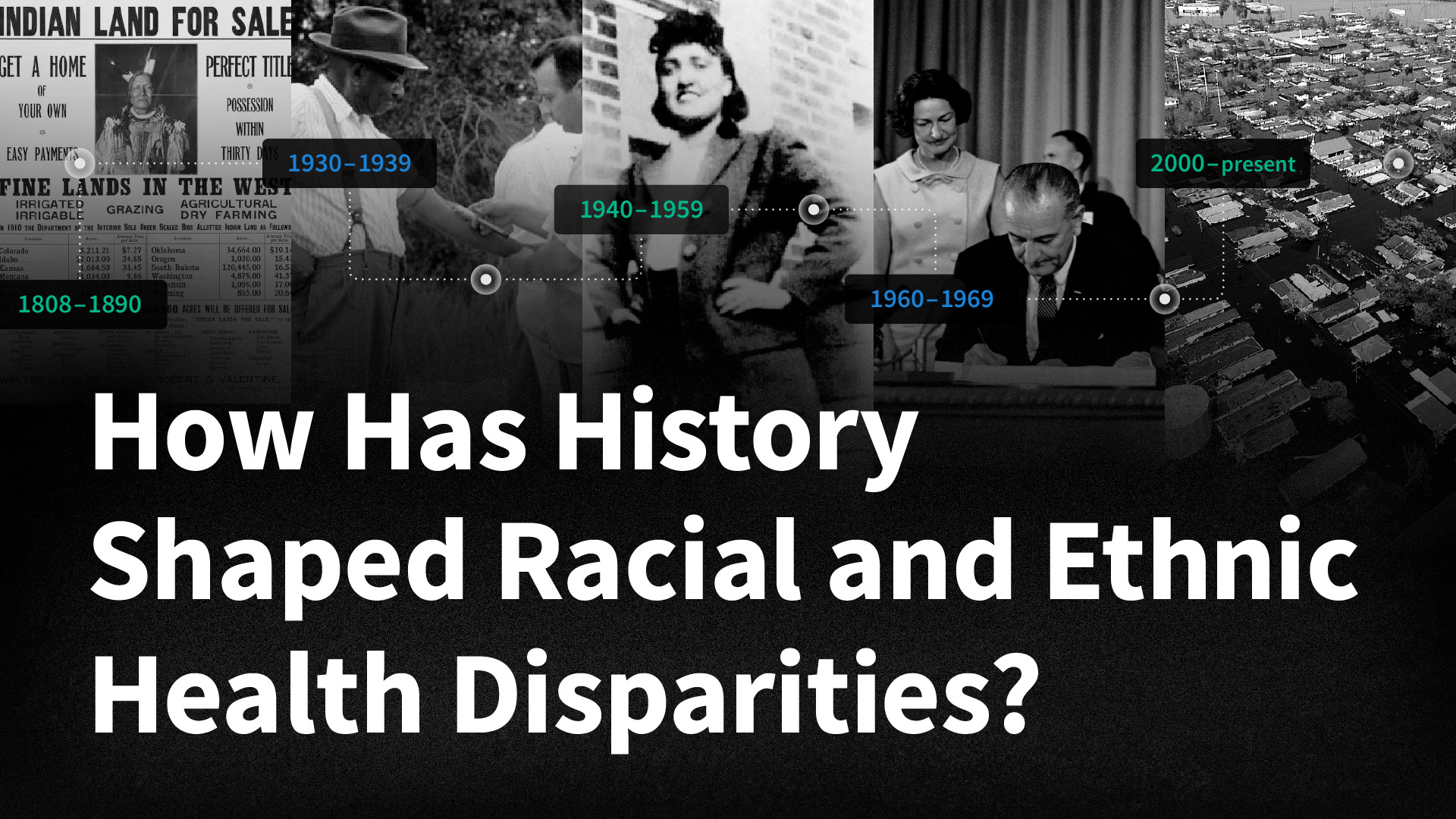
  • Timeline: How History Has Shaped Racial and Ethnic Health Disparities

    This timeline offers a historical view of significant U.S. federal policies and events spanning the early 1800s to today that have influenced present-day health disparities.
  • Health Policy 101: Chapter on Race, Inequality and Health

    Addressing persistent racial and ethnic disparities in health and health care is important for improving the nation’s health and economic prosperity. KFF explains such disparities and the factors that drive them, examines the actions to address them, and outlines future considerations.
  • Key Data on Health and Health Care by Race and Ethnicity

    Racial and ethnic disparities in health and health care remain a persistent challenge in the United States. An updated KFF resource examines how people of color fare compared to White people across 64 measures of health, health care, and social determinants of health.

Subscribe to KFF Emails

Choose which emails are best for you.
Sign up here

Filter

461 - 470 of 601 Results

  • Rethinking the Use of Race in Medicine

    News Release

    The COVID-19 pandemic has shined a spotlight on racial disparities in health and health care, but disparities are hardly new. They have been driven by longstanding inequities within and beyond the health care system that are rooted in racism. KFF Vice President Samantha Artiga, who directs the Racial Equity and Health Policy Program, in this new video discusses how the medical system continues to use race in ways that may perpetuate disparities, including through provider…

  • Understanding and Addressing Racial Disparities in Cancer Outcomes, Care, and Treatment

    Event Date:
    Event

    KFF and the American Society of Clinical Oncology (ASCO) hosted a web event on February 3, 2022 featuring oncologists, patient advocates, and policy researchers with expertise in equity and cancer care to examine persistent racial disparities in cancer. Expert panelists shared real-life experiences, provided context on the latest data, and discussed a range of actions which could help ensure that all individuals with cancer receive the highest quality, equitable cancer care and help to eliminate…

  • Racial Disparities in COVID-19 Impacts and Vaccinations for Children

    Issue Brief

    COVID-19 has disproportionately negatively affected the physical and mental health, academic growth, and economic security of children of color. At the same time, the limited data available to date suggest some children of color may be less likely to receive a COVID-19 vaccine, leaving them at elevated risk as the virus continues to spread and as many return to in-person school.

  • Medicaid Administrative Data: Challenges with Race, Ethnicity, and Other Demographic Variables

    Issue Brief

    There are persistent disparities in health and health care for people of color, which reflect structural and systemic inequities rooted in racism and discrimination. High-quality comprehensive data are key to enabling policymakers, community leaders, and other key stakeholders to identify and address these inequities and measure progress over time. Medicaid/CHIP administrative data, also known as Transformed Medicaid Statistical Information System (T-MSIS) or TAF (T-MSIS Analytic File), hold the potential to inform disparities research through detailed…

  • Early COVID-19 Vaccination Efforts Through Community Health Centers Are Reaching People of Color

    News Release

    More than half of those who received their first dose of a COVID-19 vaccine through a community health center were people of color, suggesting that health centers appear to be doing a better job of reaching people of color than are overall vaccination efforts, finds a new KFF analysis. People of color accounted for 54 percent of people who got their first dose of the vaccine through a health center, the analysis finds, including 26 percent…

  • Vaccine Hesitancy Among Hispanic Adults

    Poll Finding

    Based on data from the KFF COVID-19 Vaccine Monitor, this poll finding explores attitudes among Hispanic Americans toward the coronavirus and a generational gap in willingness to get a potential vaccine.