Racial Equity and Health Policy

the Essentials
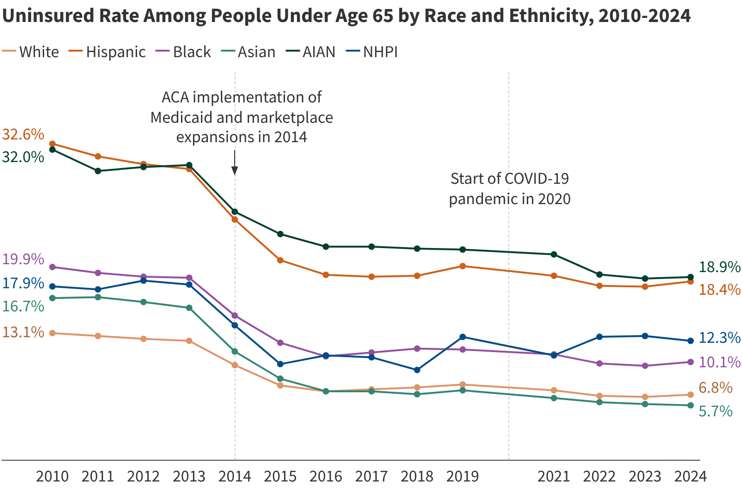
  • Health Coverage by Race and Ethnicity, 2010-2024

    There have been longstanding racial and ethnic disparities in health coverage that contribute to disparities in health. This brief examines trends in health coverage by race and ethnicity from 2010 through 2024 and discusses the implications for such disparities.
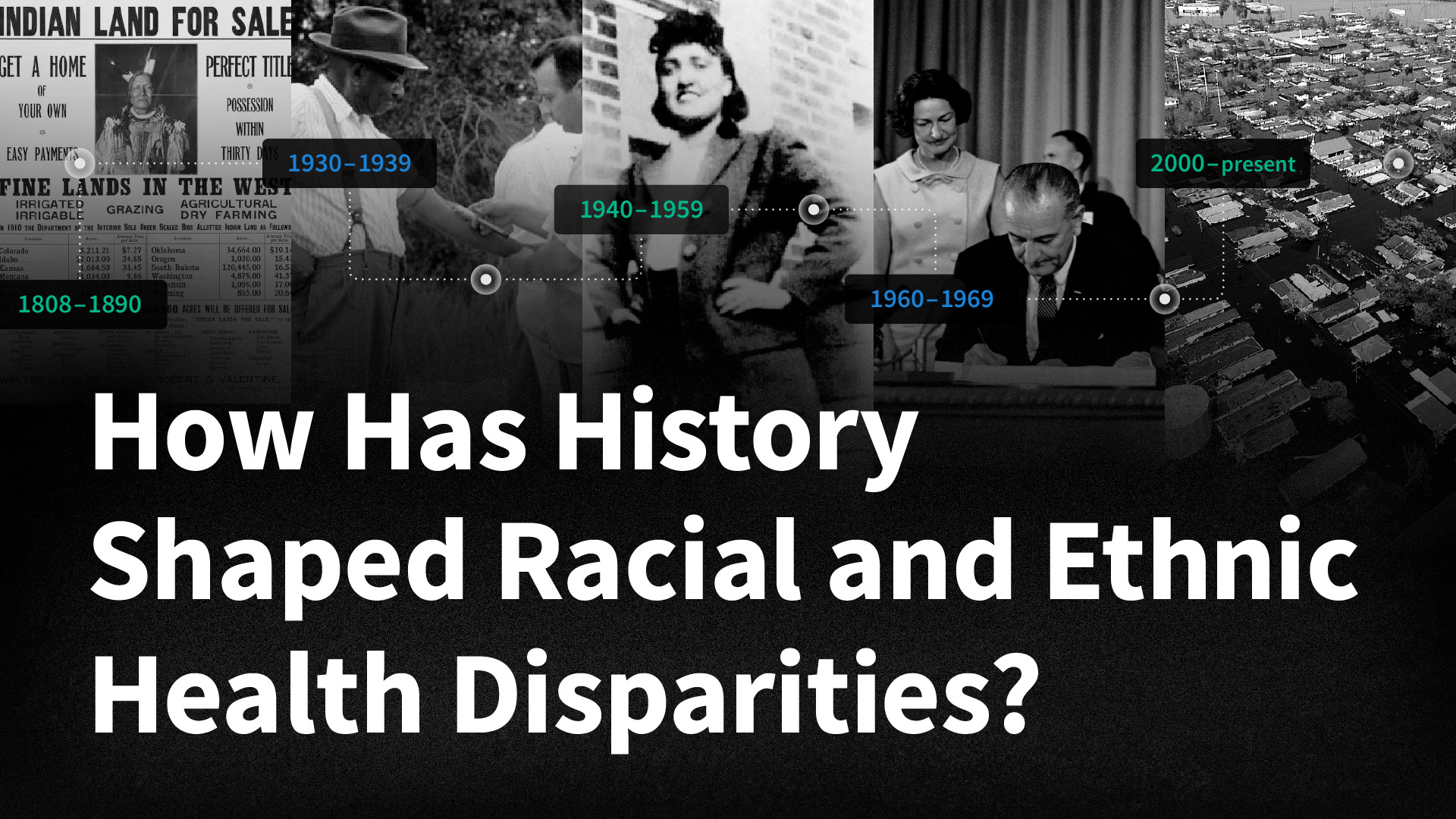
  • Timeline: How History Has Shaped Racial and Ethnic Health Disparities

    This timeline offers a historical view of significant U.S. federal policies and events spanning the early 1800s to today that have influenced present-day health disparities.
  • Health Policy 101: Chapter on Race, Inequality and Health

    Addressing persistent racial and ethnic disparities in health and health care is important for improving the nation’s health and economic prosperity. KFF explains such disparities and the factors that drive them, examines the actions to address them, and outlines future considerations.
  • Key Data on Health and Health Care by Race and Ethnicity

    Racial and ethnic disparities in health and health care remain a persistent challenge in the United States. An updated KFF resource examines how people of color fare compared to White people across 64 measures of health, health care, and social determinants of health.

Survey of Immigrants

KFF-New York Times Survey: Immigrants Report Rising Fear, Negative Economic and Health Impacts, and Changing Political Views During the First Year of President Trump’s Second Term

The 2025 Survey of Immigrants, a partnership between KFF and The New York Times, takes an in-depth look at the experiences of immigrants during the first year of President Trump’s second term, including their worries related to increased immigration enforcement, their health and economic wellbeing, and the political views and preferences of immigrant voters. The survey paints a portrait of families under strain — where fear of detention and economic instability are negatively impacting immigrants’ health and reshaping immigrant families’ daily lives and views of U.S. political parties.

Read the News Release | Explore The New York Times’ Reporting
Subscribe to KFF Emails

Choose which emails are best for you.
Sign up here

Filter

451 - 460 of 602 Results

  • What’s the Diagnosis? Latinos, Media & Health: A Series of Three Reports – Report

    Report

    What's the Diagnosis? A Series of Three Reports on Latinos, Media & Health Summary of Key Findings June 1998 Overview: A Series of 3 Reports Latinos are disproportionately affected by some of the most serious health problems facing our country. They are more likely to be uninsured and face problems getting health care when needed. Young Latinos, in particular, are confronting very high rates of unintended pregnancy and sexually transmitted diseases (STDs). Latinos have also…

  • Medicare’s Role for Latinos

    Fact Sheet

    Medicare's Role for Latinos Fact Sheet: The Medicare Program: Medicare's Role For Latinos

  • Native Americans and Medicaid: Coverage and Financing Issues

    Report

    Medicaid plays several different roles of significance to Native Americans. Through its purchase of managed care products, Medicaid is reshaping the health care delivery system for many Native Americans and other underserved low-income populations. Medicaid also assists low-income elderly and disabled Indians who are eligible for Medicare in meeting their premium and cost-sharing obligations. Finally, Medicaid offers coverage for nursing home care and other long-term care services needed by frail elderly and disabled Native Americans.…

  • Health Coverage and Access to Care for Hispanics in “New Growth Communities” and “Major Hispanic Centers”

    Report

    Health Coverage and Access to Care for Hispanics in "New Growth Communities" and "Major Hispanic Centers" A new report from the Foundation's Kaiser Commission on Medicaid and the Uninsured finds that as the Hispanic population grows and moves beyond urban centers, Hispanics in "new growth communities" face greater barriers to health care than those in cities considered "major Hispanic centers." By 2003, the uninsured rate for Hispanics in new growth communities rose to a level…

  • A Profile of American Indians and Alaska Natives and Their Health Coverage

    Issue Brief

    A Profile of American Indians and Alaska Natives and Their Health Coverage This brief examines the health coverage, access to care and health status of American Indians and Alaska Natives across the country. Although the U.S. government has an established responsibility through tribal agreements to provide health care services to members of federally recognized Indian tribes, many American Indians and Alaska Natives lack access to health care. The brief gives an overview of the some…

  • Race and Recession Survey

    Poll Finding

    The Washington Post/Kaiser Family Foundation/Harvard University partnership conducted a survey to examine how the recession has reshaped the lives of Americans and takes a closer look at experiences by race and ethnicity. This survey is the 21st in a series of surveys dating back to 1995 that have been conducted as part of The Washington Post/Kaiser Family Foundation Survey Project. Toplines (.pdf) Read The Washington Post articles on the survey:Economy poll: African Americans, Hispanics were…

  • The Digital Divide And Access To Health Information Online

    Poll Finding

    The Affordable Care Act (ACA) calls for a number of web-based initiatives, including development of the website healthcare.gov which provides a variety of health information and helps individuals find coverage options. Therefore, understanding the level and quality of Internet access among those groups most likely to benefit from reform, such as the uninsured, those with lower incomes, and members of racial and ethnic minority groups, is an important consideration as health reform is implemented. A…

  • Black Residents' Views on HIV/AIDS in the District of Columbia

    Poll Finding

    This data note examines public opinion among Washington, D.C.’s black residents about HIV/AIDS through a new analysis of the findings of the May 2011 Washington Post/Kaiser Family Foundation 2011 Survey of District of Columbia Residents. The District of Columbia has one of the highest AIDS rates in the nation, and black residents have been especially hard hit by the epidemic, accounting for about three-quarters of people living with HIV/AIDS in the city. Yet experiences and…

  • State Health Coverage for Immigrants and Implications for Health Coverage and Care

    Issue Brief

    Noncitizen immigrants, particularly those who are undocumented, face significant barriers to accessing health coverage and care and are significantly more likely than citizens to be uninsured. This brief provides an overview of state health coverage programs for immigrants, including among states that have taken up options in Medicaid and the Children’s Health Insurance Program (CHIP) to expand coverage for lawfully present immigrants and/or established fully state-funded programs to fill gaps in coverage for immigrants.