Racial Equity and Health Policy

Survey of Immigrants

KFF-New York Times Survey: Immigrants Report Rising Fear, Negative Economic and Health Impacts, and Changing Political Views During the First Year of President Trump’s Second Term

The 2025 Survey of Immigrants, a partnership between KFF and The New York Times, takes an in-depth look at the experiences of immigrants during the first year of President Trump’s second term, including their worries related to increased immigration enforcement, their health and economic wellbeing, and the political views and preferences of immigrant voters. The survey paints a portrait of families under strain — where fear of detention and economic instability are negatively impacting immigrants’ health and reshaping immigrant families’ daily lives and views of U.S. political parties.

Read the News Release | Explore The New York Times’ Reporting
the Essentials
  • Disparities in Health and Health Care: 5 Key Questions and Answers

    This brief provides an introduction to what health and health care disparities are, why it is important to address them, what the status of disparities is today, recent federal actions to address disparities, and key issues related to addressing disparities in the future.
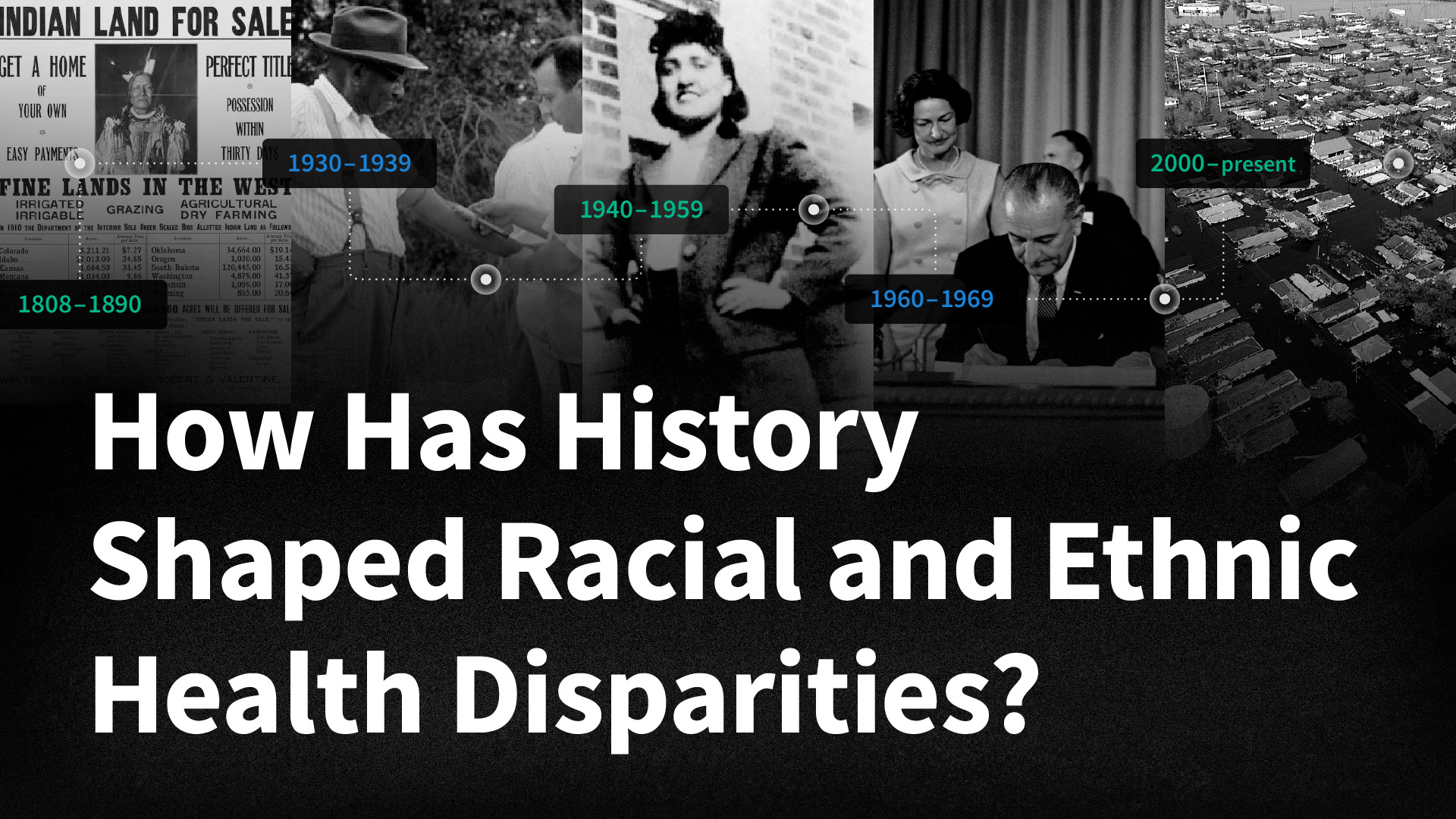
  • Timeline: How History Has Shaped Racial and Ethnic Health Disparities

    This timeline offers a historical view of significant U.S. federal policies and events spanning the early 1800s to today that have influenced present-day health disparities.
  • Health Policy 101: Chapter on Race, Inequality and Health

    Addressing persistent racial and ethnic disparities in health and health care is important for improving the nation’s health and economic prosperity. KFF explains such disparities and the factors that drive them, examines the actions to address them, and outlines future considerations.
  • Key Data on Health and Health Care by Race and Ethnicity

    Racial and ethnic disparities in health and health care remain a persistent challenge in the United States. An updated KFF resource examines how people of color fare compared to White people across 64 measures of health, health care, and social determinants of health.

Subscribe to KFF Emails

Choose which emails are best for you.
Sign up here

Filter

431 - 440 of 601 Results

  • Health Care and the 2004 Elections

    Other Post

    ** Update: For information on health care and the 2008 election, visit www.health08.org. ** Health care issues continue to be important for many Americans and a vital part of the policy debates in Washington and around the country. During an election season, candidates propose and debate their solutions for the pressing policy issues facing their constituents. The 2004 election season is no different and the Kaiser Family Foundation is issuing informational materials on some of…

  • HIV/AIDS in Georgia

    Report

    Two reports - "Survey of Georgia Residents on HIV/AIDS" and "Georgia's Minority Health and Health Disparities Report - Facing a Crisis" - show the disproportionate impact HIV is having on minorities in Georgia, and important differences in how minorities view HIV/AIDS compared to whites. The reports were released at a November 30, 2004 briefing held by the National Center for Primary Care (NCPC) at the Morehouse School of Medicine in partnership with the Kaiser Family…

  • Racial and Ethnic Disparities in Women’s Health Coverage and Access to Care

    Issue Brief

    Using data from the 2001 Kaiser Women’s Health Survey, a nationally representative survey of nearly 4,000 women between the ages of 18 to 64, this issue brief explores racial and ethnic disparities in health care among women. It provides new information on the differences in health status, health insurance coverage, and selected measures of access to care across three racial/ethnic groups of women: African American, Latina, and white. Issue Brief (.pdf)

  • Native American Health Policy Fellowship Program, 1999 – 2003

    Other Post

    Established in 1999, the Henry J. Kaiser Family Foundation Native American Health Policy Fellowships were awarded to outstanding American Indian/Alaska Natives who made their career in health-related fields and were interested in health policy. The purpose of the fellowship was to give American Indian/Alaska Native community leaders an opportunity to learn more about national health policy issues and the policymaking process. Fellows were given the opportunity to work full-time for one year in a Congressional…

  • Disparities in Access to Air Conditioning And Implications for Heat-Related Health Risks

    Issue Brief

    This analysis examines disparities in access to air condition and their implications. It shows Asian-, Black-, and Hispanic-led households are more likely to report not having an air conditioning unit in their home compared to White households. Lower income households also are more likely than higher-income households to report this and other challenges.

  • What Role Do Immigrants Play in the Rural Workforce?

    Issue Brief

    This data note examines the role that immigrants play in the rural workforce, particularly in industries disproportionately filled by immigrants, including health care, agriculture, construction, and service.

  • Title 42 and its Impact on Immigration and Migrant Families

    Issue Brief

    This brief provides an explanation of Title 42 and its application in border regions, the impact of Title 42 on border expulsions and the health and well-being of migrants during COVID-19, and a discussion of the potential implications of reinvoking Title 42 restrictions for immigration and the health of migrants.