Racial Equity and Health Policy

the Essentials
  • How Experiencing Racial Discrimination Impacts Health

    This brief highlights research examining mechanisms underlying health outcomes linked to self-reported experiences of racial discrimination, including biological changes, chronic stress, mental health, substance use, pregnancy-related outcomes, and sleep.
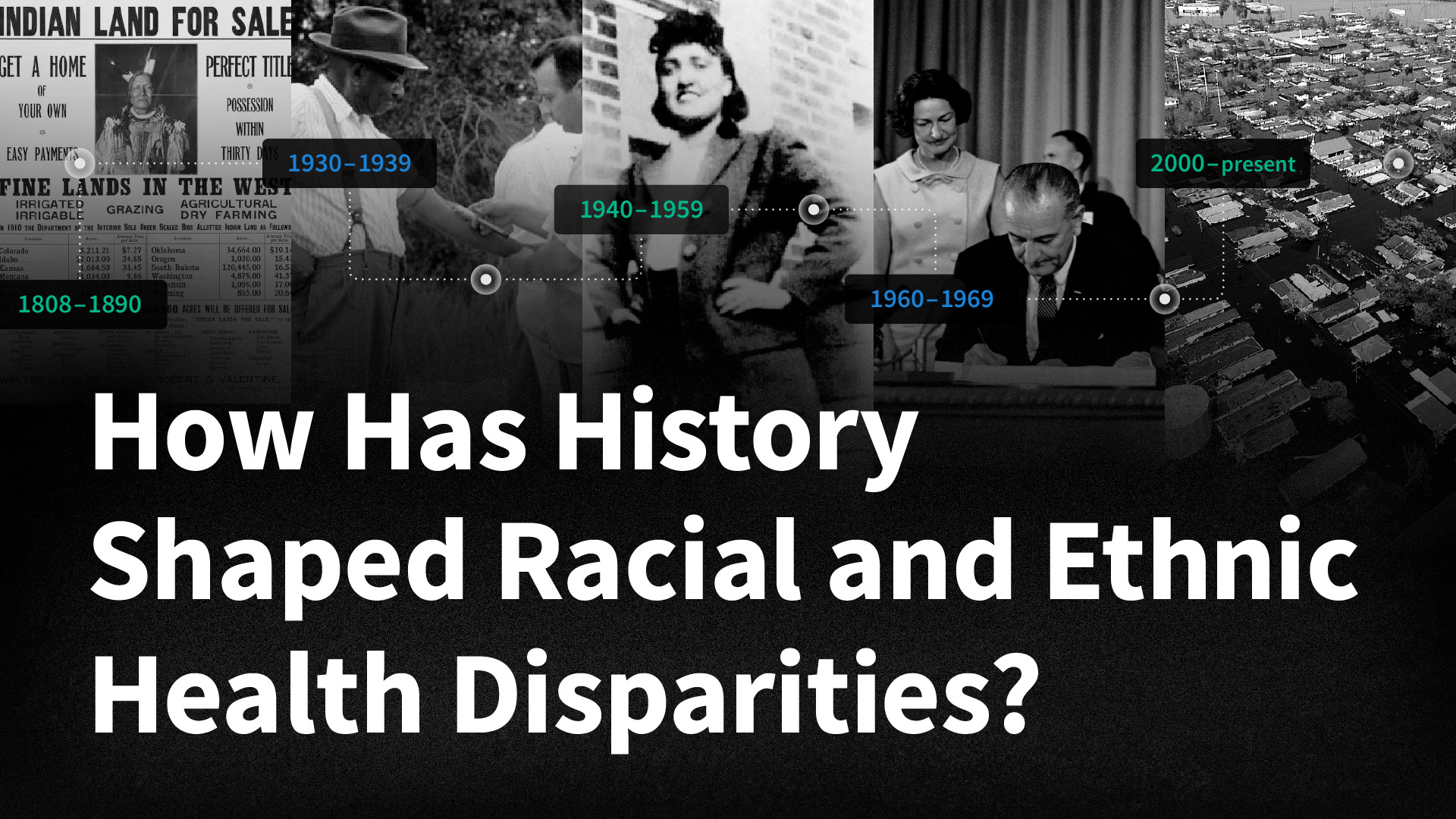
  • Timeline: How History Has Shaped Racial and Ethnic Health Disparities

    This timeline offers a historical view of significant U.S. federal policies and events spanning the early 1800s to today that have influenced present-day health disparities.
  • Health Policy 101: Chapter on Race, Inequality and Health

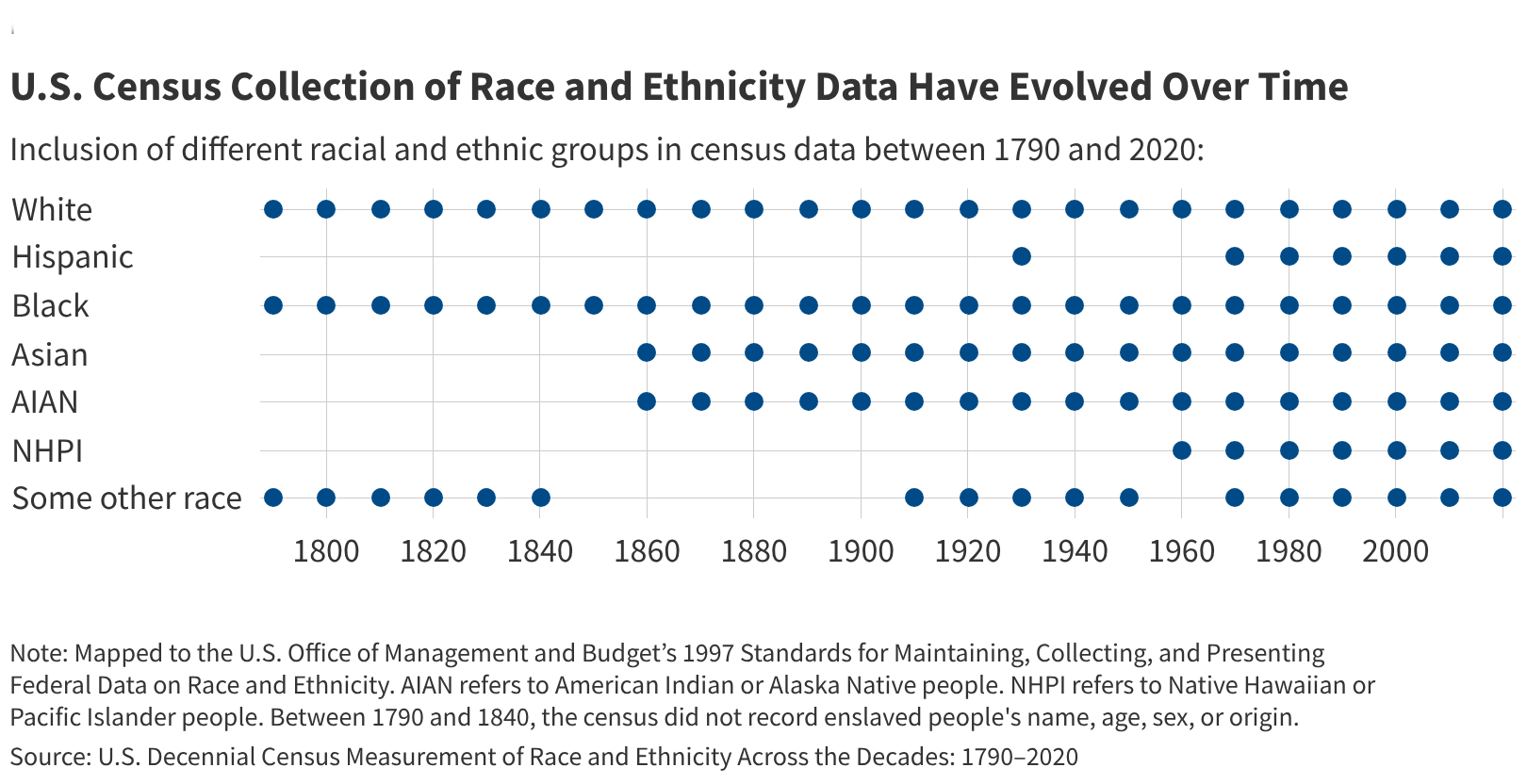
    Addressing persistent racial and ethnic disparities in health and health care is important for improving the nation’s health and economic prosperity. KFF explains such disparities and the factors that drive them, examines the actions to address them, and outlines future considerations.
  • Key Data on Health and Health Care by Race and Ethnicity

    Racial and ethnic disparities in health and health care remain a persistent challenge in the United States. An updated KFF resource examines how people of color fare compared to White people across 64 measures of health, health care, and social determinants of health.

Survey of Immigrants

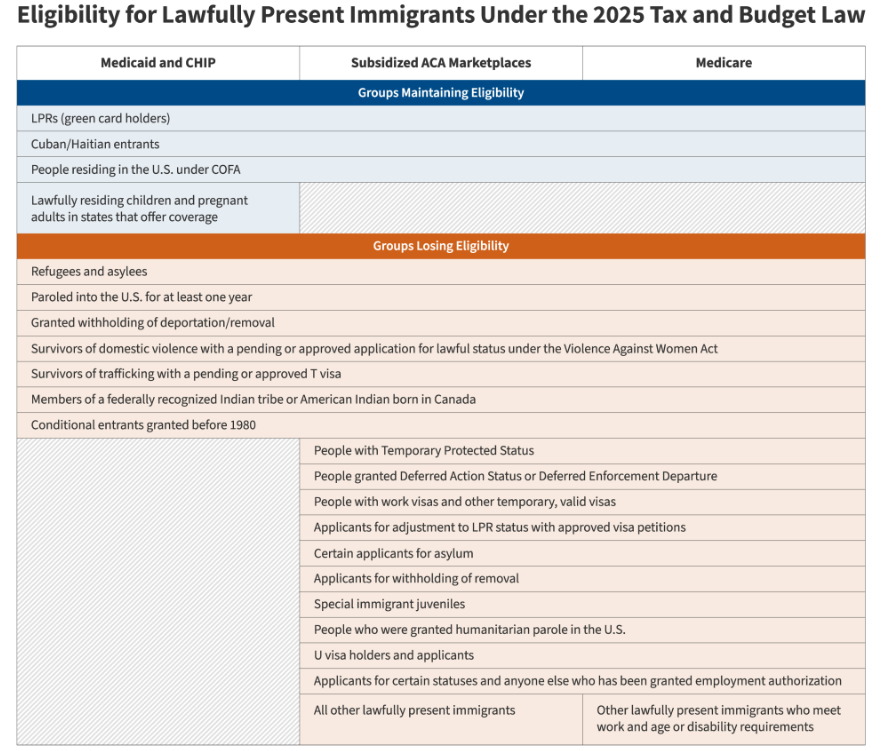
KFF-New York Times Survey: Immigrants Report Rising Fear, Negative Economic and Health Impacts, and Changing Political Views During the First Year of President Trump’s Second Term

The 2025 Survey of Immigrants, a partnership between KFF and The New York Times, takes an in-depth look at the experiences of immigrants during the first year of President Trump’s second term, including their worries related to increased immigration enforcement, their health and economic wellbeing, and the political views and preferences of immigrant voters. The survey paints a portrait of families under strain — where fear of detention and economic instability are negatively impacting immigrants’ health and reshaping immigrant families’ daily lives and views of U.S. political parties.

Read the News Release | Explore The New York Times’ Reporting
Stay informed.

Stay informed.

Filter

401 - 410 of 602 Results

  • An Early Look at the Affordable Care Act and Women

    News Release

    On Thursday, May 15 at 9:30 a.m. ET, the Kaiser Family Foundation will host a public briefing to release a new report based on the Foundation’s most recent comprehensive survey on women’s health.  This report provides new findings that will be critical to understanding women’s early experiences with the coverage changes that are part of the Affordable Care Act, including the latest information on:  Private and public insurance coverage rates for women  Use of preventive…

  • Visualizing Income and Assets Among Medicare Beneficiaries: Now and in the Future

    Interactive

    This interactive tool describes the income, savings and home equity of people on Medicare in 2013, and in 2030. It allows users to break out the data by age, gender, race/ethnicity, marital status and education level, providing insight into the disparities within and across categories of beneficiaries.

  • The Truth About Those ‘Greedy’ Seniors

    From Drew Altman

    In The Wall Street Journal’s Think Tank, Drew Altman asks, "what’s your image of America’s seniors?" and provides some facts on the income and assets of Medicare enrollees.

  • Advancing Opportunities, Assessing Challenges: Key Themes from a Roundtable Discussion of Health Care and Health Equity in the South

    Issue Brief

    This brief summarizes the primary themes expressed by participants of a roundtable discussion of current and future opportunities and challenges for advancing health care and health equity in the South organized by Kaiser Family Foundation’s Commission on Medicaid and the Uninsured and the Satcher Health Leadership Institute at Morehouse School of Medicine in Atlanta, Georgia.

  • Medicaid Administrative Data: Challenges with Race, Ethnicity, and Other Demographic Variables

    Issue Brief

    There are persistent disparities in health and health care for people of color, which reflect structural and systemic inequities rooted in racism and discrimination. High-quality comprehensive data are key to enabling policymakers, community leaders, and other key stakeholders to identify and address these inequities and measure progress over time. Medicaid/CHIP administrative data, also known as Transformed Medicaid Statistical Information System (T-MSIS) or TAF (T-MSIS Analytic File), hold the potential to inform disparities research through detailed…

  • The COVID-19 Pandemic Has Hit People of Color the Hardest, Including Among People With Medicare

    News Release

    The COVID-19 pandemic has underscored the stark racial and ethnic health inequities in the U.S., including among Medicare beneficiaries. Among this group, people of color, including older adults and others on Medicare, account for disproportionate shares of COVID-19 cases, hospitalizations and deaths, according to data presented in a new KFF report about racial and ethnic disparities in health among people with Medicare. Older Black, Hispanic, and American Indian/Alaska Native adults were nearly twice as likely…

  • Potential “Chilling Effects” of Public Charge and Other Immigration Policies on Medicaid and CHIP Enrollment

    Issue Brief

    This issue brief reviews the Department of Homeland Security (DHS) final rule that would rescind 2022 Biden-era public charge determination regulations. The public charge changes along with other Trump administration policy changes will likely lead to decreased participation in public programs, including Medicaid, among a broad group of immigrant families, including citizen children in those families.

  • Kaiser Family Foundation National Survey of Latinos on HIV/AIDS

    Poll Finding

    A random-sample national survey of 802 Latino adults, 18 years and older. The survey, designed by staff at the Foundation and conducted by telephone in both English and Spanish by Princeton Survey Research Associates (PSRA), examines Latino's knowledge, values and beliefs with respect to HIV and AIDS. The survey data is also broken down into subgroups within the Latino community including women, young adults, parents, opinion leaders, and those with less education and lower incomes.…