Racial Equity and Health Policy

the Essentials
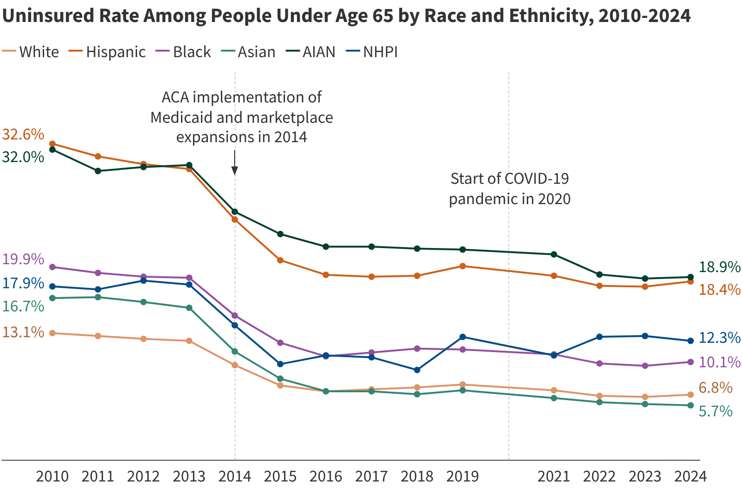
  • Health Coverage by Race and Ethnicity, 2010-2024

    There have been longstanding racial and ethnic disparities in health coverage that contribute to disparities in health. This brief examines trends in health coverage by race and ethnicity from 2010 through 2024 and discusses the implications for such disparities.
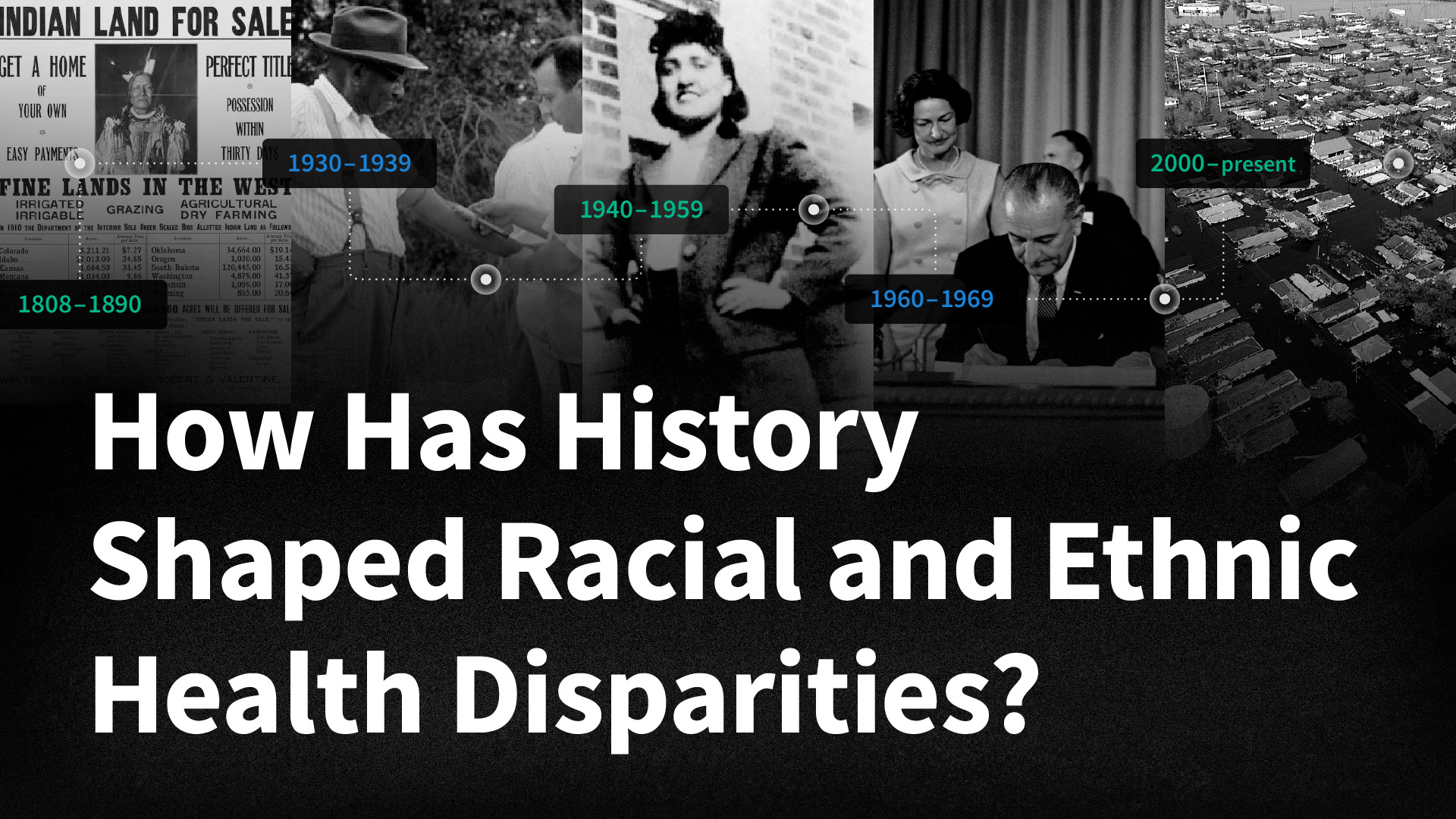
  • Timeline: How History Has Shaped Racial and Ethnic Health Disparities

    This timeline offers a historical view of significant U.S. federal policies and events spanning the early 1800s to today that have influenced present-day health disparities.
  • Health Policy 101: Chapter on Race, Inequality and Health

    Addressing persistent racial and ethnic disparities in health and health care is important for improving the nation’s health and economic prosperity. KFF explains such disparities and the factors that drive them, examines the actions to address them, and outlines future considerations.
  • Key Data on Health and Health Care by Race and Ethnicity

    Racial and ethnic disparities in health and health care remain a persistent challenge in the United States. An updated KFF resource examines how people of color fare compared to White people across 64 measures of health, health care, and social determinants of health.

Survey of Immigrants

KFF-New York Times Survey: Immigrants Report Rising Fear, Negative Economic and Health Impacts, and Changing Political Views During the First Year of President Trump’s Second Term

The 2025 Survey of Immigrants, a partnership between KFF and The New York Times, takes an in-depth look at the experiences of immigrants during the first year of President Trump’s second term, including their worries related to increased immigration enforcement, their health and economic wellbeing, and the political views and preferences of immigrant voters. The survey paints a portrait of families under strain — where fear of detention and economic instability are negatively impacting immigrants’ health and reshaping immigrant families’ daily lives and views of U.S. political parties.

Read the News Release | Explore The New York Times’ Reporting
Subscribe to KFF Emails

Choose which emails are best for you.
Sign up here

Filter

371 - 380 of 602 Results

  • How Equitable is Access to COVID-19 Treatments?

    Issue Brief

    This issue brief assesses the availability of oral antiviral treatments by county and certain county characteristics, including metro vs. non-metro status, poverty rate, and majority Black, Hispanic, or American Indian or Alaska Native (AIAN).

  • Early Data Show Racial Disparities in Monkeypox Cases

    Policy Watch

    This policy watch examines early data showing that Black and Hispanic people are bearing a disproportionate burden of monkeypox cases and discusses the importance of centering equity in response efforts, including prevention, testing, and treatment.

  • Section 1115 Waiver Watch: How California Will Expand Medicaid Pre-Release Services for Incarcerated Populations

    Policy Watch

    On January 26, the Centers for Medicare and Medicaid Services (CMS) approved California’s Section 1115 request to cover a package of reentry services for certain groups of incarcerated individuals 90 days prior to release. This approval is the first to include a partial waiver of the statutory Medicaid inmate exclusion policy, which prohibits Medicaid from paying for services provided during incarceration (except for inpatient services).

  • KFF Health Tracking Poll – June 2020

    Report

    This month's tracking poll examines public attitudes toward and experiences with institutional racism and police violence, whether they have participated in recent protests, and perceptions related to health disparities, specifically with regard to coronavirus.

  • Key Health Implications of Separation of Families at the Border (as of June 27, 2018)

    Fact Sheet

    This fact sheet examines key health implications of separating immigrant children from their parents at the border, as of June 27, 2018. The practice came to light after implementation of the Trump Administration's zero tolerance policy for individuals entering into the U.S. without authorization. Research shows that separating children from their parents exposes them to trauma and toxic stress that can have lifelong impacts on their health.

  • When a Family Member is Detained or Deported, Immigrant Families Often Face Financial Hardship, Physical and Emotional Health Consequences and New Fears of Engaging with Public Programs

    News Release

    As the Trump Administration pursues enhanced enforcement of the nation’s immigration laws, a new issue brief from the Kaiser Family Foundation documents how the detention or deportation of an individual can have major effects on families and communities. They include sudden and severe financial hardship and emotional trauma that can trigger long-term effects on mental and physical health, especially for children. At the same time as families are facing these increased needs, their fears of…

  • Analysis: Workers Increasingly Have Access to Same-Sex Spousal Benefits 

    News Release

    While workplace health benefits for married same-sex spouses are becoming more common, new data from KFF’s 2018 Employer Health Benefits Survey shows they still lag behind benefits available to opposite sex-spouses. In 2018, nearly two-thirds (63%) of employers offering health insurance coverage to opposite-sex spouses also provided coverage to same-sex spouses – up significantly from 2016, when fewer than half (43%) did. Few (6%) say they do not offer same-sex spousal benefits, while others, mostly…

  • A Profile of African Americans, Latinos, and Whites with Medicare:

    Report

    This chartpack highlights demographic data about African Americans, Hispanics and whites with Medicare to highlight potential implications for outreach efforts under the new Medicare drug benefit. The information is being used in a series of November 2005 briefings at the start of the first open-enrollment period for the new benefit. Chartpack (.pdf)