Racial Equity and Health Policy

the Essentials
  • How Experiencing Racial Discrimination Impacts Health

    This brief highlights research examining mechanisms underlying health outcomes linked to self-reported experiences of racial discrimination, including biological changes, chronic stress, mental health, substance use, pregnancy-related outcomes, and sleep.
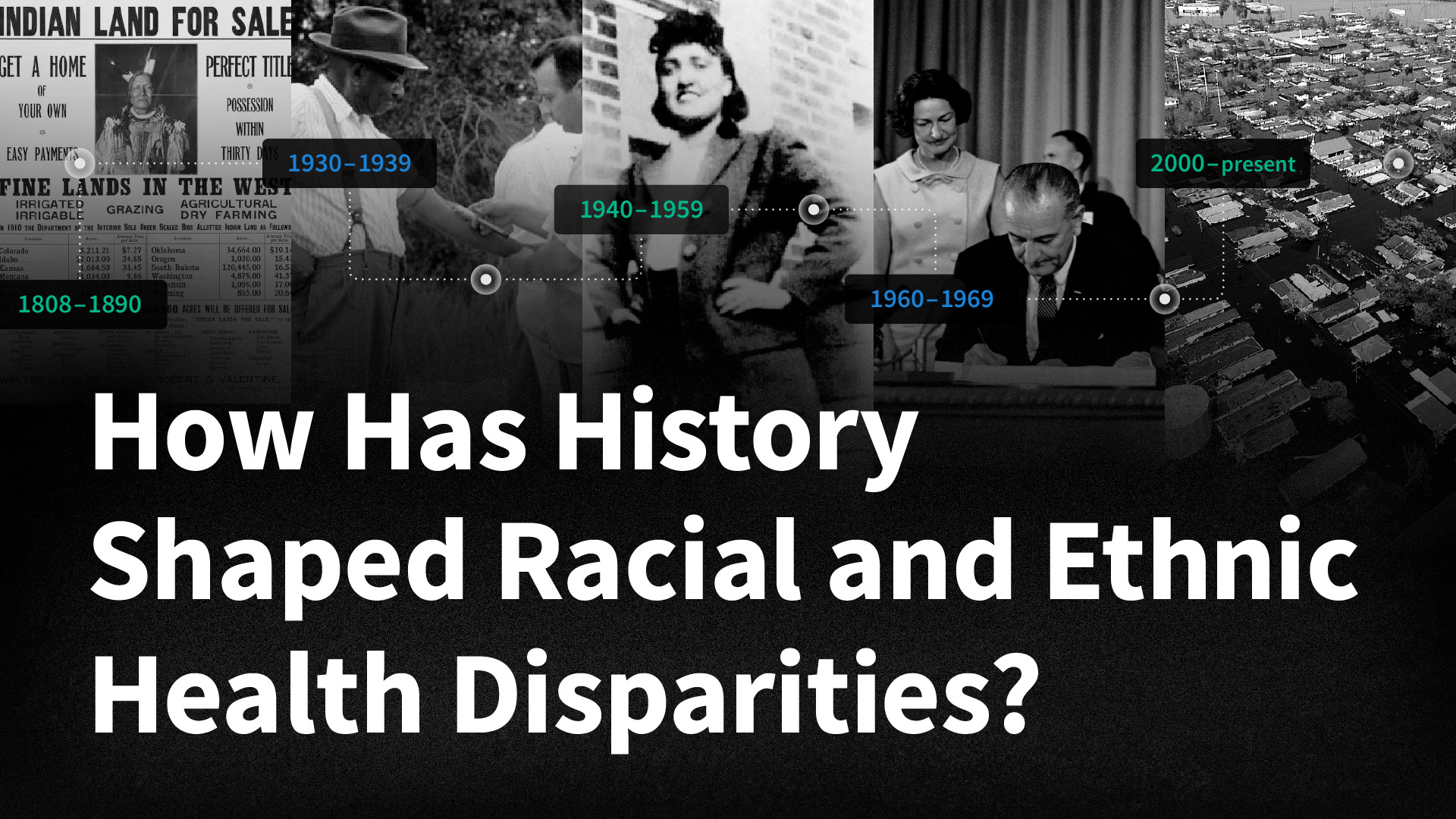
  • Timeline: How History Has Shaped Racial and Ethnic Health Disparities

    This timeline offers a historical view of significant U.S. federal policies and events spanning the early 1800s to today that have influenced present-day health disparities.
  • Health Policy 101: Chapter on Race, Inequality and Health

    Addressing persistent racial and ethnic disparities in health and health care is important for improving the nation’s health and economic prosperity. KFF explains such disparities and the factors that drive them, examines the actions to address them, and outlines future considerations.
  • Key Data on Health and Health Care by Race and Ethnicity

    Racial and ethnic disparities in health and health care remain a persistent challenge in the United States. An updated KFF resource examines how people of color fare compared to White people across 64 measures of health, health care, and social determinants of health.

Survey of Immigrants

KFF-New York Times Survey: Immigrants Report Rising Fear, Negative Economic and Health Impacts, and Changing Political Views During the First Year of President Trump’s Second Term

The 2025 Survey of Immigrants, a partnership between KFF and The New York Times, takes an in-depth look at the experiences of immigrants during the first year of President Trump’s second term, including their worries related to increased immigration enforcement, their health and economic wellbeing, and the political views and preferences of immigrant voters. The survey paints a portrait of families under strain — where fear of detention and economic instability are negatively impacting immigrants’ health and reshaping immigrant families’ daily lives and views of U.S. political parties.

Read the News Release | Explore The New York Times’ Reporting
Stay informed.

Stay informed.

Filter

361-370 of 607 results

  • Puerto Rico: Fast Facts

    Fact Sheet

    Puerto Rico: Fast Facts provides a quick snapshot of the island's demographic, health, and economic characteristics. It also provides some information on federal Medicaid rules, infrastructure, and fiscal challenges ahead.

  • Medicaid and American Indians and Alaska Natives

    Issue Brief

    This brief provides an overview of the American Indian and Alaska Native population, describes the role of the Indian Health Service and Medicaid for this population, and discusses the impact of the Medicaid expansion for this population.

  • Visualizing Health Policy: The Costs and Outcomes of Mental Health and Substance Use Disorders in the US

    News Release

    This Visualizing Health Policy infographic looks at costs and outcomes of mental health and substance use disorders in the United States (US). Nearly 18% of adults reported having a mental, behavioral, or emotional disorder in 2015, including more than 1 in 5 women. Furthermore, nearly 3% of people aged 12 years or older reported addiction to or misuse of an illicit drug in 2015, including more than 7% of people aged 18 to 25 years.…

  • The Role of Medicaid in Rural America

    Issue Brief

    This brief describes Medicaid’s role for 52 million nonelderly children and adults living in the most rural areas in the United States and discusses how expansions or reductions in Medicaid could affect rural areas.

  • What is at Stake for Health and Health Care Disparities under ACA Repeal?

    Issue Brief

    This brief describes health and health care disparities today, highlights recent advancements in reducing disparities under the Affordable Care Act (ACA), and discusses how the American Health Care Act (AHCA) and proposed reductions in discretionary funding may affect ongoing efforts to address disparities.

  • Testimony: The Status of Health and Health Care Disparities in the United States

    Issue Brief

    On March 8, 2017, Kaiser Family Foundation Director of the Disparities Policy Project Samantha Artiga testified before the House Subcommittee on Labor, Health and Human Services, Education and Related Agencies. She presented on the status of health and health care disparities in the United States.

  • Under the Affordable Care Act, People of Color Have Seen Greater Gains in Health Coverage But Remain More Likely Than Whites to Be Uninsured

    News Release

    The uninsured rate has fallen among all racial and ethnic groups under the Affordable Care Act with steeper declines among people of color compared to Whites, according to a new analysis by the Kaiser Family Foundation. The findings for Hispanics were especially striking. Between 2013 and 2015, the uninsured rate for Hispanics fell from 26 percent to 17 percent – a sharper decline than for any other group. Nationally, the total number of nonelderly uninsured…

  • More than 8 in 10 Workers With Spousal Health Benefits Have Access to Same-Sex Spousal Benefits, Analysis Finds

    News Release

    Following two major Supreme Court rulings on same-sex marriage, a new Kaiser Family Foundation data note finds that in 2016, 84 percent of employees who worked at firms offering spousal health benefits also had access to same-sex spousal benefits. Eight percent did not have access, while another 8 percent worked at firms who reported they had not encountered this benefits issue. The data note draws from responses to the Kaiser/Health Research & Educational Trust (Kaiser/HRET)…