Racial Equity and Health Policy

Survey of Immigrants

KFF-New York Times Survey: Immigrants Report Rising Fear, Negative Economic and Health Impacts, and Changing Political Views During the First Year of President Trump’s Second Term

The 2025 Survey of Immigrants, a partnership between KFF and The New York Times, takes an in-depth look at the experiences of immigrants during the first year of President Trump’s second term, including their worries related to increased immigration enforcement, their health and economic wellbeing, and the political views and preferences of immigrant voters. The survey paints a portrait of families under strain — where fear of detention and economic instability are negatively impacting immigrants’ health and reshaping immigrant families’ daily lives and views of U.S. political parties.

Read the News Release | Explore The New York Times’ Reporting
the Essentials
  • Disparities in Health and Health Care: 5 Key Questions and Answers

    This brief provides an introduction to what health and health care disparities are, why it is important to address them, what the status of disparities is today, recent federal actions to address disparities, and key issues related to addressing disparities in the future.
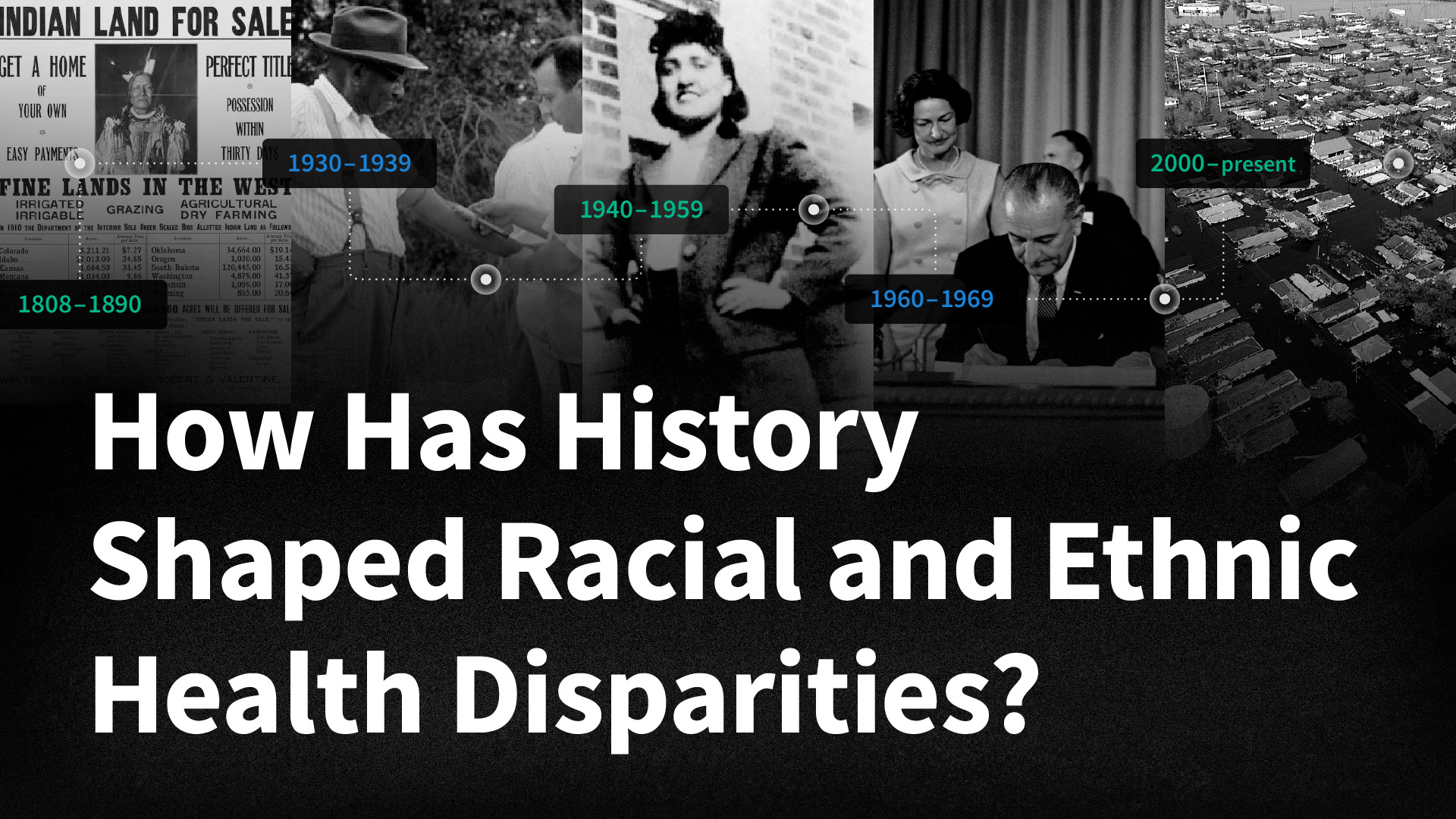
  • Timeline: How History Has Shaped Racial and Ethnic Health Disparities

    This timeline offers a historical view of significant U.S. federal policies and events spanning the early 1800s to today that have influenced present-day health disparities.
  • Health Policy 101: Chapter on Race, Inequality and Health

    Addressing persistent racial and ethnic disparities in health and health care is important for improving the nation’s health and economic prosperity. KFF explains such disparities and the factors that drive them, examines the actions to address them, and outlines future considerations.
  • Key Data on Health and Health Care by Race and Ethnicity

    Racial and ethnic disparities in health and health care remain a persistent challenge in the United States. An updated KFF resource examines how people of color fare compared to White people across 64 measures of health, health care, and social determinants of health.

Subscribe to KFF Emails

Choose which emails are best for you.
Sign up here

Filter

331 - 340 of 591 Results

  • Who are the 3.4 Million People Who Work in the Nation’s Food Production Industries?

    News Release

    Roughly 3.4 million individuals work in food production industries, more than a third of them in animal production and processing where there have been several COVID-19 outbreaks, a new KFF analysis shows. Workers at meat and poultry plants face a higher risk of coronavirus exposure due to the close quarters of their workplaces.

  • Racial and Ethnic Disparities in Access to Health Insurance and Health Care

    Fact Sheet

    Racial and ethnic groups in the United States continue to experience major differences in health status compared to the majority white population. Although many factors affect health status, the lack of health insurance and other barriers to obtaining health services markedly diminish minorities' use of both preventive services and medical treatments.

  • Encuesta Nacional de Kaiser Family Foundation sobre los Latinos y el VIH/SIDA

    Report

    En encuestas anteriores, la atencion se ha concentrando en captar las impresiones de la poblacion general, incluyendo sus opiniones sobre la epidemia; su preocupacion personal en cuanto a infectarse con el VIH; sus conocimientos sobre la transmision, curso y tratamiento del VIH y el SIDA; sus experiencias con la prueba de anticuerpos; su punto de…

  • Key Facts: HIV/AIDS and African Americans

    Other Post

    provides an overview of recent data and research on the impact of the HIV/AIDS epidemic on African Americans. The Key Facts document also presents trends in the HIV/AIDS epidemic over time, racial differences in the access to and quality of HIV/AIDS services and includes the attitudes toward and perceptions of HIV/AIDS by race.

  • Health Provisions in the 2025 Federal Budget Reconciliation Law

    Issue Brief

    On July 4, President Trump signed the budget reconciliation bill, previously known as the “One Big Beautiful Bill Act,” into law. This summary provides background, description, budgetary impact and related information on the health care provisions of the law in four categories: Medicaid, the Affordable Care Act, Medicare and Health Savings Accounts (HSAs).

  • Potential “Chilling Effects” of Public Charge and Other Immigration Policies on Medicaid and CHIP Enrollment

    Issue Brief

    This issue brief reviews the Department of Homeland Security (DHS) proposed rule that would rescind 2022 Biden-era public charge determination regulations. The proposed public charge changes along with other Trump administration policy changes will likely lead to decreased participation in public programs, including Medicaid, among a broad group of immigrant families, including citizen children in those families.