Racial Equity and Health Policy

Survey of Immigrants

KFF-New York Times Survey: Immigrants Report Rising Fear, Negative Economic and Health Impacts, and Changing Political Views During the First Year of President Trump’s Second Term

The 2025 Survey of Immigrants, a partnership between KFF and The New York Times, takes an in-depth look at the experiences of immigrants during the first year of President Trump’s second term, including their worries related to increased immigration enforcement, their health and economic wellbeing, and the political views and preferences of immigrant voters. The survey paints a portrait of families under strain — where fear of detention and economic instability are negatively impacting immigrants’ health and reshaping immigrant families’ daily lives and views of U.S. political parties.

Read the News Release | Explore The New York Times’ Reporting
the Essentials
  • Disparities in Health and Health Care: 5 Key Questions and Answers

    This brief provides an introduction to what health and health care disparities are, why it is important to address them, what the status of disparities is today, recent federal actions to address disparities, and key issues related to addressing disparities in the future.
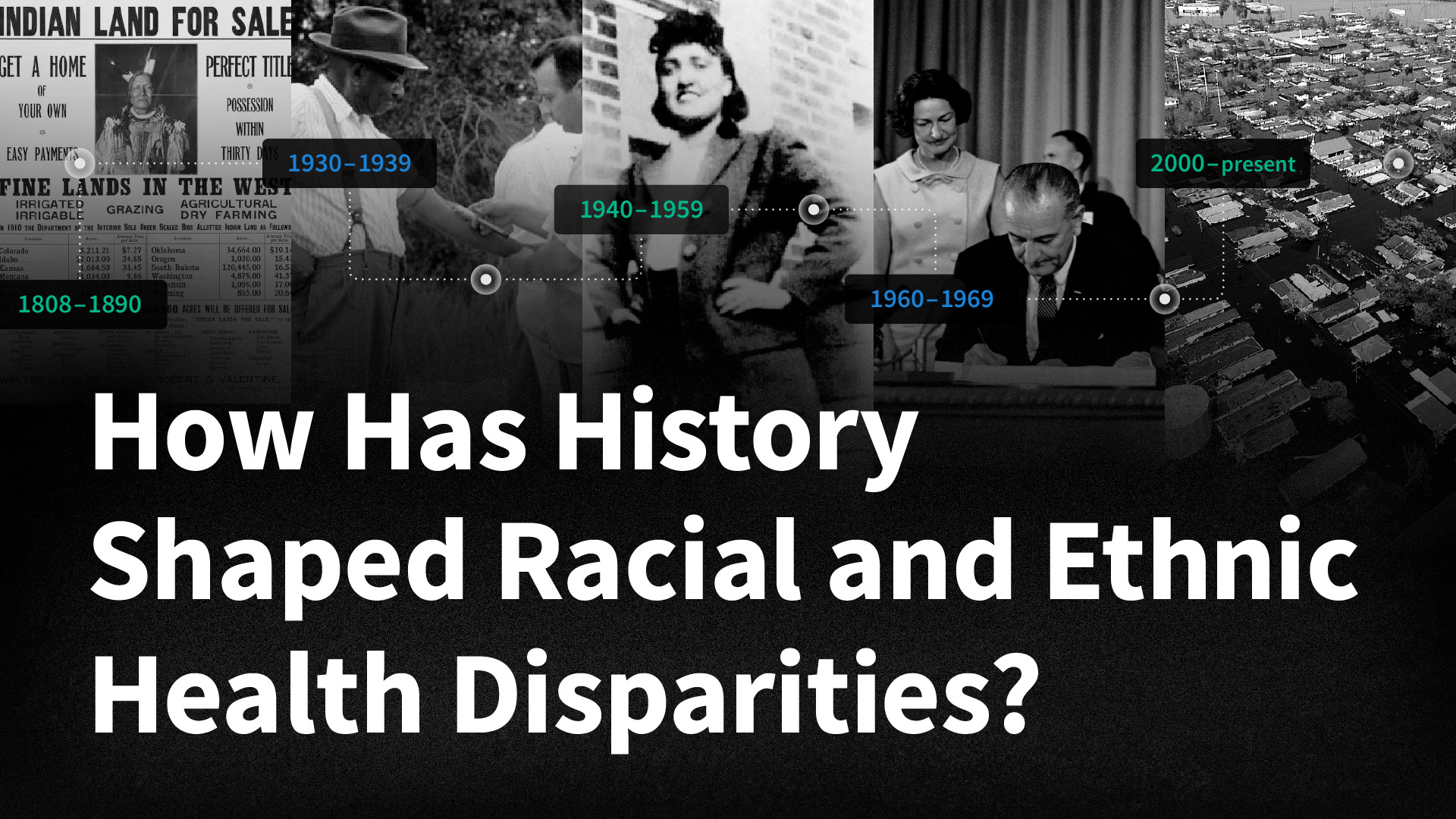
  • Timeline: How History Has Shaped Racial and Ethnic Health Disparities

    This timeline offers a historical view of significant U.S. federal policies and events spanning the early 1800s to today that have influenced present-day health disparities.
  • Health Policy 101: Chapter on Race, Inequality and Health

    Addressing persistent racial and ethnic disparities in health and health care is important for improving the nation’s health and economic prosperity. KFF explains such disparities and the factors that drive them, examines the actions to address them, and outlines future considerations.
  • Key Data on Health and Health Care by Race and Ethnicity

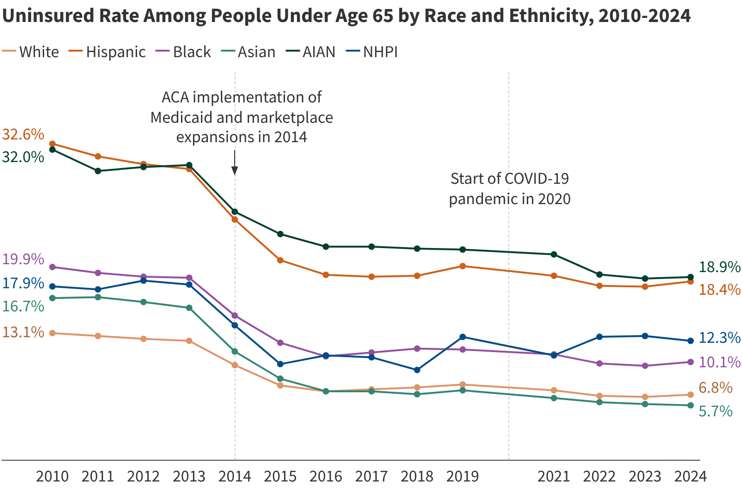
    Racial and ethnic disparities in health and health care remain a persistent challenge in the United States. An updated KFF resource examines how people of color fare compared to White people across 64 measures of health, health care, and social determinants of health.

Subscribe to KFF Emails

Choose which emails are best for you.
Sign up here

Filter

331 - 340 of 601 Results

  • Vaccine Monitor: Nearly Half of the Public Wants to Get a COVID-19 Vaccine as Soon as They Can or Has Already Been Vaccinated, Up across Racial and Ethnic Groups Since December

    News Release

    Most Convincing Messages to Promote Vaccination Highlight Effectiveness at Preventing Illness and a Return to Normal Life; Hearing about Rare Allergic Reactions and Side Effects May Discourage Some New KFF Dashboard Features Key Data and Insights from the Vaccine Monitor With millions of Americans getting their first COVID-19 vaccinations, the public’s eagerness to get a vaccine is rising across racial and ethnic groups, though Republicans and rural residents remain the most reluctant groups, the latest…

  • 8 Preguntas & Respuestas sobre Puerto Rico

    Fact Sheet

    La crisis de $73 mil millones de Puerto Rico ha sido tema de los medios de comunicación nacionales, y de debate en el Congreso en los últimos meses. Además, varios de los principales medios de prensa han reportado sobre una inminente crisis de la atención de salud relacionada con cuestiones demográficas y del financiamiento del cuidado de salud, y exacerbada por la actual situación económica y el aumento de casos de trasmisión del virus del…

  • New theGrio/KFF Survey Project Examines Diverse Views of Black Voters Heading into 2022 Midterm Election

    News Release

    7 in 10 Worry About Voter Suppression Interfering with a Fair and Accurate Count Allen Media Group’s African American-focused news, lifestyle, and entertainment platform theGrio and KFF today released a joint national survey examining the mood and views of Black voters, the only in-depth public survey this election cycle focused exclusively on this group, which has historically been a solid Democratic voting bloc but holds diverse views that often get overlooked in national polling. Coverage…

  • A Fall Update on COVID-19 Cases and Deaths, Vaccinations, and Treatments by Race/Ethnicity

    News Release

    KFF has updated its national analysis of race/ethnicity data of COVID-19 cases and deaths, vaccinations, and treatments as concerns grow over a potential increase in COVID-19 cases during winter and upcoming holiday gatherings and the low take-up of the COVID-19 bivalent booster vaccine among the eligible public. Despite earlier progress narrowing disparities in COVID-19 vaccination, new disparities have emerged in take-up of boosters and treatment. Federal data from earlier this month indicates that, among the…

  • Gaps in Mental Health Care for Asian and Pacific Islander People and Other People of Color

    Policy Watch

    Response to the victims and communities affected by recent mass shootings has increased national attention to mental health care for Asian and NHOPI people, groups that too often remain overlooked in data and policy discussions related to health disparities. In this analysis, we explore mental illness and low utilization of mental health services among Asian and NHOPI people.

  • As the COVID-19 Pandemic Enters the Third Year Most Adults Say They Have Not Fully Returned to Pre-Pandemic ‘Normal’

    News Release

    People of Color, Lower Income Adults, and Those With Chronic Conditions Are More Vigilant About COVID-19 Precautions Like Masking, and Want Others to Continue Them as Well The Public Is Divided About Public Transportation Mask Requirement, With Half Wanting the Mandate Extended and the Other Half Wanting to Let it Expire Conventional wisdom may be that Americans are ready to put COVID-19 in the rearview mirror and cast precautions aside, but the latest KFF COVID-19…

  • A Look at Key Maternal and Infant Health Disparities Among Black People

    Feature

    Due to systemic and overt discrimination, Black people are disproportionately affected by high maternal and infant morbidities and mortality. In addition to legislation, addressing systemic discrimination, implicit bias and racism will be integral to achieving equity in maternal health outcomes.