Racial Equity and Health Policy

the Essentials
  • How Experiencing Racial Discrimination Impacts Health

    This brief highlights research examining mechanisms underlying health outcomes linked to self-reported experiences of racial discrimination, including biological changes, chronic stress, mental health, substance use, pregnancy-related outcomes, and sleep.
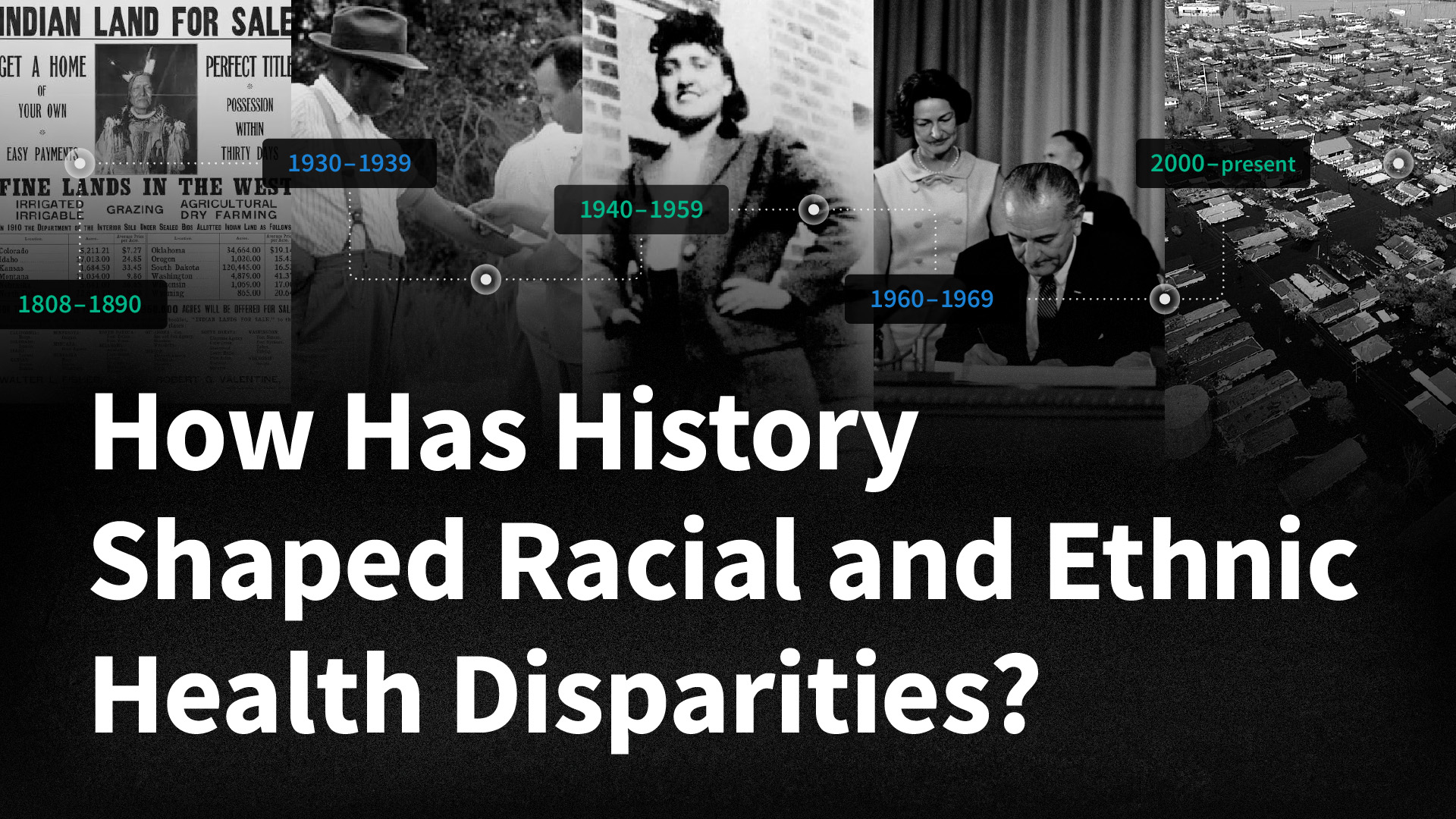
  • Timeline: How History Has Shaped Racial and Ethnic Health Disparities

    This timeline offers a historical view of significant U.S. federal policies and events spanning the early 1800s to today that have influenced present-day health disparities.
  • Health Policy 101: Chapter on Race, Inequality and Health

    Addressing persistent racial and ethnic disparities in health and health care is important for improving the nation’s health and economic prosperity. KFF explains such disparities and the factors that drive them, examines the actions to address them, and outlines future considerations.
  • Key Data on Health and Health Care by Race and Ethnicity

    Racial and ethnic disparities in health and health care remain a persistent challenge in the United States. An updated KFF resource examines how people of color fare compared to White people across 64 measures of health, health care, and social determinants of health.

Survey of Immigrants

KFF-New York Times Survey: Immigrants Report Rising Fear, Negative Economic and Health Impacts, and Changing Political Views During the First Year of President Trump’s Second Term

The 2025 Survey of Immigrants, a partnership between KFF and The New York Times, takes an in-depth look at the experiences of immigrants during the first year of President Trump’s second term, including their worries related to increased immigration enforcement, their health and economic wellbeing, and the political views and preferences of immigrant voters. The survey paints a portrait of families under strain — where fear of detention and economic instability are negatively impacting immigrants’ health and reshaping immigrant families’ daily lives and views of U.S. political parties.

Read the News Release | Explore The New York Times’ Reporting
Stay informed.

Stay informed.

Filter

331-340 of 608 results

  • Testimony: The Status of Health and Health Care Disparities in the United States

    Issue Brief

    On March 8, 2017, Kaiser Family Foundation Director of the Disparities Policy Project Samantha Artiga testified before the House Subcommittee on Labor, Health and Human Services, Education and Related Agencies. She presented on the status of health and health care disparities in the United States.

  • Puerto Rico: Medicaid, Fiscal Issues and the Zika Challenge

    Fact Sheet

    Roughly one in two Puerto Ricans (49%) are enrolled in the island’s Medicaid program. This fact sheet provides an overview of the Medicaid program in Puerto Rico and emerging fiscal issues facing its health care system as Zika cases on the island continue to mount.

  • New theGrio/KFF Survey Project Examines Diverse Views of Black Voters Heading into 2022 Midterm Election

    News Release

    7 in 10 Worry About Voter Suppression Interfering with a Fair and Accurate Count Allen Media Group’s African American-focused news, lifestyle, and entertainment platform theGrio and KFF today released a joint national survey examining the mood and views of Black voters, the only in-depth public survey this election cycle focused exclusively on this group, which has historically been a solid Democratic voting bloc but holds diverse views that often get overlooked in national polling. Coverage…

  • How Recognizing Health Disparities for Black People is Important for Change

    Policy Watch

    Ongoing racism and discrimination, police violence against and killings of Black people, and gun violence also negatively impact health and well-being of Black people. Black people’s repeated and chronic exposure to stressors associated with racism and discrimination drive rapid biological aging and poorer health outcomes.

  • Annual Update of Key Health Data Collection by Race and Ethnicity, Now Including Mental Health Measures

    News Release

    The annual update of KFF’s collection of wide-ranging data on health and health care by race and ethnicity is now available, and this year includes measures on mental health care access, mental illness, substance use disorder, suicide rates, and drug overdose death rates. The handy reference, "Key Data on Health and Health Care by Race and Ethnicity," has nearly 50 charts and up to 70 data measures that highlight the scale and scope of disparities…

  • Nearly Half of Those Likely Eligible for DACA are Uninsured

    News Release

    Yesterday, the Biden Administration announced a plan to expand eligibility for Medicaid and ACA Marketplace health coverage to Deferred Action for Childhood Arrivals (DACA) recipients. A KFF analysis finds 47% of individuals likely eligible for DACA are uninsured compared to 10% of U.S. born individuals in their age group. The analysis estimates that among those likely eligible for DACA: 84% are in a family with at least one full-time worker, 54% of adults work full-time,…

  • Early Data Show Racial Disparities in Monkeypox Cases

    Policy Watch

    This policy watch examines early data showing that Black and Hispanic people are bearing a disproportionate burden of monkeypox cases and discusses the importance of centering equity in response efforts, including prevention, testing, and treatment.