Racial Equity and Health Policy

the Essentials
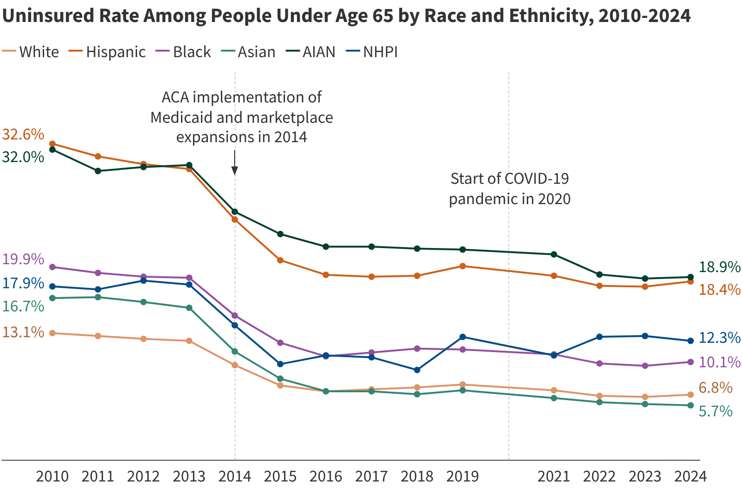
  • Health Coverage by Race and Ethnicity, 2010-2024

    There have been longstanding racial and ethnic disparities in health coverage that contribute to disparities in health. This brief examines trends in health coverage by race and ethnicity from 2010 through 2024 and discusses the implications for such disparities.
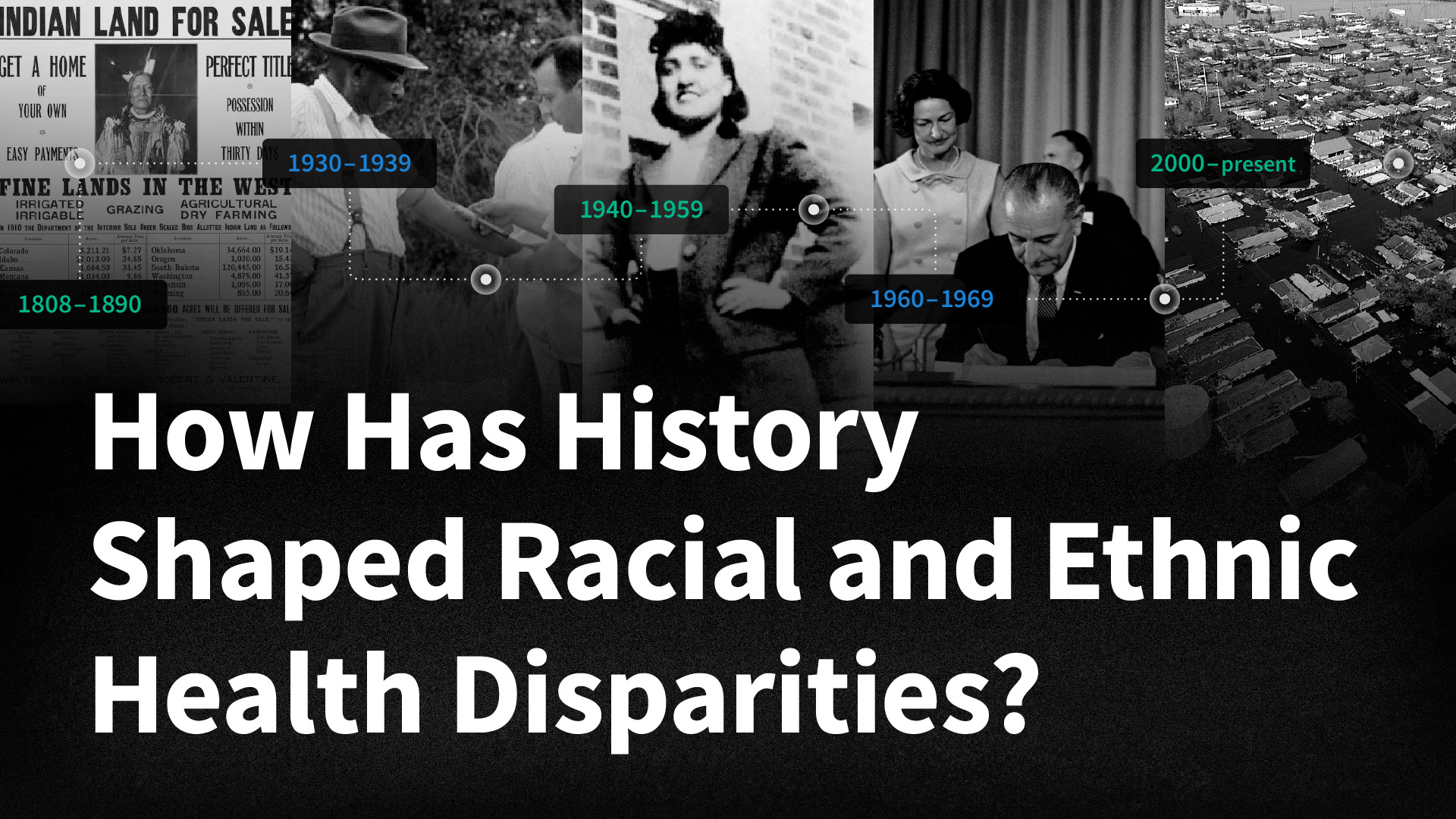
  • Timeline: How History Has Shaped Racial and Ethnic Health Disparities

    This timeline offers a historical view of significant U.S. federal policies and events spanning the early 1800s to today that have influenced present-day health disparities.
  • Health Policy 101: Chapter on Race, Inequality and Health

    Addressing persistent racial and ethnic disparities in health and health care is important for improving the nation’s health and economic prosperity. KFF explains such disparities and the factors that drive them, examines the actions to address them, and outlines future considerations.
  • Key Data on Health and Health Care by Race and Ethnicity

    Racial and ethnic disparities in health and health care remain a persistent challenge in the United States. An updated KFF resource examines how people of color fare compared to White people across 64 measures of health, health care, and social determinants of health.

Survey of Immigrants

KFF-New York Times Survey: Immigrants Report Rising Fear, Negative Economic and Health Impacts, and Changing Political Views During the First Year of President Trump’s Second Term

The 2025 Survey of Immigrants, a partnership between KFF and The New York Times, takes an in-depth look at the experiences of immigrants during the first year of President Trump’s second term, including their worries related to increased immigration enforcement, their health and economic wellbeing, and the political views and preferences of immigrant voters. The survey paints a portrait of families under strain — where fear of detention and economic instability are negatively impacting immigrants’ health and reshaping immigrant families’ daily lives and views of U.S. political parties.

Read the News Release | Explore The New York Times’ Reporting
Subscribe to KFF Emails

Choose which emails are best for you.
Sign up here

Filter

291 - 300 of 602 Results

  • Medical Care Research and Review

    Other Post

    Journal Supplement This special supplement of includes: original research tracking trends in disparities in health coverage and access to care over two decades; literature syntheses focused on medical treatment and the decision-making process; legal analysis of civil rights laws in the context of managed care; and findings from a national survey of public awareness of racial inequities in care. The supplement is comprised of work commissioned by the Foundation for its 1999 national policy roundtable,…

  • Compendium of Cultural Competence Initiatives in Health Care

    Report

    Public and private sector organizations are involved in a number of activities that seek to reduce cultural and communication barriers to health care. These activities are often described as cultural competency and/or cross-cultural education. A recent Institute of Medicine report recommended that the health care system pursue several of these techniques as part of a multi-level strategy to reduce racial and ethnic disparities in medical care. To address this need, the Henry J. Kaiser Family…

  • Key Health and Health Care Indicators by Race/Ethnicity and State

    Fact Sheet

    This updated fact sheet shows variations across states and racial and ethnic groups for six key health and health care indicators. It provides a quick glance at disparities in rates of infant mortality and diabetes-related mortality and AIDS cases in all 50 states and the District of Columbia, as well as similar breakdowns showing the percentage of each group in each state that is uninsured, enrolled in Medicaid, and living in poverty. Fact Sheet (.pdf)

  • Medicaid’s Role for Hispanic Americans

    Fact Sheet

    This fact sheet examines Medicaid's role for Hispanic Americans. It includes data on Medicaid's coverage of Hispanic Americans and the program's impact on their access to care, as well as the impacts of the recent recession and the coming expansion of Medicaid under health reform on enrollment in Medicaid among Hispanic Americans. The fact sheet also has a chart showing state-by-state data on health insurance coverage of Hispanic Americans. Fact Sheet (.pdf)

  • New Publications on Immigrant Health Care and Linguistic Access

    Fact Sheet

    In 2000, there were over 32 million foreign-born residents in the U.S. Immigrants often face barriers to health coverage and health services. The disparities confronting immigrants can be similar to those faced by low-income working families generally, but immigrants also face other barriers, including linguistic issues and eligibility changes that have limited their ability to qualify for Medicaid. These new or updated publications address issues related to how race, immigration status, and language affect insurance…

  • Policy Brief: Minority AIDS Initiative

    Issue Brief

    The Minority AIDS Initiative (MAI) was created in 1998 by the U.S. government to respond to growing concern about the impact of HIV/AIDS on racial and ethnic minorities. It provides funding to strengthen organizational capacity and expand HIV-related services in minority communities. This new policy brief provides an overview of the MAI, including a discussion of its creation, goals, administration, and funding history, and a summary of current issues and challenges based on interviews with…

  • Survey of Asians In the Bay Area – Toplines

    Poll Finding

    This document includes the toplines from a survey exploring the attitudes and experiences of the Asian community in the Bay Area, which has the largest Asian population in the country. The Kaiser Family Foundation and San Jose Mercury News collaborated on the survey. Survey Toplines (.pdf)