Racial Equity and Health Policy

the Essentials
  • How Experiencing Racial Discrimination Impacts Health

    This brief highlights research examining mechanisms underlying health outcomes linked to self-reported experiences of racial discrimination, including biological changes, chronic stress, mental health, substance use, pregnancy-related outcomes, and sleep.
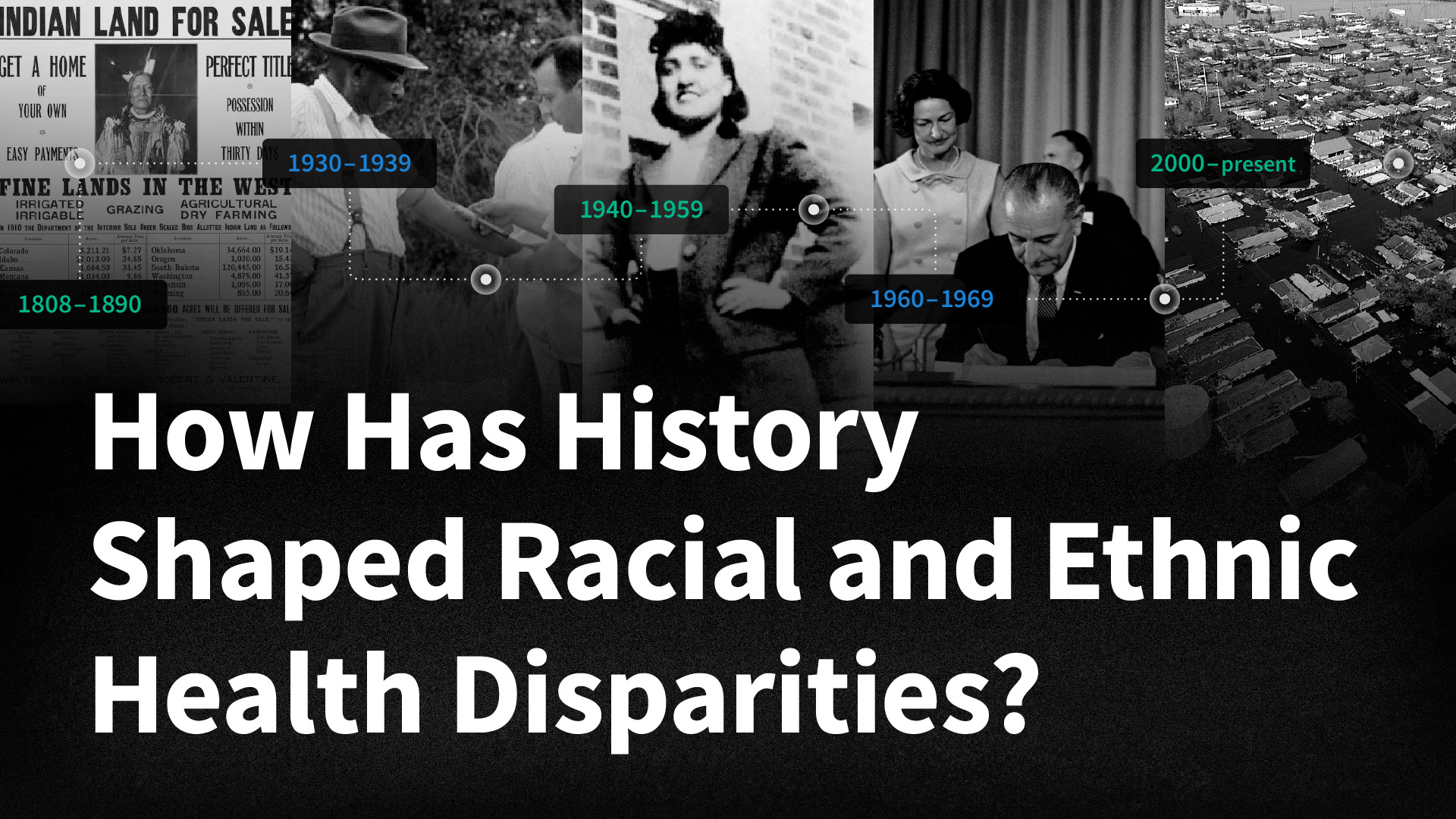
  • Timeline: How History Has Shaped Racial and Ethnic Health Disparities

    This timeline offers a historical view of significant U.S. federal policies and events spanning the early 1800s to today that have influenced present-day health disparities.
  • Health Policy 101: Chapter on Race, Inequality and Health

    Addressing persistent racial and ethnic disparities in health and health care is important for improving the nation’s health and economic prosperity. KFF explains such disparities and the factors that drive them, examines the actions to address them, and outlines future considerations.
  • Key Data on Health and Health Care by Race and Ethnicity

    Racial and ethnic disparities in health and health care remain a persistent challenge in the United States. An updated KFF resource examines how people of color fare compared to White people across 64 measures of health, health care, and social determinants of health.

Survey of Immigrants

KFF-New York Times Survey: Immigrants Report Rising Fear, Negative Economic and Health Impacts, and Changing Political Views During the First Year of President Trump’s Second Term

The 2025 Survey of Immigrants, a partnership between KFF and The New York Times, takes an in-depth look at the experiences of immigrants during the first year of President Trump’s second term, including their worries related to increased immigration enforcement, their health and economic wellbeing, and the political views and preferences of immigrant voters. The survey paints a portrait of families under strain — where fear of detention and economic instability are negatively impacting immigrants’ health and reshaping immigrant families’ daily lives and views of U.S. political parties.

Read the News Release | Explore The New York Times’ Reporting
Stay informed.

Stay informed.

Filter

281 - 290 of 603 Results

  • 3 Charts: Asian Immigrants’ Experiences in the United States

    News Release

    Like other immigrants to the U.S., Asian immigrants overwhelmingly say they emigrated for the opportunity to build a better life for themselves and their children. They come from more than 30 countries, and their experiences – their economic circumstance, how safe they feel, and the discrimination they face - vary greatly once here, including differences by income level, immigration status and country of origin. These three charts explore the diversity of the Asian immigrant experience,…

  • Language Barriers in Health Care: Findings from the KFF Survey on Racism, Discrimination, and Health

    Poll Finding

    In the U.S., 26 million people have limited English proficiency, representing about 8% of people ages 5 and older. Those with limited English proficiency report worse overall health status than those who are English proficient, but data suggests that having access to providers who speak their preferred language may help these disparities and can improve health care experiences.

  • HIV/AIDS in Georgia

    Report

    Two reports - "Survey of Georgia Residents on HIV/AIDS" and "Georgia's Minority Health and Health Disparities Report - Facing a Crisis" - show the disproportionate impact HIV is having on minorities in Georgia, and important differences in how minorities view HIV/AIDS compared to whites. The reports were released at a November 30, 2004 briefing held by the National Center for Primary Care (NCPC) at the Morehouse School of Medicine in partnership with the Kaiser Family…

  • Key Facts: African Americans and HIV/AIDS

    Report

    provides comprehensive data on the impact of HIV/AIDS epidemic on African Americans. Based on the most recent data and research on the epidemiology of HIV/AIDS among African Americans, the report includes an overview and epidemic profile, as well as data on major trends, access to and use of health services, and perceptions of HIV/AIDS. Chartbook (.pdf)

  • Health Coverage and Care of Undocumented Immigrants

    Issue Brief

    Recently, many of the Democratic presidential candidates indicated support for expanding health coverage to undocumented immigrants. To help inform the implications of such an expansion, this brief provides an overview of current health coverage and care for undocumented immigrants

  • A First Look at North Carolina’s Section 1115 Medicaid Waiver’s Healthy Opportunities Pilots

    Issue Brief

    Medicaid funds typically cannot be used to pay for non-medical interventions that target the social determinants of health. However, in October 2018, CMS approved North Carolina’s Section 1115 waiver which provides financing for a new pilot program, called “Healthy Opportunities Pilots,” to cover evidence-based non-medical services that address specific social needs linked to health/health outcomes. The pilots will address housing instability, transportation insecurity, food insecurity, and interpersonal violence and toxic stress for a limited number…

  • Analysis: Workers Increasingly Have Access to Same-Sex Spousal Benefits 

    News Release

    While workplace health benefits for married same-sex spouses are becoming more common, new data from KFF’s 2018 Employer Health Benefits Survey shows they still lag behind benefits available to opposite sex-spouses. In 2018, nearly two-thirds (63%) of employers offering health insurance coverage to opposite-sex spouses also provided coverage to same-sex spouses – up significantly from 2016, when fewer than half (43%) did. Few (6%) say they do not offer same-sex spousal benefits, while others, mostly…