Racial Equity and Health Policy

the Essentials
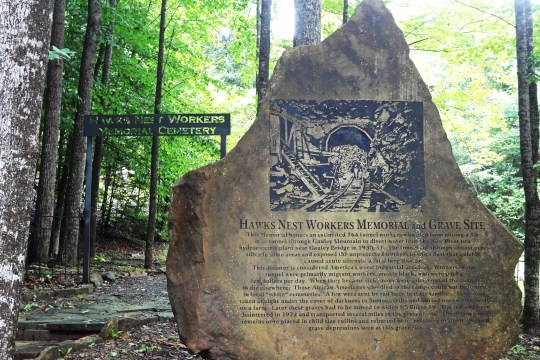
  • How Experiencing Racial Discrimination Impacts Health

    This brief highlights research examining mechanisms underlying health outcomes linked to self-reported experiences of racial discrimination, including biological changes, chronic stress, mental health, substance use, pregnancy-related outcomes, and sleep.
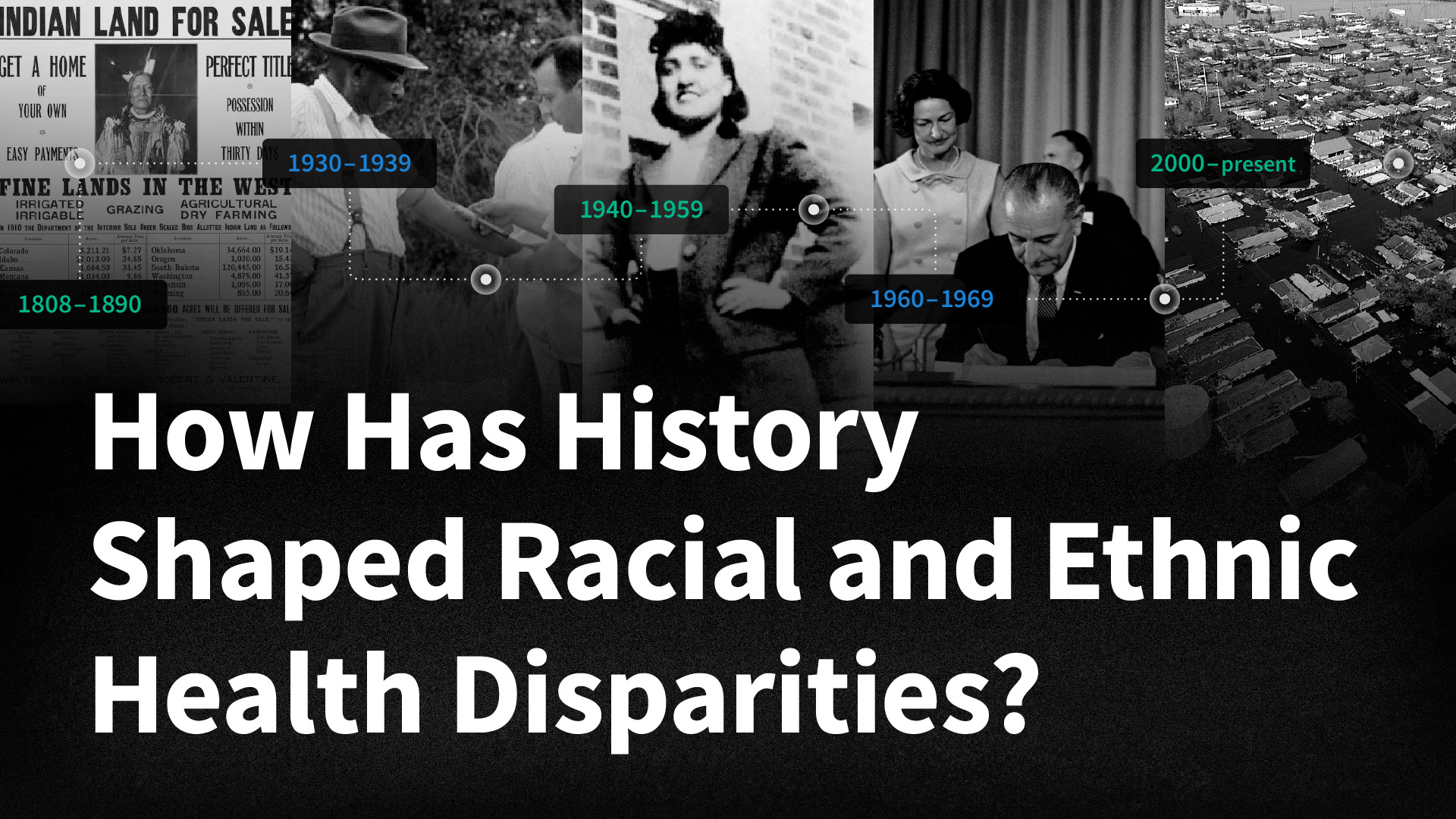
  • Timeline: How History Has Shaped Racial and Ethnic Health Disparities

    This timeline offers a historical view of significant U.S. federal policies and events spanning the early 1800s to today that have influenced present-day health disparities.
  • Health Policy 101: Chapter on Race, Inequality and Health

    Addressing persistent racial and ethnic disparities in health and health care is important for improving the nation’s health and economic prosperity. KFF explains such disparities and the factors that drive them, examines the actions to address them, and outlines future considerations.
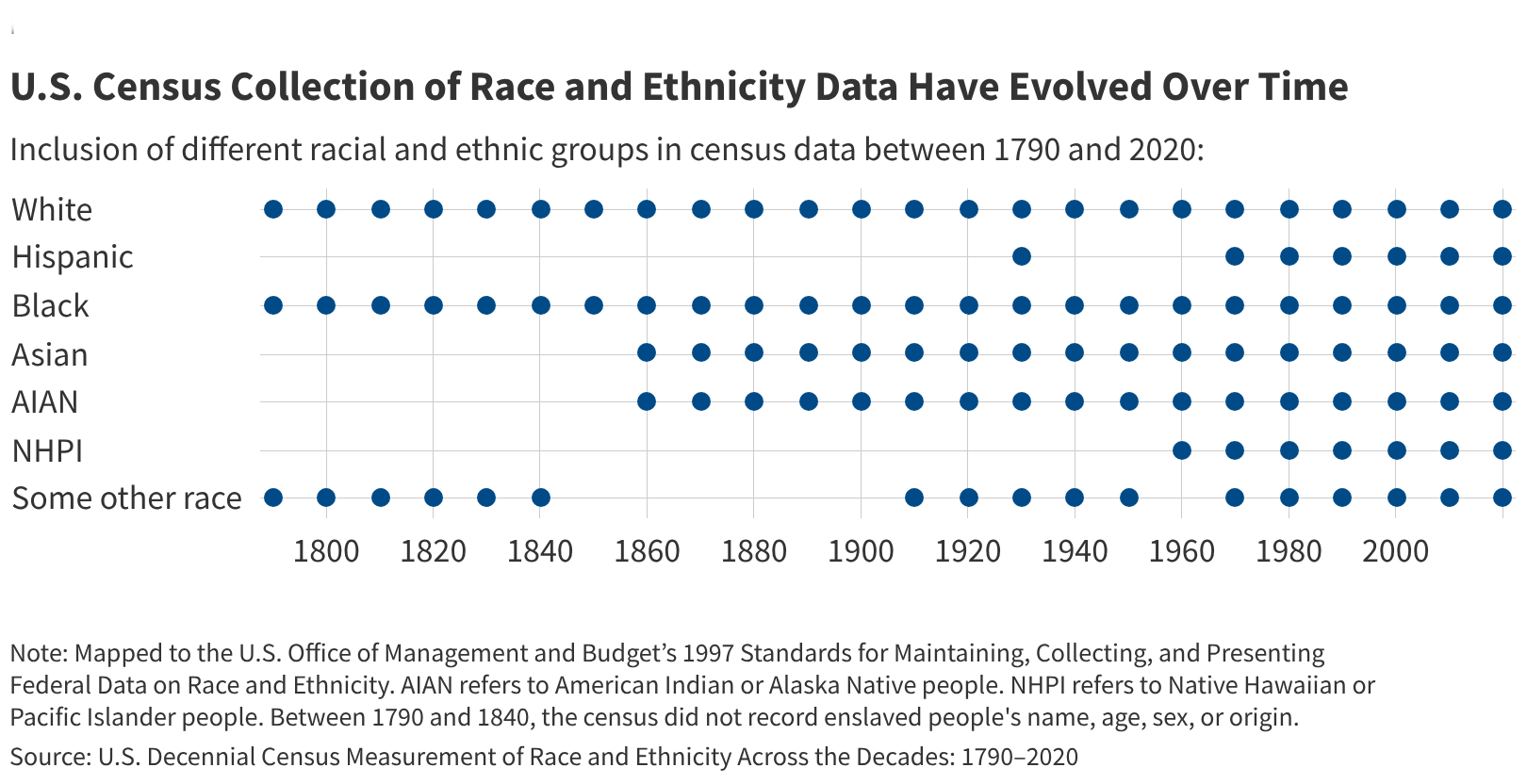
  • Key Data on Health and Health Care by Race and Ethnicity

    Racial and ethnic disparities in health and health care remain a persistent challenge in the United States. An updated KFF resource examines how people of color fare compared to White people across 64 measures of health, health care, and social determinants of health.

Survey of Immigrants

KFF-New York Times Survey: Immigrants Report Rising Fear, Negative Economic and Health Impacts, and Changing Political Views During the First Year of President Trump’s Second Term

The 2025 Survey of Immigrants, a partnership between KFF and The New York Times, takes an in-depth look at the experiences of immigrants during the first year of President Trump’s second term, including their worries related to increased immigration enforcement, their health and economic wellbeing, and the political views and preferences of immigrant voters. The survey paints a portrait of families under strain — where fear of detention and economic instability are negatively impacting immigrants’ health and reshaping immigrant families’ daily lives and views of U.S. political parties.

Read the News Release | Explore The New York Times’ Reporting
Stay informed.

Stay informed.

Filter

251 - 260 of 603 Results

  • Medicare and Minority Americans

    Fact Sheet

    As part of The Faces of Medicare, a collection of fact sheets profiling the characteristics and health needs of different groups of Medicare beneficiaries, provides key facts about Medicare's racial and ethnic minority population, who will account for one in three Americans 65 and older by 2025. Fact Sheet

  • Survey of Georgia Residents on HIV/AIDS: Summary and Chartpack

    Report

    The public in Georgia, and particularly African Americans, are concerned about HIV/AIDS as a problem facing the nation. Most believe that the U.S. is losing ground when it comes to HIV/AIDS, and most would like to see the government increase spending to fight the disease in the U.S. This statewide representative survey examines Georgians views on the HIV/AIDS epidemic in their state and local communities, their knowledge and misconceptions about HIV/AIDS, Georgia's HIV testing rates,…

  • HIV/AIDS in Georgia

    Report

    Two reports - "Survey of Georgia Residents on HIV/AIDS" and "Georgia's Minority Health and Health Disparities Report - Facing a Crisis" - show the disproportionate impact HIV is having on minorities in Georgia, and important differences in how minorities view HIV/AIDS compared to whites. The reports were released at a November 30, 2004 briefing held by the National Center for Primary Care (NCPC) at the Morehouse School of Medicine in partnership with the Kaiser Family…

  • Key Facts: African Americans and HIV/AIDS

    Report

    provides comprehensive data on the impact of HIV/AIDS epidemic on African Americans. Based on the most recent data and research on the epidemiology of HIV/AIDS among African Americans, the report includes an overview and epidemic profile, as well as data on major trends, access to and use of health services, and perceptions of HIV/AIDS. Chartbook (.pdf)

  • Indian Health Care in the 21st Century: A Case Study in Disparities

    Report

    The Kaiser Family Foundation, in conjunction with the Morris K. Udall Foundation and the American Public Health Association hosted an event on May 9, 2005 which focused on key Indian health issues, including the availability of mental health services, the adequacy of federal funding, and priorities for Indian health. Agenda (.pdf)Speaker Biographies (.pdf) A webcast of this event is available. The event highlighted research that appears in the May 2005 issue of the American Journal…

  • Medicare’s Role for Latinos – (Spanish version)

    Other Post

    Medicare's Role for Latinos - (Spanish version) Note: This publication is no longer in circulation. However, a few copies may still exist in the Foundation's internal library that could be xeroxed. Please email order@kff.org if you would like to pursue this option

  • Key Health and Health Care Indicators by Race/Ethnicity and State

    Fact Sheet

    This updated fact sheet shows variations across states and racial and ethnic groups for six key health and health care indicators. It provides a quick glance at disparities in rates of infant mortality and diabetes-related mortality and AIDS cases in all 50 states and the District of Columbia, as well as similar breakdowns showing the percentage of each group in each state that is uninsured, enrolled in Medicaid, and living in poverty. Fact Sheet (.pdf)

  • A Profile of American Indians and Alaska Natives and Their Health Coverage

    Issue Brief

    A Profile of American Indians and Alaska Natives and Their Health Coverage This brief examines the health coverage, access to care and health status of American Indians and Alaska Natives across the country. Although the U.S. government has an established responsibility through tribal agreements to provide health care services to members of federally recognized Indian tribes, many American Indians and Alaska Natives lack access to health care. The brief gives an overview of the some…

  • Race and Recession Survey

    Poll Finding

    The Washington Post/Kaiser Family Foundation/Harvard University partnership conducted a survey to examine how the recession has reshaped the lives of Americans and takes a closer look at experiences by race and ethnicity. This survey is the 21st in a series of surveys dating back to 1995 that have been conducted as part of The Washington Post/Kaiser Family Foundation Survey Project. Toplines (.pdf) Read The Washington Post articles on the survey:Economy poll: African Americans, Hispanics were…