Racial Equity and Health Policy

the Essentials
  • How Experiencing Racial Discrimination Impacts Health

    This brief highlights research examining mechanisms underlying health outcomes linked to self-reported experiences of racial discrimination, including biological changes, chronic stress, mental health, substance use, pregnancy-related outcomes, and sleep.
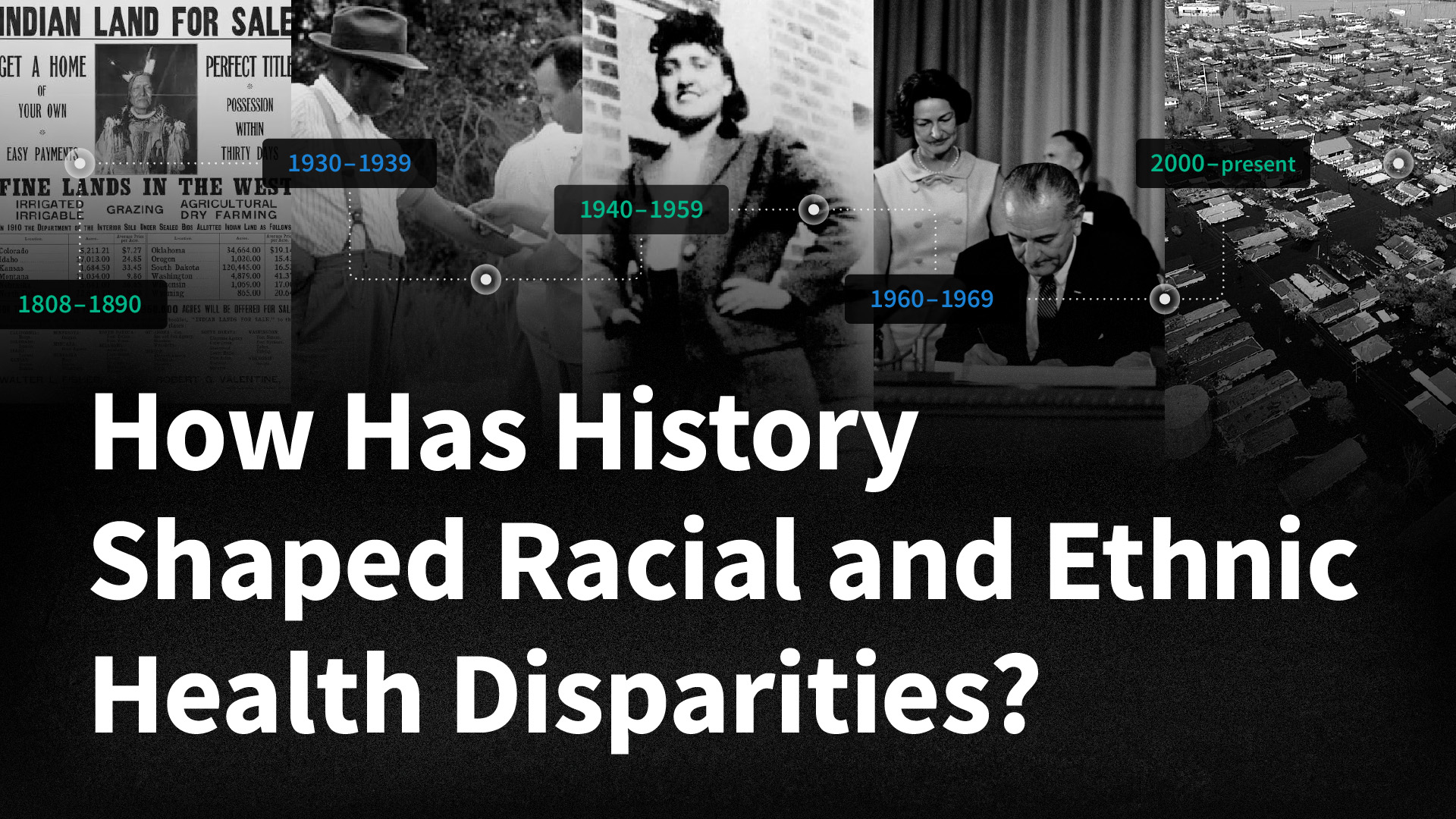
  • Timeline: How History Has Shaped Racial and Ethnic Health Disparities

    This timeline offers a historical view of significant U.S. federal policies and events spanning the early 1800s to today that have influenced present-day health disparities.
  • Health Policy 101: Chapter on Race, Inequality and Health

    Addressing persistent racial and ethnic disparities in health and health care is important for improving the nation’s health and economic prosperity. KFF explains such disparities and the factors that drive them, examines the actions to address them, and outlines future considerations.
  • Key Data on Health and Health Care by Race and Ethnicity

    Racial and ethnic disparities in health and health care remain a persistent challenge in the United States. An updated KFF resource examines how people of color fare compared to White people across 64 measures of health, health care, and social determinants of health.

Survey of Immigrants

KFF-New York Times Survey: Immigrants Report Rising Fear, Negative Economic and Health Impacts, and Changing Political Views During the First Year of President Trump’s Second Term

The 2025 Survey of Immigrants, a partnership between KFF and The New York Times, takes an in-depth look at the experiences of immigrants during the first year of President Trump’s second term, including their worries related to increased immigration enforcement, their health and economic wellbeing, and the political views and preferences of immigrant voters. The survey paints a portrait of families under strain — where fear of detention and economic instability are negatively impacting immigrants’ health and reshaping immigrant families’ daily lives and views of U.S. political parties.

Read the News Release | Explore The New York Times’ Reporting
Stay informed.

Stay informed.

Filter

251-260 of 610 results

  • The Role of Language in Health Care Access and Utilization for Insured Hispanic Adults

    Issue Brief

    The ACA coverage expansions may help mitigate some barriers people with limited English proficiency (LEP) face in accessing coverage and care. However, individuals with LEP may still face increased barriers to care with coverage. This analysis examines differences in health care experiences between English- and Spanish-speaking Hispanic adults with insurance using data from the 2014 Kaiser Survey of Low-Income Americans and the ACA.

  • Voices from Puerto Rico: Reflections Two Months After Maria (Report)

    Issue Brief

    Two months after Maria made landfall, Kaiser Family Foundation staff traveled to Puerto Rico. This brief presents findings from focus groups and individual interviews with 40 individuals from 10 different regions on the island affected by the storm.

  • U.S. Virgin Islands: Fast Facts

    Fact Sheet

    This fact sheet presents demographic, economic, and health indicators of the U.S. Virgin Islands and briefly discusses some of the territory's short and long-term challenges facing the territory after Hurricanes Irma and Maria struck the island in September 2017.

  • Key Data on Health and Health Care for Native Hawaiian or Pacific Islander People

    Issue Brief

    Among NHPI people, there is significant variation in key factors that influence health, including health coverage, income, and homeownership, with Marshallese people faring the worst across all examined measures. Data gaps prevent the ability to fully identify and understand health disparities for NHPI people. Among available data, NHPI people fare worse than White people for the majority of measures.

  • The Role of Health Coverage for Communities of Color

    Issue Brief

    The current health reform debate in this country focuses heavily on providing access to affordable health coverage for the millions of people who are uninsured. Any effort to expand coverage, alter current public programs, and/or create new public programs will have important consequences for the health of communities of color, who are more likely than Whites to be enrolled in public programs or be uninsured. This issue brief highlights variations in coverage by race and…

  • Native Americans and Medicaid: Coverage and Financing Issues

    Other Post

    Native Americans and Medicaid:Coverage and Financing Issues Medicaid and Welfare Until 1996, families with children who received cash assistance under the Aid to Families with Dependent Children (AFDC) program were automatically entitled to Medicaid coverage. The welfare law enacted that year, Public Law 104-193, repealed the AFDC program and created a Temporary Assistance for Needy Families (TANF) block grant to the states. The 1996 welfare law also severed the automatic eligibility linkage between welfare and…

  • Voices from Puerto Rico: Reflections Two Months After Maria (Video)

    Video

    Residents of Puerto Rico discuss their daily lives and their views on recovery efforts two months after Hurricane Maria. In this video, they describe job loss and continuing economic disruption, a lack of basic services such as electricity and a rising toll on the population's mental and physical health.

  • Profile of Medicare Beneficiaries by Race and Ethnicity: A Chartpack

    Report

    This chartpack draws on data and analysis from a variety of sources to profile the Medicare population through the lens of race and ethnicity, describing life expectancy, demographic characteristics, income and savings, health status and chronic conditions, supplemental coverage, selected measures of access to care, and service utilization.