Racial Equity and Health Policy

the Essentials
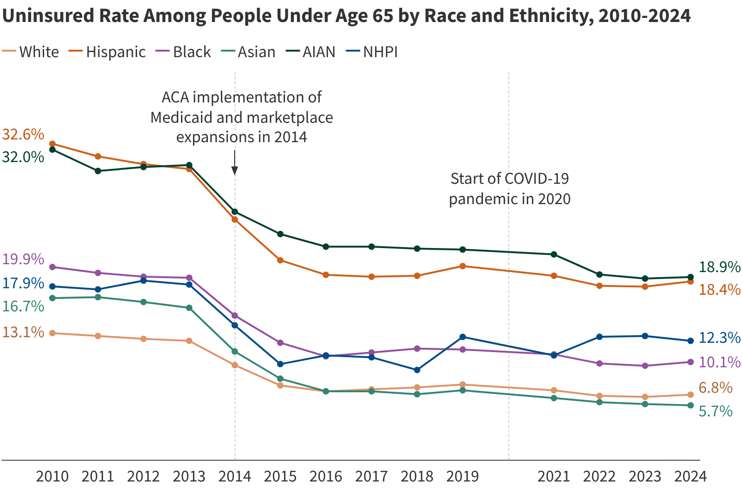
  • Health Coverage by Race and Ethnicity, 2010-2024

    There have been longstanding racial and ethnic disparities in health coverage that contribute to disparities in health. This brief examines trends in health coverage by race and ethnicity from 2010 through 2024 and discusses the implications for such disparities.
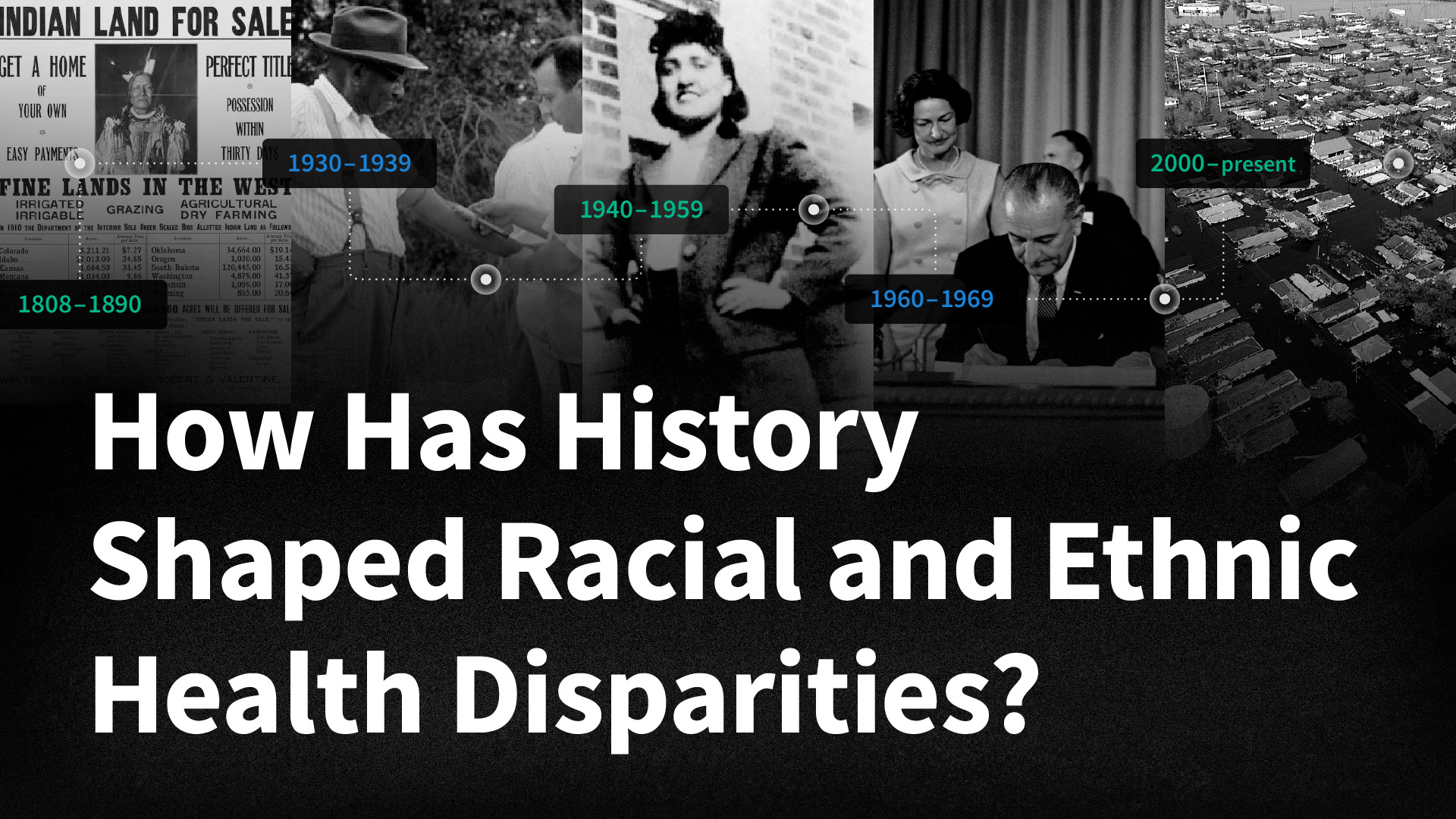
  • Timeline: How History Has Shaped Racial and Ethnic Health Disparities

    This timeline offers a historical view of significant U.S. federal policies and events spanning the early 1800s to today that have influenced present-day health disparities.
  • Health Policy 101: Chapter on Race, Inequality and Health

    Addressing persistent racial and ethnic disparities in health and health care is important for improving the nation’s health and economic prosperity. KFF explains such disparities and the factors that drive them, examines the actions to address them, and outlines future considerations.
  • Key Data on Health and Health Care by Race and Ethnicity

    Racial and ethnic disparities in health and health care remain a persistent challenge in the United States. An updated KFF resource examines how people of color fare compared to White people across 64 measures of health, health care, and social determinants of health.

Survey of Immigrants

KFF-New York Times Survey: Immigrants Report Rising Fear, Negative Economic and Health Impacts, and Changing Political Views During the First Year of President Trump’s Second Term

The 2025 Survey of Immigrants, a partnership between KFF and The New York Times, takes an in-depth look at the experiences of immigrants during the first year of President Trump’s second term, including their worries related to increased immigration enforcement, their health and economic wellbeing, and the political views and preferences of immigrant voters. The survey paints a portrait of families under strain — where fear of detention and economic instability are negatively impacting immigrants’ health and reshaping immigrant families’ daily lives and views of U.S. political parties.

Read the News Release | Explore The New York Times’ Reporting
Stay informed.

Stay informed.

Filter

241 - 250 of 602 Results

  • Medicaid’s Role for Hispanic Americans

    Fact Sheet

    This fact sheet examines Medicaid's role for Hispanic Americans. It includes data on Medicaid's coverage of Hispanic Americans and the program's impact on their access to care, as well as the impacts of the recent recession and the coming expansion of Medicaid under health reform on enrollment in Medicaid among Hispanic Americans. The fact sheet also has a chart showing state-by-state data on health insurance coverage of Hispanic Americans. Fact Sheet (.pdf)

  • New Publications on Immigrant Health Care and Linguistic Access

    Fact Sheet

    In 2000, there were over 32 million foreign-born residents in the U.S. Immigrants often face barriers to health coverage and health services. The disparities confronting immigrants can be similar to those faced by low-income working families generally, but immigrants also face other barriers, including linguistic issues and eligibility changes that have limited their ability to qualify for Medicaid. These new or updated publications address issues related to how race, immigration status, and language affect insurance…

  • Policy Brief: Minority AIDS Initiative

    Issue Brief

    The Minority AIDS Initiative (MAI) was created in 1998 by the U.S. government to respond to growing concern about the impact of HIV/AIDS on racial and ethnic minorities. It provides funding to strengthen organizational capacity and expand HIV-related services in minority communities. This new policy brief provides an overview of the MAI, including a discussion of its creation, goals, administration, and funding history, and a summary of current issues and challenges based on interviews with…

  • Survey of Asians In the Bay Area – Toplines

    Poll Finding

    This document includes the toplines from a survey exploring the attitudes and experiences of the Asian community in the Bay Area, which has the largest Asian population in the country. The Kaiser Family Foundation and San Jose Mercury News collaborated on the survey. Survey Toplines (.pdf)

  • Fact Sheet: Young African American Men in the United States

    Report

    This fact sheet highlights key information about the education, health and overall status of young African American men, including comparisons to other groups. It was released at a July 2006 event, "Paths to Success: A Forum on Young African American Men." Fact Sheet (.pdf)

  • The Role of Employer-Sponsored Health Coverage for Immigrants: A Primer

    Issue Brief

    Access to employer-sponsored health insurance is declining for all families living in the United States, and this problem is especially acute for immigrant families. Employer-sponsored coverage is a particularly important source of insurance for immigrant families since their eligibility for public coverage through Medicaid and the State Children’s Health Insurance Program (SCHIP) is restricted. This primer examines the role of employer-based coverage for immigrants and the specific hurdles they face in obtaining this coverage. Issue…

  • Racial and Ethnic Disparities in Women’s Health Coverage and Access to Care

    Issue Brief

    Using data from the 2001 Kaiser Women’s Health Survey, a nationally representative survey of nearly 4,000 women between the ages of 18 to 64, this issue brief explores racial and ethnic disparities in health care among women. It provides new information on the differences in health status, health insurance coverage, and selected measures of access to care across three racial/ethnic groups of women: African American, Latina, and white. Issue Brief (.pdf)

  • Native American Health Policy Fellowship Program, 1999 – 2003

    Other Post

    Established in 1999, the Henry J. Kaiser Family Foundation Native American Health Policy Fellowships were awarded to outstanding American Indian/Alaska Natives who made their career in health-related fields and were interested in health policy. The purpose of the fellowship was to give American Indian/Alaska Native community leaders an opportunity to learn more about national health policy issues and the policymaking process. Fellows were given the opportunity to work full-time for one year in a Congressional…

  • Disparities in Access to Air Conditioning And Implications for Heat-Related Health Risks

    Issue Brief

    This analysis examines disparities in access to air condition and their implications. It shows Asian-, Black-, and Hispanic-led households are more likely to report not having an air conditioning unit in their home compared to White households. Lower income households also are more likely than higher-income households to report this and other challenges.