Racial Equity and Health Policy

the Essentials
  • How Experiencing Racial Discrimination Impacts Health

    This brief highlights research examining mechanisms underlying health outcomes linked to self-reported experiences of racial discrimination, including biological changes, chronic stress, mental health, substance use, pregnancy-related outcomes, and sleep.
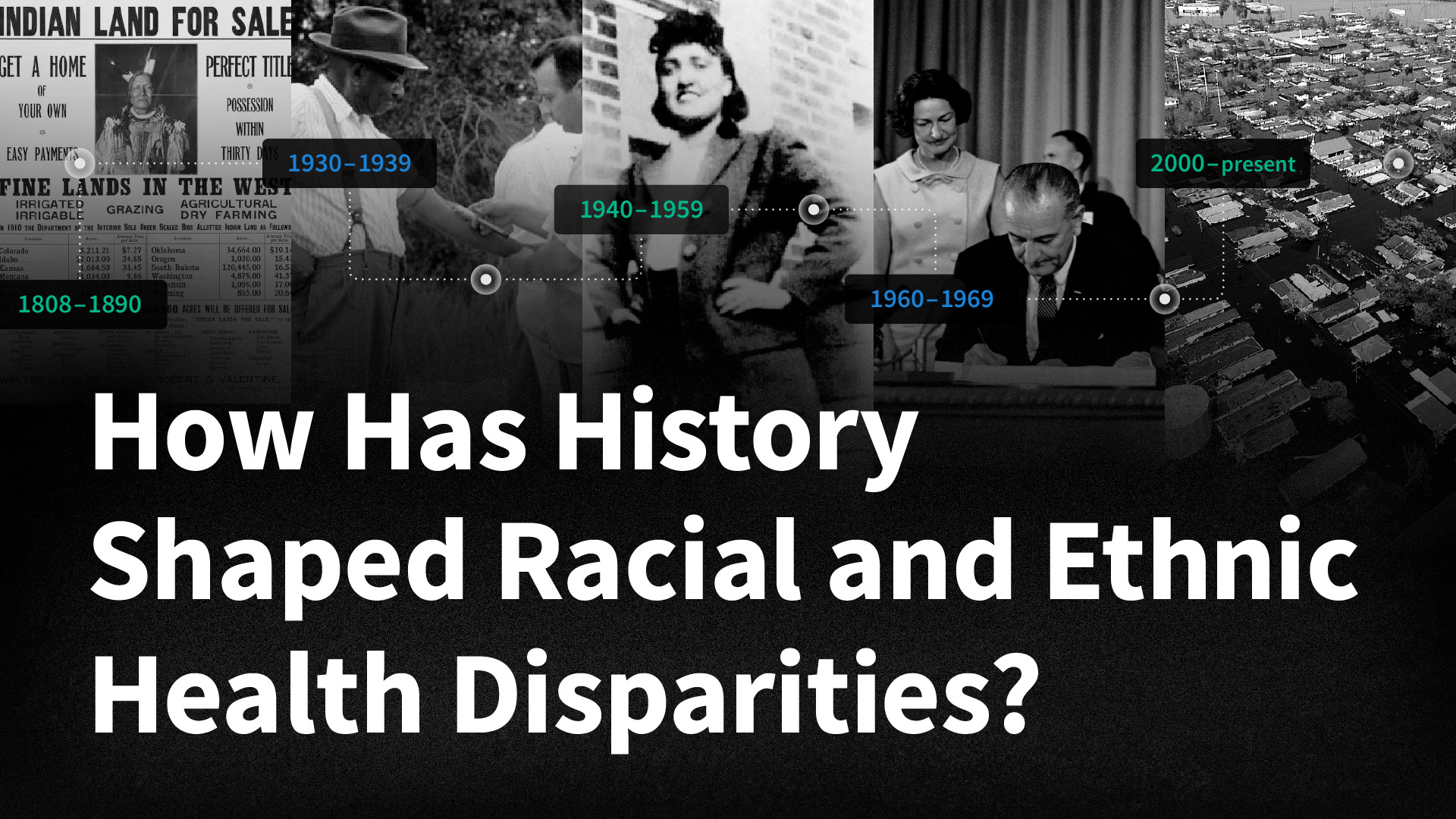
  • Timeline: How History Has Shaped Racial and Ethnic Health Disparities

    This timeline offers a historical view of significant U.S. federal policies and events spanning the early 1800s to today that have influenced present-day health disparities.
  • Health Policy 101: Chapter on Race, Inequality and Health

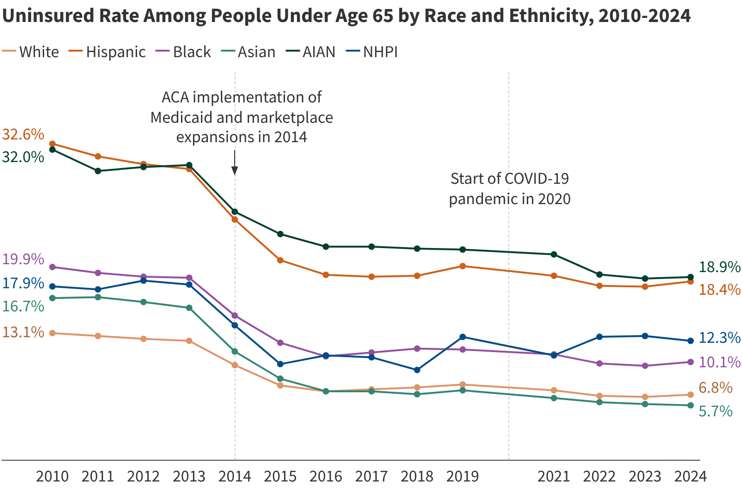
    Addressing persistent racial and ethnic disparities in health and health care is important for improving the nation’s health and economic prosperity. KFF explains such disparities and the factors that drive them, examines the actions to address them, and outlines future considerations.
  • Key Data on Health and Health Care by Race and Ethnicity

    Racial and ethnic disparities in health and health care remain a persistent challenge in the United States. An updated KFF resource examines how people of color fare compared to White people across 64 measures of health, health care, and social determinants of health.

Survey of Immigrants

KFF-New York Times Survey: Immigrants Report Rising Fear, Negative Economic and Health Impacts, and Changing Political Views During the First Year of President Trump’s Second Term

The 2025 Survey of Immigrants, a partnership between KFF and The New York Times, takes an in-depth look at the experiences of immigrants during the first year of President Trump’s second term, including their worries related to increased immigration enforcement, their health and economic wellbeing, and the political views and preferences of immigrant voters. The survey paints a portrait of families under strain — where fear of detention and economic instability are negatively impacting immigrants’ health and reshaping immigrant families’ daily lives and views of U.S. political parties.

Read the News Release | Explore The New York Times’ Reporting
Stay informed.

Stay informed.

Filter

211 - 220 of 603 Results

  • Survey of Asians In the Bay Area – Toplines

    Poll Finding

    This document includes the toplines from a survey exploring the attitudes and experiences of the Asian community in the Bay Area, which has the largest Asian population in the country. The Kaiser Family Foundation and San Jose Mercury News collaborated on the survey. Survey Toplines (.pdf)

  • Hispanics and the New Medicare Drug Benefit

    Poll Finding

    In a few short weeks, Medicare will undergo big changes that will have a major impact on more than 3 million Hispanic seniors and younger people with permanent disabilities who rely on Medicare for their health coverage. More than one in three Hispanics with Medicare lack coverage for their prescription drugs for at least part of the year. Many others will need to make decisions about their existing coverage and the new Medicare benefit. Starting…

  • Racial/Ethnic Differences in Cardiac Care: The Weight of the Evidence

    Fact Sheet

    Numerous studies over the past two decades have documented racial and ethnic differences in care for heart conditions. To assess the quality of the evidence and to summarize the information for a physician audience, the Henry J. Kaiser Family Foundation collaborated with the American College of Cardiology Foundation to review the body of research on racial/ethnic differences in cardiac care. There is credible evidence that minority patients are less likely than white patients to receive…

  • Race, Ethnicity, and Health Care Tutorial

    Interactive

    This tutorial was produced for kaiserEDU.org, a Kaiser Family Foundation website that ceased production in September 2013. The kaiserEDU.org tutorials are no longer being updated but have been made available on kff.org due to demand by professors who are using the tutorials in class assignments. You may search for other tutorials to view on kff.org. To download this or other tutorials, visit the tutorials archive page.  Slides are available for download using the “Download Slides” link within the…

  • Health and Access to Care and Coverage for Lesbian, Gay, Bisexual, and Transgender (LGBT) Individuals in the U.S.

    Issue Brief

    Lesbian, gay, bisexual, and transgender (LGBT) individuals often face challenges and barriers to accessing needed health services and, as a result, can experience worse health outcomes. These challenges can include stigma, discrimination, violence, and rejection by families and communities, as well as other barriers, such as inequality in the workplace and health insurance sectors, the provision of substandard care, and outright denial of care because of an individual’s sexual orientation or gender identity. This issue…

  • As the COVID-19 Pandemic Evolves, Disparities in Cases and Deaths for Black and Hispanic People Have Narrowed

    News Release

    As the COVID-19 pandemic’s focus shifts from urban to rural areas, and more people resume public activities, a new KFF analysis of case and death data from the Centers for Disease Control and Prevention reveals narrower disparities affecting Black and Hispanic people compared to White people now than earlier in the pandemic. The analysis examines trends in cases and deaths since early in the pandemic where race and ethnicity is known. While cumulative data show…

  • Health Coverage and Care in the South in 2014 and Beyond

    Issue Brief

    This issue brief provides an overview of health coverage and care in the South today, with a focus on demographics, the impact of the ACA coverage expansions, and ongoing efforts to improve the delivery system and safety net in the South.

  • Section 1115 Waiver Watch: How California Will Expand Medicaid Pre-Release Services for Incarcerated Populations

    Policy Watch

    On January 26, the Centers for Medicare and Medicaid Services (CMS) approved California’s Section 1115 request to cover a package of reentry services for certain groups of incarcerated individuals 90 days prior to release. This approval is the first to include a partial waiver of the statutory Medicaid inmate exclusion policy, which prohibits Medicaid from paying for services provided during incarceration (except for inpatient services).