Racial Equity and Health Policy

the Essentials
  • How Experiencing Racial Discrimination Impacts Health

    This brief highlights research examining mechanisms underlying health outcomes linked to self-reported experiences of racial discrimination, including biological changes, chronic stress, mental health, substance use, pregnancy-related outcomes, and sleep.
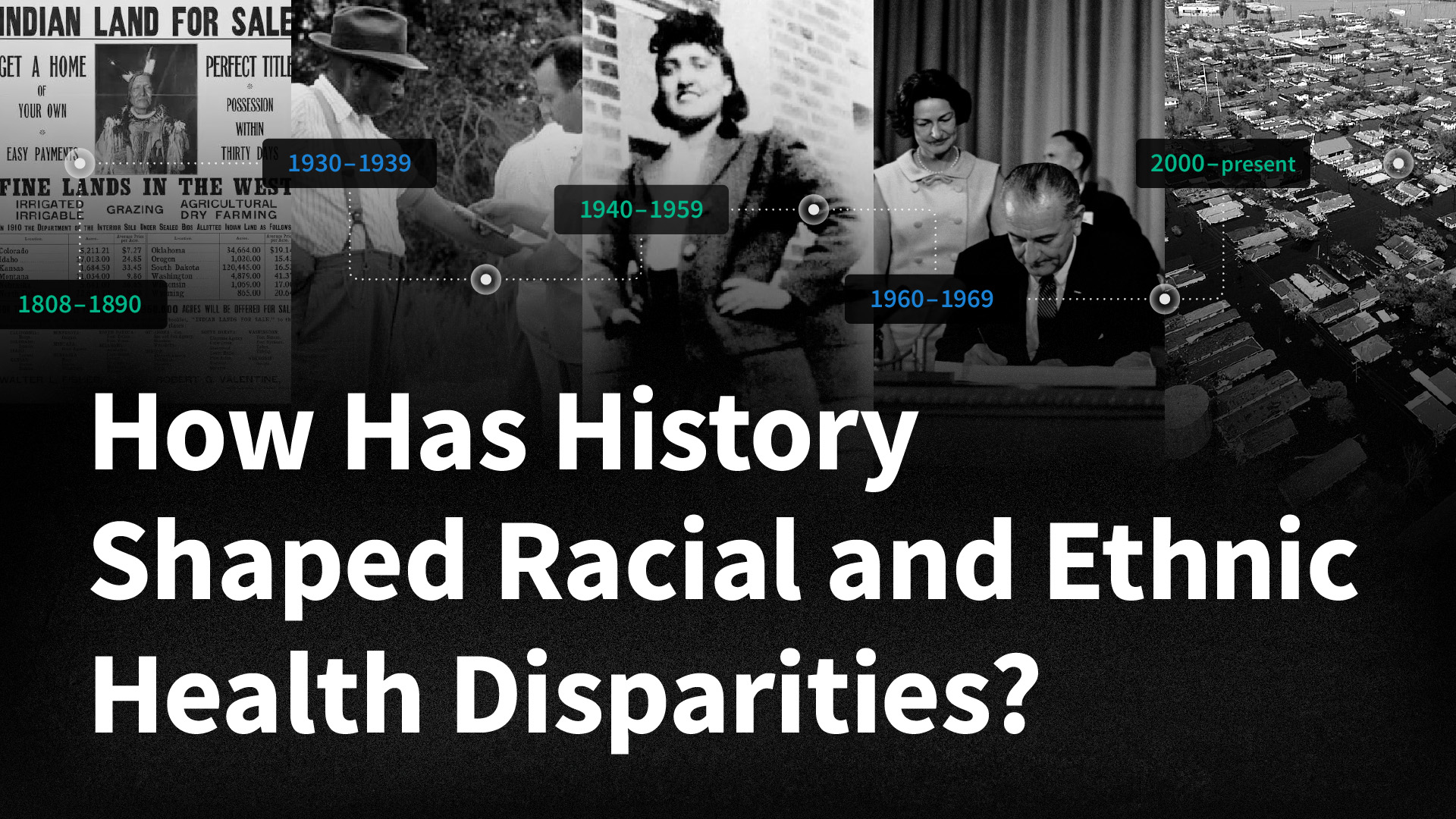
  • Timeline: How History Has Shaped Racial and Ethnic Health Disparities

    This timeline offers a historical view of significant U.S. federal policies and events spanning the early 1800s to today that have influenced present-day health disparities.
  • Health Policy 101: Chapter on Race, Inequality and Health

    Addressing persistent racial and ethnic disparities in health and health care is important for improving the nation’s health and economic prosperity. KFF explains such disparities and the factors that drive them, examines the actions to address them, and outlines future considerations.
  • Key Data on Health and Health Care by Race and Ethnicity

    Racial and ethnic disparities in health and health care remain a persistent challenge in the United States. An updated KFF resource examines how people of color fare compared to White people across 64 measures of health, health care, and social determinants of health.

Survey of Immigrants

KFF-New York Times Survey: Immigrants Report Rising Fear, Negative Economic and Health Impacts, and Changing Political Views During the First Year of President Trump’s Second Term

The 2025 Survey of Immigrants, a partnership between KFF and The New York Times, takes an in-depth look at the experiences of immigrants during the first year of President Trump’s second term, including their worries related to increased immigration enforcement, their health and economic wellbeing, and the political views and preferences of immigrant voters. The survey paints a portrait of families under strain — where fear of detention and economic instability are negatively impacting immigrants’ health and reshaping immigrant families’ daily lives and views of U.S. political parties.

Read the News Release | Explore The New York Times’ Reporting
Stay informed.

Stay informed.

Filter

171-180 of 608 results

  • Report Examines the Role of Medicare and the Indian Health Service for American Indians and Alaska Natives

    News Release

    A new report from the Kaiser Family Foundation examines the role of both Medicare and the Indian Health Service (IHS) in providing access to health care for about 650,000 American Indians and Alaska Natives who are age 65 and older or who have permanent disabilities. While Medicare provides important health care coverage for most in this group, its relatively high cost-sharing and gaps in benefits can be problematic for American Indians and Alaska Native Medicare…

  • Racial Disparities in COVID-19 Impacts and Vaccinations for Children

    Issue Brief

    COVID-19 has disproportionately negatively affected the physical and mental health, academic growth, and economic security of children of color. At the same time, the limited data available to date suggest some children of color may be less likely to receive a COVID-19 vaccine, leaving them at elevated risk as the virus continues to spread and as many return to in-person school.

  • Daily Media Use Among Children and Teens Up Dramatically From Five Years Ago

    News Release

    Most Youth Say They Have No Rules About How Much Time They Can Spend With TV, Video Games, or Computers WASHINGTON – With technology allowing nearly 24-hour media access as children and teens go about their daily lives, the amount of time young people spend with entertainment media has risen dramatically, especially among minority youth, according to a study released today by the Kaiser Family Foundation.  Today, 8-18 year-olds devote an average of 7 hours and 38…

  • Nonelderly Population by Race/Ethnicity, 2011

    Feature

    Nonelderly Population by Race/Ethnicity, 2011 Download Source Urban Institute and KCMU estimates based on the Census Bureau's March 2012 Current Population Survey  Annual Social and Economic Supplement.  

  • Health and Health Care for Indigenous People

    Feature

    November marks National Native American Heritage Month, during which the U.S. recognizes the culture, heritage, and contributions of Indigenous people including those from American Indian, Alaskan Native, Native Hawaiian, and Pacific Island communities.

  • 3 Charts: Hispanic Immigrants’ Experiences in the United States

    News Release

    Hispanic immigrants comprise the largest group of immigrants in the United States, and one in three Hispanic or Latino adults in the U.S. are immigrants. Most report a higher quality of life in the U.S. than in their countries of birth and believe their children’s lives will be better than their own. A large majority are working, and many send money to their family living outside the U.S. Hispanic immigrants are more likely than other immigrant…

  • State Policies Connecting Justice-Involved Populations to Medicaid Coverage and Care

    Issue Brief

    The COVID-19 pandemic has magnified pre-existing health disparities for justice-involved populations, with coronavirus infection rates among incarcerated populations higher than overall infection rates in nearly all states. Justice-involved individuals are disproportionately low-income and often have complex and/or chronic conditions, including behavioral health needs. Although the statutory inmate exclusion policy prohibits Medicaid from covering services provided during incarceration (except for inpatient services), states may take other steps to leverage Medicaid to improve continuity of care for…

  • Medicaid Administrative Data: Challenges with Race, Ethnicity, and Other Demographic Variables

    Issue Brief

    There are persistent disparities in health and health care for people of color, which reflect structural and systemic inequities rooted in racism and discrimination. High-quality comprehensive data are key to enabling policymakers, community leaders, and other key stakeholders to identify and address these inequities and measure progress over time. Medicaid/CHIP administrative data, also known as Transformed Medicaid Statistical Information System (T-MSIS) or TAF (T-MSIS Analytic File), hold the potential to inform disparities research through detailed…