Racial Equity and Health Policy

the Essentials
  • How Experiencing Racial Discrimination Impacts Health

    This brief highlights research examining mechanisms underlying health outcomes linked to self-reported experiences of racial discrimination, including biological changes, chronic stress, mental health, substance use, pregnancy-related outcomes, and sleep.
  • Timeline: How History Has Shaped Racial and Ethnic Health Disparities

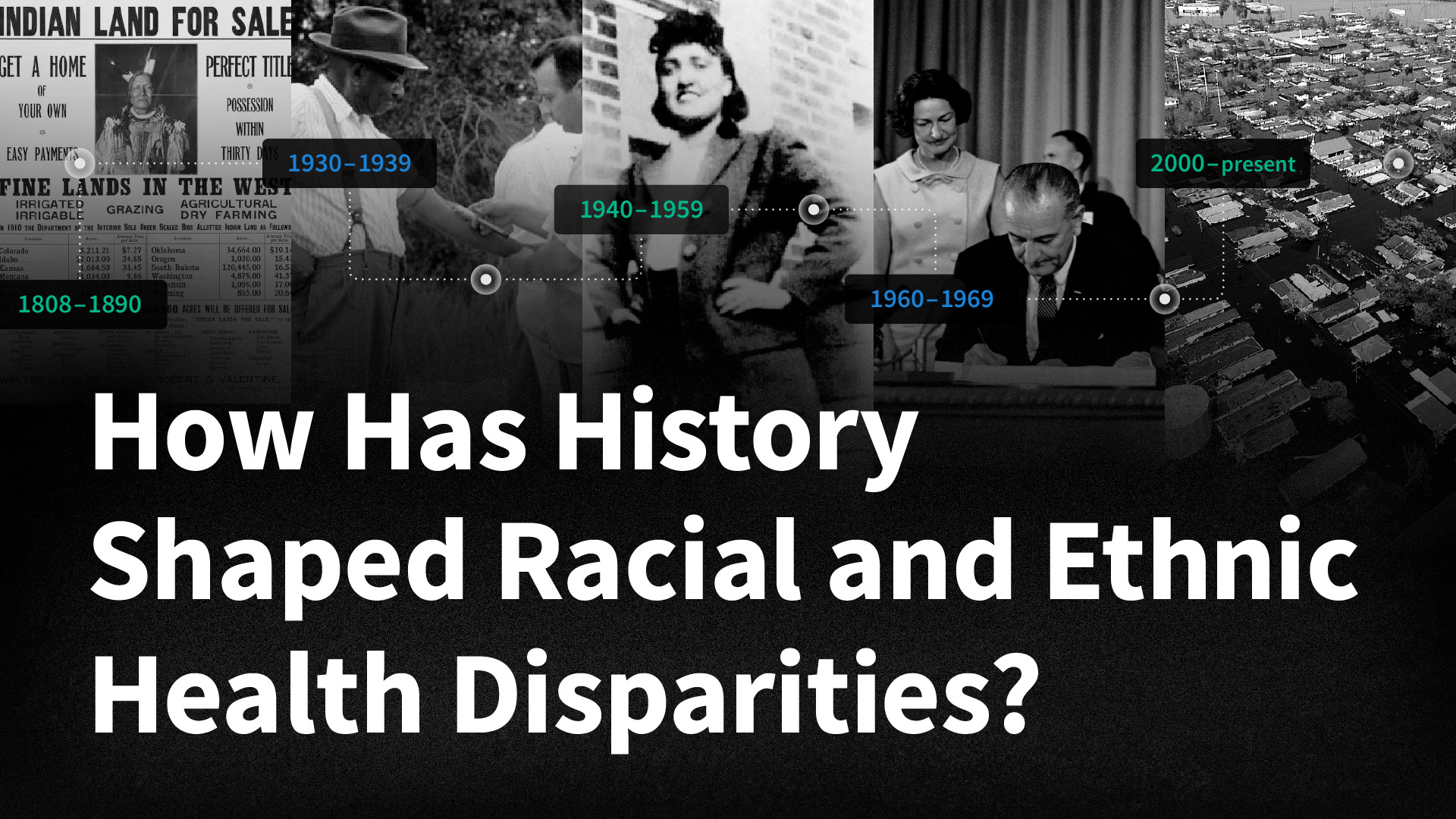
    This timeline offers a historical view of significant U.S. federal policies and events spanning the early 1800s to today that have influenced present-day health disparities.
  • Health Policy 101: Chapter on Race, Inequality and Health

    Addressing persistent racial and ethnic disparities in health and health care is important for improving the nation’s health and economic prosperity. KFF explains such disparities and the factors that drive them, examines the actions to address them, and outlines future considerations.
  • Key Data on Health and Health Care by Race and Ethnicity

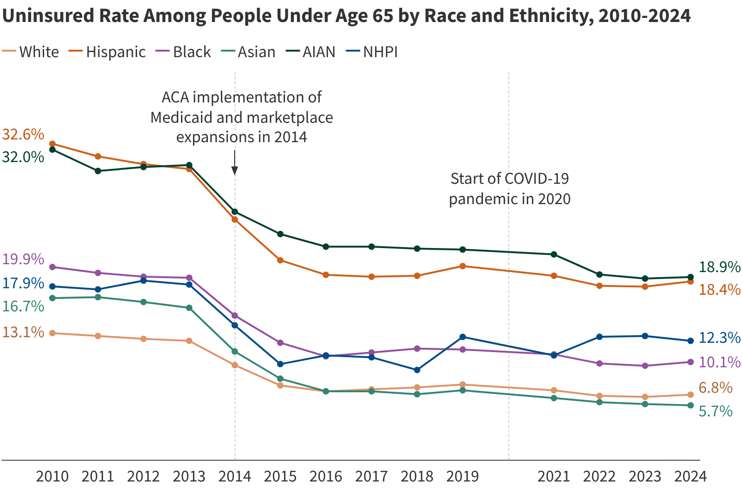
    Racial and ethnic disparities in health and health care remain a persistent challenge in the United States. An updated KFF resource examines how people of color fare compared to White people across 64 measures of health, health care, and social determinants of health.

Survey of Immigrants

KFF-New York Times Survey: Immigrants Report Rising Fear, Negative Economic and Health Impacts, and Changing Political Views During the First Year of President Trump’s Second Term

The 2025 Survey of Immigrants, a partnership between KFF and The New York Times, takes an in-depth look at the experiences of immigrants during the first year of President Trump’s second term, including their worries related to increased immigration enforcement, their health and economic wellbeing, and the political views and preferences of immigrant voters. The survey paints a portrait of families under strain — where fear of detention and economic instability are negatively impacting immigrants’ health and reshaping immigrant families’ daily lives and views of U.S. political parties.

Read the News Release | Explore The New York Times’ Reporting
Stay informed.

Stay informed.

Filter

161 - 170 of 602 Results

  • Advancing Health Equity Requires More and Better Data

    Policy Watch

    Increasing availability of high-quality comprehensive data disaggregated by race/ethnicity is a prerequisite for efforts to advance health equity, not only related to COVID-19 but in health and health care more broadly.

  • A Look at Key Maternal and Infant Health Disparities Among Black People

    Feature

    Due to systemic and overt discrimination, Black people are disproportionately affected by high maternal and infant morbidities and mortality. In addition to legislation, addressing systemic discrimination, implicit bias and racism will be integral to achieving equity in maternal health outcomes.

  • 8 Preguntas & Respuestas sobre Puerto Rico

    Fact Sheet

    La crisis de $73 mil millones de Puerto Rico ha sido tema de los medios de comunicación nacionales, y de debate en el Congreso en los últimos meses. Además, varios de los principales medios de prensa han reportado sobre una inminente crisis de la atención de salud relacionada con cuestiones demográficas y del financiamiento del cuidado de salud, y exacerbada por la actual situación económica y el aumento de casos de trasmisión del virus del…

  • Health Coverage and Care of Undocumented Immigrants

    Issue Brief

    Recently, many of the Democratic presidential candidates indicated support for expanding health coverage to undocumented immigrants. To help inform the implications of such an expansion, this brief provides an overview of current health coverage and care for undocumented immigrants

  • Medicaid Authorities and Options to Address Social Determinants of Health

    Issue Brief

    Social determinants of health (SDOH) are the conditions in which people are born, grow, live, work and age. While there are limits, states can use Medicaid – which, by design, serves a primarily low-income population with greater social needs – to address social determinants of health. This brief outlines the range of Medicaid authorities and flexibilities that can be used to add benefits and design programs to address the social determinants of health.