Racial Equity and Health Policy

the Essentials
  • How Experiencing Racial Discrimination Impacts Health

    This brief highlights research examining mechanisms underlying health outcomes linked to self-reported experiences of racial discrimination, including biological changes, chronic stress, mental health, substance use, pregnancy-related outcomes, and sleep.
  • Timeline: How History Has Shaped Racial and Ethnic Health Disparities

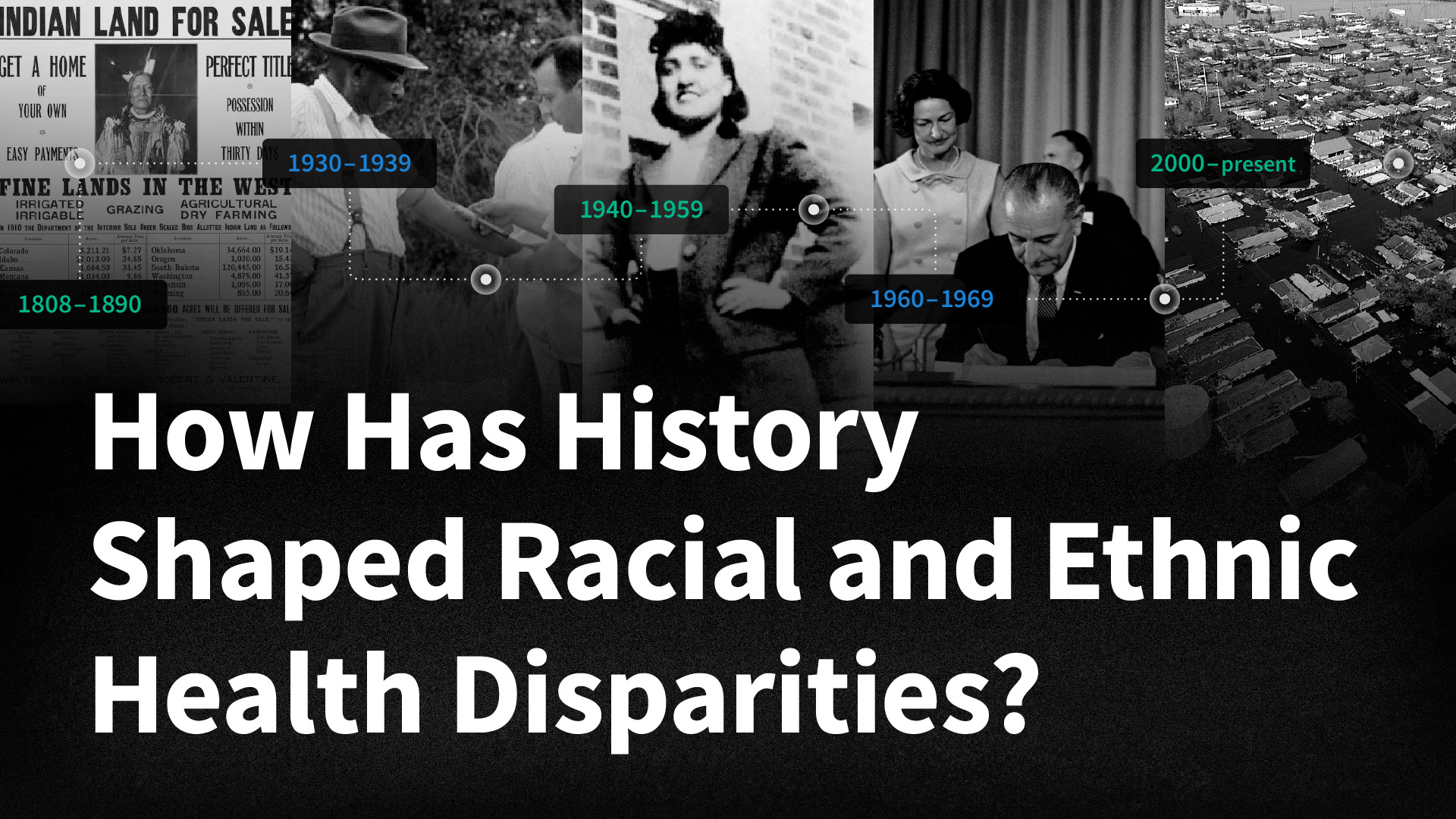
    This timeline offers a historical view of significant U.S. federal policies and events spanning the early 1800s to today that have influenced present-day health disparities.
  • Health Policy 101: Chapter on Race, Inequality and Health

    Addressing persistent racial and ethnic disparities in health and health care is important for improving the nation’s health and economic prosperity. KFF explains such disparities and the factors that drive them, examines the actions to address them, and outlines future considerations.
  • Key Data on Health and Health Care by Race and Ethnicity

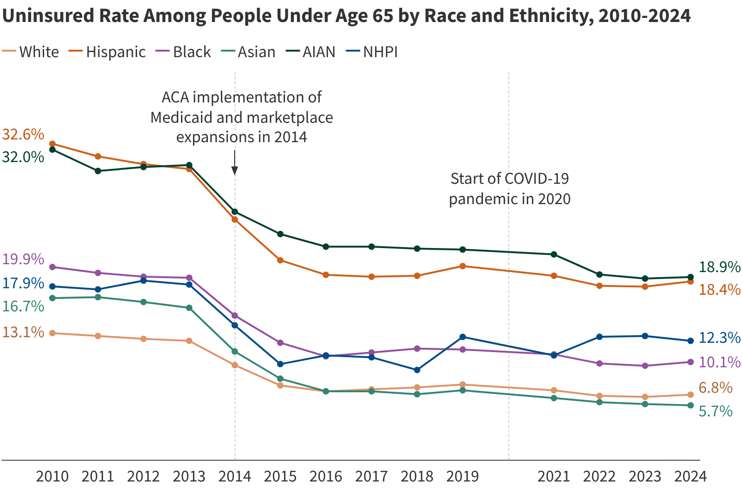
    Racial and ethnic disparities in health and health care remain a persistent challenge in the United States. An updated KFF resource examines how people of color fare compared to White people across 64 measures of health, health care, and social determinants of health.

Survey of Immigrants

KFF-New York Times Survey: Immigrants Report Rising Fear, Negative Economic and Health Impacts, and Changing Political Views During the First Year of President Trump’s Second Term

The 2025 Survey of Immigrants, a partnership between KFF and The New York Times, takes an in-depth look at the experiences of immigrants during the first year of President Trump’s second term, including their worries related to increased immigration enforcement, their health and economic wellbeing, and the political views and preferences of immigrant voters. The survey paints a portrait of families under strain — where fear of detention and economic instability are negatively impacting immigrants’ health and reshaping immigrant families’ daily lives and views of U.S. political parties.

Read the News Release | Explore The New York Times’ Reporting
Stay informed.

Stay informed.

Filter

141 - 150 of 603 Results

  • Physician Willingness and Resources to Serve More Medicaid Patients: Perspectives from Primary Care Physicians

    Issue Brief

    This issue brief attempts to assess how primary care physicians will respond to the entry of 32 million newly insured people into the health care system under health reform. The increase in the number of people with health coverage is expected to intensify competition among patients and payers for primary care resources. The brief analyzes data from a nationally representative survey of physicians to assess which adult-care primary care physicians are most likely to respond…

  • Racial Disparities in Flu Vaccination: Implications for COVID-19 Vaccination Efforts

    Policy Watch

    With planning beginning for an eventual COVID-19 vaccine, one important consideration is making sure that distribution processes and outreach and communication strategies reach people of color. Analysis of seasonal flu vaccination rates provides some insight into the potential barriers and issues to be addressed as part of COVID-19 vaccination efforts.

  • Potential Impacts of Increased Immigration Enforcement on School Attendance and Funding

    Issue Brief

    This brief presents research on the impacts of immigration enforcement on children, including school attendance and performance; provides data on the share and number of school-aged children by state who live in immigrant families based on KFF analysis of the 2023 American Community Survey (ACS); and discusses potential implications of declines in school enrollment and/or attendance among these children on school funding.

  • Key Data on Health and Health Care by Race and Ethnicity

    Issue Brief

    This analysis examines how people of color fare compared to White people across 64 measures of health, health care, and social determinants of health using the most recent data available from federal surveys and administrative sets as well as the 2023 KFF Survey on Racism, Discrimination, and Health.

  • Women’s Health Data Book: A Profile of Women’s Health in the United States

    Fact Sheet

    The Women's Health Data Book: A Profile of Women's Health in the United States, offers the latest data and trends on the wide range of health issues that affect women across their life spans. Published by the Kaiser Family Foundation and the Jacobs Institute of Women's Health, the Data Book is edited by Dawn Misra, Ph.D. This book addresses social and economic factors and provides up-to-date information on chronic conditions, reproductive health, mental health, violence,…

  • Survey of Americans on HIV/AIDs – Part Three: Experiences and Opinions by Race/Ethnicity and Age: Toplines

    Poll Finding

    These findings are the third part of a national survey of Americans’ views on HIV/AIDS, “Survey of Americans on HIV/AIDS,” conducted in spring 2004. It explores the views and experiences of, as well as the key differences among, African Americans, Latinos, Whites, and young people. The first part of the survey, on global HIV/AIDS, was released on June 2, 2004. The second part of the survey, on HIV Testing, was released on June 15, 2004.…

  • Latinos  Views of the HIV/AIDS Epidemic at 20 Years:  Findings from a National Survey

    Poll Finding

    This report, Latinos Views of the HIV/AIDS Epidemic at 20 Years: Findings from a National Survey, examines Latinos views and knowledge of HIV/AIDS, including analysis by race/ethnicity, of trends over time, and among Latino subgroups. The report is based a nationally representative survey of 2,683 adults, ages 18 and older, including 549 Latinos. Interviews were completed in both English and Spanish according to respondent preference, and the report is available in both English and Spanish.…

  • Oral Health in the U.S.: Key Facts

    Fact Sheet

    This fact sheet provides data on oral health care coverage and access for children, nonelderly adults and Medicaid beneficiaries, including state-by-state data on measures such as the share of adults who have had a dental visit within the past year. Fact Sheet (.pdf)