Racial Equity and Health Policy

Survey of Immigrants

KFF-New York Times Survey: Immigrants Report Rising Fear, Negative Economic and Health Impacts, and Changing Political Views During the First Year of President Trump’s Second Term

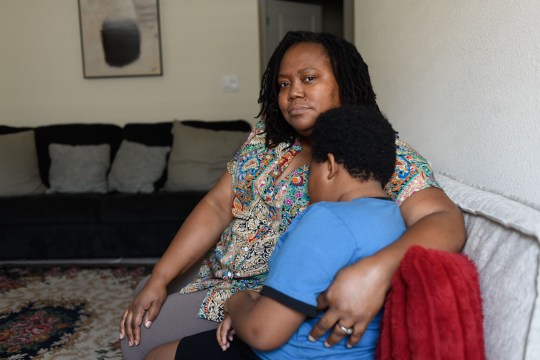
The 2025 Survey of Immigrants, a partnership between KFF and The New York Times, takes an in-depth look at the experiences of immigrants during the first year of President Trump’s second term, including their worries related to increased immigration enforcement, their health and economic wellbeing, and the political views and preferences of immigrant voters. The survey paints a portrait of families under strain — where fear of detention and economic instability are negatively impacting immigrants’ health and reshaping immigrant families’ daily lives and views of U.S. political parties.

Read the News Release | Explore The New York Times’ Reporting
the Essentials
  • Disparities in Health and Health Care: 5 Key Questions and Answers

    This brief provides an introduction to what health and health care disparities are, why it is important to address them, what the status of disparities is today, recent federal actions to address disparities, and key issues related to addressing disparities in the future.
  • Timeline: How History Has Shaped Racial and Ethnic Health Disparities

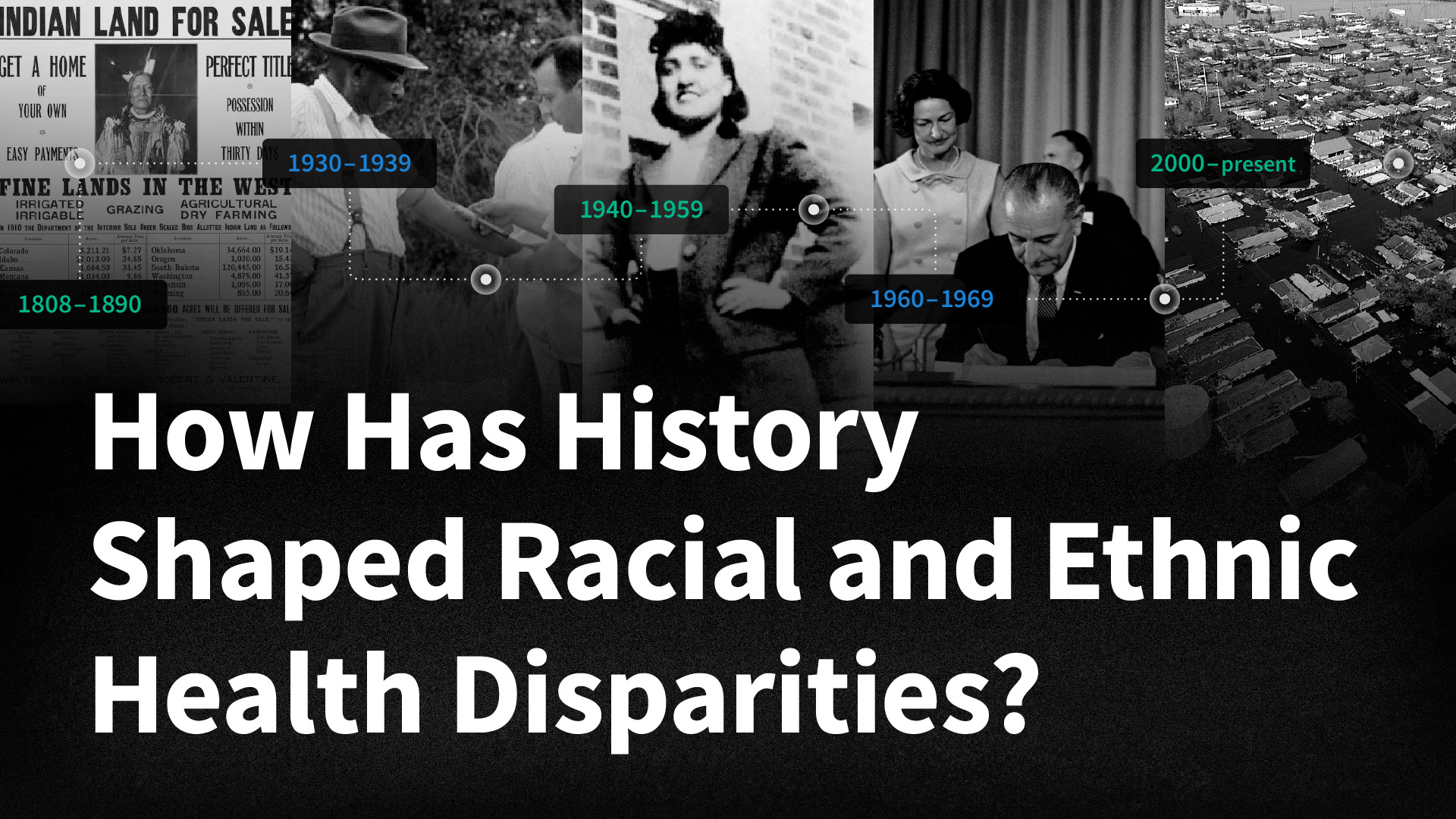
    This timeline offers a historical view of significant U.S. federal policies and events spanning the early 1800s to today that have influenced present-day health disparities.
  • Health Policy 101: Chapter on Race, Inequality and Health

    Addressing persistent racial and ethnic disparities in health and health care is important for improving the nation’s health and economic prosperity. KFF explains such disparities and the factors that drive them, examines the actions to address them, and outlines future considerations.
  • Key Data on Health and Health Care by Race and Ethnicity

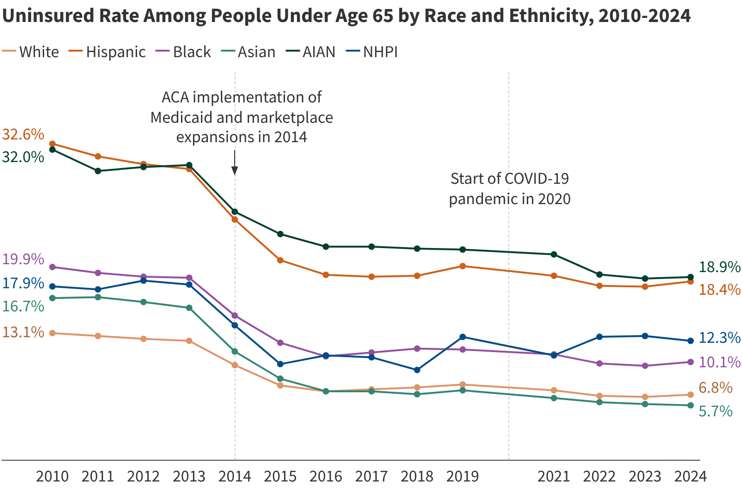
    Racial and ethnic disparities in health and health care remain a persistent challenge in the United States. An updated KFF resource examines how people of color fare compared to White people across 64 measures of health, health care, and social determinants of health.

Subscribe to KFF Emails

Choose which emails are best for you.
Sign up here

Filter

121 - 130 of 597 Results

  • Health Care Experiences – 2002 National Survey of Latinos Survey Brief

    Poll Finding

    This survey brief of new analysis from the 2002 National Survey of Latinos examines Latinos experiences with health care in the United States. Topics discussed include coverage, accessing health care services, and communicating with health care providers. Survey Brief (.

  • Oral Health in the U.S.: Key Facts

    Fact Sheet

    This fact sheet provides data on oral health care coverage and access for children, nonelderly adults and Medicaid beneficiaries, including state-by-state data on measures such as the share of adults who have had a dental visit within the past year. Fact Sheet (.

  • Medicaid Authorities and Options to Address Social Determinants of Health

    Issue Brief

    Social determinants of health (SDOH) are the conditions in which people are born, grow, live, work and age. While there are limits, states can use Medicaid – which, by design, serves a primarily low-income population with greater social needs – to address social determinants of health. This brief outlines the range of Medicaid authorities and flexibilities that can be used to add benefits and design programs to address the social determinants of health.

  • Health and Health Care in the U.S.-Mexico Border Region

    Issue Brief

    The four states along the U.S.-Mexico border are home to over 78 million people of whom 8 million live in 44 counties that adjoin the border and border activity is at an all-time high. KFF's county-level analysis of the region shows that people living in border states fare worse along socioeconomic and health access measures as compared to the rest of the U.S. and that people who live in border counties within these states, especially in Texas, face more challenges than those living in non-border counties. Understanding of who lives in the region and their experiences, including their health and access to health care, may help inform efforts to address their needs and improve socioeconomic and health outcomes in border areas.

  • State Policies for Expanding Medicaid Coverage of Community Health Worker (CHW) Services

    Issue Brief

    Community Health Workers (CHWs) are frontline workers who have close relationships with the communities they serve, allowing them to better liaise and connect community members to health care systems. States may authorize Medicaid payment for certain CHW services under state plan or Section 1115 demonstration authority. States may allow or require managed care organizations (MCOs) to provide CHW services or include CHWs in care teams. Many states use CHW services to address the health needs of targeted populations including enrollees with chronic conditions or complex behavioral or physical health needs, enrollees receiving targeted case management services, or frequent users of health care services