Racial Equity and Health Policy

Survey of Immigrants

KFF-New York Times Survey: Immigrants Report Rising Fear, Negative Economic and Health Impacts, and Changing Political Views During the First Year of President Trump’s Second Term

The 2025 Survey of Immigrants, a partnership between KFF and The New York Times, takes an in-depth look at the experiences of immigrants during the first year of President Trump’s second term, including their worries related to increased immigration enforcement, their health and economic wellbeing, and the political views and preferences of immigrant voters. The survey paints a portrait of families under strain — where fear of detention and economic instability are negatively impacting immigrants’ health and reshaping immigrant families’ daily lives and views of U.S. political parties.

Read the News Release | Explore The New York Times’ Reporting
the Essentials
  • Disparities in Health and Health Care: 5 Key Questions and Answers

    This brief provides an introduction to what health and health care disparities are, why it is important to address them, what the status of disparities is today, recent federal actions to address disparities, and key issues related to addressing disparities in the future.
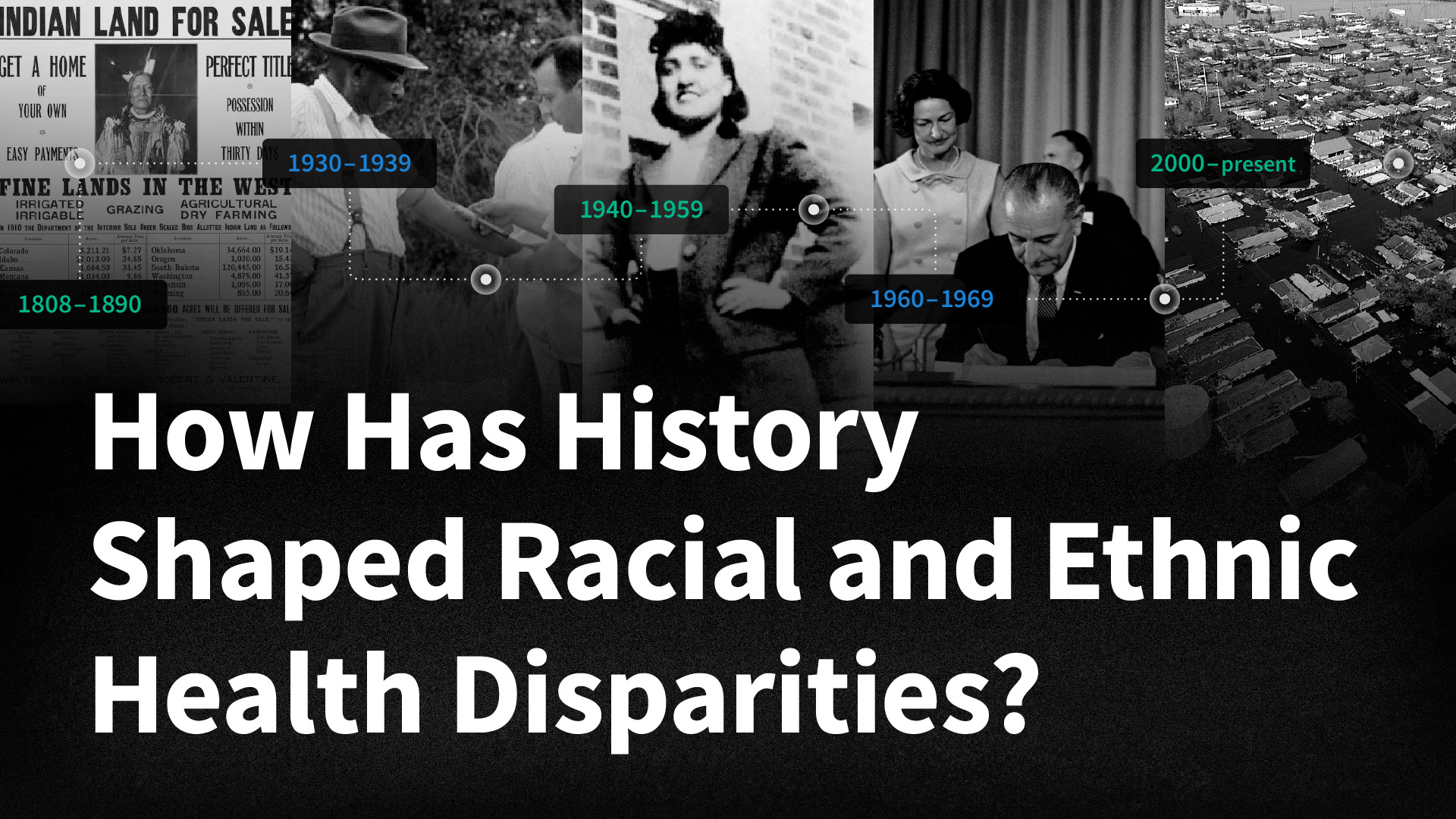
  • Timeline: How History Has Shaped Racial and Ethnic Health Disparities

    This timeline offers a historical view of significant U.S. federal policies and events spanning the early 1800s to today that have influenced present-day health disparities.
  • Health Policy 101: Chapter on Race, Inequality and Health

    Addressing persistent racial and ethnic disparities in health and health care is important for improving the nation’s health and economic prosperity. KFF explains such disparities and the factors that drive them, examines the actions to address them, and outlines future considerations.
  • Key Data on Health and Health Care by Race and Ethnicity

    Racial and ethnic disparities in health and health care remain a persistent challenge in the United States. An updated KFF resource examines how people of color fare compared to White people across 64 measures of health, health care, and social determinants of health.

Subscribe to KFF Emails

Choose which emails are best for you.
Sign up here

Filter

111 - 120 of 591 Results

  • The Impact of the Coverage Gap for Adults in States not Expanding Medicaid by Race and Ethnicity

    Issue Brief

    The Affordable Care Act (ACA) expansion of Medicaid to adults with incomes at or below 138% of the federal poverty level (FPL) effectively became a state option following the Supreme Court decision, creating a “coverage gap” for many poor uninsured adults in states that do not expand Medicaid. This brief examines the coverage gap by race and ethnicity.

  • Daily Media Use Among Children and Teens Up Dramatically From Five Years Ago

    News Release

    Most Youth Say They Have No Rules About How Much Time They Can Spend With TV, Video Games, or Computers WASHINGTON – With technology allowing nearly 24-hour media access as children and teens go about their daily lives, the amount of time young people spend with entertainment media has risen dramatically, especially among minority youth, according…

  • Abismo en el financiamiento de Medicaid: Implicaciones para los sistemas de atención de salud de Puerto Rico y las Islas Vírgenes de los EE.UU.

    Issue Brief

    Este resumen ofrece una descripción general del estado de los sistemas de atención médica y los programas de Medicaid en Puerto Rico y las Islas Vírgenes de los EE.UU. (USVI) aproximadamente un año y medio después que los huracanes Irma y María azotaran las islas, en septiembre de 2017. Después de las tormentas, los programas de Medicaid de los territorios han servido como recursos importantes para atender las necesidades de atención médica de los residentes, pero han operado bajo desafíos financieros de larga data. Este resumen se enfoca en esos desafíos e incluye el análisis de KFF de las consecuencias para las finanzas de los programas de Medicaid de los territorios, ya que la mayoría de los fondos federales de Medicaid provistos a través de la Ley de Cuidado de Salud a Bajo Precio (ACA), y la asistencia para desastres, expirarán a fines de septiembre de 2019. Los otros territorios de los EE.UU. (Samoa Americana, el Commonwealth de las Islas Marianas del Norte y Guam) también enfrentan retos relacionados con el vencimiento programado de los fondos de ACA. Este resumen se basa en trabajos anteriores y en informes públicos recientes, y en entrevistas con funcionarios de los territorios en los lugares afectados, con proveedores, con responsables de planes de salud de Puerto Rico y beneficiarios.

  • Disparities in Health and Health Care Among Black People

    Other

    This infographic looks at the persistent disparities in health and health care for Black people, which reflect structural and systematic inequities rooted in racism and discrimination. Although disparities in health coverage for Black people narrowed after passage of the Affordable Care Act, they continue to face higher rates of illness and death compared to White people.

  • Health Coverage by Race and Ethnicity, 2010-2023

    Issue Brief

    There were gains in coverage across most racial and ethnic groups between 2019 and 2023 after several years of rising uninsured rates during the first Trump administration. The coverage gains between 2019 and 2023 were largely driven by increases in Medicaid coverage, reflecting policies to stabilize and expand access to affordable coverage that were implemented during the COVID-19 pandemic.

  • Understanding the Inequitable Impacts of Hurricanes and Other Natural Disasters in the Wake of Hurricanes Helene and Milton

    Policy Watch

    The Southeast region of the U.S. is particularly vulnerable to severe tropical storms due to climate change, and its persistently high poverty rates inhibit residents’ ability to prepare for and recover from storms. Many of the states in the Southeast have not implemented the ACA Medicaid expansion, leaving lower income residents with more limited access to health care, which may lead to challenges addressing their health needs.

  • The Impact of HIV on Hispanic/Latino People in the United States

    Fact Sheet

    In the U.S., Hispanic/Latino people have been disproportionately affected by HIV since the epidemic’s beginning, and that disparity has deepened over time. Hispanic/Latino people represent a larger share of HIV diagnoses and people estimated to be living with HIV relative to their population size. This fact sheet provides an overview of the impact of HIV on Hispanic/Latino people in the U.S.