Racial Equity and Health Policy

the Essentials
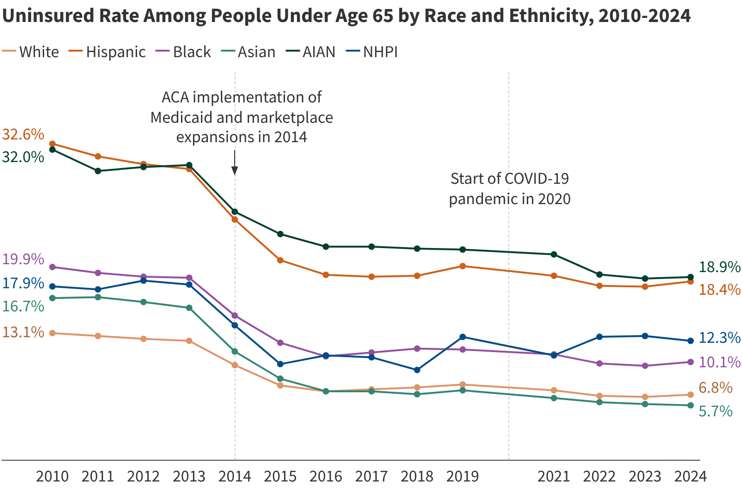
  • Health Coverage by Race and Ethnicity, 2010-2024

    There have been longstanding racial and ethnic disparities in health coverage that contribute to disparities in health. This brief examines trends in health coverage by race and ethnicity from 2010 through 2024 and discusses the implications for such disparities.
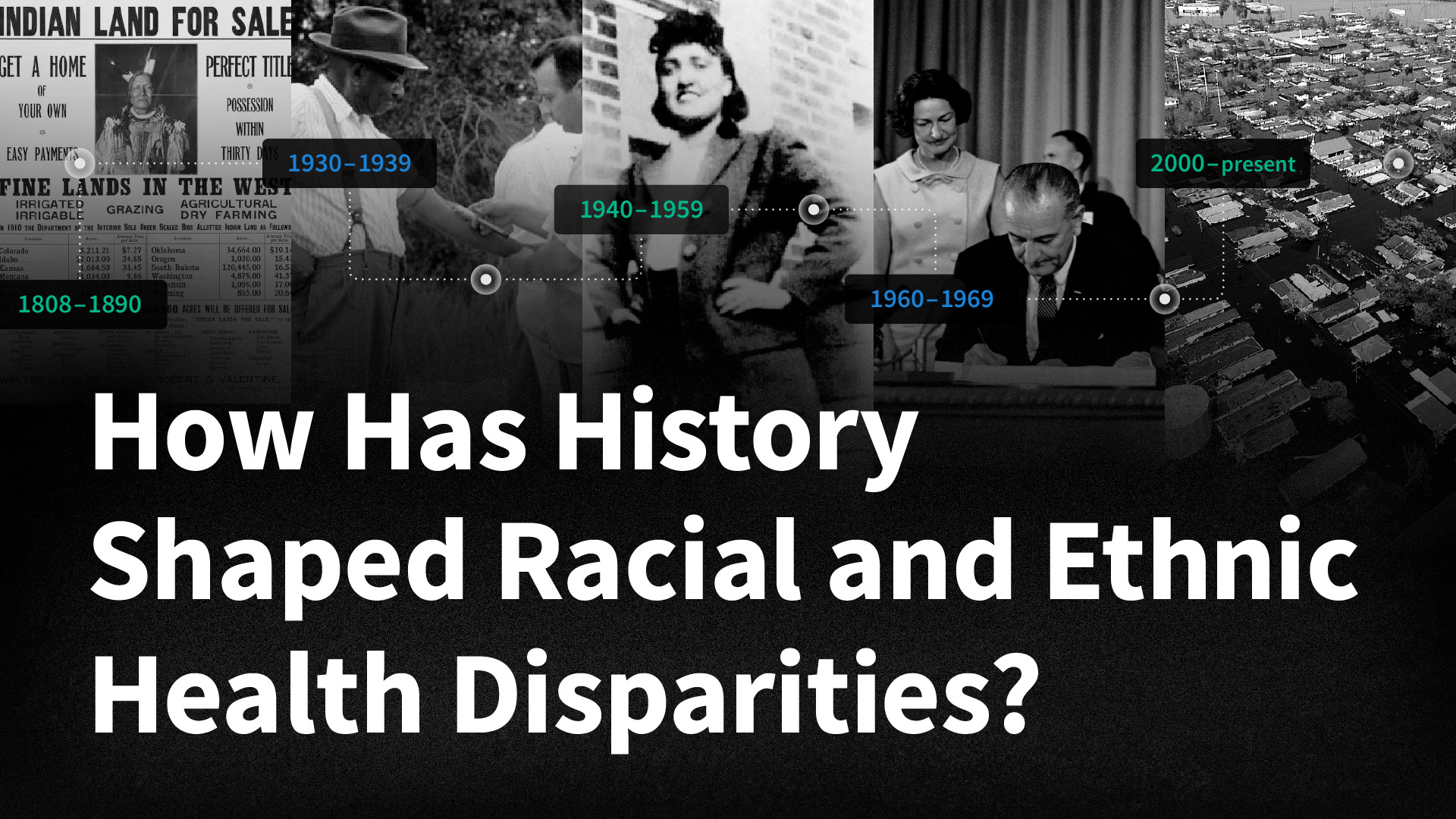
  • Timeline: How History Has Shaped Racial and Ethnic Health Disparities

    This timeline offers a historical view of significant U.S. federal policies and events spanning the early 1800s to today that have influenced present-day health disparities.
  • Health Policy 101: Chapter on Race, Inequality and Health

    Addressing persistent racial and ethnic disparities in health and health care is important for improving the nation’s health and economic prosperity. KFF explains such disparities and the factors that drive them, examines the actions to address them, and outlines future considerations.
  • Key Data on Health and Health Care by Race and Ethnicity

    Racial and ethnic disparities in health and health care remain a persistent challenge in the United States. An updated KFF resource examines how people of color fare compared to White people across 64 measures of health, health care, and social determinants of health.

Survey of Immigrants

KFF-New York Times Survey: Immigrants Report Rising Fear, Negative Economic and Health Impacts, and Changing Political Views During the First Year of President Trump’s Second Term

The 2025 Survey of Immigrants, a partnership between KFF and The New York Times, takes an in-depth look at the experiences of immigrants during the first year of President Trump’s second term, including their worries related to increased immigration enforcement, their health and economic wellbeing, and the political views and preferences of immigrant voters. The survey paints a portrait of families under strain — where fear of detention and economic instability are negatively impacting immigrants’ health and reshaping immigrant families’ daily lives and views of U.S. political parties.

Read the News Release | Explore The New York Times’ Reporting
Subscribe to KFF Emails

Choose which emails are best for you.
Sign up here

Filter

1 - 10 of 602 Results

  • Among Non-Elderly Adults, Low-Income, American Indian/Alaska Native and Black Adults Have Higher Risk of Developing Serious Illness if Infected With Coronavirus

    News Release

    Among non-elderly adults, American Indian/Alaska Native and Black adults are more likely than Whites to be at higher risk of serious illness if infected with the new coronavirus -- chiefly due to a higher prevalence of underlying health conditions and longstanding disparities in health care and other socio-economic factors, according to a new KFF analysis. People in lower-income households are also at higher risk. The analysis finds that the share of non-elderly adults at higher…

  • Potential Effects of Public Charge Changes on Health Coverage for Citizen Children

    Issue Brief

    The Trump Administration is pursuing changes that, for the first time, would allow the federal government to take into account use of Medicaid, CHIP, subsidies for Marketplace coverage and other health, nutrition, and non-cash programs when making public charge determinations. These changes would likely lead to decreased participation in Medicaid, CHIP, Marketplace coverage, and other programs among legal immigrants and their citizen children, even though they would remain eligible.

  • Nearly 20 Million Children Live in Immigrant Families that Could Be Affected by Evolving Immigration Policies

    Issue Brief

    President Trump has intensified national debate about immigration by implementing policies to enhance immigration enforcement and restrict legal immigration. Recent findings show that the climate surrounding these policies has significantly increased fear and uncertainty among immigrant families, broadly affecting families across different immigration statuses and locations. The effects extend to lawfully present immigrants, including lawful permanent residents or “green card” holders, and children in immigrant families, who are predominantly U.S.-born citizens. In particular, findings point…

  • Abismo en el financiamiento de Medicaid: Implicaciones para los sistemas de atención de salud de Puerto Rico y las Islas Vírgenes de los EE.UU.

    Issue Brief

    Este resumen ofrece una descripción general del estado de los sistemas de atención médica y los programas de Medicaid en Puerto Rico y las Islas Vírgenes de los EE.UU. (USVI) aproximadamente un año y medio después que los huracanes Irma y María azotaran las islas, en septiembre de 2017. Después de las tormentas, los programas de Medicaid de los territorios han servido como recursos importantes para atender las necesidades de atención médica de los residentes,…

  • How are States Addressing Racial Equity in COVID-19 Vaccine Efforts?

    Issue Brief

    This brief reviews information available through state websites and publicly available vaccine distribution plans to provide greater insight into how states are addressing equity through vaccine allocation and distribution strategies, outreach and communications efforts, and data collection and reporting. It provides a snapshot and examples of state efforts in these areas.

  • Growing Gaps in COVID-19 Vaccinations among Hispanic People

    Policy Watch

    This policy watch piece highlights the potential challenges surrounding COVID-19 vaccinations among Hispanic people, whose health and finances have been extremely hard hit by the pandemic. Low rates of vaccination among Hispanic people would leave them at increased risk for the virus, could further widen existing health disparities, and would leave gaps that hinder our ability to achieve overall population immunity.

  • Racial and Ethnic Health Inequities and Medicare

    Report

    This chart collection draws on primary and secondary data analyses by KFF and other sources to examine the characteristics, experiences, and outcomes of the Medicare population by race and ethnicity