Public Opinion

Health Costs

ACA Marketplace Survey Feature Image - Website

Cost Concerns and Coverage Changes: A Follow-Up Survey of ACA Marketplace Enrollees

Following the expiration of the enhanced premium tax credits for people with Affordable Care Act (ACA) Marketplace plans, a new KFF follow-up survey of the same Marketplace enrollees KFF surveyed in 2025 finds half (51%) of returning enrollees say their health care costs are “a lot higher” this year compared to last year, including four in 10 who specifically say their premiums are “a lot higher.” In all, a large majority (80%) of these enrollees say their health care costs, which can include premiums, deductibles, co-pays, or coinsurance, are higher.

Public Views on Prescription Drug Costs: Regulation, Affordability and TrumpRx

Amid the Trump administration’s focus on lowering prescription drug costs, including its new TrumpRx website, KFF’s Health Tracking Poll finds that most Americans (59%) are worried about affording prescription drugs and support more regulation of prescription drug pricing (72%). Looking ahead to the midterm elections, the Democratic party currently holds the advantage for who voters trust to address health costs, including prescription drugs.

Health Information and Trust

Dashboard: Polling on Health Information and Trust

Drawing on KFF’s poll findings, this interactive dashboard tracks the public’s trusted sources for health information, attitudes toward vaccines, and use of news, social media, and AI for health-related information.

Recent Polls

2025 KFF Marketplace Enrollees Survey

Poll Finding

This survey explores how ACA Marketplace enrollees expect to respond if their premium payments doubled as expected in 2026 when enhanced premium tax credits are set to expire. About a third would very likely look for a lower-cost plan, even if it had higher deductibles, and about a quarter would very likely end up uninsured. The survey also examines how increased health care costs may affect their finances and the potential impact in next year’s elections.

Knowledge and Views of Medication Abortion

This KFF Health Tracking Poll finds that many, including women of reproductive age, remain unfamiliar with key facts about mifepristone. Fewer than half of all adults say they believe abortion pills are safe now, compared to over half of all adults two years ago. This poll explores awareness and perception of the recent FDA review of the medication, and support for policies aimed at restricting it.

KFF-Washington Post Survey Explores Parents’ Trust In, and Confusion About, Childhood Vaccines

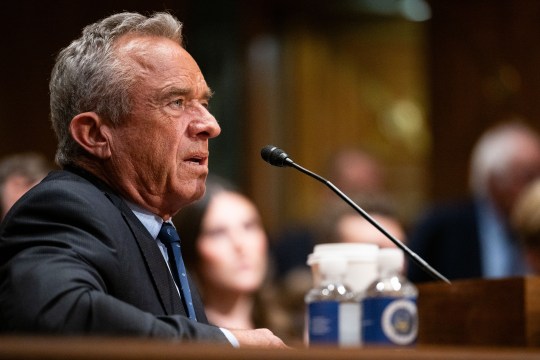
The KFF-Washington Post partnership Survey of Parents explores experiences and views pertaining to childhood vaccines. The Survey of Parents also sheds light on school vaccination requirements, views on federal health agencies and policy changes, and the views of parents with children diagnosed with autism spectrum disorder. This poll comes as the Trump administration revamps federal policies, and HHS Secretary Robert F. Kennedy Jr. continues to question the childhood vaccine schedule.

KFF/New York Times Survey of Immigrants

KFF-New York Times Survey: Immigrants Report Rising Fear, Negative Economic and Health Impacts, and Changing Political Views During the First Year of President Trump’s Second Term

The 2025 Survey of Immigrants, a partnership between KFF and The New York Times, takes an in-depth look at the experiences of immigrants during the first year of President Trump’s second term, including their worries related to increased immigration enforcement, their health and economic wellbeing, and the political views and preferences of immigrant voters. The survey paints a portrait of families under strain — where fear of detention and economic instability are negatively impacting immigrants’ health and reshaping immigrant families’ daily lives and views of U.S. political parties.

Read the News Release | Explore The New York Times’ Reporting

the essentials

Health Tracking Poll

Our signature survey project provides up-to-date data on the public’s health care views, knowledge, and experiences.

Survey Question Finder

Search all KFF polls since 1992 by keyword and date to find full question wording and results.

Health Information and Trust Tracking Poll

The Health Information and Trust Tracking Poll is part of KFF’s Health Information and Trust Initiative, which tracks health misinformation and analyzes its impact on the public.

Polls in Health Policy

This chapter of our digital “textbook” explores why surveys are essential for understanding health policy issues. 

Subscribe to KFF Emails

Choose which emails are best for you.
Sign up here

Filter

1,781 - 1,790 of 1,830 Results

  • Post-Election Survey of Voters’ 1997 Health Care Agenda

    Poll Finding

    Post-Election Survey of Voters' 1997 Health Care Agenda A nationally representative sample of 1000 voters, conducted immediately after the 1996 election, examines voters' priorities for the new Congress. Balancing the budget, cutting taxes and spending on public education top the list of voters priorities.

  • Kaiser/Harvard Health News Index, December 1996

    Poll Finding

    The December 1996 edition of the Kaiser Family Foundation/Harvard Health News Index includes questions about major health issues covered in the news, including questions about California Proposition 215, Mammograms and Teen Drug Use.

  • The Kaiser Survey About Public Knowledge and Attitudes About STDs Other Than AIDS

    Report

    A summary and toplines from a national survey conducted for the Foundation by Market Facts, Inc. of public knowledge about STDs overall and their attitudes towards policy options to confront the spread of STDs. This survey was released at a briefing on Sexually Transmitted Diseases: Exposing the Epidemic.

  • Getting Behind the Numbers on Access to Care

    Other Post

    The Debate About The Uninsured: How serious are their problems? Embargoed for release until: 9:30 AM, EDT, Tuesday, October 22, 1996 For further information contact: Matt James or Tina Hoff First National Study Asking People To Describe Health Care Experiences In Own Words: 46 Percent of Uninsured Adults Experienced "Serious" Consequences As a Result of…

  • Getting Behind the Numbers on Access to Care

    Report

    A national telephone survey, conducted by researchers at the Harvard School of Public Health, the Kaiser Family Foundation and the National Opinion Research Center, of 3,993 randomly selected U.S. adults between February and April 1995.

  • Getting Behind the Numbers on Access to Care

    Other Post

    Insurance Status:Insured PeopleProblem Group:Getting Needed Medical CareSelf-rating of Severity of Consequences:Very or Somewhat SeriousSexAgeResponseMale22Fungus on my foot, coverage at my work did not cover it because it was not preventative care. Pretty uncomfortable, could tell it was not a normal infection. Went to store bought stuff, medication, over the counter.Female32It affects me physically and mentally.