







Mental Health

Key CDC Data

Access and coverage

Subscribe to KFF Emails

Choose which emails are best for you.
Sign up here

Filter

101 - 110 of 252 Results

  • New KFF Analysis Shows Number of Suicide Deaths at Record Levels, Driven by an Increase in Firearm-Related Suicides

    News Release

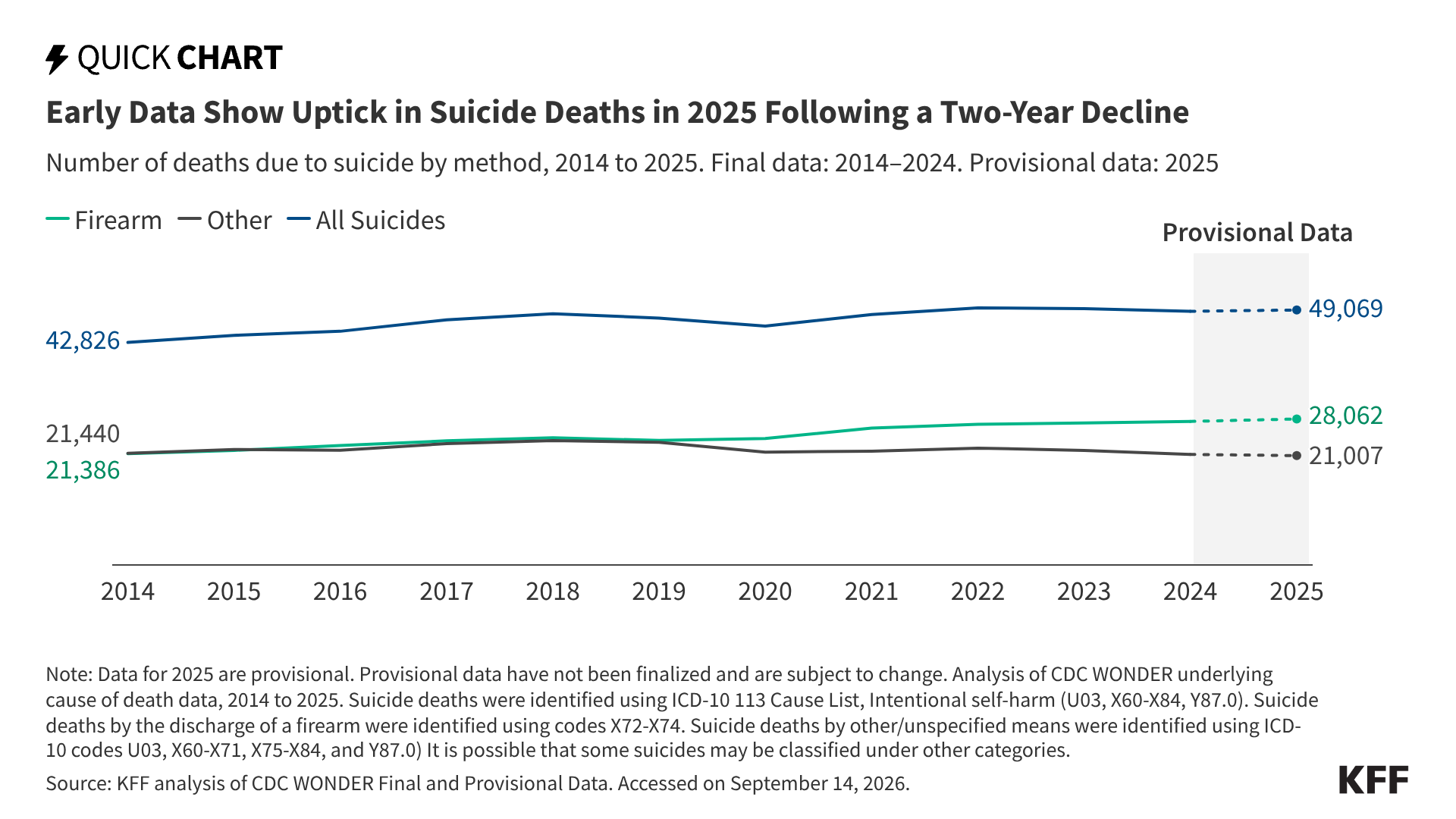
    More than 49,000 people died by suicide across the country in 2022, a record number driven largely by an increase in the number of firearm-related deaths, a new KFF analysis of provisional CDC data shows. Firearm-related suicide deaths have been increasing in recent years and are now the most common method of suicide, accounting for 55% of all suicide deaths in both 2021 and 2022. Deaths from other suicide methods have remained relatively steady. The…

  • U.S. Has the Highest Rate of Gun Deaths for Children and Teens Among Peer Countries

    News Release

    Firearms were responsible for 20 percent of all child and teen deaths in the U.S. for both 2020 and 2021, compared to an average of less than 2 percent in similarly large and wealthy nations, according to a new KFF analysis. This puts the U.S. far ahead of peer nations in child and teen firearm deaths. Data show that U.S. firearm deaths for children and teens again surpassed motor vehicle deaths – the second leading…

  • Child and Teen Firearm Mortality in the U.S. and Peer Countries

    Issue Brief

    Firearms were responsible for 20 percent of all child and teen deaths in the U.S. for both 2020 and 2021, compared to an average of less than 2 percent in similarly large and wealthy nations. This puts the U.S. far ahead of peer nations in child and teen firearm deaths.

  • One Year After the Launch of 988, the National Suicide and Crisis Hotline Has Received Nearly 5 Million Combined Calls, Texts, and Chats  

    News Release

    Since its launch in July 2022, the 988 national suicide and crisis hotline has received about 4 million contacts, a 33 percent increase from the year before, according to a new KFF analysis of publicly available data through May 2023. The contacts include more than 2.6 million calls, over 740,000 chats, and more than 600,000 texts. The total number of contacts rises to almost 5 million when nearly 1 million additional contacts from the Veterans…

  • New KFF Analysis Examines Rapidly Evolving Federal Policies For Substance Use Disorder Treatment for the Opioid Epidemic  

    News Release

    A new KFF analysis finds that 24 percent more buprenorphine, a medication to treat opioid use disorder, was dispensed in 2022 than in 2019, the year before the pandemic brought a surge of opioid overdose deaths – and a focus on how to expand access and treatment. This upward trend in buprenorphine distribution, already in motion before the pandemic, continued throughout the COVID public health crisis, suggesting continued improvements in access to treatment even as…

  • Addressing the Opioid Crisis: A Look at the Evolving Landscape of Federal OUD Treatment Policies

    Issue Brief

    Federal policies governing substance use disorder treatment have undergone rapid changes during the pandemic; however, the extent to which these changes can address the surge in opioid overdose deaths is unclear. Some of these policy adjustments are permanent, while others could revert to pre-pandemic regulations. In this brief, we examine the following 5 key federal policies and implications for access and treatment for OUD.

  • Rise in Use of Mental Health Apps Raises New Policy Issues

    Issue Brief

    Use of digital behavioral health services increased during the COVID-19 pandemic when in-person visits were limited. This brief examines how different types of mental health apps are used, how federal policies during the pandemic affected the scope of services they could provide, and key issues to watch.

  • KFF Survey of Consumer Experiences with Health Insurance

    Poll Finding

    The survey finds nearly six in 10 people with health insurance experienced a problem using their insurance in the past year, with even larger shares reporting problems among people who are sick or who have mental health needs. It includes data for people with different types of coverage, including employer, Marketplace, Medicare and Medicaid, and also examines affordability issues and mental health access.