Medicare

New & Noteworthy

What to Know About Medicare Coverage of Telehealth

Congress has repeatedly extended pandemic-era flexibilities around Medicare coverage of telehealth, but most such flexibilities remain temporary. This brief answers key questions about the current scope of Medicare telehealth coverage, including both temporary and permanent changes adopted through legislation and regulation, and future policy considerations.

Examining the Potential Impact of Medicare’s New WISeR Model

A federal initiative to establish new prior authorization requirements in traditional Medicare, called the Wasteful and Inappropriate Service Reduction (WISeR) model, is likely to have only modest impact in its first year.

State Profiles for Dual-Eligible Individuals

This data collection draws on Medicare and Medicaid administrative data to present national and state-level information on people who are covered by both Medicare and Medicaid, referred to as dual-eligible individuals (also known as dually-enrolled beneficiaries).

Data Visualization

The Facts About Medicare Spending

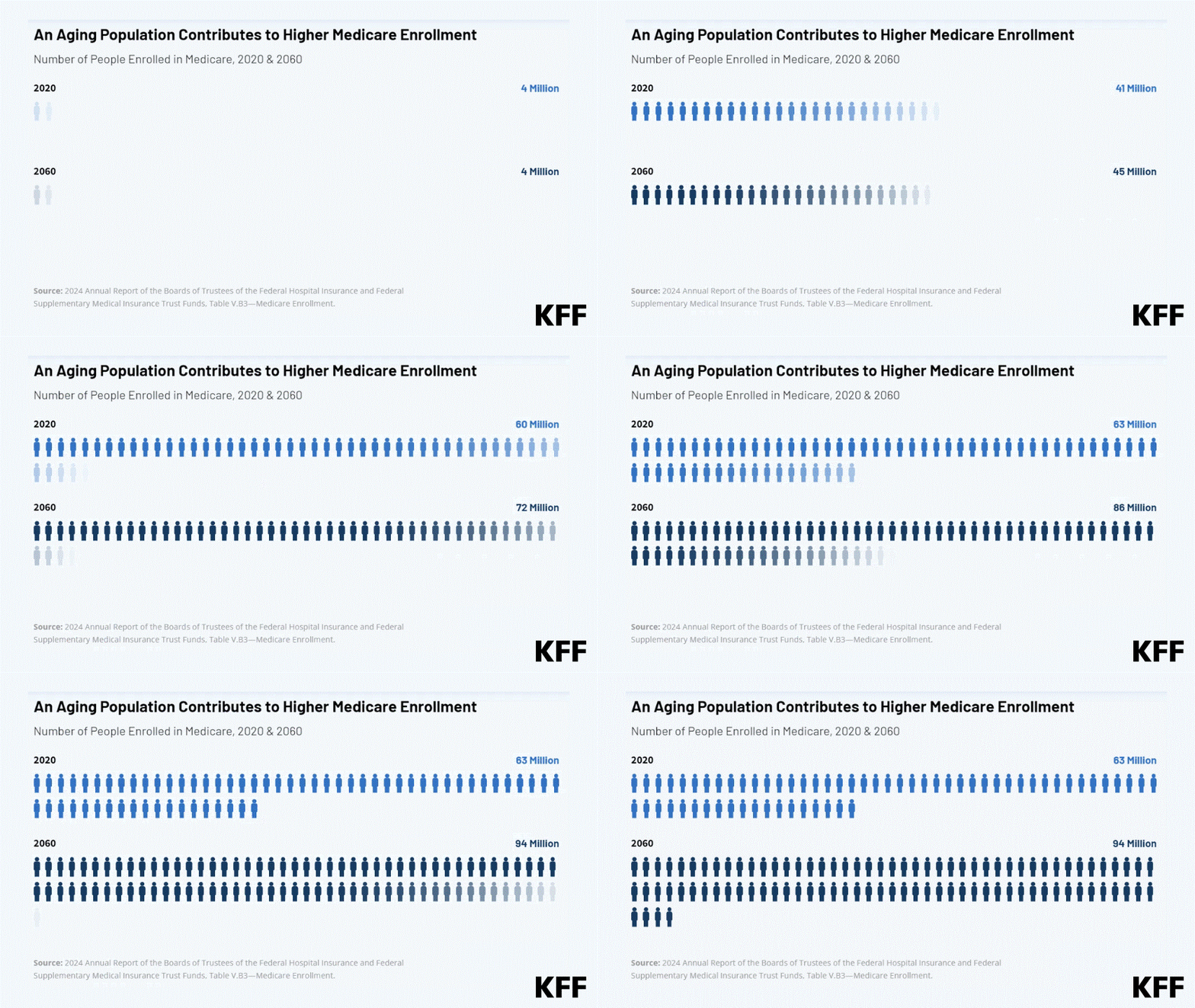
This interactive provides the facts on Medicare spending. Medicare, which serves 67 million people and accounts for 12 percent of the federal budget and 21 percent of national health spending, is often the focus of discussions about health expenditures, health care affordability and the sustainability of federal health programs.

Explore data on enrollment growth, Medicare spending trends overall and per person, growth in Medicare spending relative to private insurance, spending on benefits and Medicare Advantage, Part A trust fund solvency challenges, and growth in out-of-pocket spending by beneficiaries.

Related: FAQs on Medicare Financing and Trust Fund Solvency

Read More

Subscribe to KFF Emails

Choose which emails are best for you.
Sign up here

Filter

281 - 290 of 1,599 Results

  • Improving Prescription Drug Coverage: Opportunities and Challenges for Reform

    Event Date:
    Event

    Tricia Neuman, Vice President and Director of the Medicare Policy Project, testified before the Senate Finance Committee on prescription drug coverage under Medicare. The statement reviews existing sources of prescription drug coverage for Medicare beneficiaries and the importance of such coverage for this population.

  • Pulling it Together: Last Week’s Health Reform “Shocker”

    Perspective

    Last week we learned that health reform could cost the federal government at least a trillion dollars over ten years, and that it will be really difficult to forge bipartisan agreement on legislation and keep major interest groups on board.

  • What’s in There? The New Health Reform Law and Medicare

    Event Date:
    Event

    As part of an ongoing series to explore what is in the Patient Protection and Affordable Care Act and the Health Care and Education Reconciliation Act of 2010, this May 7 briefing sponsored by the Alliance for Health Reform and the Kaiser Family Foundation examines how the reform law affects Medicare.

  • Trends in Medicare Supplemental Insurance and Prescription Drug Benefits, 1996-2001Data Update

    Report

    Trends in Medicare Supplemental Insurance and Prescription Drug Benefits, 1996-2001 Data Update This data update provides estimates of supplemental insurance and prescription drug coverage rates and trends between 1996 and 2001, which will help to provide important context for assessing future changes in supplemental insurance and drug coverage rates after provisions of the Medicare drug…

  • The Budget: What Would You Cut?

    Perspective

    As President Obama and Congress begin to hash out the 2012 budget, it is a good time to revisit results from our January 2011 survey showing that in spite of the fact that most Americans report being very concerned about the budget deficit, there is little public support for major reductions across a number of…

  • Betting on Private Insurers

    Perspective

    Just-released estimates of national health spending in 2010 by the Centers for Medicare and Medicaid Services (CMS) show that 45% of our health care spending is financed by the federal and state governments, primarily through the Medicare and Medicaid programs.

  • 10 Key Facts About Women with Medicare

    Issue Brief

    This brief examines 10 key facts about women with Medicare and presents new statistics on the health, economic and functional status of women with Medicare.