Medicaid

new and noteworthy

Medicaid: What to Watch in 2026

Medicaid: What to Watch in 2026

In this brief, KFF explores how state fiscal pressures are likely to converge with the implementation of the 2025 reconciliation law to affect Medicaid coverage, financing, and access to care over the next year, especially leading up to the midterm elections.

Medicaid Watch

Featuring policy research, polling and news about how Medicaid is changing, and the impact of those changes due to the tax and spending cuts law

Medicaid Work Requirements

Tracking Medicaid Work Requirements:
Data and Policies

To implement Medicaid work requirements, states will need to make important policy and operational decisions, implement needed system upgrades or changes, develop new outreach and education strategies, and hire and train staff, all within a relatively short timeframe. The information tracked here can serve as a resource to understand Medicaid work requirements and state options, gauge readiness, and track implementation of the requirements.

understanding medicaid

Medicaid Financing

Medicaid represents $1 out of every $5 spent on health care in the U.S. and is the major source of financing for states to provide health coverage and long-term care. This brief examines key questions about Medicaid financing and how it works.

Medicaid and Provider Taxes

All states except Alaska cover some state Medicaid costs with taxes on health care providers. This brief uses data from KFF’s 2024-2025 survey of Medicaid directors to describe current practices and the federal rules governing them.

5 Facts: Medicaid and Hospitals

Absorbing reductions in Medicaid spending could be challenging for hospitals, particularly for those that are financially vulnerable. This brief provides data on the reach of Medicaid across hospitals, patients, and charity care.

Medicaid Home Care in 2025

This issue brief provides an overview of what Medicaid home care (also known as “home- and community-based services”) is, who is covered, and what services were available in 2025.

5 Facts: Medicaid Program Integrity

This brief explains what is known about improper payments and fraud and abuse in Medicaid and describes ongoing state and federal actions to address program integrity.
2025 Medicaid Home Care survey

Payment Rates Ahead of 2025 Reconciliation Law

This issue brief describes Medicaid payment rates for home care and other workforce supports that are in place in 2025, before the majority of the 2025 reconciliation law provisions start taking effect.

Home Care Support for Family Caregivers in 2025
number of responding states, including DC, that allow payments for family caregivers by type of home care program and type of caregiver.

This issue brief describes the availability of self-directed services and supports for family caregivers in Medicaid home care in 2025, before most provisions in the reconciliation law take effect.

States’ Management of Home Care Spending

This issue brief describes the mechanisms states are currently using to limit Medicaid spending on home care and their plans for adopting new mechanisms in state fiscal year (FY) 2026.

Waiting Lists for Medicaid Home Care, 2016 to 2025
A Look at Waiting Lists for Medicaid Home- and Community-Based Services from 2016 to 2025

This data note provides new information about waiting lists in Medicaid home care before many of the provisions in the 2025 reconciliation law go into effect.

Eligibility and coverage
  • Eligibility, Enrollment, and Renewal Policies

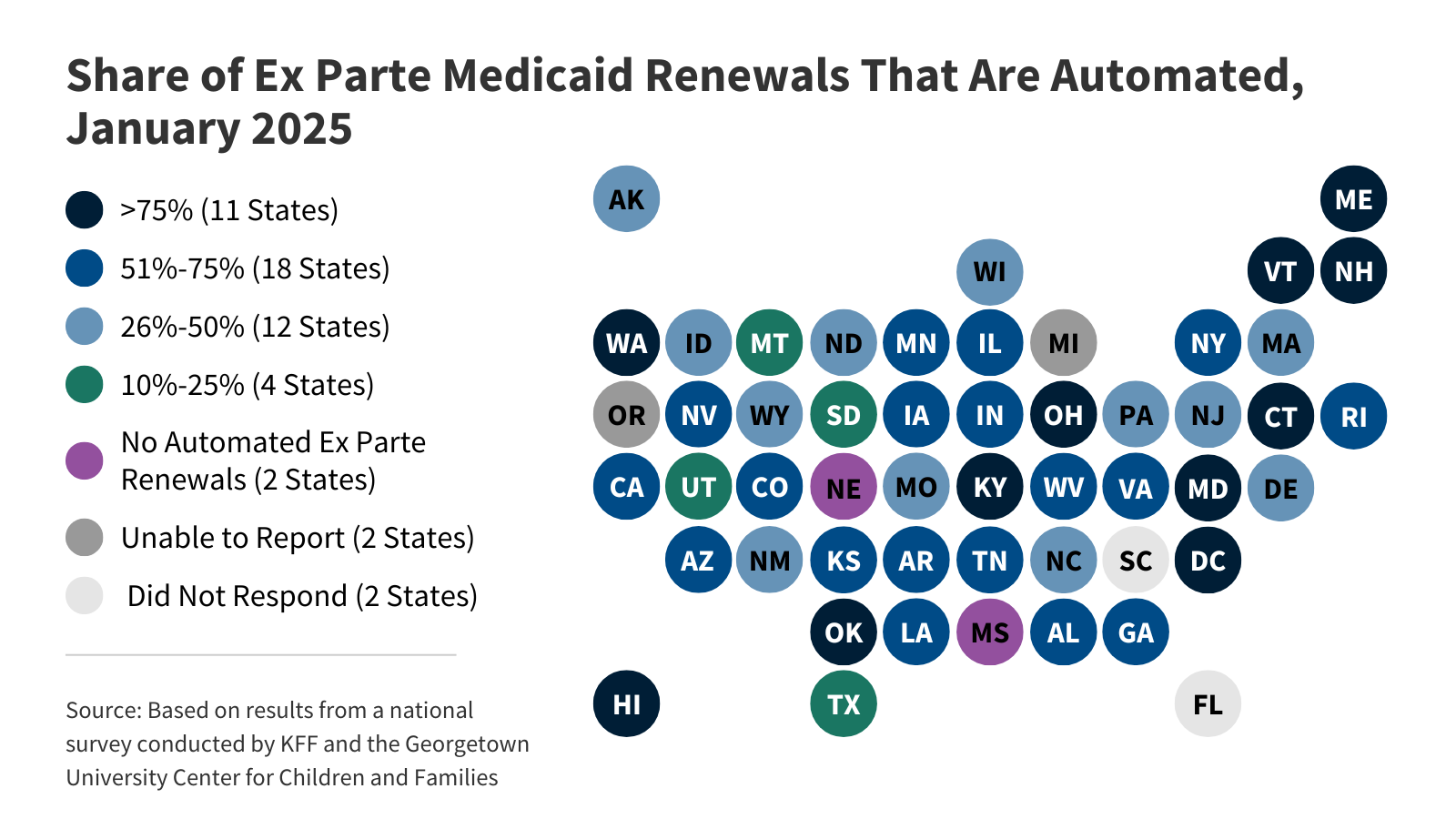
    KFF's survey findings capture state actions that seek to improve the accuracy and efficiency of Medicaid and CHIP enrollment and renewal processes, as of January 2025.
  • Seniors and People with Disabilities

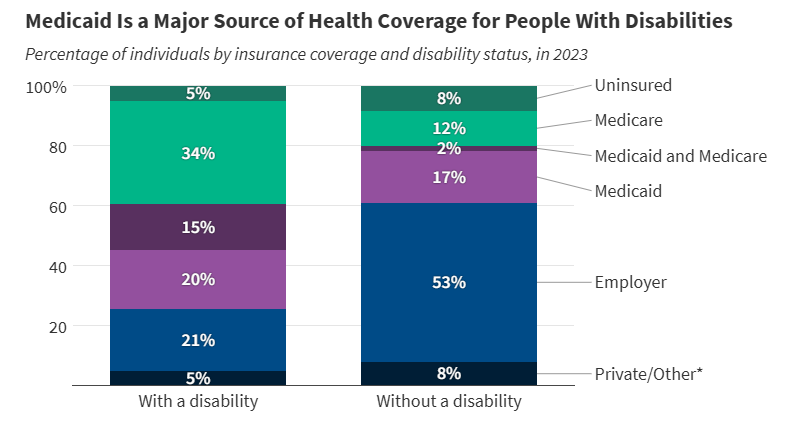
    More than 1 in 3 people with disabilities (15 million) have Medicaid (35%). In comparison, only 19% of people without disabilities have Medicaid.
  • Children with Special Needs

    Amid debates about proposed cuts to federal Medicaid spending, this brief analyzes key characteristics of children with special health care needs and explores how Medicaid provides them with coverage.
  • People With Intellectual and Developmental Disabilities

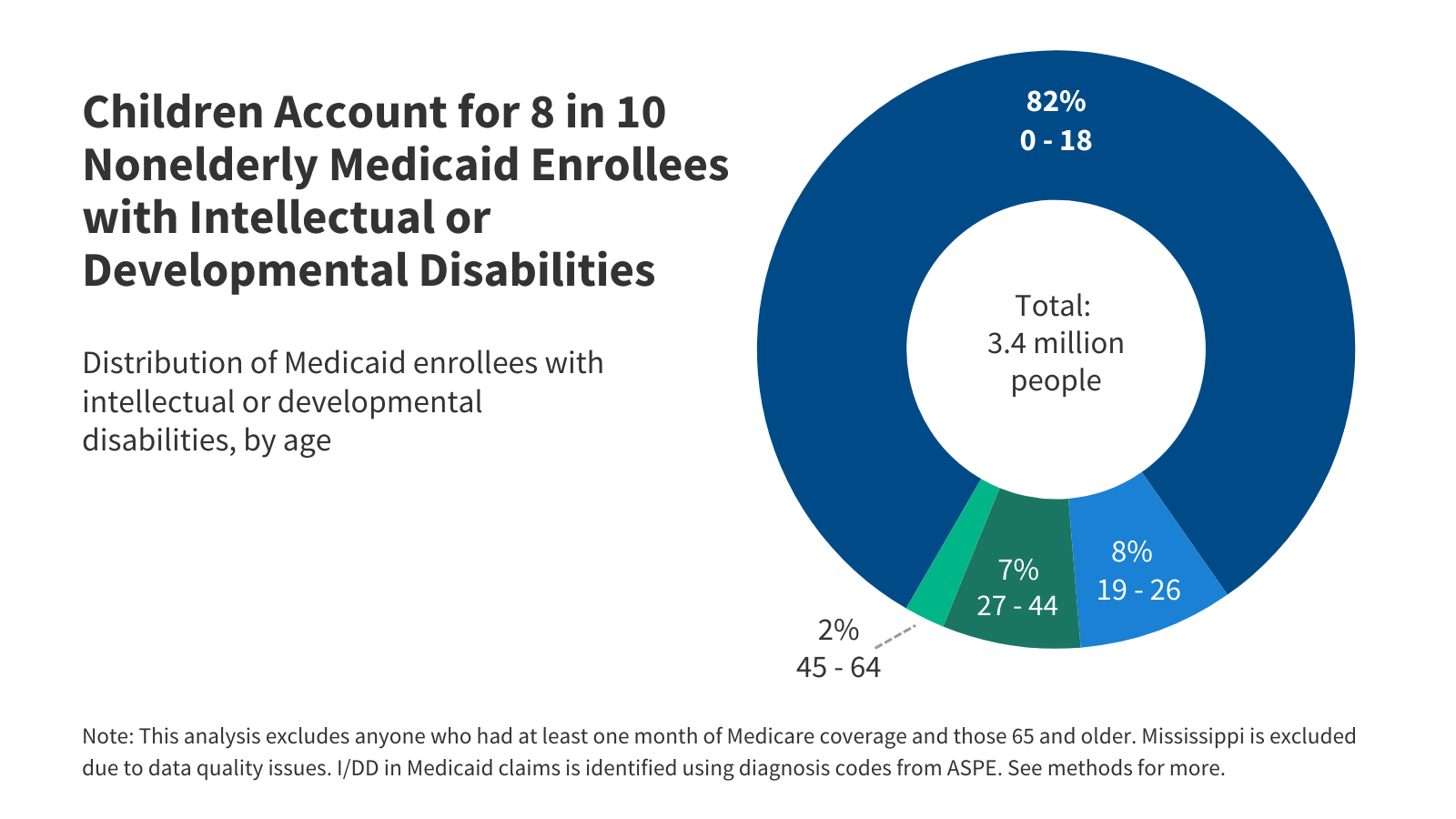
    Among the estimated 8 million people with intellectual and developmental disabilities (I/DD), over three million have Medicaid coverage.
  • Adults with Chronic Conditions

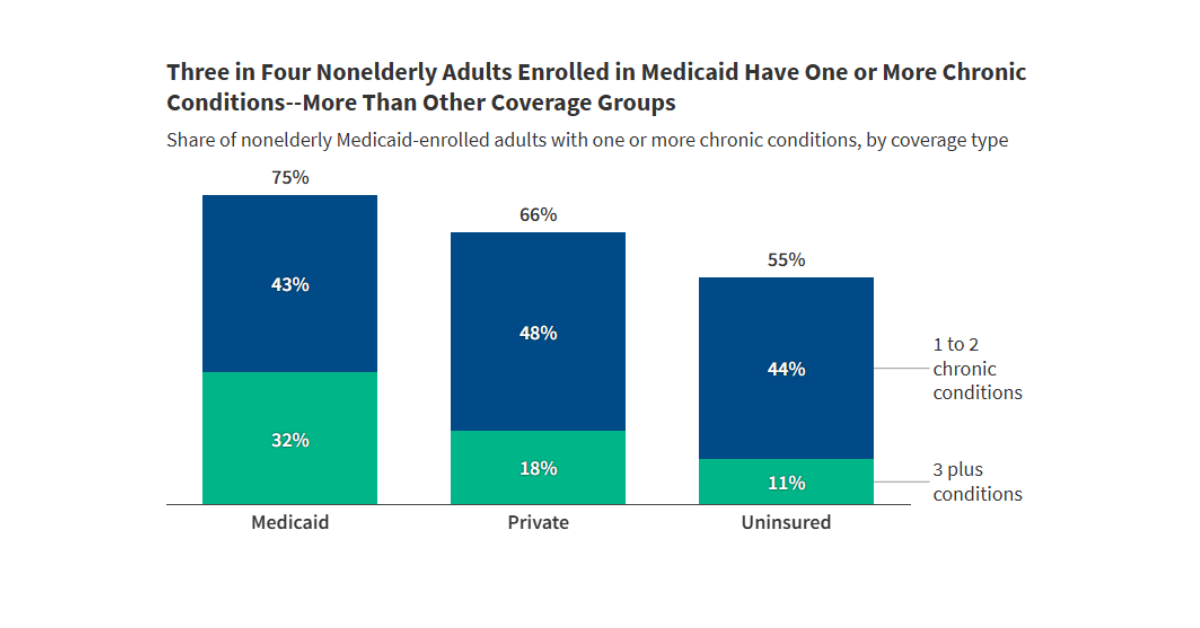
    Among working age adults enrolled in Medicaid, approximately three quarters have one or more chronic conditions, and nearly one-third have three or more.

Subscribe to KFF Emails

Choose which emails are best for you.
Sign up here

Filter

1,301 - 1,310 of 2,688 Results

  • Medicare and Medicaid at 50 Years: Perspectives of Beneficiaries, Health Care Professionals and Institutions, and Policy Makers

    From Drew Altman

    In this article for the Journal of the American Medical Association (JAMA), Drew Altman and former U.S. Senate Majority Leader William Frist examine the roles the Medicaid and Medicare play in the health system today from the perspectives of the public and beneficiaries, providers, and policymakers, and discusses the challenges they face in the future. The article is accompanied by an audio interview with Altman and Frist, who is a member of the Foundation’s board of trustees.

  • New Article and Infographics in JAMA Examine Medicaid and Medicare at 50 Years

    News Release

    The July 28 special issue of the Journal of the American Medical Association (JAMA) includes an article written by Kaiser Family Foundation President and CEO Drew Altman and former U.S. Senate Majority Leader William H. Frist, MD, and two infographics from the Foundation that examine the past, present, and future of Medicaid and Medicare.

  • Visualizing Health Policy: Medicaid and Medicare at 50: Trends and Challenges

    Other Post

    These Visualizing Health Policy infographics commemorate the 50th anniversary of the Medicaid and Medicare programs. This infographic provides details about the reach and demographics of the programs, as well as the Federal and total US health-care spending associated with them. This infographic illustrates trends and challenges going forward.

  • Proposed Rule on Medicaid Managed Care: A Summary of Major Provisions

    Issue Brief

    This issue brief summarizes major provisions of the Notice of Proposed Rulemaking (NPRM) to modernize and strengthen federal Medicaid managed care regulations, which serves as an informational guide to key proposed new federal expectations and requirements of states and managed care arrangements, and federal oversight interests moving forward.

  • Medicare And Medicaid At 50

    Poll Finding

    Medicare and Medicaid were signed into law by President Lyndon Johnson on July 30, 1965 in a bipartisan effort to provide health insurance coverage for low-income, disabled, and elderly Americans. In their 50 year history, each of these programs has come to play a key role in providing health coverage to millions of Americans today and make up a significant component of federal and state budgets. As major programs both in size and scope, their role and the ways in which they operate are often debated by policymakers and the public alike. As the programs reach their 50th year, the Kaiser Family Foundation conducted a nationally representative survey of Americans to explore the public’s views of these programs, their experiences as beneficiaries, and their opinions on proposals for future changes.

  • With Medicare and Medicaid Getting High Marks from the Public and Beneficiaries, Majorities Favor Status Quo over Major Structural Changes Such As Premium Supports or Block Grants

    News Release

    Among Medicare Changes, Strongest and Broadest Support Is for Negotiating Drug Prices People With Medicare, Medicaid and Employer Plans Give Their Coverage Similar Ratings, But Some Report Affordability and Physician Access Problems Fifty years after President Lyndon Johnson signed the law creating the Medicare and Medicaid programs, a new Kaiser Family Foundation poll finds a…

  • Takeaways From Alaska’s Medicaid Expansion

    From Drew Altman

    In this column for The Wall Street Journal’s Think Tank, Drew Altman discusses the implications of the governor of Alaska’s decision to move ahead unilaterally with Medicaid expansion.

  • Takeaways From Alaska’s Medicaid Expansion

    News Release

    In his latest column for The Wall Street Journal’s Think Tank, Drew Altman discusses the implications of the governor of Alaska’s decision to move ahead unilaterally with Medicaid expansion. All previous columns by Drew Altman are available.