Immigrant Health

survey of immigrants

KFF-New York Times Survey: Immigrants Report Rising Fear, Negative Economic and Health Impacts, and Changing Political Views During the First Year of President Trump’s Second Term

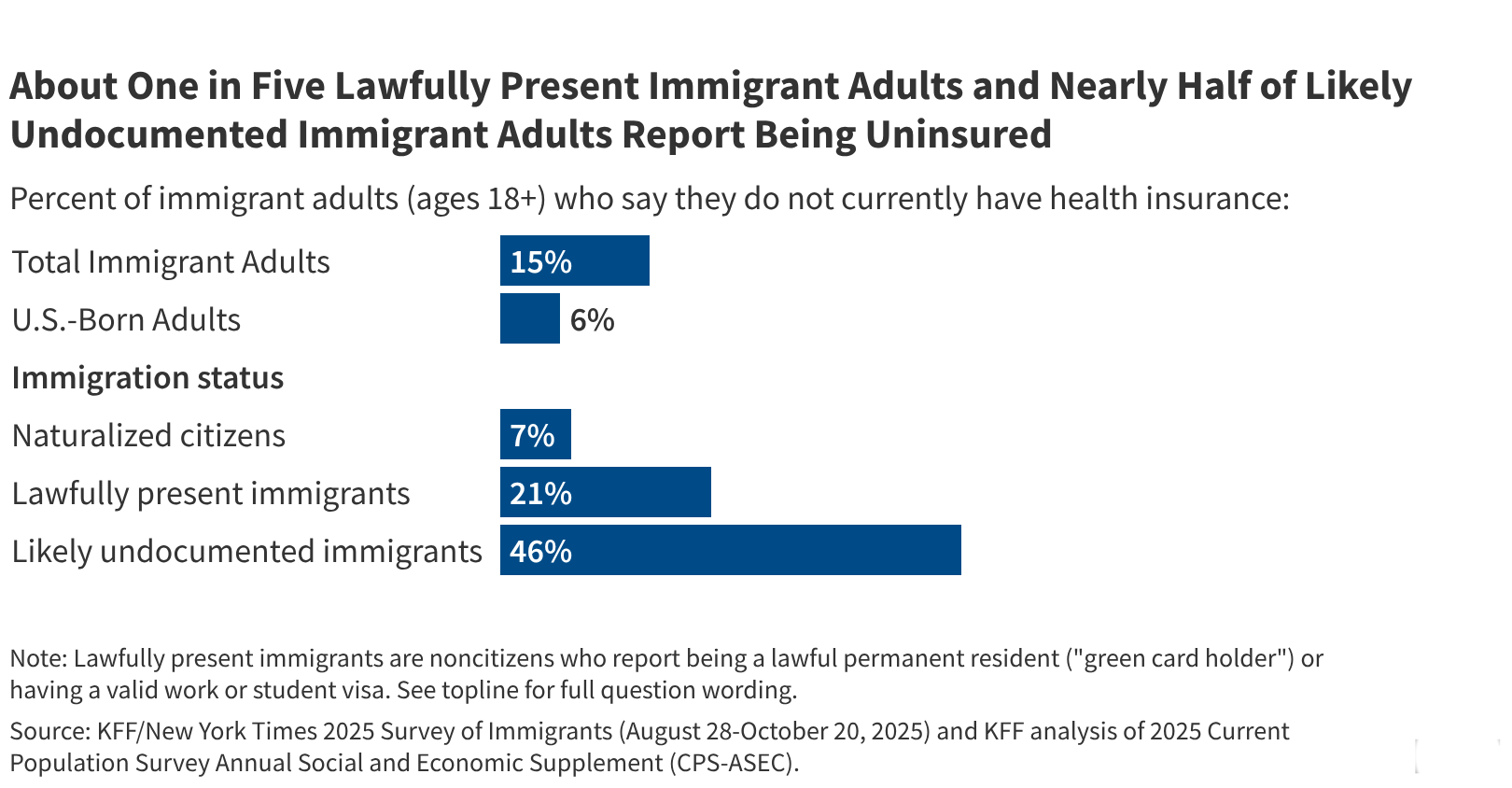
The 2025 Survey of Immigrants, a partnership between KFF and The New York Times, takes an in-depth look at the experiences of immigrants during the first year of President Trump’s second term, including their worries related to increased immigration enforcement, their health and economic wellbeing, and the political views and preferences of immigrant voters. The survey paints a portrait of families under strain — where fear of detention and economic instability are negatively impacting immigrants’ health and reshaping immigrant families’ daily lives and views of U.S. political parties.

Read the News Release | Explore The New York Times’ Reporting

Key Facts and Analysis

Subscribe to KFF Emails

Choose which emails are best for you.
Sign up here

Filter

131 - 140 of 173 Results

  • Medicaid: What to Watch in 2019 from the Administration, Congress, and the States

    Issue Brief

    Medicaid, the provider of health insurance coverage for about one in five Americans and the largest payer for long-term care services in the community and nursing homes, continues to be a key part of health policy debates at the federal and state level. Important Medicaid issues to watch in 2019 include Medicaid expansion developments amid ongoing litigation about the ACA’s constitutionality as well as Medicaid demonstration waiver activities, including those focused on work requirements and other eligibility restrictions. States are also likely to continue to pursue initiatives to address the opioid crisis, and the recent passage of bi-partisan legislation with new tools and financing could bolster these efforts. Primary areas of federal policy to watch in 2019 with implications for Medicaid include the expiration of temporary funding for Puerto Rico and the US Virgin Islands in the absence of legislative action as well as potential regulatory changes to public charge policies that would likely lead to Medicaid enrollment declines among immigrant families. Finally, reforms in benefits, payment and delivery systems continue to evolve as states and the federal government focus on managed care, social determinants of health, prescription drugs, and community based long-term care. While beyond the scope of this brief, Congress and states could also consider broader health reform that could expand the role of public programs in health care including Medicare for All or Medicaid buy-in programs that could have significant implications for Medicaid.

  • Family Consequences of Detention/Deportation: Effects on Finances, Health, and Well-Being

    Issue Brief

    This report examines the direct consequences to family finances, health, and well-being when a member of the household is detained or deported. It is based on 20 in-person interviews with families who recently had a family member detained or deported and 12 telephone interviews with health centers, legal services providers, educators, and community organizations serving immigrant families in California, Texas, and the Washington, DC area.

  • One Year After the Storm: Texas Gulf Coast Residents’ Views and Experiences with Hurricane Harvey Recovery

    Report

    The Kaiser Family Foundation/Episcopal Health Foundation Harvey Anniversary Survey examines the views, experiences, and long-term recovery needs of vulnerable Gulf Coast Texans who were affected by Hurricane Harvey. This survey – a follow-up to a survey conducted by the partners 3 months after the storm – measures residents’ challenges with housing, financial assistance, health care, and mental health, as well as views on priorities and preparedness moving forward. It finds many challenges are especially salient for affected residents who are Black, Hispanic, or have lower incomes, as well as those who experienced major home damage or remain displaced from their homes.

  • Key Health Implications of Separation of Families at the Border (as of June 27, 2018)

    Fact Sheet

    This fact sheet examines key health implications of separating immigrant children from their parents at the border, as of June 27, 2018. The practice came to light after implementation of the Trump Administration's zero tolerance policy for individuals entering into the U.S. without authorization. Research shows that separating children from their parents exposes them to trauma and toxic stress that can have lifelong impacts on their health.

  • Potential Effects of Public Charge Changes on Health Coverage for Citizen Children

    Issue Brief

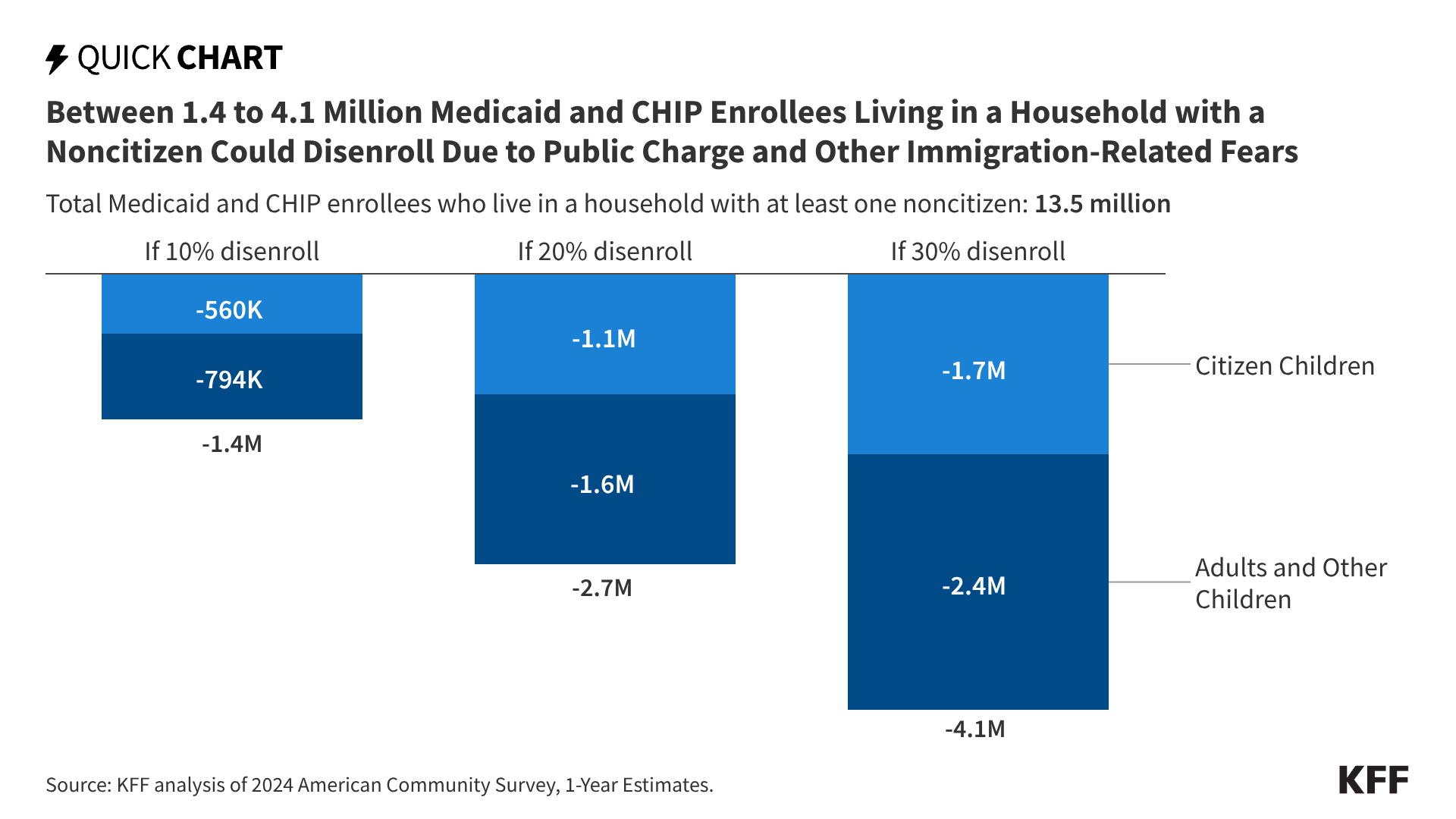
    The Trump Administration is pursuing changes that, for the first time, would allow the federal government to take into account use of Medicaid, CHIP, subsidies for Marketplace coverage and other health, nutrition, and non-cash programs when making public charge determinations. These changes would likely lead to decreased participation in Medicaid, CHIP, Marketplace coverage, and other programs among legal immigrants and their citizen children, even though they would remain eligible.

  • Nearly 20 Million Children Live in Immigrant Families that Could Be Affected by Evolving Immigration Policies

    Issue Brief

    President Trump has intensified national debate about immigration by implementing policies to enhance immigration enforcement and restrict legal immigration. Recent findings show that the climate surrounding these policies has significantly increased fear and uncertainty among immigrant families, broadly affecting families across different immigration statuses and locations. The effects extend to lawfully present immigrants, including lawful permanent residents or “green card” holders, and children in immigrant families, who are predominantly U.S.-born citizens. In particular, findings point to both short- and long-term negative consequences on the health and well-being of children in immigrant families.
    Potential changes to public charge policies intended to reduce use of public programs by immigrant families, including their citizen children, could further increase strains on immigrant families and lead to losses in health coverage. To provide insight into the scope of potential impacts of continually evolving immigration policy on children, this data note provides nationwide and state-level estimates (Table 1) of citizen children living in immigrant families and the number currently covered by Medicaid/CHIP coverage.