Affordable Care Act

About the ACA

Promotional image for KFF video How Affordable is the Affordable Care Act

Did the Affordable Care Act Make Health Care More Affordable?

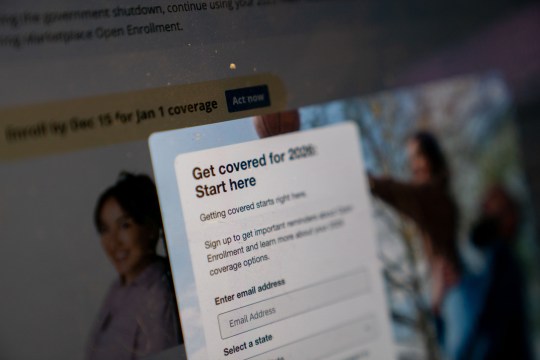
The expiration of the ACA’s enhanced premium tax credits at the start of 2026, combined with rising insurer premiums, put a spotlight on health care affordability that extends beyond Marketplace enrollees. KFF’s Cynthia Cox examines the ACA’s record and the broader underlying question it raises: what’s a fair price for Americans people to pay for health care?

The ACA MarketplaceS

In Preliminary Rate Filings, ACA Marketplace Insurers Largely Propose Double-Digit Premium Increase For 2027, Following a Steep Climb This Year 

ACA Marketplace insurers are proposing a median premium increase of 14% for 2027— indicating a likely second consecutive year of double-digit increases, according to a new analysis of preliminary rate filings in 16 states and DC. If these increases hold, typical premiums for insurers participating in the ACA Marketplaces would jump by more than one-third between 2025 and 2027.

The Average Marketplace Deductible Grew by About $1,000 Per Person in 2026, With More Enrollees Shifting to Higher-Deductible Plans as Enhanced Tax Credits Expired

The average Affordable Care Act (ACA) Marketplace deductible experienced the steepest increase in history—growing by 37% or over $1,000, from $2,759 in 2025 to $3,786 in 2026 as enhanced premium tax credits expired, according to a new KFF analysis. After the enhanced tax credits ended, many Marketplace shoppers shifted toward lower-premium, higher-deductible plans.

Stay informed.

Stay informed.

https://js.hsforms.net/forms/embed/292449.js

Filter

1,591 - 1,600 of 2,780 Results

  • Kaiser Health Tracking Poll – Late April 2017: The Future of the ACA and Health Care & the Budget

    Report

    With the ongoing debate about the future of the Affordable Care Act (ACA), the latest tracking poll examines the public awareness of and attitudes about some recent developments related to the 2010 health care law, including uncertainty about cost-sharing reduction payments and insurers opting out of some health insurance marketplaces. The poll also takes a look at Americans’ budget and health care priorities.

  • Proposed Medicaid Section 1115 Waivers in Maine and Wisconsin

    Issue Brief

    While the future of legislation to repeal and replace the Affordable Care Act (ACA) and make fundamental changes to the structure and funding of the Medicaid program is uncertain, states and the Administration may achieve major changes to Medicaid through the use of Section 1115 Medicaid waivers. Wisconsin submitted a waiver amendment request to CMS in June 2017 and Maine submitted a waiver application to CMS in August 2017. Unlike previous waivers that encompass the…

  • State-by-State Estimates of Reductions in Federal Medicaid Funding Under Repeal of the ACA Medicaid Expansion

    Issue Brief

    Congressional debate around the Affordable Care Act (ACA) has recently included a proposal to repeal the ACA, including the provision allowing states to extend Medicaid to childless adults up to 138% FPL and providing enhanced federal funds for the Medicaid expansion. This brief provides estimates of changes in federal Medicaid funds and Medicaid coverage for adults covered through the ACA expansion if the expansion is eliminated starting in 2020. A repeal of the Medicaid expansion…

  • Senate Health Bill Proposes Big Changes to Medicaid Beyond Repealing and Replacing the ACA

    News Release

    The Better Care Reconciliation Act (BCRA) under consideration in Congress includes provisions that would fundamentally change Medicaid by phasing out extra federal funding for states’ Medicaid expansions and for the first time limiting federal spending on Medicaid through a per enrollee cap on financing or a block grant for certain adults. While those measures account for most of the bill’s $756 billion reduction in federal Medicaid spending over the next decade, there are other big…

  • How Single Payer Helps Republicans Change the Subject

    From Drew Altman

    In this Axios column, Drew Altman analyzes the political pros and cons of single payer for Democrats and whether it will shift the focus from the Republicans' failed effort to repeal and replace  the Affordable Care Act to the Democrats new sweeping plan.

  • Pulling It Together: The Repeal Trap?

    Perspective

    Almost a year into an often acrimonious health reform debate, we stand poised for near certain passage of historic health reform legislation. Yet, somewhat perplexingly, there's now talk about whether a law that has not even been enacted might actually be repealed and reporters have been calling asking what the chances of repeal may be. I have a very hard time imagining any scenario for repeal unfolding. Calls for repeal have much to do with…

  • How is the Affordable Care Act Leading to Changes in Medicaid Today? State Responses to Five New Options

    Issue Brief

    This policy brief examines how states in every region have responded to five key opportunities available under the health reform law to help them prepare for the significant expansion of Medicaid in 2014. The options covered in the brief include incentives for states to get an early start on the Medicaid coverage expansion; increased federal funding to upgrade Medicaid eligibility systems; money to improve care for beneficiaries with chronic conditions by providing "health home" services;…

  • A Guide to the Supreme Court’s Decision on the ACA’s Medicaid Expansion

    Issue Brief

    On June 28, 2012, the U.S. Supreme Court issued its decision in the case challenging the Affordable Care Act (ACA). The Court upheld the constitutionality of the ACA's individual mandate, which requires most people to maintain a minimum level of health insurance coverage beginning in 2014. A majority of the Court also found the ACA's Medicaid expansion unconstitutionally coercive of states, while a different majority of the Court held that this issue was fully remedied…

  • The Role of Medicaid for Adults With Chronic Illnesses

    Fact Sheet

    This report and related fact sheets provide data on spending, utilization, and access to care among low-income nonelderly adult Medicaid beneficiaries with chronic illnesses. Four fact sheets provide detail for beneficiaries with diabetes, respiratory disease, cardiovascular disease, and behavioral health conditions The reports show that, despite relatively high prevalence of chronic conditions and, correspondingly, relatively high spending and utilization rates, Medicaid beneficiaries with chronic illness report better access to care than their uninsured counterparts, many…