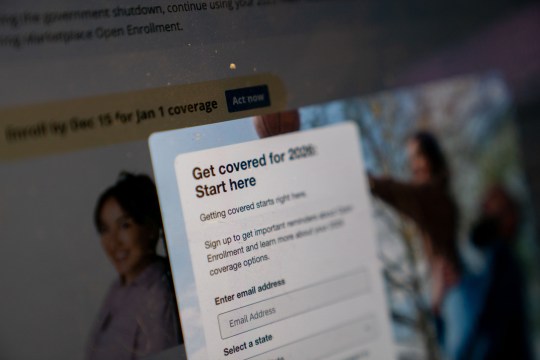
Affordable Care Act

The ACA MarketplaceS

Change in February effectuated enrollment, by state, 2025-2026

How Has ACA Marketplace Enrollment Changed Across States in 2026?

ACA Marketplace enrollment fell this year in every state except New Mexico, which was the only state to fully replace the enhanced premium tax credits that expired last year with a state-funded subsidy, according to a new KFF analysis of effectuated enrollment data. The Marketplace enrollment decline—the first in seven years—follows several years of rapid enrollment growth and coincides with the end of the enhanced federal subsidies.


How Much and Why ACA Marketplace Premiums Are Going Up in 2027

ACA Marketplaces insurers are proposing a median premium increase of 15% in 2027, according to KFF’s updated analysis of 276 insurers with publicly available filings across all 50 states and the District of Columbia. This is the second consecutive year of double-digit premium hikes. Last year’s median nationwide proposed rate change was 18%, and the median finalized rate change was 20%. While this proposed rate change is lower than last year, it represents the second-highest requested rate change since 2018, as premium growth had been relatively flat in this market for several years.

About the ACA

Promotional image for KFF video How Affordable is the Affordable Care Act

Did the Affordable Care Act Make Health Care More Affordable?

The expiration of the ACA’s enhanced premium tax credits at the start of 2026, combined with rising insurer premiums, put a spotlight on health care affordability that extends beyond Marketplace enrollees. KFF’s Cynthia Cox examines the ACA’s record and the broader underlying question it raises: what’s a fair price for Americans people to pay for health care?

Stay informed.

Stay informed.

Filter

1,441 - 1,450 of 2,787 Results

  • Affordability in the ACA Marketplace Under a Proposal Like Joe Biden’s Health Plan

    Issue Brief

    This KFF analysis finds that expanding Affordable Care Act (ACA) premium subsidies like Democratic presidential nominee Joe Biden has proposed would lower the cost of Marketplace coverage for nearly all potential enrollees, including the uninsured and others currently priced out of the Marketplace. Biden's plan would, however, increase federal spending, which we do not attempt to estimate here.

  • I bought emergency contraception over-the-counter (OTC) at my pharmacy and thought it would be covered by my insurance, but I ended up having to pay the full cost out-of-pocket. Why wasn’t it cove...

    FAQs

    Emergency contraception is one of the FDA-approved methods for women that must be covered by most health plans, including those sold on the Marketplace, but it has to be prescribed by a health care provider in order for most insurance plans to cover it. If you don’t have a prescription, you will likely have to pay the full cost out-of-pocket. However, you can ask your provider (or pharmacist if your state allows it) for a prescription…

  • Insurer Participation on the ACA Marketplaces, 2014-2021

    Issue Brief

    For the third straight year, more insurers are entering the ACA Marketplaces or expanding their service area in 2021, creating more choices for consumers shopping for coverage during the 2021 open enrollment period.

  • The Stakes Beyond the Halbig Lawsuit

    From Drew Altman

    In a column for The Wall Street Journal’s Think Tank, Drew Altman discusses if the legal court cases about whether the government can provide tax credits to people in the Affordable Care Act’s federal health exchanges will be perceived by the American people as a legitimate legal question or as more inside-Washington politics.

  • Mapping Premium Variation in the Individual Market

    Issue Brief

    This analysis examines how premiums for individual health insurance differ around the nation, finding that premiums can vary substantially from state to state. The average per-person premium in 2010 ranged in cost from approximately $136 per month in Alabama to more than $400 per month in Vermont and Massachusetts. The average across all states was $215 per member per month. Given the fragmentation of the market and the lack of public data available about individual…

  • Quick Take: Timing Matters: States Waiting for a Supreme Court Decision to Plan an Exchange

    Fact Sheet

    State-based health insurance exchanges are an important component of the Patient Protection and Affordable Care Act (ACA) designed to extend subsidized private health insurance coverage to millions of Americans by 2014. Though projections show exchange enrollment could grow to 20 million individuals nationally, aggressive planning on the part of states will be necessary to meet implementation timelines—exchanges must be fully operational by January 1, 2014 and the Department of Health and Human Services will begin…

  • Faces of the Medicaid Expansion: How Obtaining Medicaid Coverage Impacts Low-Income Adults

    Report

    The Affordable Care Act (ACA) seeks to fill the longstanding gap in Medicaid coverage for low-income adults by expanding eligibility to a minimum floor of 138% of the federal poverty level (FPL), or $24,344 for a family of 3 in 2012. However, the Supreme Court ruling on the ACA effectively made implementation of the Medicaid expansion a state choice. If a state does not expand Medicaid, poor uninsured adults in that state will not gain…

  • La reforma del cuidado de salud llega al público

    Video

    ¿Esta confundido acerca de cómo la nueva ley de reforma de salud realmente funciona? Este video explica los problemas relacionados con el sistema de salud actual, los cambios que están sucediendo ahora, y los cambios importantes que se anticipan para el 2014.