National Survey of Americans on AIDS/HIV

Published: Nov 29, 1997

Now I have just a few background questions so we’ll know something about the people taking part in the survey…

51. I’m going to read you a list of things some people do about government or politics. Many people haven’t done any of these things. As I read each one, please tell me if this is something you have done in the past 12 months. (First,) in the past 12 months have you…(read and rotate)

Yes a. Contacted a member of Congress or a U.S. Senator 17 b. Attended a public meeting on town or school affairs 35 c. Worked in the campaign of a political candidate or party 6 d. Wrote a letter to a newspaper that was published 6 e. Been interviewed or quoted by the media about an important issue 7 f. Served as an officer of some club or organization 22 g. Served on a local committee, such as school board or community council 12 h. Made a public speech 12 i. Helped organize a group or event in support of a particular cause 19

D1. What is your religious preference? Are you Protestant, Roman Catholic, Jewish, or some other religion?

D2. Do you consider yourself a Christian?

D3. Would you describe yourself as a born-again or evangelical Christian, or not?

63 Total Protestant/Christian 33 Evangelicals 27 Non-evangelicals 24 Roman Catholic 2 Jewish 5 Other religion 5 No religion/Atheist/Agnostic (vol.) 1 Don’t know/Refused 100

D4. In politics today, do you consider yourself a Republican, Democrat or Independent?

27 Republican 33 Democrat 30 Independent 1 Other Party (vol.) 5 No party (vol.) 2 Don’t know 2 Refused 100

D5. Would you say your views in most political matters are very liberal, somewhat liberal, moderate, somewhat conservative, or very conservative?

6 Very liberal 21 Somewhat liberal 29 Moderate 26 Somewhat conservative 12 Very conservative 4 Don’t know 2 Refused 100

D6. What is the last grade or class that you completed in school? (Do not read)

3 None, or grade 1 to 8 12 High school incomplete (grade 9-11) 34 High school graduate 4 Business, technical or vocational school after high school 24 Some college, but no four-year degree 15 College graduate, four-year degree 8 Post-graduate or professional schooling after college * Don’t know/Refused 100

D7. How old are you?

24 18-29 43 30-49 18 50-64 15 65 or older 100

D8a. Are you of Hispanic or Latino background, such as Mexican, Puerto Rican, Cuban, or some other Spanish background?

D8b. Is your background mainly Mexican, Puerto Rican, Cuban, or some other Hispanic or Latino nationality?

8 Total Hispanic/Latino background 4 Mexican 1 Puerto Rican * Cuban 3 Other/Mixed (vol.) 91 Not Hispanic/Latino 1 Don’t know/Refused 100

D9. What is your race? Are you white, black, Asian, or some other race?

83 White 11 Black or African-American 1 Asian 3 Other/mixed race (vol.) * Don’t know 2 Refused 100

D10. Last year, that is in 1996, what was your total family income from all sources, before taxes? Just stop me when I get to the right category.

9 Less than $10,000 12 $10,000 to under $20,000 10 $20,000 to under $25,000 10 $25,000 to under $30,000 15 $30,000 to under $40,000 9 $40,000 to under $50,000 14 $50,000 to under $75,000 11 $75,000 or more 4 Don’t know 6 Refused 100

I have just a few more questions. Let me remind you that this a completely confidential interview and that there are no right answers…

D11. In general, how comfortable would you be, personally, working with someone who has HIV — very comfortable, somewhat comfortable, somewhat uncomfortable, or very uncomfortable?

32 Very comfortable 33 Somewhat comfortable 21 Somewhat uncomfortable 12 Very uncomfortable 2 Don’t know/Refused 100

D12. In general, how comfortable are you, personally, being around homosexuals — very comfortable, somewhat comfortable, somewhat uncomfortable, or very uncomfortable?

Current 12/95 31 Very comfortable 32 30 Somewhat comfortable 29 15 Somewhat uncomfortable 15 20 Very uncomfortable 17 2 Never around homosexuals (vol.) 5 2 Don’t know/Refused 2 100 100

D13. Have you, yourself, ever been tested for HIV, that is, the virus that causes AIDS? (If yes, ask: Was that in the last 12 months or not?

Current 12/95 16 Yes, tested within past 12 months 16 22 Yes, tested but prior to this year 21 60 No, never tested 61 2 Don’t know 2 100 100

D14. The last time you were tested, did you discuss your test results with a doctor, other medical professional, or counselor?

Based on those who have been tested for HIV.

50 Yes 50 No * Don’t know/Refused 100 (n=484)

D15. What is the main reason you haven’t been tested for HIV? Is it that… (read in order)

Based on those who have never been tested for HIV.

2 You don’t like needles or giving blood, 21 You’re not sexually active, 61 You’re married or in a monogamous relationship, 1 You’re afraid you’ll test positive for HIV, or 6 Some other reason? 6 No need/No reason to suspect a problem (vol.) 3 Don’t know/Refused 100 (n=701)

D16. As you may know, HIV tests are now being developed that would not require using a needle or taking blood. For example, one new test for HIV would place a sponge inside your mouth for just a few minutes. How likely would you be to use an HIV test that does not require using a needle or taking blood? (read)

35 Very likely 20 Somewhat likely 8 Somewhat unlikely, or 32 Very unlikely? 3 Don’t know 2 Refused 100

D17. Gender

48 Male 52 Female 100

That completes the interview. Thank you very much for your time and cooperation. Have a nice day/evening.

Region

20 Northeast 24 Midwest 35 South 21 West 100

Community Type

28 Urban 49 Suburban 23 Rural 100

Return to top

1997 National Survey of Americans on AIDS/HIV:Press Release Survey Part One Part Two Part Three Part Four Part Five Chart Pack
Legislative Summary: State Children’s Health Insurance Program – Fact Sheet

Published: Nov 29, 1997

State Children’s Health Insurance Program Summary

November 1997

Nearly 10 million children are uninsured, often resulting in difficulties in obtaining needed health care. To expand coverage to low-income uninsured children, Congress enacted the State Children’s Health Insurance Program (CHIP) as part of the Balanced Budget Act (BBA) of 1997 (P.L. 105-33). This new program allocates $20.3 billion in federal matching funds over five years to states to expand insurance for children. States can use the federal funds to expand coverage either through a separate state program or by broadening their Medicaid programs — or both.

Eligibility

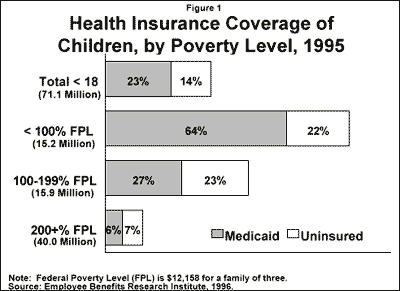
The intent of CHIP is to expand health insurance coverage to uninsured children under age 19 in families with incomes below 200% of poverty (Figure 1). Children with private insurance or who are covered by or qualify for Medicaid are ineligible for CHIP, as are those who are residents of public institutions or whose families are eligible for state employee health benefits. Undocumented children and legally resident children arriving in the U.S. after August 22, 1996 are ineligible for coverage but may qualify for emergency Medicaid assistance. States that implement their child health insurance programs through Medicaid may use federal funds to cover legally resident children in the country prior to August 22, 1996.

1345-fig1.gif

States that choose to operate a separate state child insurance program can establish eligibility based on geographic area, age, income and resources, residency, and disability status, as well as limit duration of coverage. States cannot exclude children based upon a preexisting condition or diagnosis, and cannot cover higher income children before lower income children.

If states use the Medicaid option, children become entitled to full Medicaid coverage. States that have already broadened Medicaid income eligibility levels above 150% of the federal poverty level (FPL) can expand coverage to children up to 50 percentage points above the current level. For example, a state with eligibility set at 175% FPL could expand to 225% FPL.

Benefits and Cost-sharing

The benefit package options available to states fall into three general categories: Benchmark, benchmark-equivalent, or Medicaid.

  • Benchmark Packages: States can offer one of three existing benefit packages: including the Federal Employees Blue Cross/Blue Shield PPO plan; coverage available to state employees; or coverage offered by the HMO with the state’s largest commercially enrolled population.
  • Benchmark-Equivalent Coverage: States can use a package with aggregate value greater than or equal to a benchmark plan. Hospital, physician, laboratory and x-ray, and well baby/child services must be included at a value at least actuarially equivalent to the benchmark benefit package. If prescription drugs, mental health, vision, and hearing services are included in the benchmark plan, then they must be part of the benchmark-equivalent coverage with a value of at least 75% of the benchmark plan’s actuarial value.
  • Medicaid: States that expand Medicaid must provide the complete benefit package, which includes well-child care, immunizations, prescription drugs, doctor visits, hospitalization, and EPSDT, as well as long-term care for disabled children. The Medicaid benefit package for children is broad and should satisfy the benchmark requirement in a state that administers a separate CHIP program.

The Secretary has the authority to approve a different benefit package that is determined to be appropriate for low-income children. The existing New York, Florida, and Pennsylvania child health programs are deemed to satisfy federal requirements for benefits.

Under the new program, states cannot impose cost-sharing for preventive services including well-baby and well-child care and immunizations. For children with family incomes below 150% FPL, cost-sharing must be “nominal” as under the Medicaid statute. Medicaid currently permits premiums of $15 to $19 per month per family and co-payments of up to $3 per service. Cost-sharing for children with incomes above 150% FPL can be imposed based on an income-related sliding scale, but total cost sharing cannot exceed 5% of family income. Coverage can be provided directly by the state Medicaid program, an insurer, or any other entity considered to be qualified by the state.

Financing

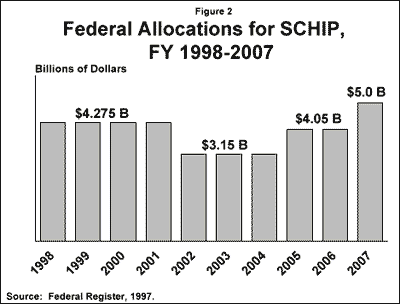
The BBA authorizes $20.3 billion in federal funds from FY 1998 through FY 2002 and $19.4 billion over the second five years. Over the ten-year period, the funds are allocated as follows: $4.275 billion per year in FY 1998-2001, falling to $3.15 billion annually in FY 2002 through 2004, and then rising to $4.05 billion from FY 2005 through 2006, and reaching $5 billion for 2007, for a total of $40 billion.

1345-fig2.gif

Annual federal allocations to states are based on the states’ share of low-income and uninsured children using estimates from the Current Population Survey, conducted by the U.S. Census Bureau. The allotment formula changes over time to adjust for reductions in the number of uninsured children.

States do not receive their allotments automatically. States must have their child health plan approved by HHS and are required to contribute state funds in order to draw down, or “match” their federal allotment. The state share cannot include beneficiary cost-sharing and is subject to the same provider tax and donation limitations specified in the Medicaid statute.

Under the new state program, states receive an “enhanced” federal matching rate based on their Medicaid matching rate. The CHIP enhanced rate essentially reduces by 30 percent the share states pay as compared to what they would contribute under their Medicaid match. For example, a state with a federal match of 60% under Medicaid would receive an “enhanced” rate of 72% under the new program. In essence, the state would pay 28 cents of every dollar spent under the new children’s program. No state may receive a matching rate greater than 85% and the minimum annual payment for a state is $2 million. States can receive an enhanced matching rate for providing Medicaid coverage to an expanded group of children. All Medicaid rules, including the entitlement to coverage, would apply to the newly covered group of children. States would continue to receive the regular Medicaid matching rate after their CHIP allotment was depleted.

While the states have considerable latitude in designing and structuring their CHIP programs, there are some limits on what federal CHIP payments can be used for:

  • No more than 10 percent of federal payments can be used for outreach, administrative costs or direct service payments to clinics or hospitals. The Secretary can authorize waivers to allow states to create community-based programs or to purchase family coverage.
  • States cannot adopt Medicaid eligibility criteria that are more restrictive than those in effect as of June 1, 1997.
  • Maintenance of effort is also required in state-only programs in New York, Pennsylvania, and Florida.
  • Abortions cannot be covered by federal or state funds except to save the life of the mother or in the case of rape or incest.

Child-Related Medicaid Provisions

In addition to the creation of the new state child health insurance program, several changes to Medicaid were made to strengthen coverage for children under the Balanced Budget Act of 1997. States can now opt to:

  • Extend presumptive eligibility to children — This means that services provided to uninsured children will be covered by Medicaid before eligibility determination is complete. For children who are determined to be eligible for the new program, the costs will be paid through new program funds.
  • Offer 12 month continuous eligibility to children — States can provide up to one year of continuous eligibility for children under Medicaid, regardless of any changes in family income during that period.
  • Accelerate the phase-in to cover poor children born before September 30, 1983. In the past, states could cover these children under Section 1902(r)(2) at state option or through a Section 1115 waiver. The BBA of 1997 clarifies this option. Some 27 states have used these options to expand coverage to older children.

States must also restore Medicaid eligibility to disabled children who lost SSI under the 1996 welfare reform legislation. The Balanced Budget Act also includes numerous provisions that grant states increased flexibility over their Medicaid programs. These include the ability to mandate managed care enrollment without a waiver and greater control over provider payment through the repeal the Boren Amendment and a phase-out of cost-based reimbursement for Federally Qualified Health Centers.

Working Families at Risk: Coverage, Access, Cost and Worries

Published: Nov 29, 1997

Many Working Families Struggle To Get Needed Care And Pay Medical Bills

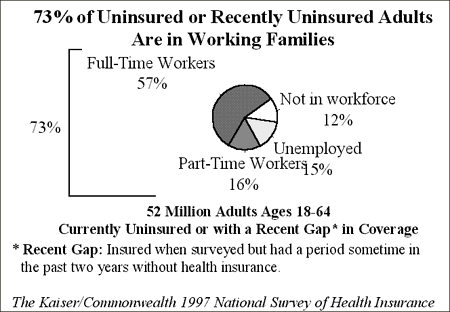
Three-Quarters of the Currently or Recently Uninsured Are in Working Families

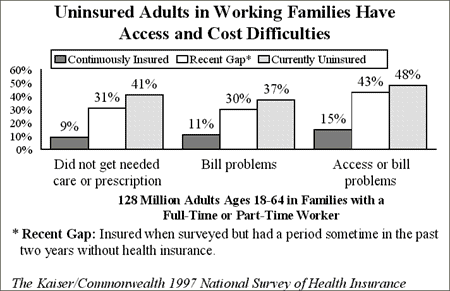
Nearly Half of Uninsured Adults in Working Families Have Access or Bill Problems

Embargoed for release until: 10:00 a.m., EST, Monday, December 8, 1997

For further Information contact: Chris Ferris (202)347-5270 or Mary Mahon (212)606-3853

Washington, D.C.– Three in four American adults who do not have health insurance or who have experienced a recent gap in coverage are part of working families — they are either full- or part-time workers or the spouse of a worker — according to a new survey released by the Kaiser Family Foundation and The Commonwealth Fund. The Kaiser/Commonwealth 1997 National Survey of Health Insurance also finds that as a result of being currently or recently uninsured, many working-age adults and their families face barriers to getting or paying for needed health care.

“This survey serves as a reminder that the problems of the working uninsured are still with us,” said Drew Altman, President of the Kaiser Family Foundation. “The low-wage working uninsured deserve special attention when the country considers the next incremental step in expanding health insurance coverage.”

1347-fig1.gif

Going without health coverage is not a matter of choice for most of the uninsured. About half (51%) of all uninsured adults report that they do not have insurance because they cannot afford it. Another quarter (25%) say they do not have health insurance because they lost their job or their employer does not offer benefits. Only 4% are uninsured because they have poor health or were denied health benefits.

Families with incomes below the median U.S. family income of $35,000 are most affected by lack of insurance. Three in five (59%) adults in families who earned less than $20,000 annually were uninsured or had a recent gap (sometime in the past two years) in health coverage. One-third (31%) who earned between $20,000 and $35,000 annually also were currently or recently uninsured.

The survey also finds that low-wage working families are at high risk overall. Two in five (41%) adults in working families said they had problems paying medical bills or went without needed care in the past year. More than half (56%) of adults in low-wage working families who are uninsured, and 50% of those with a recent gap in coverage, had problems with access to care or paying medical bills in the last year.

“This survey shows us that people are not uninsured because of preexisting conditions or because they opted out of coverage,” explained Karen Davis, President of The Commonwealth Fund. “Many working families simply cannot afford the high cost of health insurance premiums.”

Insurance Matters

Lack of health insurance leads directly to barriers to health care and problems paying medical bills. Nearly half of the working uninsured (48%) report difficulties with access or costs, while only 15 percent of people who had continuous coverage report these problems. The survey also finds that nearly one-quarter (24%) of uninsured adults say they had not filled a prescription they needed in the past year. One in six (17%) report that they had to change their families’ way of life significantly to pay medical bills.

1347-fig2.gif

“Many uninsured working families incur unmanageable financial burdens due to medical emergencies or serious illness, or even worse, go without health care at all,” noted Davis.

Survey respondents who had temporary gaps in health coverage and were uninsured at some point in the past two years face problems similar to those of the currently uninsured. One in five (21%) did not fill a prescription in the past year, and two in five (40%) postponed care in the past year due to costs. By comparison, about one in four of the uninsured (24%) did not fill a prescription; about half (55%) had delayed care.

Medicare Scores Highly Compared to Insurance of Working Families

In marked contrast to the situation of working families, the elderly ages 65 and over covered by Medicare are much more satisfied with their health insurance coverage. Medicare, which provides coverage for the elderly ages 65 and older, results in beneficiaries having greater access to health care and better financial protections than most low- and moderate-income working families. Despite more serious health problems, for example, only 7 percent of the elderly report problems getting health care in the past year, compared with 20 percent of all adults under age 65, and 42 percent of uninsured working-age adults. Medicare beneficiaries are also much more likely to be very satisfied with their health insurance (64%) and choice of doctors (74%) than are adults with job-based health coverage or Medicaid beneficiaries.


Methodology:

The Kaiser/Commonwealth 1997 National Survey of Health Insurance, which was conducted between November 1996 and March 1997 by Louis Harris and Associates, Inc., was designed and analyzed by staff at the Kaiser Family Foundation and The Commonwealth Fund. The survey sample consisted of 4,001 adults ages 18 and older, including 3,761 adults surveyed by telephone and 240 in-person interviews of people without telephones in their homes. The data were weighted to the March 1996 Current Population Survey for accurate representation of Americans by sex, race, age, education, and health insurance status.

The Kaiser Family Foundation, based in Menlo Park, California, is a nonprofit, independent national health care philanthropy and is not associated with Kaiser Permanente or Kaiser Industries. The Foundation’s work is focused on four main areas: health policy, reproductive health, and HIV policy in the United States, and health and development in South Africa.

The Commonwealth Fund, a New York City-based national foundation, undertakes independent research on health and social issues. Its mission is to enhance the common good by looking for new opportunities to help Americans live healthy and productive lives, and to assist specific groups with serious and neglected problems.

This press release is also available on the World Wide Web at www.kff.org or www.cmwf.org. Copies of the release and the accompanying chart pack can be ordered from the Kaiser Foundation’s toll-free publications request line (800/656-4533). Ask for document #1347.

Legislative Summary: State Children’s Health Insurance Program

Published: Nov 29, 1997

This Fact Sheet summarizes eligibility, benefits and cost-sharing, and financing rules of the State Children’s Health Insurance Program as well as other child-related Medicaid provisions from the Balanced Budget Act of 1997.

National Survey of Americans and Health Care Providers on Emergency Contraception – Toplines/Survey

Published: Nov 29, 1997

1997 Kaiser Family Foundation Survey of Americans on Emergency Contraception

Conducted for the Henry J. Kaiser Family FoundationBy Princeton Survey Research Associates

Methodology

Survey of Americans on Emergency Contraception

The 1997 Kaiser Family Foundation Survey of Americans on Emergency Contraception examined public knowledge and attitudes regarding unplanned pregnancy and contraception, with a particular focus on emergency contraceptive pills. The survey, conducted by Princeton Survey Research Associates for Kaiser Family Foundation, consisted of telephone interviews with a nationally representative sample of 1000 women and 300 men aged 18 to 44 years old living in telephone households in the continental United States. The interviews were conducted from May 13, 1997 through June 8, 1997. The margin of error is plus or minus 3 percent for the national sample, plus or minus 3 percent for women, and plus or minus 6 percent for men.

The surveyors called back potential respondents 15 times before removing them from the sample, achieving a response rate of 59 percent. Averaging 15 minutes in length, all interviews were conducted by female interviewers. Respondents were told they would be participating in “a confidential national opinion survey about some important health issues.” Of those who agreed to be interviewed, 6 percent (89 people) terminated the interview before it was completed. The analyses reported here weight the data to be proportional to the actual U.S. population’s demographic characteristics with respect to gender, race, age, income and educational attainment.

The 1995 Kaiser Survey on Public Knowledge and Attitudes on Contraception and Unplanned Pregnancy, conducted by Louis Harris Associates for Kaiser Family Foundation, examined public knowledge and attitudes regarding the magnitude and scope of unplanned pregnancy and various contraceptive options, including emergency contraceptive pills. The national random sample consisted of 2,002 adults, 18 years of age and older, and was conducted between October 12 and November 13, 1994. The margin of error is plus or minus 3 percent for Americans 18-44, plus or minus 4 percent for women 18-44, and plus or minus 4 percent for men 18-44.

All interviews were matched for gender of the interviewer and respondent. The surveyors called back potential respondents four times before discarding them from the sample. Among 4,000 women and men contacted by telephone, 1,000 women and 1,002 men completed the survey, for an overall response rate of 50 percent. One hundred and eighty one individuals out of the 4,000 (4%) refused the survey outright, and 1868 (46%) terminated the interview before it was completed. The analyses reported here weight the data to be proportional to the actual U.S. population’s demographic characteristics with respect to gender, race, age, educational attainment, and health insurance status.

Survey of Health Care Providers on Emergency Contraception

The 1997 Kaiser Family Foundation Survey of Health Care Providers on Emergency Contraception was designed by Kaiser Family Foundation and Fact Finders, Inc. and conducted by Fact Finders, Inc. The national telephone survey, which included 754 women’s health care providers, including 305 obstetrician-gynecologists, 236 family practice physicians, and 229 nurse practitioners and physician assistants, examined knowledge, attitudes and practices regarding reproductive health services, with a focus on emergency contraception. Using three separate random probability samples, Fact Finders, Inc. drew nationally representative samples of obstetrician-gynecologists, family practice physicians and nurse practitioners from the American Medical Association Physicians Masterfile. Obstetrician-gynecologists and family practice physicians were drawn directly from the Masterfile, while the sample for nurse practitioners/physician assistants was drawn from a separate sample of obstetrician-gynecologist and family practice offices. The statistical sampling error associated with the overall findings based on a random probability sampling of 300 ranges from plus or minus 3.4 to plus or minus 5.7 percent (+/- 3.4-5.6% for Ob/Gyns, +/- 3.7-6.2% for family practice physicians, and +/- 3.7-6.2% for nurse practitioners and physician assistants). Fact Finders, Inc., contacted providers by phone and facsimile to schedule phone interviews which took place between March 5, and June 12, 1997. Health care providers were contacted up to 15 times before being discarded from the sample, with refusal rates of 18 percent for the obstetrician-gynecologists, 22 percent for the family practice physicians, and 2 percent for the nurse practitioners/physician assistants.

The 1995 survey was a national telephone survey of 307 obstetrician-gynecologists and 154 family practice physicians, examining knowledge and attitudes toward unplanned pregnancy and contraception, including emergency contraceptive pills. Fact Finders, Inc. drew separate nationally representative samples of obstetrician-gynecologists and family practice physicians from the American Medical Association Physicians’ Masterfile and contacted them by phone and facsimile to schedule phone interviews which took place between February 1 and March 21, 1995. Physicians were contacted up to 15 times before being discarded from the sample, with a refusal rate of 23 percent. The statistical sampling error associated with the overall findings based on a random probability sampling of 307 ranges from plus or minus 3.4 to plus or minus 5.7 percent for obstetrician-gynecologists and plus or minus 4.8 to plus or minus 8.0 percent for family practice physicians. The survey respondents mostly practiced in urban and suburban locations, in solo or single-specialty group practices, were men and were between the ages of 40 and 64. Those refusing to respond to the survey were similar to the respondents with respect to practice characteristics, age and gender patterns, and geographic diversity.

Survey of Consumer Experiences in Managed Care – News Release

Published: Oct 31, 1997

New Survey Offers Insight Into Experiences of Managed Care Consumers

Majority of Sacramento Managed Care Consumers Report No Difficulty with Their Plan, But Over a Quarter Had Problems

For Immediate Release:Wednesday, November 19, 1997

Contacts:Heather Balas,Kaiser Family Foundation, (650) 854-9400

Katie Salvas,Sierra Health Foundation, (916) 922-4755

Magdalena Beltran-del Omo,The California Wellness Foundation, (818) 589-6600

Lauren Schaefer,Health Rights Hotline, (916) 551-2147

Medicaid Beneficiaries Report Highest Rate of Difficulty

Sacramento, California — Much national attention is currently focused on managed care issues, with a Presidential advisory commission considering a “bill of rights” for health care consumers and California policy-makers awaiting recommendations from a managed care task force. A new Survey of Consumer Experiences With Managed Care conducted in the Sacramento, California area – a region with one of the highest rates of managed care enrollment in the country – may help inform state and national debates about managed care regulation, offering new insight into difficulties people have with health plans and how they go about resolving them.

The survey finds that the majority of Sacramento managed care consumers cited no difficulties with their health insurance in the previous year, but that more than a quarter (27%) reported some problems. Of those managed care consumers experiencing problems, the most commonly reported difficulties included:

  • Delay or denial of care or payment (42%), such as disputes over coverage, delays or denials in authorization for care, and disagreement over the scope of benefits covered by the plan.
  • Limited access to physicians (32%), such as difficulty getting an appointment or limited access to specialists.
  • Concerns about quality of care (11%), including perceived problems with inappropriate or inadequate treatment, facilities, or diagnoses, or with obtaining test results.

The report found that consumers did not appear to know of the availability of existing resources, particularly from state agencies. Of the 1,014 managed care consumers in the survey who reported difficulties – of whom many had major problems unresolved after over two months – only four individuals reported calling either the California Departments of Corporations or Insurance for assistance or to complain. A total of 2% of consumers with difficulties contacted any state or local agency.

Thirty-eight percent contacted their health plan and 37% contacted their doctor, while a quarter took no action. (32% used two or more resources.) Of those who took no action, 26% didn’t think it would do any good, 24% thought it was not worth the time, and 14% did not know what to do.

About the same number of consumers resolved their difficulty relatively quickly as those whose problem took two months or longer to settle. Over a third of consumers (36%) resolved their difficulty in less than a month, while 13% achieved resolution in one to two months. Another 13% took two months or longer to resolve their problem, and 35% had not resolved their problem at the time of the interviews. (Almost three-fourths of unresolved problems were at least two months old.)

The survey was conducted to provide baseline information for a multi-year evaluation of a pilot consumer assistance program, the Health Rights Hotline, funded by the Kaiser Family Foundation, Sierra Health Foundation, and The California Wellness Foundation with initial support of $1.6 million for the first two years of the project. The program is the largest test of an independent assistance program for consumers in managed care in the nation. Over the next three years, additional data on cases handled by the Health Rights Hotline and a full-scale evaluation of its effectiveness will be conducted.

Len McCandliss, president of Sierra Health Foundation, said, “With over 90% of privately insured Sacramentans enrolled in managed care, the community has long been considered an HMO ‘laboratory.’ We believe that very soon practically every community in the nation will resemble Sacramento in terms of managed care prevalence.”

Medicaid and Medicare

Low-income people enrolled in managed care through Medicaid (called Medi-Cal in California) experienced the highest rate of difficulty (42%). People insured through Medicare managed care (who account for 45% of all elderly and disabled Medicare beneficiaries in Sacramento county) experienced the lowest rate of difficulty (17%).

Reported Consequences of Difficulties

To provide information about the severity of the difficulties consumers experienced, the survey asked people several questions about the consequences they attributed to their difficulties (as opposed to the consequences of any underlying health condition). Of the 27% of people who reported a difficulty with their health plans:

  • 30% attributed a personal financial loss to the difficulty, including 12% who reported a financial loss of greater than $200.
  • 31% attributed time lost from work, school, or other major activity to the difficulty, including 16% who reported losing two days or more.
  • About one in ten (11%) reported experiencing a worsening of a health condition or developing a new condition as a result of the difficulty.

“Quality health care has to work for patients,” said Gary Yates, president and CEO of The California Wellness Foundation. “These results show that while the majority of consumers reported no problems with their care, we must strive to make the system work for everyone. We see that even consumers with long-term continuity and familiarity with managed care have experienced difficulties.”

Consumer services

Most consumers said they would have used the services of an independent group to resolve their difficulty, had the option been available. The most popular requests were: a mechanism for lodging a complaint to prevent future problems for others (66%); information about consumer rights (62%); referral to other resources (60%); and assistance in understanding their health plan’s policies and procedures (54%).

“At a time when people across the country are complaining about managed care, this project is trying to find solutions,” said Drew Altman, president of the Kaiser Family Foundation, referring to the Health Rights Hotline. “It is the leading community-based effort in the nation giving people concrete help for their health plan problems.”


Methodology

The Survey of Consumer Experiences in Managed Care was developed and analyzed by the Lewin Group of Fairfax, Virginia. The survey was administered by Survey Methods Group, Inc., of San Francisco, California. Screening interviews were conducted in June and August, 1997 with representatives from 4,419 Sacramento households contacted at random by phone. Of these 3,768 were managed care consumers, upon whom survey results were based. For Medicare and Medicaid beneficiaries, managed care enrolles were identified based on the names of their plans. Since traditional fee-for-service coverage is virtually non-existent in the Sacramento area, all privately insured people were categorized as being in managed care. The margin of error is +/- 3% for most questions. These findings are preliminary; a final report will be released at a later date.

Additional information, including a complete copy of this preliminary report, can be obtained by calling the Kaiser Family Foundation’s toll-free publication request line at 800-656-4533 and requesting document #1344.

The Kaiser Family Foundation, based in Menlo Park, California, is a nonprofit, independent national health care philanthropy and is not associated with Kaiser Permanente or Kaiser Industries. Sierra Health Foundation, located in Sacramento, supports health and health-related activities in Northern California. Based in Woodland Hills, The California Wellness Foundation’s mission is to improve the health and wellness of the people of California.

Health Rights Hotline

The Survey of Consumer Experiences in Managed Care was conducted as part of a broader program to support and evaluate the Health Rights Hotline, a free, independent source of information and assistance for health care consumers in California’s El Dorado, Placer, Sacramento, and Yolo counties. The Health Rights Hotline, which began providing services in June 1997, is the first program of its kind in the nation to assist consumers regardless of the type of health plan they have and regardless who pays for care – whether an employer, individual, Medicare, Medi-Cal, or CHAMPUS. The Health Rights Hotline – a program of the Center for Health Care Rights in Los Angeles – is funded for a four-year pilot period to:

  • improve consumers’ access to health care by educating and assisting them to be responsible, informed, and empowered;
  • improve the health care system in the four-county Sacramento area by collecting and analyzing information on the types of issues consumers face, and providing feedback to health plans, health care providers, purchasers, regulators, and the public regarding consumers’ experiences; and
  • test this program as a model for other consumer-oriented programs in California and the nation.

“The survey results point to the role that independent consumer assistance organizations like the Health Rights Hotline can play in helping consumers navigate an often confusing system,” noted Peter Lee, Health Rights Hotline Project Director.

The Health Rights Hotline is open 9 a.m. to 6 p.m., and can be reached toll-free by consumers in the four-county service area at (888) 354-4474 or (916) 551-2100.

Medicaid Facts: Medicaid’s Role for Children – Fact Sheet

Published: Oct 30, 1997

In 1995, 17.5 million children — one-quarter of all children under age 18 — had Medicaid coverage for health care services. Medicaid, the federal/state health program for the poor, pays for a broad range of services for children including well-child care, immunizations, prescription drugs, doctor visits, and hospitalization, and a range of long-term care services for children with disabilities.

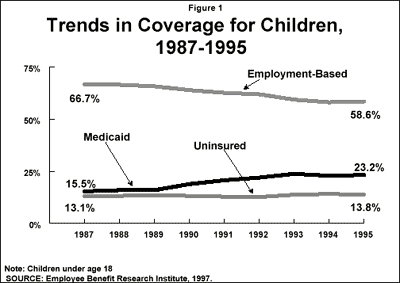
Medicaid plays a particularly strong role for low-income children, covering two-thirds (64%) of all poor children and a quarter( 27%) of children with incomes between 100% and 199% of the federal poverty level (FPL). While employer-based insurance coverage of children declined from 1987 to 1995, expansions in Medicaid have resulted in greater coverage of children in low-income families (Figure 1). During this same period, Medicaid enrollment grew from about 10 million — 15.5% of all children — to 17.5 million children (23.2%).

Despite the importance of Medicaid today, about 10 million children are uninsured. Lack of insurance is particularly high among low-income children. Seventy percent of uninsured children are in families with incomes below 200% of poverty. The new State Child Health Insurance Program, enacted as part of the Balanced Budget Act of 1997, is intended to provide coverage to this group.

2078-img1.gif

Eligibility

Being poor does not automatically qualify a child for Medicaid. In the past 15 years, Medicaid eligibility for children has been broadened considerably through federal legislation and state optional expansions. Prior to 1986, Medicaid primarily served children who received AFDC cash assistance. Today, children qualify for Medicaid based on their age and income.

Medicaid coverage is especially prominent among young children, covering 33% of infants and 29% of children ages 1 to 5. Because recent expansions focused on young children, older children are less likely to qualify for Medicaid. Medicaid covers 22% of children between the ages of 6 to 12 years and 17% of teens between the ages of 13 to 18 years.

Medicaid Coverage of Children:

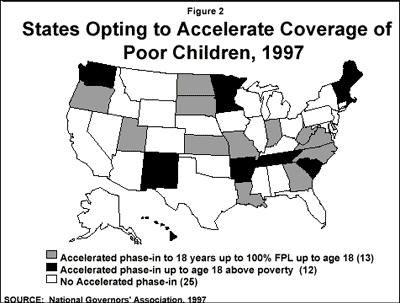
States are mandated to cover certain groups of children based on age and income criteria. By 2002, all states will be required to have phased-in coverage of children under age 19 with incomes below poverty. States can choose to expand Medicaid eligibility beyond federal minimum standards by raising age and income levels for children (Figure 2). They can also use Section 1115 research and demonstration waivers to broaden eligibility. In total, 41 states have expanded Medicaid coverage to children in one or more age or income levels. Federal coverage requirements for children are as follows:

  • Up to age 6 with family incomes up to 133% FPL. For infants, 35 states have chosen to expand coverage beyond 133% FPL and 13 have expanded for children age one to six.


  • Age 6 to 14 with family incomes below 100% FPL. Fifteen states have opted to expand eligibility beyond 100% FPL.
  • Age 15 to 19 if family income meets the AFDC criteria of August 1996 (state average is 41% of FPL) with coverage phased-in for poor children born before 9/30/83. 25 states have opted to accelerate this phase-in to cover older children up to age 18 with income below 100% FPL (Figure 2).
  • Children with disabilities also qualify for Medicaid assistance on the basis of SSI eligibility. Medicaid covers about 1 million additional children with physical or mental disabilities.


2078-img2.gif

Because states established varied Medicaid income eligibility levels for children, and because of state variations in per capita income there is considerable variation in Medicaid coverage, ranging from 13% of children in Colorado to 47% in West Virginia. Similarly, Medicaid pays for 39% of all births nationally, but coverage varies from 21% of births in Massachusetts to 61% in Georgia.

The Balanced Budget Act (BBA) of 1997 creates new options for states to strengthen and expand Medicaid coverage for children. The new State Children’s Health Insurance Program (CHIP) was enacted as part of the Balanced Budget Act (BBA) of 1997. This new capped federal program allocates $20.3 billion over five years in the form of a matched grant to states to expand coverage to uninsured low-income children through either a separate state program or by broadening Medicaid — or both. The funds became available on October 1, 1997 and are targeted to uninsured children under 19 with income below 200% of poverty who are not eligible for Medicaid or not covered by private insurance.

Provisions of the Balance Budget Act also included some important changes to Medicaid. It clarifies the state Medicaid option to accelerate the phase-in for children born before September 30, 1983. In addition, the new law gives states the option to extend presumptive eligibility to children, meaning that services provided to low-income uninsured children will be covered by Medicaid before the Medicaid eligibility determination process is complete. States can also offer 12 month continuous eligibility to children, regardless of any changes in family income during that period.

Services and Costs

Federal guidelines require that Medicaid cover a comprehensive set of services with nominal or no cost-sharing for children. Access to these services is important because poor children experience more health problems than more affluent children. Children with Medicaid are eligible to receive physician and outpatient services, prescription drugs, inpatient hospital care, and long-term care services.

Medicaid coverage also entitles children to early and periodic screening, diagnostic, and treatment (EPSDT) services including a comprehensive health and developmental history and physical exam, immunizations, laboratory tests including blood lead levels, and health education. Children found to have conditions requiring further attention are covered for needed treatment.

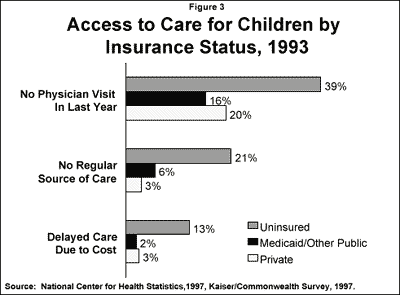
The importance of health insurance in securing access to health care services is well documented. Despite their complex health and social needs, children with Medicaid coverage have access to care that is similar to higher income privately insured children (Figure 3).

2078-img3.gif

In 1995, Medicaid spent $25.4 billion on health care services for 17.5 million children in low-income families and about $7.1 billion for one million disabled children. The majority (93%) of the expenditures for non-disabled children are for acute care services, with one third for inpatient hospital care.

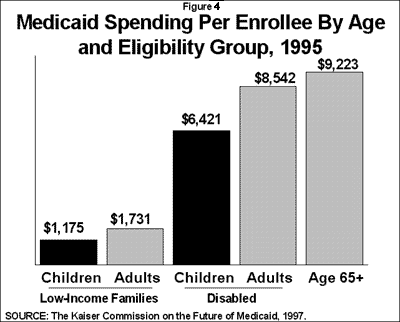
While low-income children represent half of the 35 million Medicaid beneficiaries, they account for only 16.7% of overall Medicaid spending. In 1995, Medicaid spent an average of $1,175 per low-income child enrolled in the program. On average, children cost less to care for than older Medicaid beneficiaries, but some disabled children have very costly health and long-term care needs. Medicaid spent an average of $6,421 per year per child qualifying on the basis of disability (Figure 4).

2078-img4.gif

Issues and Challenges

Expanding Coverage.

To broaden coverage of low-income uninsured children, Congress enacted the new State Child Health Insurance Program and included provisions to allow states to facilitate enrollment and continuity of coverage under Medicaid. Key issues facing state Medicaid agencies include how the new children’s program will be structured, financed, and implemented, as well as how it will be integrated with or build on the state’s existing Medicaid program.

Participation.

An estimated 3 million of the 9.8 million uninsured children are eligible for but not enrolled in Medicaid. This is largely due to enrollment barriers or lack of awareness of the program. States can streamline the eligibility process and facilitate enrollment. For example, 25 states allow mail-in eligibility applications and 29 states have dropped the asset test. Medicaid eligibility policy has also changed markedly as a result of the 1996 welfare law, which eliminated the automatic link between cash assistance and Medicaid. Ongoing and intensified outreach and educational efforts will be necessary to assure that all the children who are eligible for assistance under Medicaid are enrolled.

Managed Care.

In 1996, 40% of beneficiaries were enrolled in managed care, mostly low-income children and their parents. The BBA of 1997 expands state flexibility by allowing states to mandate Medicaid managed care enrollment without requiring states to obtain a Section 1115 or 1915(b) waiver. States will still need a waiver to mandatorily enroll special needs children, but will be able to enroll other non-disabled children. Managed care has the potential to improve access to preventive and primary care, but given the vulnerable nature of the Medicaid population, it requires careful implementation and monitoring to assure quality and access.