Medicaid Facts: Medicaid’s Role for Children – Fact Sheet

Published: Oct 30, 1997

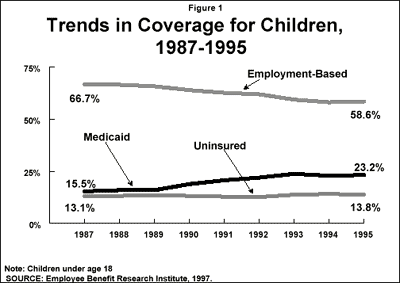
In 1995, 17.5 million children — one-quarter of all children under age 18 — had Medicaid coverage for health care services. Medicaid, the federal/state health program for the poor, pays for a broad range of services for children including well-child care, immunizations, prescription drugs, doctor visits, and hospitalization, and a range of long-term care services for children with disabilities.

Medicaid plays a particularly strong role for low-income children, covering two-thirds (64%) of all poor children and a quarter( 27%) of children with incomes between 100% and 199% of the federal poverty level (FPL). While employer-based insurance coverage of children declined from 1987 to 1995, expansions in Medicaid have resulted in greater coverage of children in low-income families (Figure 1). During this same period, Medicaid enrollment grew from about 10 million — 15.5% of all children — to 17.5 million children (23.2%).

Despite the importance of Medicaid today, about 10 million children are uninsured. Lack of insurance is particularly high among low-income children. Seventy percent of uninsured children are in families with incomes below 200% of poverty. The new State Child Health Insurance Program, enacted as part of the Balanced Budget Act of 1997, is intended to provide coverage to this group.

2078-img1.gif

Eligibility

Being poor does not automatically qualify a child for Medicaid. In the past 15 years, Medicaid eligibility for children has been broadened considerably through federal legislation and state optional expansions. Prior to 1986, Medicaid primarily served children who received AFDC cash assistance. Today, children qualify for Medicaid based on their age and income.

Medicaid coverage is especially prominent among young children, covering 33% of infants and 29% of children ages 1 to 5. Because recent expansions focused on young children, older children are less likely to qualify for Medicaid. Medicaid covers 22% of children between the ages of 6 to 12 years and 17% of teens between the ages of 13 to 18 years.

Medicaid Coverage of Children:

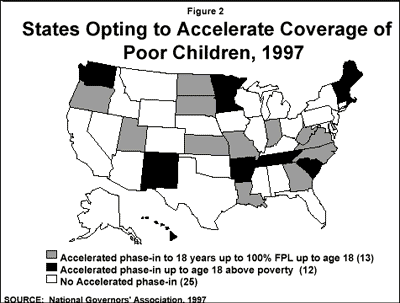
States are mandated to cover certain groups of children based on age and income criteria. By 2002, all states will be required to have phased-in coverage of children under age 19 with incomes below poverty. States can choose to expand Medicaid eligibility beyond federal minimum standards by raising age and income levels for children (Figure 2). They can also use Section 1115 research and demonstration waivers to broaden eligibility. In total, 41 states have expanded Medicaid coverage to children in one or more age or income levels. Federal coverage requirements for children are as follows:

  • Up to age 6 with family incomes up to 133% FPL. For infants, 35 states have chosen to expand coverage beyond 133% FPL and 13 have expanded for children age one to six.


  • Age 6 to 14 with family incomes below 100% FPL. Fifteen states have opted to expand eligibility beyond 100% FPL.
  • Age 15 to 19 if family income meets the AFDC criteria of August 1996 (state average is 41% of FPL) with coverage phased-in for poor children born before 9/30/83. 25 states have opted to accelerate this phase-in to cover older children up to age 18 with income below 100% FPL (Figure 2).
  • Children with disabilities also qualify for Medicaid assistance on the basis of SSI eligibility. Medicaid covers about 1 million additional children with physical or mental disabilities.


2078-img2.gif

Because states established varied Medicaid income eligibility levels for children, and because of state variations in per capita income there is considerable variation in Medicaid coverage, ranging from 13% of children in Colorado to 47% in West Virginia. Similarly, Medicaid pays for 39% of all births nationally, but coverage varies from 21% of births in Massachusetts to 61% in Georgia.

The Balanced Budget Act (BBA) of 1997 creates new options for states to strengthen and expand Medicaid coverage for children. The new State Children’s Health Insurance Program (CHIP) was enacted as part of the Balanced Budget Act (BBA) of 1997. This new capped federal program allocates $20.3 billion over five years in the form of a matched grant to states to expand coverage to uninsured low-income children through either a separate state program or by broadening Medicaid — or both. The funds became available on October 1, 1997 and are targeted to uninsured children under 19 with income below 200% of poverty who are not eligible for Medicaid or not covered by private insurance.

Provisions of the Balance Budget Act also included some important changes to Medicaid. It clarifies the state Medicaid option to accelerate the phase-in for children born before September 30, 1983. In addition, the new law gives states the option to extend presumptive eligibility to children, meaning that services provided to low-income uninsured children will be covered by Medicaid before the Medicaid eligibility determination process is complete. States can also offer 12 month continuous eligibility to children, regardless of any changes in family income during that period.

Services and Costs

Federal guidelines require that Medicaid cover a comprehensive set of services with nominal or no cost-sharing for children. Access to these services is important because poor children experience more health problems than more affluent children. Children with Medicaid are eligible to receive physician and outpatient services, prescription drugs, inpatient hospital care, and long-term care services.

Medicaid coverage also entitles children to early and periodic screening, diagnostic, and treatment (EPSDT) services including a comprehensive health and developmental history and physical exam, immunizations, laboratory tests including blood lead levels, and health education. Children found to have conditions requiring further attention are covered for needed treatment.

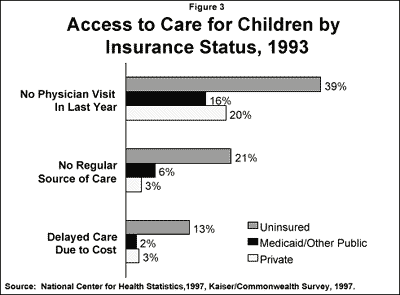
The importance of health insurance in securing access to health care services is well documented. Despite their complex health and social needs, children with Medicaid coverage have access to care that is similar to higher income privately insured children (Figure 3).

2078-img3.gif

In 1995, Medicaid spent $25.4 billion on health care services for 17.5 million children in low-income families and about $7.1 billion for one million disabled children. The majority (93%) of the expenditures for non-disabled children are for acute care services, with one third for inpatient hospital care.

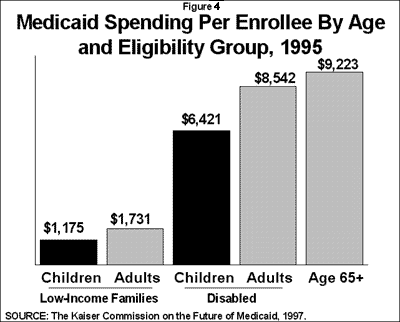
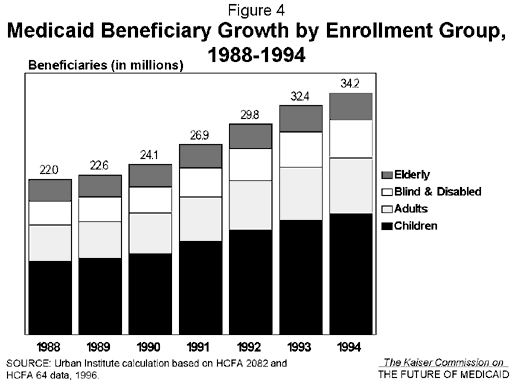
While low-income children represent half of the 35 million Medicaid beneficiaries, they account for only 16.7% of overall Medicaid spending. In 1995, Medicaid spent an average of $1,175 per low-income child enrolled in the program. On average, children cost less to care for than older Medicaid beneficiaries, but some disabled children have very costly health and long-term care needs. Medicaid spent an average of $6,421 per year per child qualifying on the basis of disability (Figure 4).

2078-img4.gif

Issues and Challenges

Expanding Coverage.

To broaden coverage of low-income uninsured children, Congress enacted the new State Child Health Insurance Program and included provisions to allow states to facilitate enrollment and continuity of coverage under Medicaid. Key issues facing state Medicaid agencies include how the new children’s program will be structured, financed, and implemented, as well as how it will be integrated with or build on the state’s existing Medicaid program.

Participation.

An estimated 3 million of the 9.8 million uninsured children are eligible for but not enrolled in Medicaid. This is largely due to enrollment barriers or lack of awareness of the program. States can streamline the eligibility process and facilitate enrollment. For example, 25 states allow mail-in eligibility applications and 29 states have dropped the asset test. Medicaid eligibility policy has also changed markedly as a result of the 1996 welfare law, which eliminated the automatic link between cash assistance and Medicaid. Ongoing and intensified outreach and educational efforts will be necessary to assure that all the children who are eligible for assistance under Medicaid are enrolled.

Managed Care.

In 1996, 40% of beneficiaries were enrolled in managed care, mostly low-income children and their parents. The BBA of 1997 expands state flexibility by allowing states to mandate Medicaid managed care enrollment without requiring states to obtain a Section 1115 or 1915(b) waiver. States will still need a waiver to mandatorily enroll special needs children, but will be able to enroll other non-disabled children. Managed care has the potential to improve access to preventive and primary care, but given the vulnerable nature of the Medicaid population, it requires careful implementation and monitoring to assure quality and access.

Is There a Common Ground? Affiliations Between Catholic and Non-Catholic Health Care Providers and the Availability of Reproductive Health Services

Published: Oct 30, 1997

A report by Carol S. Weisman, Ph.D., School of Public Health, University of Michigan examines affiliations between Catholic and non-Catholic health care providers and their impact on the availability of reproductive health services in communities. The number and types of formal affiliations (including joint ventures, mergers, acquisitions, consolidations, and long-term lease agreements) involving Catholic health care organizations between 1990 and 1996 are described, and a comparative case studies illustrate the affiliation process and its outcomes. This report was discussed at a briefing held for journalists on November 4, 1997 in New York City as part of a joint program by The Alan Guttmacher Institute, The Kaiser Family Foundation and the National Press Foundation.

Executive Summary

Full Report

Managed Care Plan Liability: An Analysis of Texas and Missouri Legislation

Published: Oct 30, 1997

The Impact of Managed Care Legislation: An Analysis of Five Legislative Proposals from California

Health Policy Economics GroupPrice Waterhouse LLP

November, 1997

Executive Summary

Managed care has grown tremendously in recent years. From 1988 to 1997, at firms with 200 or more employees, the proportion of employees enrolled in HMOs nationwide increased from 18 percent to 33 percent. The presence of managed care varies by state across the country but is particularly strong in California where the proportion of HMO enrollment is more than 50 percent of the private insurance market in several large metropolitan areas. For example, in Sacramento, 92 percent of those with private insurance are enrolled in HMOs; in San Francisco and San Jose, the proportion is more than 68 percent.

As managed care has grown, in California and throughout the country, complaints against managed care plans have also mounted. Patients have raised concerns that managed care plans deny necessary coverage or provide access to mainly lower quality services. Physicians and other providers have expressed concerns that managed care plans may dictate care, monopolize the marketplace, and exclude independent practitioners. As a result, legislation aimed at addressing some of these concerns has been proposed at the federal and state levels.

This report presents results from a study conducted by Price Waterhouse LLP which was commissioned by The Henry J. Kaiser Family Foundation. The purpose of the study was to assess the impact of managed care reform legislation on HMOs and their enrollees. Specifically, the study analyzes five areas of California legislation: insurer liability, use of drug formularies, mental health parity, direct access to obstetric and gynecologic services, and lengths of stay for mastectomy patients. For each of these areas, the paper examines the specifics of the legislative bills in California, the likely impact of the legislation on HMOs by organizational type, and the corresponding effects for consumers.

Measuring the Impact of Managed Care Legislation

For the most part, many of the concerns about managed care plans have arisen because of the nature of the services provided by these plans. Managed care plans offer a lower-cost alternative to traditional, fee-for-service health insurance. Managed care plans are able to keep costs low through the use of various cost-saving strategies. For example, most HMOs limit access to providers by the use of a gatekeeper, usually a primary care physician, who must give prior approval before enrollees receive services from other providers, such as hospitals and medical specialists. Managed care plans also engage in practices of limiting the types of services provided to enrollees. For example, they may deny coverage for diagnostic tests and other procedures that the plan determines not to be medically necessary. They encourage outpatient treatment rather than inpatient care, and, when inpatient treatment is necessary, they encourage short hospital stays. The purpose of much of the recently proposed legislation is to protect consumers from some of the least desirable features of managed care cost-saving practices.

Managed care legislation, like most consumer protection, has positive and negative aspects. On the positive side, most of the proposals are intended to improve access to health care providers and medical services. As an example of managed care legislation, health plans could be required to give enrollees access to any provider that they choose. This would increase access to a variety of providers and have positive benefits for enrollees. On the other hand, this type of legislation might be costly to HMOs and other managed care organizations. If HMOs incur increased costs as a result of legislation, they would likely reduce covered services or increase enrollee premiums and/or out-of-pocket costs. If HMOs increase their rates, or reduce benefits, then some enrollees may decide to enroll in traditional insurance plans. In the extreme, managed care regulation could make managed care noncompetitive with traditional, fee-for-service insurance.

Difference in Impact by Type of HMO. The impact of consumer protection legislation may vary depending on the type of managed care plan. There are four basic types of HMOs:

  • Staff model-Physicians practice as employees of the organization, frequently in an office comprised of only HMO staff.
  • Group model-The managed care organization pays a physician group a negotiated, per capita rate which the group then distributes among the individual physicians.
  • Network model-HMOs contract with two or more group practices and usually pay a fixed monthly fee per enrollee.
  • Independent practice/physician association (IPA) model-HMOs contract with individual physicians in independent practice or with associations of independent physicians.

Because the physician and the plan are much more integrated in staff and group model HMOs than in IPA and network model HMOs, staff and group model HMOs are most likely to be able to manage care as well as coordinate and control the behavior of plan physicians. IPA and network model HMOs, on the other hand, are more loosely designed and thus are more limited in the methods by which they can control plan physicians.

For the most part, legislation aimed at reforming managed care seems directed toward HMOs. Although there are forms of managed care plans other than HMOs-such as preferred provider organizations (PPOs) and point-of-service plans (POSs)-that may be impacted by health care legislation, this study primarily focuses on the impact of managed care legislation on HMOs.

ERISA. The impact of state managed care legislation could be limited because of preemptions under the Employee Retirement Income Security Act (ERISA) of 1974. ERISA provides a broad federal preemption of state laws that relate to employee benefit plans. State insurance laws, however, do not fall under this preemption. Thus, state laws may affect non-self-insured employer-sponsored plans through regulation of the insurers. Because of ERISA, non-risk-bearing networks contracting only with self-insured plans and the self-insured plans themselves are exempt from complying with state managed care legislation. With respect to liability, however, both non-self-insured and self-insured plans can be shielded by ERISA from state attempts to expand insurer liability. Plaintiffs are permitted to sue only for the value of the benefit denied. They are not permitted to sue for other damages under ERISA. Because of ERISA preemptions, the effects of state-level managed care reforms would be limited since many employer-sponsored plans will not be affected by these reforms. Only the federal government can enact legislation that governs all managed care plans.

Insurer Liability

Background. Traditionally, insurance plans have not been the target of liability suits since they have not been viewed as being participants in the decision-making process regarding the treatment of patents. With the evolution of managed care, this has changed. By definition, managed care plans manage patient care. The plans not only reimburse a portion of the medical expenses incurred by a patient, they may also greatly influence a patient’s treatment. As a result, recently, there has been a legislative movement to hold managed care plans legally accountable for their role in the decision-making process of patient care. The concept behind the legislation is the idea that if managed care plans face a greater potential for lawsuits, they will be more likely to make decisions that are in the best interest of their patients.

Legislation. Insurer liability legislation has been introduced in the U.S. Congress and in numerous states. In 1997, the California legislature considered five bills related to insurer liability. Three of the bills-SB 324, SB 557, and AB 794-extend liability to managed care organizations by expanding the definition of the practice of medicine to include decisions regarding the medical necessity or appropriateness of any diagnosis, treatment, operation, or prescription. Among other actions, AB 794 also requires that health plans make available to the public, upon request, the criteria used by plans to determine whether to deny or authorize health care services. A fourth bill, AB 536, solely requires plans to make available to the public, upon request, the criteria used in deciding whether to deny or authorize care. The fifth bill, AB 977, provides that a health care service plan would be liable for damages for harm to an enrollee that is caused by the plans failure to exercise ordinary care or caused by decisions made by employees, agents, ostensible agents, or certain representatives of the health care service plan.

Impact. In this study, we assess the impact of expanding liability to managed care organizations through legislation. We find that the impact of expanding malpractice to managed care plans has the potential to greatly reduce their ability to control costs through case management, especially for group model HMOs, but the actual impact may be negligible because of a number of mitigating factors.

First, most employer-sponsored plans may be able to avoid liability by claiming the ERISA preemption. Second, to the extent that group model HMOs are currently being successfully sued in California, then the potential for additional lawsuits may be slight for those HMOs. Therefore, the impact of managed care liability legislation may mainly be limited to a subset of IPA model HMOs, but the effect on these HMOs would be modest. We estimate that at the most, premiums of IPA model HMOs would increase from 0.1 to 0.4 percent.

To the extent that management efficiency is reduced as a result of expanded liability, enrollees would likely gain access to care that they otherwise would not have received. Some of this care may be appropriate and necessary, thus improving the quality of treatment for some enrollees.

Use of Drug Formularies

Background. In the early 1990s, many managed care organizations adopted the use of drug formularies as a method for reducing the costs of prescription drug coverage. A formulary is a list of drugs, rated on clinical and cost criteria, that have been approved and are covered by the plan for treatment of particular illnesses. As a result of concerns about the effects of formularies on managed care enrollees, various forms of legislation have been created.

Legislation. In 1997, more than 40 bills concerning drug formularies have been introduced in more than 25 states. In 1997, the California legislature considered three bills that address issues related to drug formularies: SB 625, AB 974, and AB 1333. SB 625 requires that plans provide an expeditious process by which prescribing providers may obtain authorization for a medically necessary nonformulary prescription drug, make known to the enrollee any reason for disapproval, and make available their formularies upon request. AB 974 requires that a plan provide coverage for a drug if coverage for that drug had been previously approved by the plan for the enrollee and if the drug continues to be prescribed by the physician. AB 1333 prohibits a plan from requiring physicians to prescribe a drug from the formulary if the appropriate drugs from the formulary have been tried and have been unsuccessful in treating the patient.

Impact. By making the consumer better informed, legislation such as SB 625 may enable enrollees in managed care plans to have more negotiating power regarding their treatment, but we do not expect large financial consequences for managed care plans. Based on our assumption that formularies enable plans to save money by providing the most cost-effective medications, as a result of AB 974 and AB 1333, we would expect HMOs (particularly IPA model HMOs) to incur increased costs. Because these bills are limited in scope, the resulting increases in premiums for HMOs would be fairly modest-most likely significantly less than 0.6 percent. In general, both AB 974 and AB 1333 provide certain enrollees easier access to nonformulary drugs while not having a significant impact on the financial stability or the management style of HMOs.

Mental Health Parity

Background and Legislation. The idea of requiring parity in health insurance coverage for mental disorders has been a much debated issue in recent years. In 1996, President Clinton signed into law the Mental Health Parity Act of 1996 which amended ERISA and the Public Health Service Act to provide parity between annual and/or aggregate lifetime dollar limits on mental health benefits with the limits on medical and surgical benefits of group health plans. Various forms of mental health parity legislation have been passed in numerous states. In 1997, the California legislature considered AB 1100 which would mandate health care plans to cover biologically based severe mental illnesses for enrollees of all ages and cover serious emotional disturbances of children under the same policy terms and conditions applied to other medical conditions.

Impact. As a result of AB 1100, those with severe biologically based mental illnesses and children with serious emotional disturbances would likely obtain improved access to mental health services, since their conditions would be subject to the same policy coverage as other physical illnesses. These enrollees would be likely to use more mental health services which, in turn, would lead to increased costs for the health plans.

We estimate the increase in premiums resulting from these increased costs would be approximately 2.1 percent for all plan types in California. Specifically, we estimate that there would be a 1.0 percent premium increase for HMOs, 2.7 percent increase for PPOs/POSs, and 3.6 percent increase for fee-for-service plans.

This bill would also increase the market share for managed care plans since those plans would have lower increases in premiums than traditional fee-for-service plans. Furthermore, since HMOs, particularly group models, are good at managing care, enrollees may not experience as significant an increase in access to mental health services as those in fee-for-service plans. The effects of parity would fall more strongly on fee-for-service plans which use the limits on services to control costs instead of case management techniques which are the mainstay of managed care. For that reason, the mental health parity legislation would tend to increase enrollment in HMOs.

Direct Access to Obstetrical and Gynecological Services

Background and Legislation. As with care from other specialists, many HMOs require that a woman have a referral from her primary care physician to see an obstetrician and gynecologist. However, many have argued that women should have direct access to obstetricians and gynecologists who, in many situations, are viewed as primary care physicians. Legislation providing some form of such access has been passed in many states. In 1994, California enacted legislation enabling women to choose an obstetrician and gynecologist as their primary care physician. In 1997, the Assembly and the Senate in California passed legislation (AB 1354) that would have required health plans to provide women with direct access to obstetrical and gynecological services, but that bill was vetoed by the Governor.

Impact. Given that women in California could already choose obstetricians and gynecologists as their primary care physicians, we estimate that AB 1354 would result in slightly higher premiums and out-of-pocket costs for HMO enrollees, approximately a 0.35 percent increase.

At the same time, enrollees would benefit from easier access to obstetrical and gynecological services and, in some circumstances, would benefit from improved quality of care. We expect similar impacts on both IPA model and group model HMOs. However, this type of legislation could have a longer-term impact on managed care that would be much larger in magnitude, if it sets in motion other legislation that would hinder the ability of managed care plans to limit access to specialists other than obstetricians and gynecologists.

Lengths of Stay for Mastectomy Patients

Background and Legislation. Since the 1996 passage of federal legislation mandating lengths of stay for maternity visits, mandating lengths of stay for mastectomies has become a common area for managed care legislation. In response to increased outpatient surgeries and decreased inpatient lengths of stays for mastectomies, legislation mandating minimum hospital stays has been introduced at both state and federal levels. In 1997, the California legislature considered bills that would mandate that the hospital length of stay for mastectomies be determined by the physician in consultation with the patient and those that mandate a 48-hour minimum stay.

Impact. We estimate that if a 48-hour minimum stay for mastectomies were enacted, the mean length of hospital stay for mastectomies would increase by 11 percent, from 2.0 days to 2.2 days. This estimation is based on the assumption that 25 percent of the short-stay patients-those who would have previously stayed less than 48 hours-elect to stay the full 48 hours if this legislation is enacted. In terms of an increase in health plan premiums, we estimate that the 48-hour minimum stay would result in only a one-hundredth of a percent (0.01%) increase in premiums, for both IPA model and group model HMOs. We would expect a similar increase in California and nationwide.

Conclusion

Based on our analyses, we were able to draw several conclusions which we hope will provide a starting point for further analyses of these proposals as well as other proposals that would regulate this industry.

First, proposals for managed care reforms improve some aspect of medical care or access to services for enrollees in managed care plans. Every proposal that we considered would, to some extent, force HMOs to offer more and/or better services to enrollees.

Second, proposals for managed care reforms tend to increase health plan costs and raise premiums. More services implies higher benefit costs for health plans. The plans, in turn, pass the costs along in the form of higher premiums. We estimate only small premium increases as a result of specific pieces of managed care legislation. However, if a large proportion of current managed care legislation were enacted, then the impact might be very large premium increases accompanied by a large shift in enrollment to fee-for-service plans. The impact of legislation, however, would likely vary according to type of HMO.

Finally, the impact of state managed care legislation could be severely limited by ERISA which enables self-insured plans to avoid compliance with state legislation. Furthermore, under ERISA, both self-insured and non-self-insured plans can avoid the attempts of states to expand insurer liability. In order to ensure that reforms affect all health plans, legislation would have to be passed at the federal level.

* * *A full copy of the report can be ordered by calling the Kaiser Family Foundation’s publication request line at (800) 656-4KFF and asking for document #1342. A report on Managed Care Plan Liability: An Analysis of Texas and Missouri Legislation is available separately. Return to top

The Impact of Managed Care Legislation: An Analysis of Five Legislative Proposals from California

Managed Care Plan Liability: An Analysis Of Texas And Missouri Legislation Library Index
The Development of Capitation Rates Under Medicaid Managed Care Programs: A Pilot Study, Vols. 1 & 2

Published: Oct 30, 1997
  • Report: The Development of Capitation Rates under Medicaid Managed Care Programs: A Pilot Study

Kaiser/Harvard National Survey of Americans’ Views on Managed Care

Published: Oct 30, 1997

A survey of Americans’ attitudes toward managed care, including comparisons between consumers in managed care versus those in traditional fee-for-service plans. The survey was designed and analyzed by researchers at the Kaiser Family Foundation and Harvard University and conducted by telephone by Princeton Survey Research Associates with 1,204 adults nationwide between August 22 and September 23,1997. A sample of 500 adults in California and 500 adults in Massachusetts were also surveyed. The toplines for California (#1326), and Massachusetts (#1327) are available separately.

Medicaid Facts: Medicaid’s Role for Children

Published: Oct 30, 1997

Medicaid Facts: Medicaid’s Role for Children

This fact sheet provides an overview of children’s eligibility and coverage under Medicaid, summarizes Mediciad benefits and expenditures for children, and highlights key issues facing the program as it continues to serve children.

Kaiser/Harvard National Survey of Americans’ Views on Managed Care

Published: Oct 30, 1997

Is There A Managed Care “Backlash?”

Embargoed for release: 9:30 a.m. ET, Wednesday, November 5, 1997

For further information contact: Matt James or Tina Hoff

Most Americans Give Their Own Health Plan A Good Grade, But Have Concerns About Key Aspects Of Managed Care

Washington, DC — At a time of expanding enrollment and stricter federal and state regulation, how does the public feel about managed care? Most insured Americans — regardless of whether they have managed care or traditional coverage — give their own health plan a letter grade of “B” or higher. However, majorities of the public also say they are concerned about key aspects of managed health care. According to a new national survey by the Kaiser Family Foundation and Harvard University:

  • A majority of Americans (59%) say managed care plans have made it harder for people who are sick to see medical specialists (25% say easier);
  • Half (51%) say managed care has decreased the quality of care for people who are sick (32% say increased);
  • Three out of five (61%) say managed care has reduced the amount of time doctors spend with patients (16% say increased);
  • A majority of people in managed care — 55 percent — say they are at least “somewhat worried” that if they were sick their “health plan would be more concerned about saving money than about what is the best medical treatment;” 34 percent of those with traditional health insurance coverage feel this way.

One area where managed care does come out on top is preventive care: nearly half (46%) of people say managed care has made it easier to get services such as immunizations, health screenings, and physical exams (31% say harder).

The survey also found that people seem to generalize from anecdotal reports in the news about problems with managed care. When asked about specific examples taken from news stories about the problems some people have reported to have had with managed care, the public’s perception is that these are fairly common occurrences. For example, two thirds of Americans believe that a Health Maintenance Organization (HMO) holding back on a child’s cancer treatment is something that happens “often” (26%) or “sometimes” (40%). Two out of five (39%) think newborn babies being sent home after just one day because of a managed care plan’s policy, in spite of mothers’ concerns, happens “often;” an additional third (34%) think this occurs at least “sometimes.”

“Managed care is winning in the health care marketplace, but it is in danger of losing the battle for public opinion,” said Drew E. Altman, Ph.D., President, Kaiser Family Foundation.

More people — 34 percent — think managed care health plans do a “good job” in serving health care consumers than think do a “bad job” (21%). However, overall, other health care groups are viewed far more favorably than managed care health plans: solid majorities of Americans think nurses (83%), doctors (69%), hospitals (61%), and pharmaceutical companies (62%) generally do a “good job.” For many people, though, the jury is simply still out: 32 percent have no opinion about the kind of job managed care health plans are doing.

Who Benefits from Managed Care Savings?

Many people perceive the cost savings from managed care as benefiting both employers (56%) and individuals (49%), but it is the health insurance companies themselves that most (72%) say reap the rewards in the form of greater profits. Few Americans believe the trend to managed care has had a significant impact on the overall cost of health care in this country, with most — 55 percent — saying they don’t see that it has made much of a difference; 28 percent say it has helped bring down costs.

Should Managed Care Be Regulated?

In recent weeks, the push for regulation of managed care has intensified with some industry leaders now calling for “legally enforceable national standards.” The President’s Advisory Committee on Consumer Protection and Quality in the Health Care Industry is also expected to soon release a “consumer bill of rights.” A slight majority of Americans — 52 percent — say the government should protect consumers of managed care; 40 percent say such intervention is not worth the increased costs that would result. When asked who they would “most like to see managed care plans regulated by,” the public is divided over whether the government — federal (19%) or state (18%) — or an independent organization (34%) should regulate the industry. Sixteen percent (16%) maintain that managed care plans should not be regulated at all.

Managed … What?

Few Americans are familiar with some of the key terms used in debates over health care policy. A sizeable percentage of people — 28 percent — have never heard of “managed care” (45% know what it means; 26% have heard of it but are not sure what it means). “Fee-for-service” is even less recognized: while 41 percent say they know what it means, 43 percent say they have never heard the term (15% have heard of it but are not sure what it means). HMOs are more familiar: 62 percent say they know what it means (24% have heard of but are not sure what it means, and 14% have never heard the term).

Comparing the Views of Managed Care Enrollees with People in Traditional Health Plans

People in managed care are more worried than those with traditional coverage when it comes to the perceived motivations of their health plans. Insured respondents under 65 in this survey were grouped into three categories based on their health care coverage: “heavy” managed care, reflecting the most restrictive arrangements; “light” managed care, reflecting less restrictive arrangements; and “traditional” fee-for-service plans. Three out of five people (61%) in “heavy” managed care say they would be at least “somewhat worried” that their health plan would be more concerned about saving money than providing the best treatment option if they were sick. Fifty-one percent (51%) of those in “light” managed care agree. By comparison, 34 percent of those with traditional coverage report a similar anxiety; 62 percent say they would not be overly worried that cost might affect medical care.

“People in managed care are much more anxious than those in traditional plans about whether or not their insurance plan will pay for what they need when they are sick,” said Robert J. Blendon, Sc.D., Professor of Health Policy at Harvard University. “Members appear satisfied with their plans today, but are concerned about what might happen to them in the future.”

While most insured Americans say they trust their health plan to do the right thing at least “most of the time,” those in traditional health plans have a greater degree of confidence than those in managed care that this is “just about always” the case (55% in traditional plans vs. 30% in “heavy” and 31% in “light” managed care).

Managed care enrollees are more likely to have cost concerns than those in traditional fee-for-service plans. While 69 percent of people in traditional health insurance say they think it would be “very likely” that their plan would cover most of the cost of serious illness, by comparison 44 percent of those in “heavy” and 54% in “light” managed care are equally sure their plan would pay. Similarly, three quarters (78%) of those with a traditional plan say it is “very likely” that a visit to the emergency room would be covered, while fewer of those in managed care (56% in “heavy” and 63% in “light”) are as confident their plan would pay.

While managed care enrollees appear more anxious about their health plan than those with traditional health care coverage, people with all types of insurance coverage grade their plans generally favorably. Twenty percent (20%) of those with “heavy” managed care give their plan a letter grade of “A,” 44 percent give a “B;” about the same percentages given by those with “light” managed care (“A” 24%, and “B” 44%). Slightly more people with traditional health insurance give an “A” (33%), and 43 percent give a “B.”

How Type of Health Care Coverage was Determined.

Because many people are unsure — or don’t know — what kind of health insurance they have, insured respondents under 65 in this survey (778 respondents) were asked a series of questions about their health plan to establish what kind of coverage they have. They were asked if they were required to do any of the following by their plan: choose doctors from a list and pay more for doctors not on the list; select a primary care doctor or medical group; and/or obtain a referral before seeing a medical specialist or a doctor outside of the plan. Respondents were listed as being in “heavy” managed care if they reported their plans had all of the characteristics described above (34% of the sample). Respondents were listed as being in “light” managed care if they reported their plans had some but not all of the characteristics listed above (45% of the sample). And, respondents were listed as having “traditional” insurance if they reported their plans as having none of the characteristics (21% of the sample).

Shaping Public Opinion: Personal Experience, Family, Friends, and the Media

People say that their feelings about managed care — favorable as well as unfavorable — are more likely to be based on personal experiences and what they have heard from family members and friends than on media coverage. Two thirds of those who say they think managed care plans generally do a “bad job” serving consumers report that the main reason they feel this way is their own experience (39%) or what they have heard from family or friends (32%). Similar percentages of people who think managed care is doing a “good job” say the same thing (35% say own experience, 32% say family or friends). About a quarter say media coverage of managed care has most influenced their views. Those with unfavorable impressions of managed care are again as likely to cite the media (22%) as those with more favorable opinions (24%).

Media coverage of HMOs or managed care is largely seen by the public as “fair” (54%) and as including a mix of favorable and unfavorable stories (57%). Most people — 56 percent — say they have personally seen at least “some” media coverage about managed care in the past year.


Methodology

The Kaiser/Harvard National Survey of Americans’ Views on Managed Care is a product of the Kaiser-Harvard Program on the Public and Health/Social Policy. It was designed and analyzed by researchers at the Kaiser Family Foundation and Harvard University. The survey was conducted by telephone by Princeton Survey Research Associates with 1,204 adults nationwide between August 22 and September 23, 1997. The margin of error is plus or minus 3 percent for the national sample.

The Kaiser Family Foundation, based in Menlo Park, California, is a non-profit, independent national health care philanthropy and is not associated with Kaiser Permanente or Kaiser Industries. The Foundation’s work is focused on four main areas: health policy, reproductive health, and HIV policy in the United States, and health and development in South Africa.

Return to top

National Election Night Survey of VotersPress Release Survey Chart Pack

Poll Finding

The Kaiser/Harvard Health News Index, November/December 1997

Published: Oct 30, 1997

The November/December 1997 edition of the Kaiser Family Foundation/Harvard Health News Index includes questions about major health issues covered by news media, including questions about AIDS and the Health Care Bill of Rights. The survey was based on a national random sample of 1,201 Americans conducted December 4-9, 1997 which measures public knowledge of health stories covered in the news media the previous month. The Health News Index is designed to help the news media and people in the health field gain a better understanding of which health stories in the news Americans are following and what they understand about those health issues. Every two months, Kaiser/Harvard issues a new index report.

Note: This publication is not available on our website. However, the data from these surveys is still available through the Public Opinion and Media Research Group. Please email kaiserpolls@kff.org for more information.