Uninsured

New and noteworthy

Quote from KFF President and CEO Drew Altman reads, "when it comes to the “affordability crisis” driving the national discussion of health care today, the chronically ill, and most of all the chronically ill uninsured, are the tip of the spear."

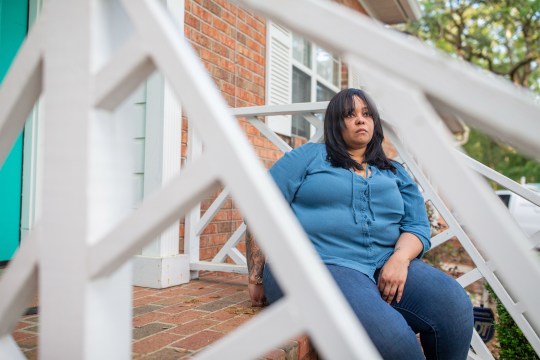
The Group that Struggles the Most in American Health Care

In a new column, Dr. Drew Altman, KFF’s Founding President and CEO, previews findings about the chronically ill uninsured from a large KFF survey of 25,000 Americans focusing on the cost and access challenges facing the chronically ill, which will be released tomorrow. He writes: “There are more than enough needs to go around in American health care, but if I had to pick the one group that struggles the most with costs and access, it would be people with chronic illnesses who are also uninsured.”


Other “Beyond the Data” columns >>

Key Facts about the Uninsured Population

The number and share of people without insurance grew in 2024, increasing for the first time since 2019, according to KFF’s analysis of data from the American Community Survey (ACS). This issue brief describes trends in health coverage in 2024, examines the characteristics of the uninsured population , and summarizes the access and financial implications of not having coverage.

Data and analysis

The coverage gap exists because some states did not expand Medicaid under the ACA to cover adults under age 65 without dependent children with incomes at/below 138% of the federal poverty level (FPL)

How Many Uninsured Are in the Coverage Gap?

An estimated 1.4 million uninsured individuals in the 10 states without Medicaid expansion, including many working adults, people of color, and those with disabilities, remain in the "coverage gap," ineligible for Medicaid or for ACA tax credits that would make coverage affordable.

The Uninsured and Health Coverage

This Health Policy 101 chapter examines the share of the United States population who are uninsured, highlighting their demographics and the challenges they face because of the lack of coverage.

Key Facts on Health Coverage of Immigrants

This fact sheet provides an overview of health coverage for immigrants based on data from the 2023 KFF/LA Times Survey of Immigrants. As of 2023, half of likely undocumented immigrant adults and one in five lawfully present immigrant adults reported being uninsured.

Who was uninsured in 2024?

Latest Polling
9.8%

The share of people under age 65 without insurance
62%

The share of uninsured adults who said they were uninsured because coverage is not affordable
59%

The share of uninsured adults who said they or someone living with them had problems paying for health care
39%

The share of uninsured adults who reported delaying or not getting needed care or medication due to cost

Stay informed.

Stay informed.

Filter

651-660 of 1,315 results

  • Impact of Coronavirus on Community Health Centers

    Issue Brief

    Community health centers are a national network of safety net primary care providers that fill an important role in national, state, and local responses to the coronavirus pandemic. This brief presents findings from new data that provide insights into how health centers are adapting their services in response to the pandemic and how coronavirus is affecting their operations and long-term financial outlook with patient visits and revenue from those visits dropping precipitously.

  • Uninsured Most Likely to Delay or Go Without Care or Prescription Drugs Due to Cost

    Feature

    Many uninsured people do not obtain the treatments their health care providers recommend for them because of the cost of care. In 2018, uninsured nonelderly adults were more than three times as likely as adults with private coverage to say that they postponed or did not get a needed prescription drug due to cost.

  • Health Coverage and Access to Care for Hispanics in “New Growth Communities” and “Major Hispanic Centers”

    Report

    Health Coverage and Access to Care for Hispanics in "New Growth Communities" and "Major Hispanic Centers" A new report from the Foundation's Kaiser Commission on Medicaid and the Uninsured finds that as the Hispanic population grows and moves beyond urban centers, Hispanics in "new growth communities" face greater barriers to health care than those in cities considered "major Hispanic centers." By 2003, the uninsured rate for Hispanics in new growth communities rose to a level…

  • Testimony: State-Based Health Reform Efforts

    Event

    On June 16, 2008, Kaiser Family Foundation Vice President Gary Claxton testified about state-based health reform efforts as part of the Senate Finance Committee's Preparing For Launch Health Reform Summit. In his prepared testimony, he examined the role of Medicaid and the State Children's Health Insurance Program, as well as the way various federal laws and policies may limit innovation at the state level. Testimony (.pdf)

  • Update on Individual Health Insurance

    Report

    This report provides information about the individual health insurance market using data from the largest vendor of this type of insurance, eHealthInsurance. The report includes who is buying individual insurance, what they are actually paying for the insurance, and buying patterns. It is the first in an up-coming series of reports jointly produced by the Kaiser Family Foundation and eHealthInsurance to provide trend information in such areas of interest as premiums and cost sharing, and…

  • A Profile of American Indians and Alaska Natives and Their Health Coverage

    Issue Brief

    A Profile of American Indians and Alaska Natives and Their Health Coverage This brief examines the health coverage, access to care and health status of American Indians and Alaska Natives across the country. Although the U.S. government has an established responsibility through tribal agreements to provide health care services to members of federally recognized Indian tribes, many American Indians and Alaska Natives lack access to health care. The brief gives an overview of the some…

  • Chartpack: Kaiser Health Tracking Poll — September 2009

    Poll Finding

    This document contains the chartpack from the September Health Tracking Poll. The survey was designed and analyzed by public opinion researchers at the Kaiser Family Foundation and was conducted August 4 through August 11, 2009, among a nationally representative random sample of 1,203 adults ages 18 and older. Telephone interviews conducted by landline (801) and cell phone (402, including 123 who had no landline telephone) were carried out in English and Spanish. The margin of…

  • Today’s Topics In Health Disparities: Is the Health Care System Ready for Health Reform?

    Event Date:
    Event

    On Wednesday, November 4, at 1 p.m. ET, this Today's Topics In Health Disparities live webcast examined how ready the health care system is for the influx of newly covered individuals that health reform aims to deliver. In the health care proposals being considered by Congress, changes to Medicaid alone could mean as many as 15 million people would become newly eligible for the program and many live in medically underserved areas. The program will…

  • Chartpack: Kaiser Health Tracking Poll — December 2009

    Poll Finding

    This document contains the chartpack from the December Health Tracking Poll. The survey was designed and analyzed by public opinion researchers at the Kaiser Family Foundation and was conducted December 7 through December 13, 2009, among a nationally representative random sample of 1,204 adults ages 18 and older. Telephone interviews conducted by landline (801) and cell phone (403, including 111 who had no landline telephone) were carried out in English and Spanish. The margin of…